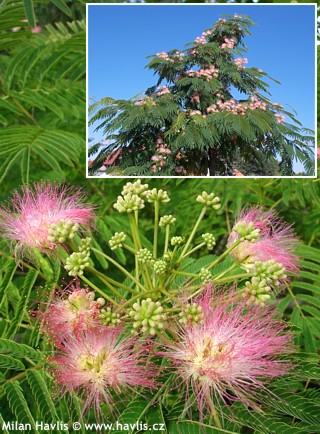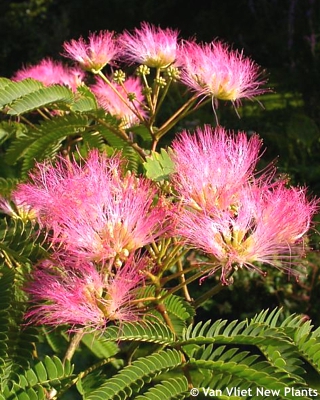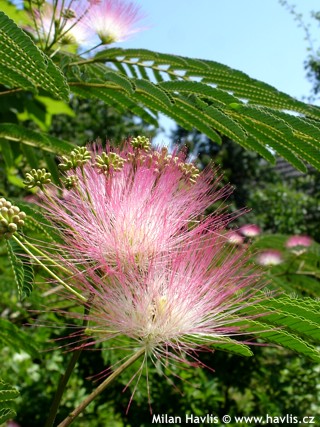


Albizia julibrissin 'ERNEST WILSON' silk tree


 Symbivit Tric (arbuscular)
 Symbivit (arbuscular)
Albizia
Mimosaceae plants are popular mainly in southern Europe as they are very drought tolerant. Even though they come from subtropical parts of the world we can also grow some of them in our climate.
Ernest Wilson is a selection found in Korea in early 1900´s. It grew in a colder zone which predestined it to be ideal for testing in colder climates of the USA as well as Europe later on.
Exotic looking flowers are pink, hairy spheres with yellowish centres, 3-5 cm large and with a sweet fragrance. Fern-like leaves are deep green, compound. They close for the night and re-open in the morning, just like mimosa when touched. They are very soft and therefore the plant received the name silk tree.
It is a large shrub or a medium-sized tree with irregular, flat or umbrella-shaped, spreading crown. It needs warm, neutral to alkaline, preferably poor or slightly fertile soil. Mulching is good for winter but in the summer it prefers direct sunlight onto the area above roots so it can collect as much warmth as possible for better flowering.
Pruning is possible in spring, after frosts. Do not cut more that one third of the branches as they would make long new shoots that would be reluctant to flower.
We proved it hardy down to -27°C on our premises with minimum winter injury. We discourage customers from using fertilizers based on nitrogen. The plant itself grows fast and branches that are too long and soft-wood will not mature by winter and can get damaged by harsh frost. However, should that happen, it readily regenerates from healthy, even older wood.
Last update 14-02-2008.
Watch out for symptoms of a very dangerous disease – mimosa wilt disease. Read this article to follow instructions in case you spot them and we strongly suggest you do the procedure as prevention on annual basis.