













Ficus carica 'BROWN TURKEY' fig tree


Ficus
We focus on plants that have not been cultivated in our climate before. We have great results because many of them are well adaptable to our continental conditions and do what they should – flourish, bloom, or set fruit. Fig trees belong among these originally forbidden taxons. There, a good location is needed as well as a selected variety suitable for our zone. And if you meet both obligations, you can enjoy sweet and tasty figs from your own garden every summer as well as exotic foliage that significantly upgrades every Mediterranean-like landscape.
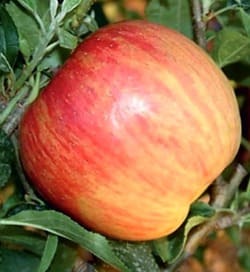
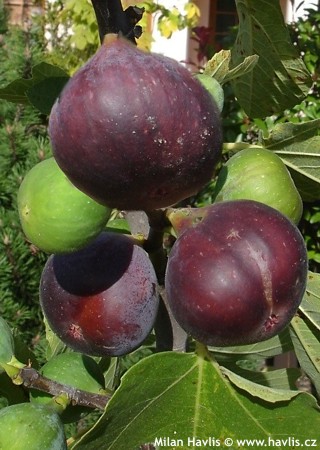
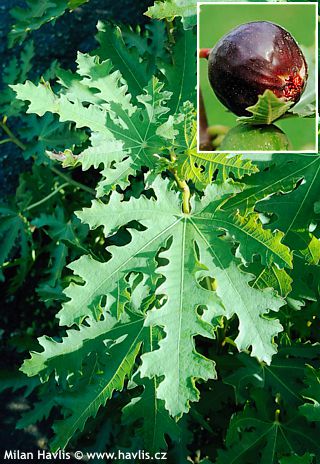
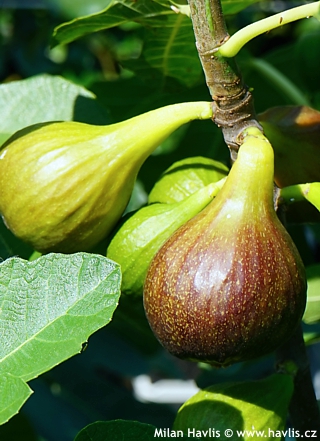
One of the hardiest figs for our climate (zone 6) is named Brown Turkey. As the name suggests the fruit is brownish-red or blackish-purple, relatively large and sweet. They do not require pollination. Immature fruit and branches contain sap which can be an eye and lip-irritant. Palmate leaves are very ornamental – mid green and large, with deep, rounded lobes. Pruning is possible in spring, for stronger fruiting you can cut new branches after 3rd leaf in summer.
It needs a sunny spot preferably at a south-facing wall where it can accumulate a lot of warmth and is sheltered in winter. Young plants survive approx. -15°C, older plants can take -20°C or more with protection. In any case it is fully root-hardy i.e. it always re-sprouts from the ground level if branches are damaged by frost. It needs alkaline soil with some clay and plenty of humus-rich material.
Last update 20-01-2009.

474,05 Kč
902,5 Kč
Goods are shipped all over Europe. For Russia and U.K. and for further details please read about SHIPPING OPTIONS HERE.
Are you interested in a serious discount for orders NOV-FEB? Check your options here.
THE PRICES INCLUDE VAT of 15%. For quick conversion you can use 1 CZK = approx. 0.04 EUR
- STANDARD QUALITY - Plants of this group are 1st class quality with number of branches and overall density adequate to their size and age, considering they were container grown.
- DE LUXE QUALITY - This label guarantees a luxurious quality of manually selected plants that, compared to their height and age, are exceptionally dense and beautiful.
- EXTRA - These plants are usually mature and bigger specimens with exceptional overall appearance.
- STANDARD (as described in the plant form) means a tree with a trunk of 190-210 cm and a crown at the top, unless specified differently. The commercial size for trees is their girth measured in the height of 1m from ground.
- HOBBY - These plants are of the same quality as our standard-quality plants but younger and therefore cheaper.
- SHRUB - a woody plant with branches growing bushy from the ground level.
- HALF-STANDARD or MINI-STANDARD - a small tree with shorter trunk, its size is usually specified.
- FEATHERED - These are trees with branches growing already from the base of the trunk and up along the stem.
- GRASSES and PERENNIALS - Sizes given usually read the diameter of the pot or the clump, as specified.
