

Robinia hispida var. rosea (Robinia elliottii) hairy locust, rose acacia

 Symbivit Tric (arbuscular)
 Symbivit (arbuscular)
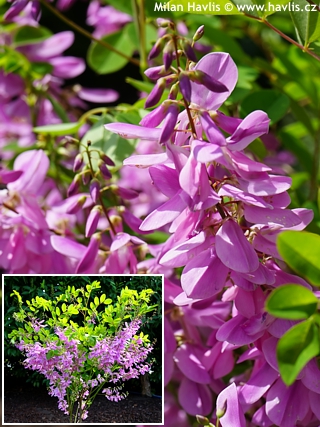
The original name of this shrub is hairy locust because of the twigs that are covered with bristly purplish-brown hairs.
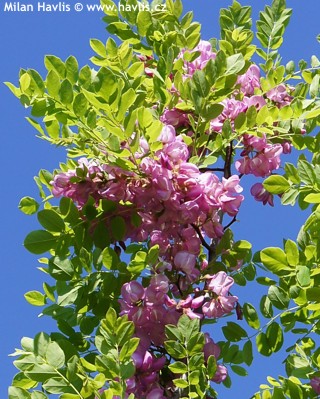
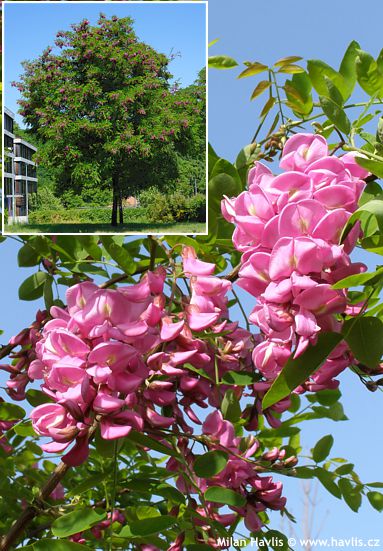
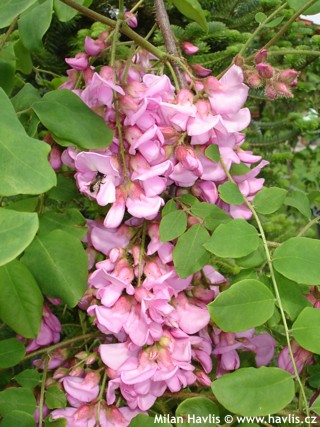
Pea-like, rose-pink flowers are formed in short clusters and come out at the end of spring for 2-4 weeks. In hot and sunny summer it blooms for the second time at the end of July, in cold summers it may set fewer flowers throughout July and August. To make it bloom profusely again in August trim the new twigs to about half their size after the first flowering. Locust flowers on new branches so the plant will think it is time again to make a flower display.
Pinnate leaves are alternate, mid green, composed of oval to rounded individual leaflets, larger than on black locust. This is low growing shrub or tree, often grafted at the base or on half-standard, ideal for small gardens.
Last update 02-02-2008.
It needs almost no maintenance and is very easy. Just find it a location protected from strong wind since branches are fragile and can easily get broken. Use ordinary, preferably less fertile soil with sand and do not fertilize. It is drought tolerant and dislikes wet conditions. Fully hardy to -29°C (USDA zone 5).