
Rosa 'LICHFIELD ANGEL' shrub rose by David Austin


 Symbivit Tric (arbuscular)
 Symbivit (arbuscular)
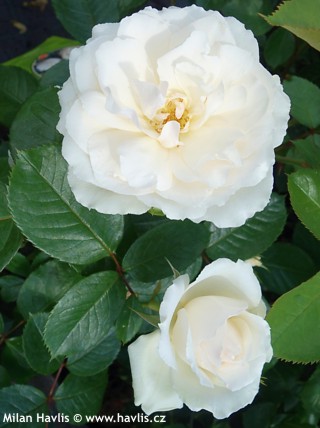
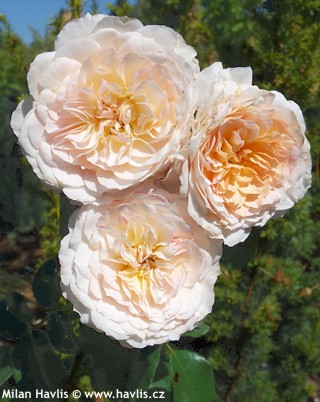
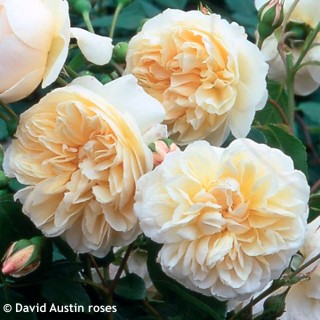
The flowers of this rose commence as charming peachy pink cups, gradually opening to form neatly cupped rosettes. Each bloom has a perfect ring of creamy-apricot waxy petals enclosing numerous smaller petals. Eventually the petals turn back to form a large, domed, creamy-white flower. The overall effect in the mass in sunshine is almost pure white. Lichfield Angel will form a vigorous, rounded shrub which, with its blooms nodding attractively on the branch, will make a fine sight. It is very useful in a border, as it harmonises well with all other colours and will act as an intermediary between pinks and yellows. The fragrance is generally light but has strong elements of clove at one stage.
Planting instructions: Prepare a hole of size 30x30 cm. Put your rose in the way that the grafting point is 3 cm deep in the soil. Water well and cover new shoots with soil or bark mulch about 15 cm high. Roses tolerate wide range of soils but thrive in deep, humus-rich, moist but well-drained soil, in full sun.
Last update: 24-01-2009.
Pruning: English roses don’t need hard pruning like tea hybrids. Just cut last year’s growth by one third to maximum one half in the spring (after frosts) to achieve desired shape, and strong and reliable framework. Cutting it back to 3-5 live buds is possible for re-juvenating. To support extra flowering during the season remove twigs past blossom: cut them off the first leaf with 5 bracts. Mulch well before winter, preferably with leaf-mould.