










.jpg)
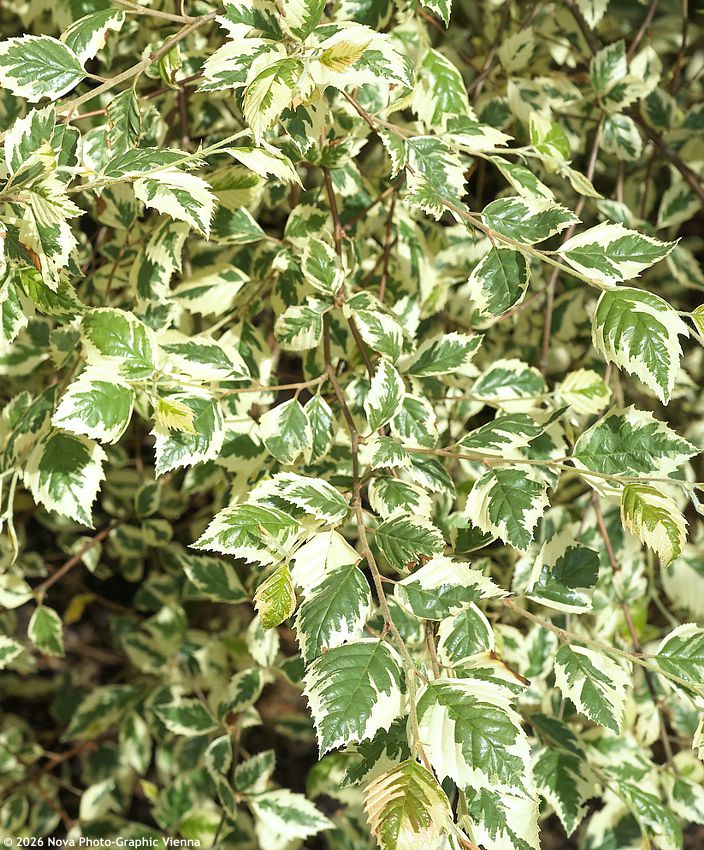
Betula nigra 'SHILOH SPLASH' River birch

 Ectovit (ectomycorrhizal)
Betula
The genus Betula comprises roughly sixty species of deciduous trees and shrubs distributed across the Northern Hemisphere, from subarctic regions to the mountain belts of the temperate zone. Birches belong to botanically ancient lineages, with fossil pollen known from the Tertiary period, and in the landscape, they appear as classic pioneer species, able to colonise disturbed ground with remarkable speed. The first coherent botanical treatment of the genus was produced by Carl Linnaeus (1707–1778), who placed birches among the fundamental woody plants of the European flora. Since then, they have served as a model example of trees adapted to extremes of light, cold and nutrient‑poor soils. In human culture, birches occupy a distinctive position, ranging from Nordic mythology and folk medicine to the practical use of bark, wood and sap, making them one of the most instantly recognisable tree genera of the temperate world.
River birch, Betula nigra, is a North American species naturally tied to river landscapes, occurring along streams, rivers and periodically flooded alluvial plains from south‑eastern Canada to Texas. It reached European gardens surprisingly early, when it was introduced in 1736 by Peter Collinson (1694–1768), a London merchant and botanist who enthusiastically mediated new North American trees to European horticulture. From there it found its way into Central Europe, where from the late nineteenth century it was cultivated mainly as a collection tree in aristocratic parks and dendrological collections, including the Průhonice Botanic Park near Prague. It never became a standard park birch, remaining instead a tree for connoisseurs and collectors, as well as for practical use, because as a species of water and shifting riverbanks it can tolerate repeated flooding, exposed roots and fluctuating water levels, a combination that still sets it apart from most other birches.
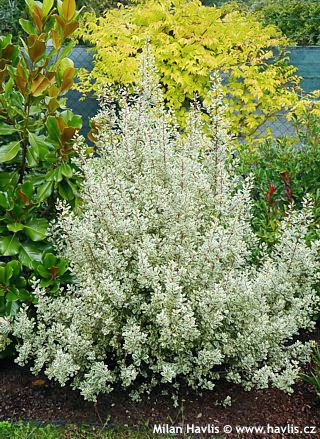
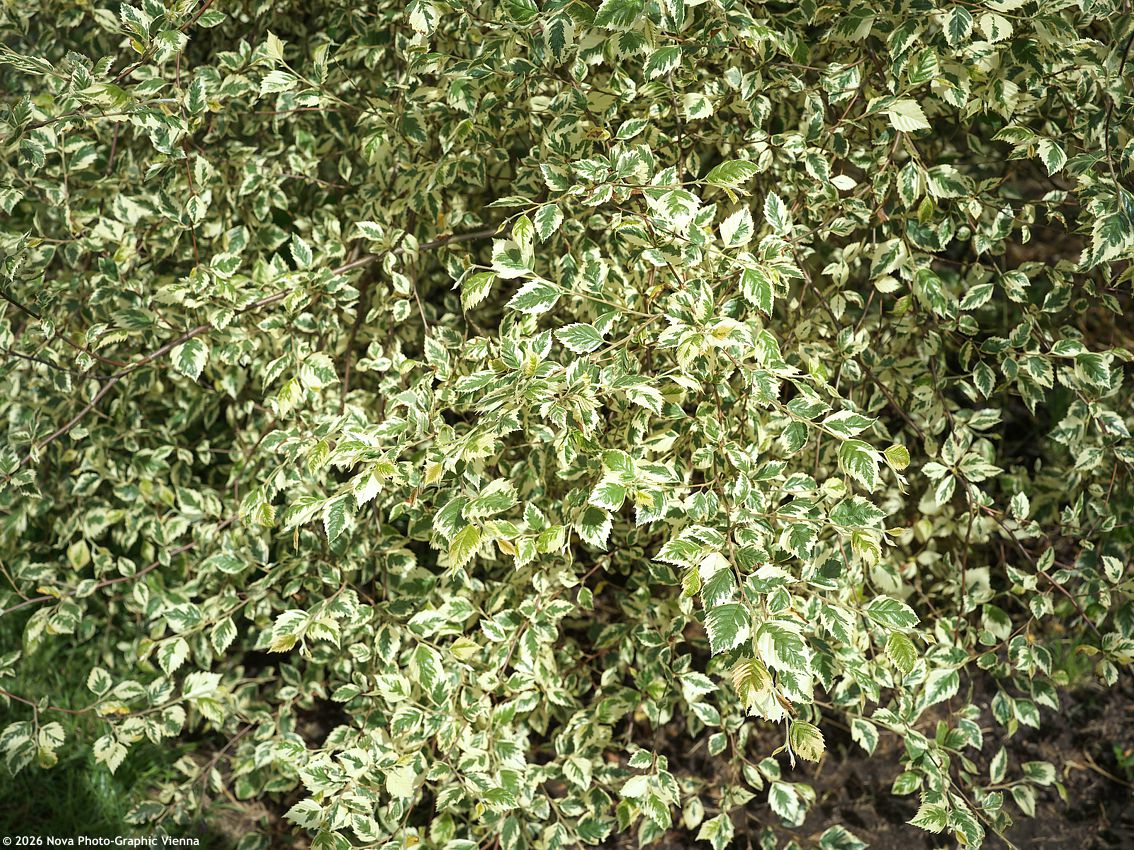
Shiloh Splash birch looks like almost anything but a birch. It bears noticeably smaller leaves, richly variegated with creamy white along the margins. It was discovered in 1999 by brothers John and Danny Allen at their Shiloh Nursery in North Carolina, USA, as a spontaneous mutation of the species, river birch. The strikingly coloured leaves dance in the wind, aided by fine branching and an airy habit. They are deciduous, broadly ovate and distinctly toothed along the edges, yet soft to the touch. They reach lengths of 3–11 cm and widths of 2–9 cm, although the maximum dimensions are achieved only after many years and solely under ideal conditions in very fertile and moist soils. They typically remain smaller and give a more delicate impression. The bark remains attractive even in winter thanks to its papery exfoliation in warm tones, but patience is required – it may take up to ten years for the trunks to thicken sufficiently to reveal their full splendour.
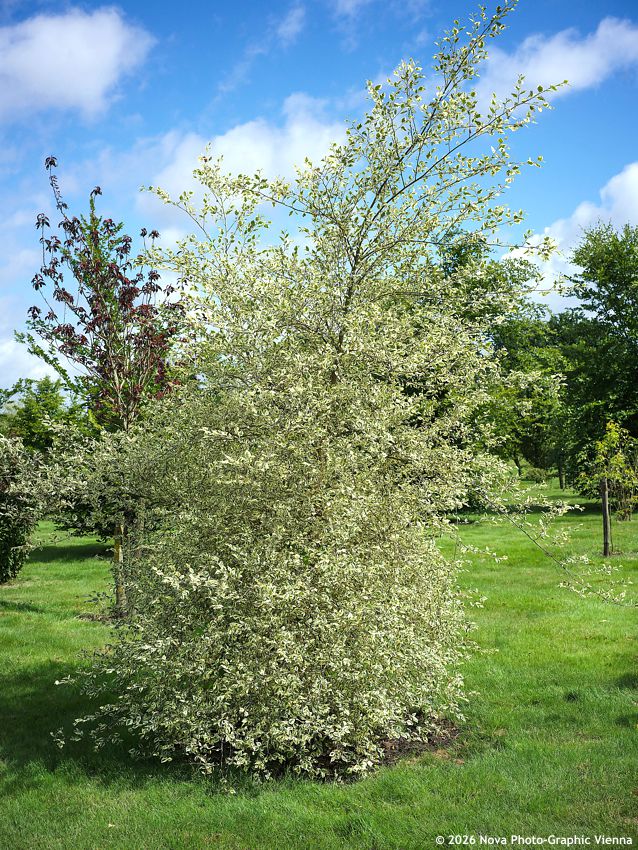
It grows at a moderate rate, approximately 30–50 cm per year and can be cultivated either as a low tree naturally branched from the ground, or with the lower branches gradually removed to form a canopy. It reaches roughly 3–4.5 m in height with a spread of about 2.5–3 m. In the landscape, it performs best in moist locations – it is not ideal as a lawn tree without irrigation where it may suffer from drought. As it needs evenly moist (but not waterlogged) soil, it pairs well with similarly inclined woody plants such as rhododendrons, clethras, willows, certain ferns and moisture‑loving perennials. Its canopy does not cast deep shade, but when planted in the right position it can provide midday protection from the scorching sun, for example for Japanese azaleas. The cultivar is protected by US Plant Patent no. PP16,362, granted in 2006.
Last update 08-02-2026
River birch is an undemanding yet ecologically specialised tree that values ample moisture and deeper soils. It thrives best in full sun or light shade, in humus‑rich, well‑drained soils, but it also tolerates prolonged flooding. In dry conditions it responds with slower growth and partial shedding of inner leaves. It is sensitive to strongly alkaline soils, where chlorosis may occur. Pruning is unnecessary and should be limited to the removal of damaged or crossing branches, ideally in summer outside the period of heavy sap flow. Newly planted trees require firm staking, as rapid growth and a shallow root system in moist soils increase the risk of windthrow during the first years after planting. Frost hardiness is exceptional, down to approximately −40 °C (USDA zone 3), and plants require no winter protection even in cold temperate climates.

.jpg)