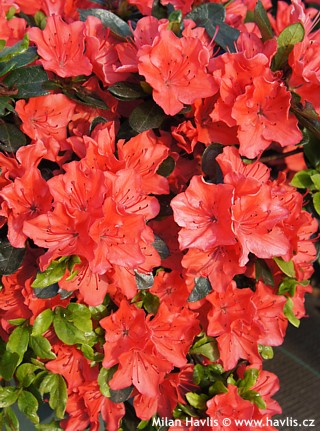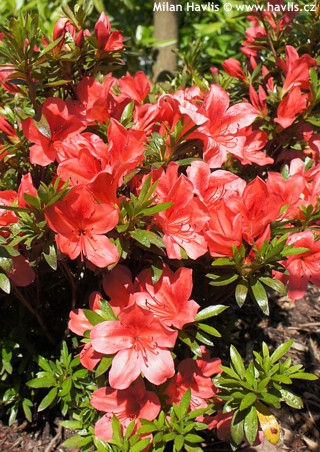
CURRENTLY IN STOCK:
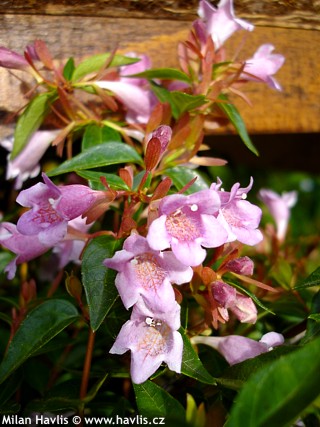
Abelias belong to the most popular flowering shrubs of dwarf to small sizes, mainly thanks to its long flowering period: June-October. Variety Edward Goucher was introduced by a botanist of the same name in the USA in 1911 as a cross between abelia x grandiflora and abelia schumannii.
This elegan ...

VI - X

0,3 - 1m

0,3 - 1m

full to partial sun

6 (down to -23°C)

for zone 5+6

for zone 7
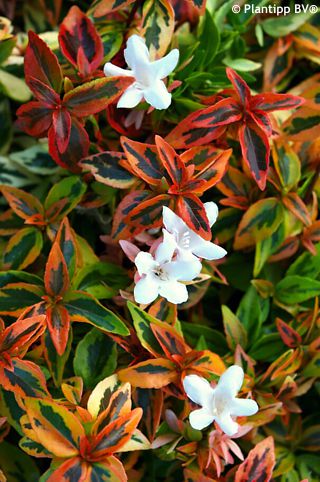
Kaleidoscope® is another novelty of the turn of the century. It drags attention thanks to its multicoloured foliage, but not only that. This abelia was found as a naturally occurring mutation of abelia x grandiflora “Little Richard” by nurseryman Randall Dale Lindsey in North Caroli ...

VII - IX

0,3 - 0,5m

0,3 - 0,8m

full to partial sun

6 (down to -23°C)

for zone 5+6

for zone 7
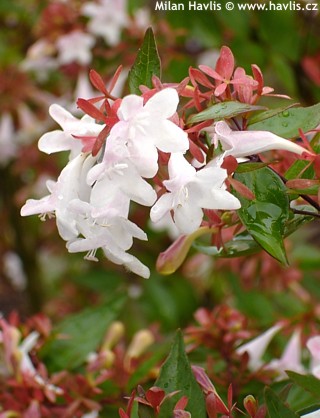
Glossy abelia is a garden hybrid between abelia chinensis and abelia uniflora, and is sometimes also called abelia rupestris. Its dominant feature is profuse flowering from late June until late autumn. Flowers are small, funnel-shaped, pure white, and decorated by pale red calyxes thanks to which th ...

VII - X

0,5 - 1,8m

0,5 - 1,5m

full sun

5b (down to -27°C)

for zone 5+6

for zone 7
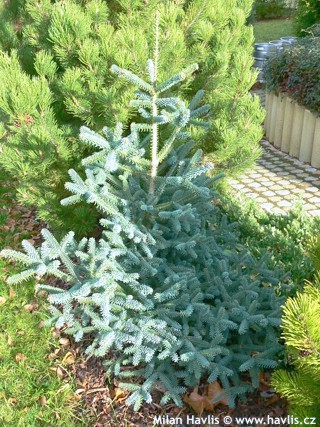
White fir is a popular conifer of Czech and Slovak gardens and parks. It is demanded for its glaucous foliage colour. Nurseries take good care to select only the seedlings that have the most attractive colour because this fir occurs naturally in the range of dark green where only the young shoots ar ...

15 - 30m

2 - 6m

full to partial sun

3 (down to -40°C)

for zone 5+6

for zone 7
We always love presenting unusual and rare plants. Among those we only select the ones that are not just rare but also beautiful and can enrich your garden with a new feature. This time we have a real jewel for conifer lovers.
It is a dwarf Korean fir named “Brillant”. It is a compact and almost ...

0,2 - 0,3m

full to partial sun

5 (down to -29°C)

for zone 5+6

for zone 7
Molli is a dwarf variety of Korean fir from late 20th century. It is a compact, smaller version of common Korean fir with rich green, short, glossy needles with silver-grey film underneath. It grows slowly and develops a more or less regular conical shape. It always has a central leader giving it a ...

1 - 2,5m

1 - 1,5m

full to partial sun

5 (down to -29°C)

for zone 5+6

for zone 7
Caucasian fir is perhaps the most beautiful conifer of our climate. No wonder that it is also a commercial bestseller as a Christmas tree. Its short needles densely cover the branches; they are deep green and very glossy, with silvery undersides. Fresh growths are intensely bright green.
The growth ...

12 - 18m

3 - 5m

full to partial sun

4 (down to -34°C)

for zone 5+6

for zone 7
Spanish fir is one of the most popular conifers with blue needles. It is also called hedgehog fir as the needles are short and stiff, regularly composed around its branches. The shape is broadly conical, very neat and regular.
Glauca has striking silvery-blue needles which make it easy to combine w ...

3 - 5m

1,5 - 2,5m

full to partial sun

5b (down to -27°C)

for zone 5+6

for zone 7
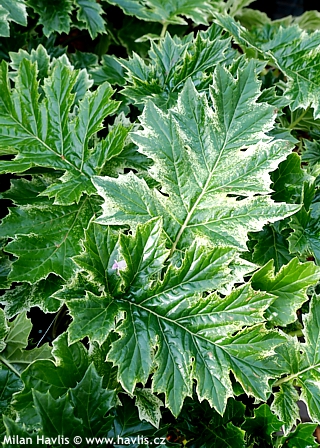
Bear’s breeches variety Whitewater is a true tour de force by Janet N. Egger of Terra Nova® Nurseries in Oregon, USA. At first glance, it captivates with its boldly variegated leaves, whose pattern resembles an irregular wash of white paint – without symmetry or repetition, and with a softly patinat ...

VII

0,3 - 0,6m

0,4 - 0,8m

semi-shade / partial sun

6b (down to -21°C)

for zone 5+6

for zone 7
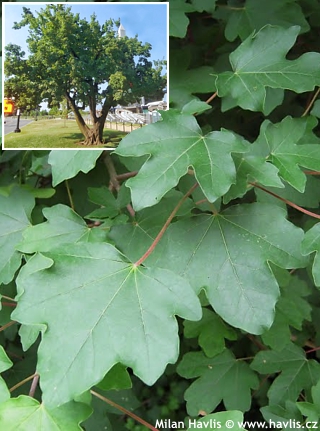
Field maple (and its varieties) is one of the most frequently planted trees in Czech urban landscapes. It is of European origin and has earned its success thanks to its high tolerance to all kinds of weather conditions as well as those brought upon by humans, and longevity. It is rated a medium-tall ...

6 - 10m

6 - 10m

full to partial sun

5 (down to -29°C)

for zone 5+6

for zone 7
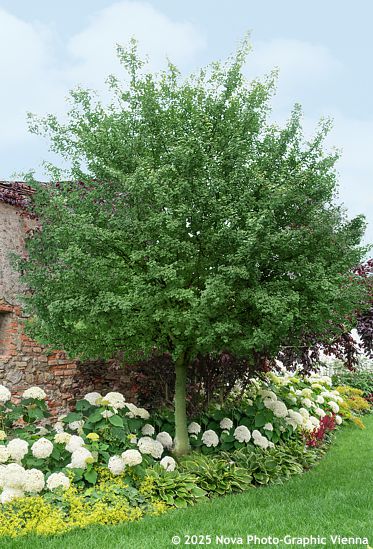
When one mentions Elsrijk, most landscape architects think of a tree that “doesn’t stand out” and that is precisely what makes it exceptional. It is a field maple variety whose canopy is regular, narrowly oval to pyramidal, and keeps its shape without pruning, giving it a tidy appearance even withou ...

6 - 10m

4 - 6m

full to partial sun

3 (down to -40°C)

for zone 5+6

for zone 7
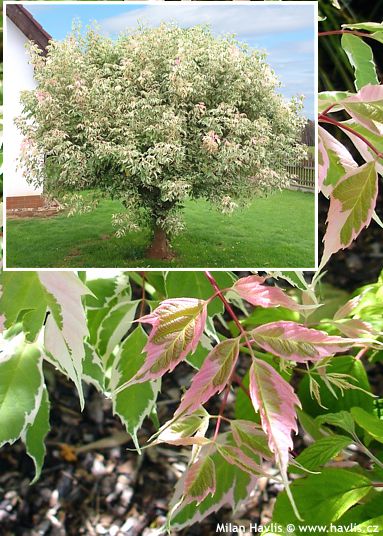
Nanum is a dwarf variety of Field maple, suitable for small gardens and avenues with limited space. It grows slowly into a small tree some 2.5m tall and wide. The leaves are deciduous, deep green, with 3-5 rounded lobes, turning yellow in autumn. It naturally forms dense and many branched, rounded c ...

1,5 - 3m

1,5 - 3m

full to partial sun

4 (down to -34°C)

for zone 5+6

for zone 7
Snakebark maple is a distinctive maple species that was discovered in China by Jean Pierre Armand David in 1869. Being quite easy to grow and non-problematic to transplant one wonders why it remains in the group of plants difficult to locate both in garden centres as well as private gardens.
It is ...

IV - IV

8 - 15m

3 - 6m

full to partial sun

5 (down to -29°C)

for zone 5+6

for zone 7
ICE DRAGON® is a hybrid Korean maple (a. palmatum x a. pseudosieboldianum), the smallest variety from the Jack Frost® series developed by Iseli Nurseries in Oregon, USA. It has finely cut, 7-lobed, deciduous leaves, almost identical to those on Japanese maples from the dissectum group. The ...

1,5 - 2,5m

2 - 3m

full sun

4 (down to -34°C)

for zone 5+6

for zone 7
Aconitifolium is a Japanese maple with large leaves. They are very attractive, deeply lobed but look entire. The colour is light to mid green, turning bright shades of orange and fiery red in autumn. In spring it bears profusion of small flowers.
The shrub is spreading and even though in Japan you ...

2 - 3m

2 - 3m

full to partial sun

5 (down to -29°C)

for zone 5+6

for zone 7
Montpellier maple is a typical Mediterranean tree commonly found in dry, coastal or mountainous landscapes of Portugal, France, and Italy. It makes small, three-lobed, leathery but deciduous leaves, which are medium green in summer, and turn yellow, amber orange or scarlet red in autumn. Its flowers ...

4 - 6m

4 - 6m

full sun

5 (down to -29°C)

for zone 5+6

for zone 7
Flamingo boxelder has long been a favourite among trees with variegated foliage and is a characteristic product of the garden aesthetics of the late twentieth century, when attention shifted from flower to leaf colour and structure. Its deciduous leaves are attractively marbled with white and pink, ...

5 - 7m

5 - 7m

full sun

2 (down to -45°C)

for zone 5+6

for zone 7
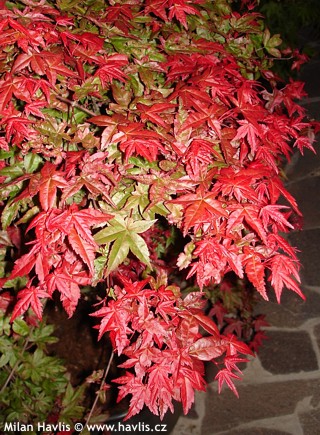
Atropurpureum is a famous and commonly used variety with deeply lobed, red-purple leaves that turn bright red and orange in autumn. They have 5 tips. It forms a multi-stemmed shrub with widely spread branches. It grows slowly and is suitable as a specimen in any garden, not just a Japanese style gar ...

3 - 6m

3 - 4m

full to partial sun

5 (down to -29°C)

for zone 5+6

for zone 7
Beni Maiko is a fantastic variety of Japanese maple with brilliant red new foliage. Its Japanese name means a red-haired dancing girl. The deciduous leaves are not large, only about 5 cm across, but their emerging colour in the spring is striking and is even more enhanced when new leaves mature in e ...

1 - 2,5m

1 - 2m

full to partial sun

5b (down to -27°C)

for zone 5+6

for zone 7
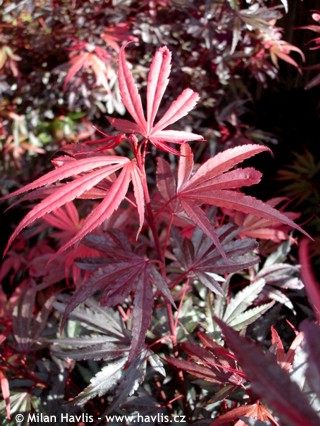
Bi-hoo is a new Japanese maple variety found by maple enthusiast, Mr.Masayoshi, in Japan in 1993. It was introduced and licensed in Europe by Maillot Nurseries in France in 2004. It is valued predominantly for its stunning colour in autumn and winter when the stronger branches and stems gain golden ...

2 - 3m

1,5 - 2m

full to partial sun

5b (down to -27°C)

for zone 5+6

for zone 7
Fireglow is a red-leaved Japanese maple variety from Italy. It is similar to Bloodgood with less vigorous growth and brighter red colour, and Atropurupureum with more upright habit and richer leaf colour. Leaves are palmate, 5-lobed, deciduous, glowing crimson red when they emerge and shiny burgundy ...

2 - 4m

2 - 4m

full sun

5 (down to -29°C)

for zone 5+6

for zone 7
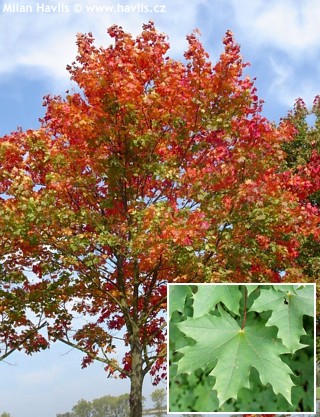
Jerre Schwartz Japanese maple was bred by one of the prominent American lovers and growers of Japanese maples, Billy Schwartz of the Green Mansions Nursery in Pennsylvania, and it was introduced to the market in 2005. It belongs to the dwarf varieties, as at the age of 15 years, it is no more than a ...

1,5 - 2,3m

1 - 1,5m

full to partial sun

5 (down to -29°C)

for zone 5+6

for zone 7
Katsura is a Japanese maple that is highly decorative especially in spring, when new leaves emerge, and in autumn, when they change again. They are typically palmate, rather small, 5-lobed, chartreuse yellow-green with coppery margins in early spring, rich green in summer, and glowing golden-yellow ...

1,5 - 3m

1,5 - 3m

full to partial sun

5 (down to -29°C)

for zone 5+6

for zone 7
The variety name of Osakazuki Japanese maple seems to refer to the third largest city in Japan, Osaka, which is renowned for its extensive vineyards that replaced cotton fields. There could be at least two reasons for choosing it – either in reference to its bright carmine red autumn leaves which co ...

3 - 7m

3 - 5m

full to partial sun

5 (down to -29°C)

for zone 5+6

for zone 7
Red Emperor is another red-leaved Japanese maple, this time from the USA, where it was introduced in 1976 by Dick Wolff from Red Maple Nursery in Pennsylvania. He was an enthusiastic lover of the vibrant shades of red and maroon leaves on Japanese maples, and he was especially proud of his Red Emper ...

4 - 6m

2 - 4m

full to partial sun

5 (down to -29°C)

for zone 5+6

for zone 7
Seiryu is a Japanese maple variety from the dissectum group. Its delicate leaves are deeply cut like a lace, deciduous, they emerge yellow to lime green with red tips in spring, mature to soft green in summer, and turn fantastic shades of gold, orange and red in autumn. It grows rather fast into a w ...

3 - 5m

3 - 4m

full to partial sun

5 (down to -29°C)

for zone 5+6

for zone 7
If you google red-leaved Japanese maples I am sure that, amongst the oldest varieties such as Bloodgood and Atropurpureum, you will find this nice piece: Shaina. Unlike the previously mentioned cultivars Shaina is everyone’s love as it offers advantages that come in handy for gardeners-beginners.
...

1 - 2m

1 - 1,5m

full to partial sun

5 (down to -29°C)

for zone 5+6

for zone 7
Japanese maple Skeeter's Broom is a witch's broom found on an older and popular variety Bloodgood. It differs from the parent plant in more ways - it is smaller, more compact, and has foliage of a richer red.
Skeeter's Broom maple produces deciduous, palmate, 5-lobed leaves which emerge glowin ...

2 - 3m

1 - 1,5m

full sun

5 (down to -29°C)

for zone 5+6

for zone 7
Summer Gold is a special Japanese maple with yellow-green foliage that is very resistant to heat and sun, and is commonly grown in locations where yellow and green coloured maples fail to perform. The leaves are 5 or 7-lobed, palmate, bright golden or almost orange yellow with some salmon orange-pin ...

2 - 3m

2 - 3,5m

full to partial sun

5b (down to -27°C)

for zone 5+6

for zone 7
Garnet is one of the top selling Japanese maples ever. It has been popular around the world for many decades. Its filigree leaves are deeply cut = dissected, hence its name. They look like giant snowflakes cut in pieces and densely cover even young plants. The colour show begins with vibrant red in ...

1 - 2m

1 - 2,5m

full to partial sun

5 (down to -29°C)

for zone 5+6

for zone 7
It is hard to believe that only a few bare branches, which you can see in winter, can develop into such a stunning thing. Foliage of this shrub almost looks like a fluffy hairdo of a red-haired lady. The leaves are deeply cut and when young they are glossy and brownish-red, in summer they turn to de ...

1 - 2m

full to partial sun

5 (down to -29°C)

for zone 5+6

for zone 7
Tamukeyama is an old variety of Japanese maple. It is mentioned in Japanese literature as early as in 1710. It is one of the most preferred varieties among nurseries around the world thanks to its reliable yearly growths, strong branches and suitability for very hot locations. It can do well even in ...

1,5 - 2m

1,5 - 3m

full sun

5 (down to -29°C)

for zone 5+6

for zone 7
Sango-kaku is a Japanese maple that has so many colours that we are lost for words. Its main attraction is the colour of bark which is orangey-red in summer and bright coral red in winter. The palmate leaves have 5 lobes and emerge orangey-yellow with salmon pink shades, changing to light green or y ...

2 - 4m

1 - 2,5m

semi-shade / partial sun

5 (down to -29°C)

for zone 5+6

for zone 7
This maple Shishigashira received a name Lion’s Head. Its leaves are small, deeply cut and curled, forming dense tufts along twisted branches. The foliage is bright green or yellow-green in spring and summer, turning orange and rust-red very late in autumn or early winter. In a good year when ...

1,3 - 2,5m

1 - 1,8m

full to partial sun

5 (down to -29°C)

for zone 5+6

for zone 7
Norway maple is a native European tree commonly cultivated in countries and regions with harsh winters. It is one of the most common street and park in Czech and Slovak republics. Its tolerance against pollution, low winter temperatures, and vigorous growth made it a useful tree for almost all place ...

15 - 25m

10 - 20m

full to partial sun

3 (down to -40°C)

for zone 5+6

for zone 7
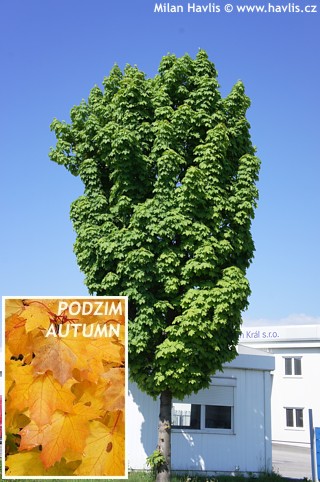
Columnare is a slender form of Norway maple with deciduous, 10-15 cm across, broadly palmate leaves that are green in summer and turn golden orange and bright yellow in autumn. The crown is very narrow – only about 3m wide in 15-20 years, and rather dense. Pruning is usually not required but c ...

15 - 18m

3 - 5m

full to partial sun

for zone 5+6

for zone 7
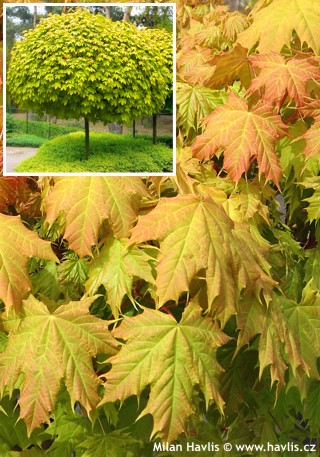
Crimson King is a majestic looking maple tree for large gardens, parks, and city avenues. Its palmate leaves are dark crimson red, almost black, and glossy, turning orange-red in autumn. In the spring, just as leaves emerge, it flowers profusely with many small yellow flowers, typical for many Norwa ...

10 - 15m

5 - 9m

full to partial sun

3 (down to -40°C)

for zone 5+6

for zone 7
Drummondii is a variegated form of Norway maple, only some 100 years old. The decades from its birth proved its popularity which is still very high. The leaves are beautifully creamy white variegated at the margins, with bright green centres.
Apart from pruning at the end of winter, should you wis ...

5 - 8m

2 - 3m

semi-shade / partial sun

4 (down to -34°C)

for zone 5+6

for zone 7
Golden Globe is a dwarf Norway maple i.e. one of those with large leaves as opposed to Japanese maples with small and dissected foliage. One of the big advantage of Norway maple is its resistance against majority of common tree diseases and pests. And it will grow almost anywhere.
Golden Globe va ...

IV - V

2 - 4m

3 - 4m

full sun

4 (down to -34°C)

for zone 5+6

for zone 7
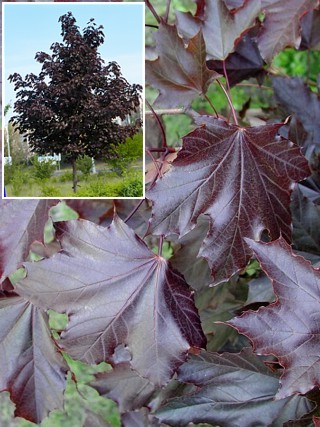
Royal Red is a Norway maple variety you cannot mistake – its leaves emerge in a rich wine-red, deepen to dark maroon in summer, and blaze amber to fiery orange in autumn. In early spring, before the canopy fully leafs out, clusters of small yellow flowers appear, creating a striking contrast against ...

10 - 15m

6 - 12m

full sun

3 (down to -40°C)

for zone 5+6

for zone 7
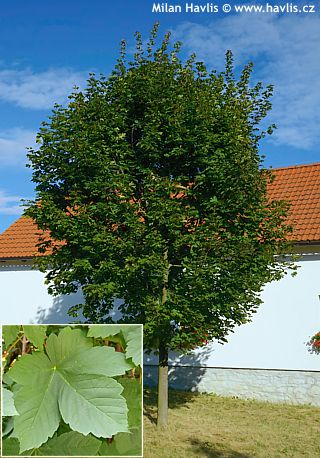
Sycamore tree is one of our native maple species and its natural habitat extends vertically from the north of Europe (with the exception of the northernmost peaty locations) to the mountainous areas of southern Europe, and horizontally from the colder parts of western Europe to the Caucasus. It is o ...

15 - 30m

10 - 20m

full to partial sun

3 (down to -40°C)

for zone 5+6

for zone 7
Men usually get mad when women describe colours with expressions like salmon pink, peachy red etc. Well, men, get ready for another hit below the belt: we have a tree whose leaves are SHRIMP pink. Not familiar with that colour? Go to the nearest restaurant and have a prawn-cocktail to see what the f ...

IV - V

3 - 7m

3 - 5m

full sun

4 (down to -34°C)

for zone 5+6

for zone 7
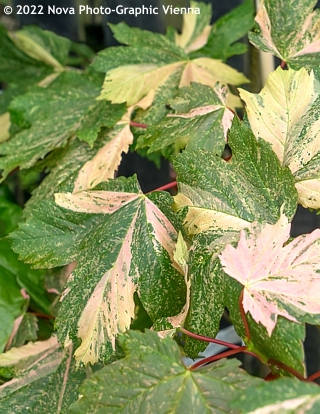
Simon-Louis Frères is a beautiful sycamore maple variety from France introduced in 1881. Its leaves emerge bright pink and as they unroll and mature, each leaf becomes uniquely marbled white and green in various portions. They are deciduous, coarsely-serrate, 5-lobed, and have red stalks. In au ...

3 - 6m

1,5 - 3m

full sun

4 (down to -34°C)

for zone 5+6

for zone 7
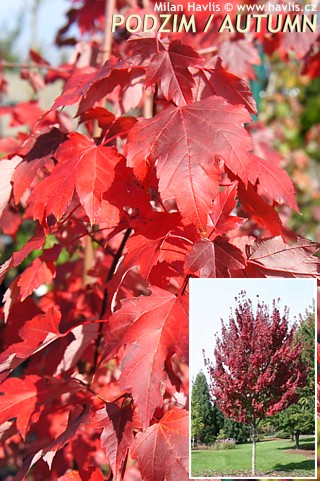
Red maple is one of the most spectacular big-sized trees suitable for large gardens, parks or city avenues. It has mid-sized leaves that are green in summer, changing to yellow, orange and predominantly red in autumn. Seedling vary with autumn shades.
It grows moderate fast into an almost regular ...

12 - 18m

5 - 9m

full sun to shade

3 (down to -40°C)

for zone 5+6

for zone 7
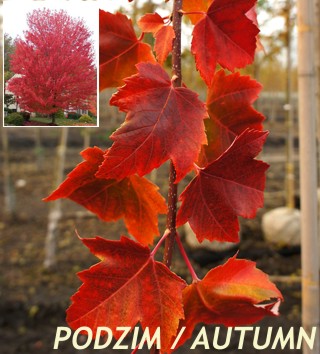
Red maple is one of the most spectacular big-sized trees suitable for large gardens, parks or city avenues. October Glory is a variety cultivated for its smaller size and fantastic autumn foliage colour. It has mid-sized leaves that are glossy and green in summer, changing to orange and red in early ...

9 - 13m

4 - 6m

full to partial sun

5 (down to -29°C)

for zone 5+6

for zone 7
Red Sunset belongs to the top favourite scarlet maples. It makes eye-catching display of autumn colour. Its deciduous leaves are three-lobed, mid-sized, rich green in summer and bright scarlet red in autumn. It grows fast, forming a widely oval, upright canopy. The crown is dense and needs no traini ...

15 - 18m

9 - 12m

full to partial sun

3 (down to -40°C)

for zone 5+6

for zone 7
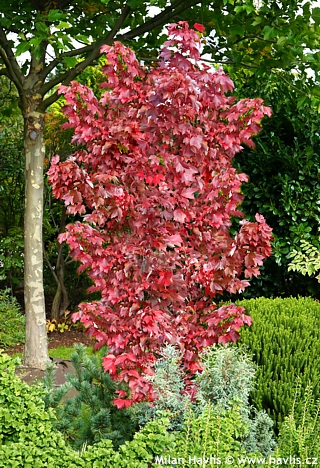
MORGAN is a beautifully coloured variety of scarlet maple, which was discovered in 2002 by Ray Tate from the Angel Creek Nursery in Bishop, Georgia, USA. It was a single mutation among a number of October Glory seedlings planted at a nearby nursery in Morgan County. Among the 58 existing varieties o ...

10 - 20m

6 - 12m

full to partial sun

3 (down to -40°C)

for zone 5+6

for zone 7
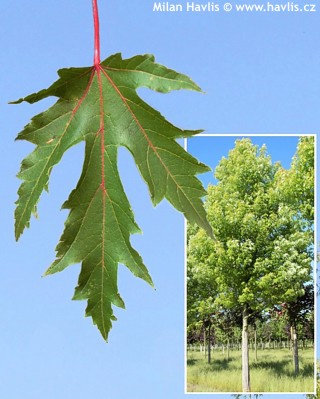
Pyramidale is a silver maple variety with attractive, deeply cut foliage with prominent red veins. The leaves are deciduous, rich green in summer, turning yellow, golden and orange-red in autumn. The tree forms a widely columnar canopy and is fast growing. Its branches may have a tendency to break, ...

12 - 18m

4 - 6m

full to partial sun

4 (down to -34°C)

for zone 5+6

for zone 7
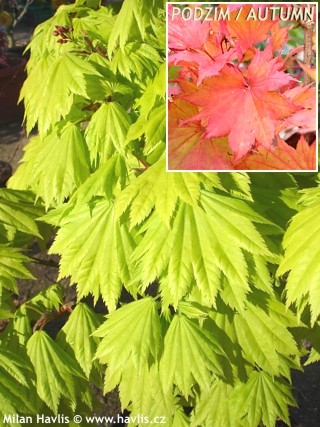
“Aureum” is variety that differs from others by its more or less erect growth with horizontal lateral branches. The fan-shaped leaves are fresh yellow-green to golden yellow, sometimes with pinkish margins. The other difference is fruit: Acer shirasawanum holds its samaras above the foli ...

2 - 4m

semi-shade / partial sun

5b (down to -27°C)

for zone 5+6

for zone 7
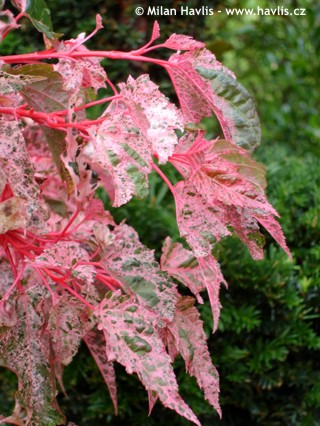
Shirasawan’s maple is a sought-after species of Japanese maple valued mostly for its unique leaf shape. To date (July 2020) there are 17 recognized varieties, and MOONRISE is a recent introduction from the USA where its inventor Carl A. Munn patented it as PP16718 in 2004. He discovered it in ...

IV - V

3 - 5m

2 - 4m

full to partial sun

5 (down to -29°C)

for zone 5+6

for zone 7
Even among a hundred trees you will notice Red Flamingo hybrid snake-bark maple first. Such a colourful small tree must have been brought directly from Mars where red is constantly in vogue. It is a stunning variety making a breathtaking display wherever you put it. Its key features are the leaves a ...

2 - 4m

1,5 - 3m

full to partial sun

6 (down to -23°C)

for zone 5+6

for zone 7
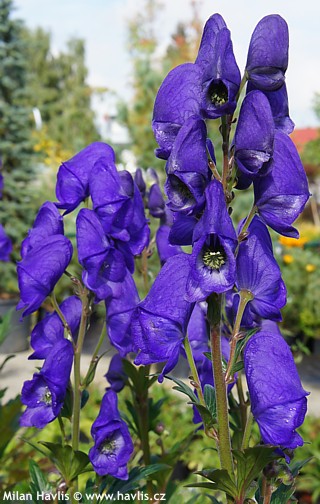
If you love the character of ornamental grasses, you’ll likely fall for this – to be botanically correct – non-grass 😊. Its name is Ogon and it is a cultivar of sweet flag that shines like a jewel thanks to its leaf colouration. It immediately draws attention with its bright yellow leaves ad ...

0,3 - 0,4m

0,4 - 0,5m

full sun

5 (down to -29°C)

for zone 5+6

for zone 7
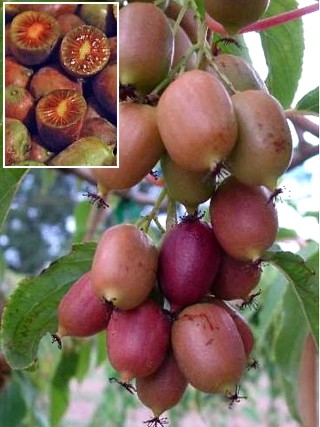
Issai is a self-fertile variety of the so-called mini-kiwi. This means that unlike the species it does not need a male and a female plant to produce fruit. Apart from tasty fruit it is a nice plant, too, with deep green leaves and scented flowers in June.
It is a vine that is less vigorous that the ...

V - VI

3 - 6m

full sun

4 (down to -34°C)

for zone 5+6

for zone 7
Ken’s Red is a female variety of the so-called mini-kiwi (kiwiberry). It is a vine that is less vigorous that the species. Apart from tasty fruit it is a nice plant, too, with deep green leaves and scented flowers in June.
Its fruit has smooth skin, and both skin and flesh have various shades ...

VI - VI

2 - 6m

full sun

5 (down to -29°C)

for zone 5+6

for zone 7
Jenny is another self-fertile variety of kiwi. This means that it does not need a male and a female plant to produce fruit. Apart from tasty fruit it is a nice plant, too, with deep green leaves and scented flowers in June.
It is a vine that bears hairy, brown fruit of the same taste and shape like ...

VI - VII

3 - 4m

full sun

6 (down to -23°C)

for zone 5+6

for zone 7
There are a number of hyssop species found in mostly temperate climate and only a few of them can survive winters of zones 5 or 6. This short-lived perennial is ideal for dry climates which is perhaps why Thompson&Morgan came up with this hardy hybrid called Apricot Sprite. If planted in well-draine ...

VII - X

0,3 - 0,5m

0,3 - 0,5m

full sun

6 (down to -23°C)

for zone 5+6

for zone 7
The active ingredient is cold‑pressed oil from Pongamia pinnata (karanja oil), which contains natural compounds with insecticidal and fungicidal properties. It acts by contact and as an antifeedant – disrupting the cuticle and respiratory system of pests, leading to their death. At the same ti ...
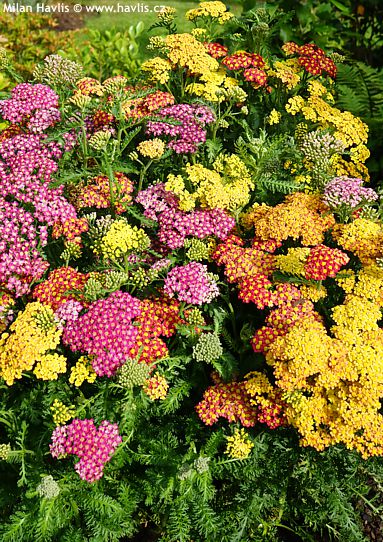
I'm not a huge fan of multi-coloured combinations — I admit that. But when I visited the Plantarium trade fair in 2023 and saw the exhibition by the Dutch company Florensis, showcasing their rising star — a modern yarrow series called Milly Rock, planted in mixed containers with three to five shade ...

VI - IX

0,3 - 0,4m

0,3 - 0,4m

full sun

3 (down to -40°C)

for zone 5+6

for zone 7
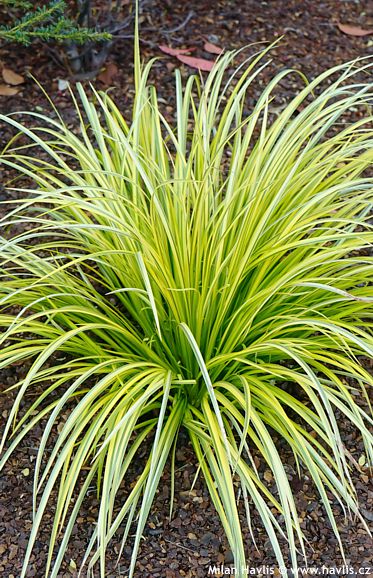
Skysail Yellow is a yarrow variety from the Skysail series brought by the Dutch company Dümmen Orange. It makes bright yellow flowers that turn beige to pale orange as they mature while the centres remain deep yellow. It begins to bloom in June atop short and firm stems only 30-40 cm in height, and ...

VI - VIII

0,3 - 0,4m

0,3 - 0,4m

full sun

3 (down to -40°C)

for zone 5+6

for zone 7
Apple Blossom yarrow, a literal translation of the original and preferred German name ‘Apfelblüte’, is a variety created by German breeder A. Kikillus. It features soft pink flowers in almost flat terminal corymbs made up of delicate flower heads. Flowering begins in June and continues through Septe ...

VI - IX

0,6 - 0,8m

0,3 - 0,4m

full sun

3 (down to -40°C)

for zone 5+6

for zone 7
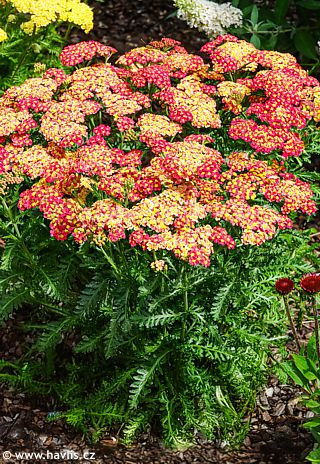
MILLY ROCK™ RED yarrow makes warm red flowers with yellow centres composed in almost flat corymbs atop about 30-40 cm tall stems. Flowering begins in June and continues until late August. Fern-like leaves are finely cut and rich grass green, basal leaves are larger than stem leaves. Removing s ...

VI - VIII

0,3 - 0,4m

0,3 - 0,4m

full sun

3 (down to -40°C)

for zone 5+6

for zone 7
Metallica Crispa is a striking cultivar of pyramidal bugleweed, a species native to alpine regions of Europe. Unlike the more vigorous A. reptans, this form grows in compact rosettes and spreads slowly. Its foliage is highly ornamental and semi-evergreen in mild climates. The leaves have a metallic ...

VI - IX

0,1 - 0,2m

0,3 - 0,5m

full to partial sun

3 (down to -40°C)

for zone 5+6

for zone 7
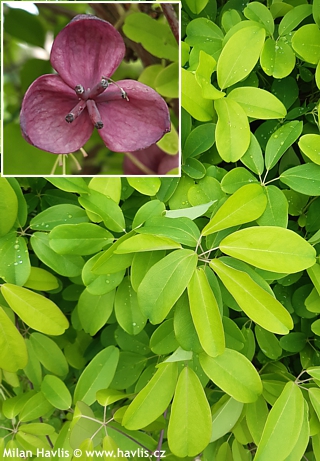
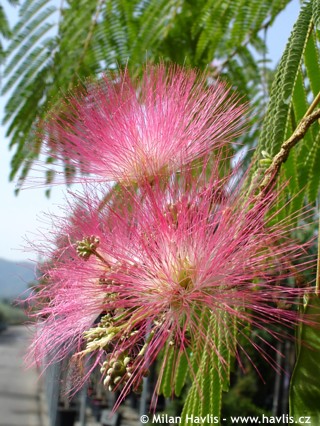
Mimosaceae plants are common and popular mainly in southern Europe for their high tolerance to drought as well as attractive and long lasting flowering. Even though they come from subtropical parts of the world there is one species hardy enough to be grown in our climate - silk tree.
Silk tree come ...

VII - IX

3 - 5m

3 - 6m

full sun

6 (down to -23°C)

for zone 5+6

for zone 7
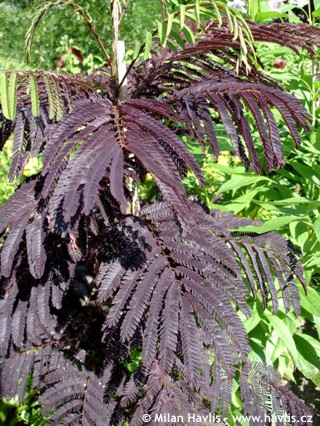
Evi's Pride (also spelled Evey's Pride) is a purple-leaved form of silk tree which boasts with better hardiness and richer flowering as opposed to Summer Chocolate®. Its flowers are rich pink, hairy spheres with nearly white centres, 3-5 cm large and with a sweet fragrance. Fern-like, compound ...

VII - VIII

3 - 5m

3 - 6m

full sun

6 (down to -23°C)

for zone 5+6

for zone 7
Rouge Selection is a French silk tree introduction of similar characteristics to Ombrella® variety. It grows faster and a little taller and exhibits a purple tint on young leaves. Its flowers are sweetly scented, rich pink, 3-5 cm wide, hairy spheres with white centres. They bloom from early Ju ...

VII - VIII

3 - 6m

3 - 6m

full sun

6 (down to -23°C)

for zone 5+6

for zone 7
A spectacular new variety of silk tree comes from Japan and is called Summer Chocolate®. It was discovered in 1990 as a seedling in a controlled planting of Albizia julibrissin in 1990. It was patented in the USA under PP 13,822 in 2003. It is considered a rarity for lovers of exotic-looking pl ...

VII - VIII

2 - 5m

2 - 5m

full sun

6b (down to -21°C)

for zone 5+6

for zone 7
Ombrella® belongs to the hardy group. It was a chance selection from France which was observed and cultivated, and later on patented under the name Boubri. It differs from the species by darker leaves and deeply coloured flowers.
Exotic looking flowers are pinky-red, hairy spheres with yellowi ...

VII - IX

2 - 6m

1 - 3m

full sun

6 (down to -23°C)

for zone 5+6

for zone 7
TROPICAL DREAM is a silk tree variety from Belgium where it was selected by Johan Possemiers around 1984. It was selected among many seedlings raised from seeds collected around Seoul in South Korea. Though, it took many years to reach the trade as only in 2015 it was first introduced at Plantarium ...

VII - VIII

3 - 5m

3 - 6m

full sun

6 (down to -23°C)

for zone 5+6

for zone 7
Ambassador is a hybrid variety of large flowered ornamental onion. It makes up to 15 cm across flowers heads composed of numerous small, sterile, striking rich purple violet flowers from end May until early July. The inflorescences are very dense and similar to a.giganteum species, only flowering a ...

VI

1 - 1,3m

0,2 - 0,2m

full sun

4 (down to -34°C)

for zone 5+6

for zone 7
Gladiator is a hybrid variety of large flowered ornamental onion. It makes up to 15 cm across flowers heads composed of numerous star-shaped, rich violet flowers from early June until early July. They appear atop strong and sturdy stems that grow about 90 cm tall. Strap-shaped, basal leaves are ligh ...

VI

0,8 - 1m

0,2 - 0,2m

full sun

4 (down to -34°C)

for zone 5+6

for zone 7
Globemaster allium produces possibly the largest flower heads among all ornamental onions registered so far. They are commonly 18-20 cm across, and under ideal growing conditions with plenty of fertilizing they can reach up to 28 cm. The flower heads are composed of numerous star-shaped, lilac viole ...

VI - VII

0,6 - 0,8m

0,2 - 0,3m

full sun

4 (down to -34°C)

for zone 5+6

for zone 7
Ostara is a unique variety of ornamental onion. It is an interspecific hybrid between the low-growing species a. karataviense and purple-flowered species a. atropurpureum. The result is a beautiful variety with large, broad leaves and stems that are shorter than usual: only some 30-40 cm high. They ...

VI - VII

0,3 - 0,4m

0,2 - 0,3m

full sun

4 (down to -34°C)

for zone 5+6

for zone 7
Pinball Wizard is a hybrid variety of ornamental onion, a cross between a.macleanii and a.cristophii. It produces extremely large globes of star-shaped, violet flowers from late May until late June. The inflorescence is up to 20 cm across, and strong stems reach only about 50-60 cm. Strap-shaped, b ...

V - VI

0,5 - 0,6m

0,2 - 0,2m

full sun

5 (down to -29°C)

for zone 5+6

for zone 7
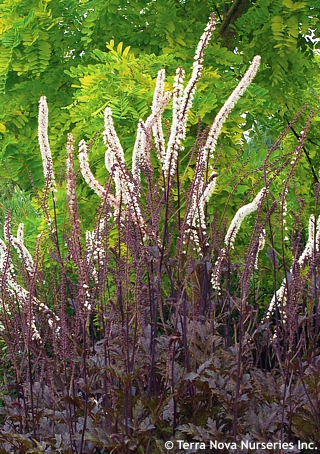
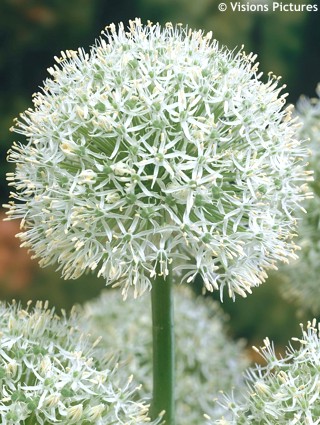
Ornamental onions, too, have their white sheep in the herd. This beauty is called Mount Everest and is a large flowered variety of Persian onion from Central Asia. It makes 12-14 cm across flower heads composed of numerous star-shaped, pure white flowers with beige stamens in June for about 3 weeks. ...

VI

0,6 - 0,8m

0,2 - 0,2m

full sun

3 (down to -40°C)

for zone 5+6

for zone 7
Common alder is a European native plant. There are varieties, however, that are very uncommon and I am not afraid to say exquisite. Such as this variety: Imperialis.
Imperialis alder bears mid-green, deciduous, very deeply cut, 4-8 cm long, narrow leaves that look like tiny witches’ brooms. B ...

5 - 8m

2 - 4m

full sun

3 (down to -40°C)

for zone 5+6

for zone 7
Saskatoon is a native Canadian species of juneberry. It is cultivated for very tasty and juicy fruit which are deep purple to blue-purple berries similar to blueberries. They are formed in short clusters and best picked when fully ripe = when it turns the deepest colour. It can be used in any way yo ...

IV - IV

1 - 3m

1 - 1,5m

full sun

1 (down to -46°C)

for zone 5+6

for zone 7
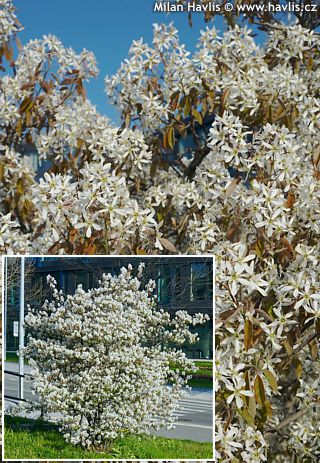
Juneberry and downy serviceberry species are popular shrubs and trees that are celebrating their renaissance at the beginning of the new millennium. They belong to both ornamental plants as well as fruit trees which is why they are regaining interest. They are very easy to grow and can cope even wit ...

IV - IV

4 - 8m

2 - 4m

full sun

4 (down to -34°C)

for zone 5+6

for zone 7
Juneberry is a large shrub cultivated mostly for its delicious and healthy fruit. It is a large deciduous shrub or a small tree.
Flowers are star-shaped, white and scented and appear in mid spring. Oval leaves are up to 8 cm long, emerge bronze and mature to green colour, turning scarlet red or dee ...

IV - V

2 - 6m

2 - 5m

full sun

4 (down to -34°C)

for zone 5+6

for zone 7
Blue Ice is a variety of bog rosemary with bright silvery blue leaves. They are linear-lance-shaped, 2-3 cm long. Urn-shaped flowers appear from mid spring until early summer and are light pink. It is a slow growing, mound-forming or ground-covering.
It loves moist to wet places with humus-rich, co ...

V - VI

0,2 - 0,6m

0,6 - 1m

full to partial sun

2 (down to -45°C)

for zone 5+6

for zone 7
Compacta is a dwarf bog rosemary with green foliage and profusion of light pink flowers. Leaves are rosemary-like, linear-lance-shaped, 2-3 cm long. Urn-shaped flowers are paler than on Nikko variety and appear in abundance from end April until early June. It is a slow grower forming a neat cushion ...

IV - VI

0,2 - 0,3m

0,2 - 0,4m

full to partial sun

2 (down to -45°C)

for zone 5+6

for zone 7
Blue Shades is a selection of Balkan anemone with larger and deeper violet blue flowers. They rise only a few centimeters above rich green foliage which remains nice for only about 2 months after flowering, and then the whole plant goes dormant until the next spring.
This anemone like moist, humus ...

III - IV

0,1 - 0,1m

full to partial sun

5b (down to -27°C)

for zone 5+6

for zone 7
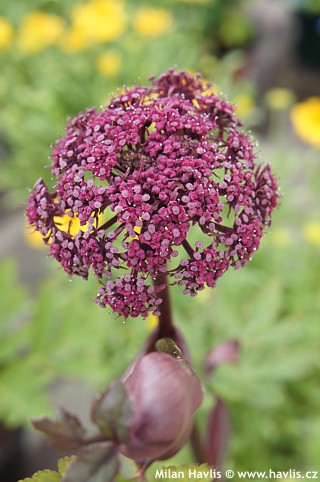
Giant angelica is a bold-leaved perennial with very unusual flowers. They are formed in deep purple-red umbels, borne on 1.5-1.8m tall, strong stems, and appear from late July until early September. Leaves are large, divided in the manner that they look like palmate, mid green, and deciduous.
Wild ...

VII - IX

1,3 - 1,8m

0,5 - 0,8m

full to partial sun

6 (down to -23°C)

for zone 5+6

for zone 7
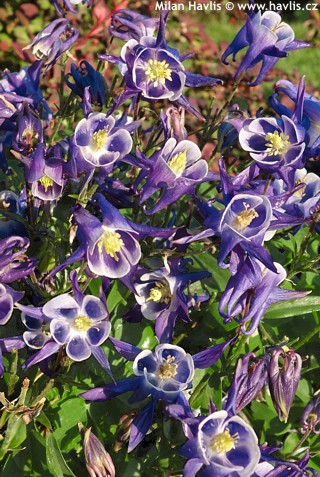
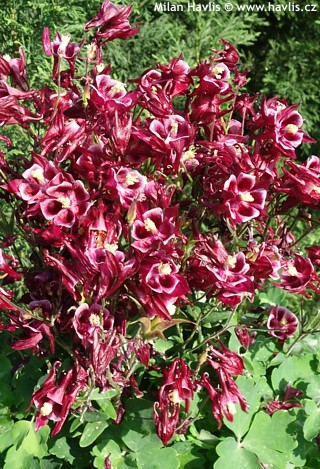
WINKY series of columbine comprises of strong varieties of several colors. They form compact and symmetrical clumps which look like precisely hand-tied bouquets. WINKY Red White produces unique, glossy flowers of rich burgundy red colour with white margins. They are borne atop about 60 cm tall stems ...

IV - VI

0,5 - 0,6m

0,3 - 0,4m

full to partial sun

2 (down to -45°C)

for zone 5+6

for zone 7
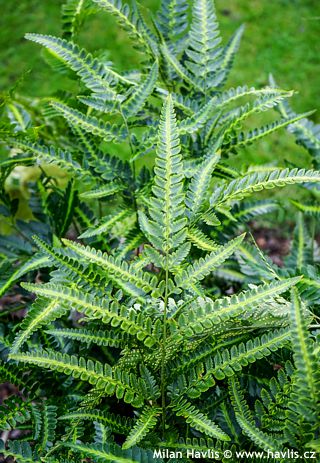
Simpler East Indian hollyfern is one of the few outdoor ferns with variegated leaves. Its name simplicior refers to the difference with a. aristata, compared to which it has shorter leaves with conspicuously separated lateral petioles with leaves of the second pinnacle - they are bi-pinnate. Moreove ...

0,3 - 0,5m

0,5 - 0,8m

semi-shade / partial sun

7 (down to -18°C)

for zone 5+6

for zone 7
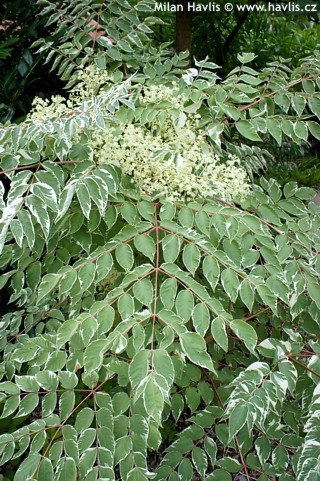
Variegata
is one of the first (or possibly the very first) variegated mutation of Japanese angelica tree which probably explains it rather botanical, charmless name. Nonetheless the plant itself is charm impersonified! It produces giant frond-like foliage, compound of 5-6 cm long, broadly obovate t ...

VIII - IX

2 - 4m

2 - 3m

full to partial sun

4 (down to -34°C)

for zone 5+6

for zone 7
Robusta Gheri is a sought‑after selection of the monkey puzzle tree, combining greater strength with enhanced cold tolerance. Its branches are thicker, carry denser foliage and give the whole plant a more compact, muscular look, as if the tree had a little more power stored inside. The leaves ...

6 - 20m

6 - 10m

full sun

6 (down to -23°C)

for zone 5+6

for zone 7
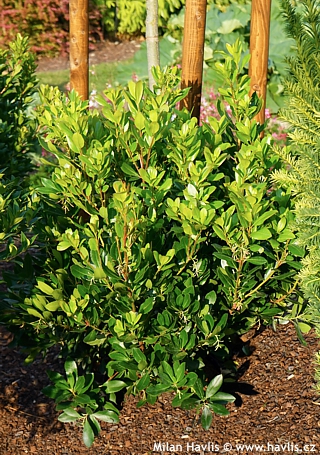
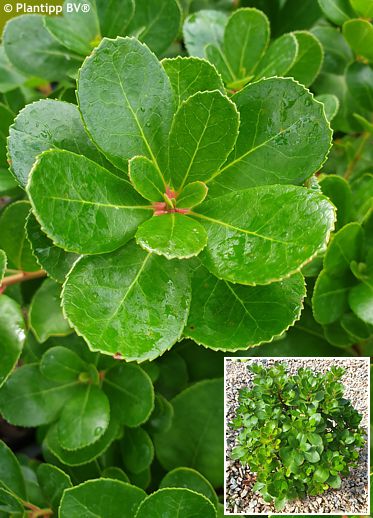
Atlantic is a French variety of strawberry tree selected and introduced by the Pepinieres Minier in 1993. It boasts a neat and well-behaved, more upright habit, dense branching, and improved hardiness. Its evergreen leaves are narrowly obovate, 5-7 cm long, finely serrated at margins, they emerge br ...

V

2 - 3m

1 - 2m

full sun

6 (down to -23°C)

for zone 5+6

for zone 7
Compacta is a strawberry tree selection found many years ago as a seedling of the species. It boasts a neat and well-behaved habit, dense branching, and improved hardiness. Its evergreen leaves are narrowly obovate, 5-7 cm long, finely serrated at margins, they emerge bronze red and remain soft gree ...

IX - V

1,5 - 3m

1 - 2m

full to partial sun

6 (down to -23°C)

for zone 5+6

for zone 7
Rubra is a common name for all forms of strawberry tree with red flowers. Only those plants which also boast other distinct features were selected and registered as individual varieties. It makes evergreen, narrowly oval to obovate, 6-10 cm long, leathery leaves with serrated margins, more conspicuo ...

X - V

2 - 4m

2 - 4m

full to partial sun

6b (down to -21°C)

for zone 5+6

for zone 7
Quercifolia is a rare, collector’s selection of strawberry tree that differs from the species in both leaf shape and growth habit. The epithet Quercifolia is common in botanical usage and means “oak‑leaved”; also here it refers to the unusual leaf form, which bears several shallow notches towa ...

XI - XII

1,5 - 4m

1,5 - 4m

full sun

6 (down to -23°C)

for zone 5+6

for zone 7
MERCURIUS is a French variety of hardy strawberry tree, bred by Jean Giraudet from the French nursery Pépinières du Bocage in Sèvremont, near the city of Nantes in the west of France, and introduced in 2020. This is an absolutely adorable shrub with a slower growth and almost rounded ...

IX - XI

0,7 - 1,5m

0,8 - 1,5m

full sun

6b (down to -21°C)

for zone 5+6

for zone 7
PEACE AND LOVE is a French cultivar of strawberry tree, selected by François Leverge in 2008 at his nursery Pépinière Le Verge in Brittany. The cultivar is protected under European law CPVO EU 69807 with the breeder’s name ‘Levap’ (2025). The trade name PEACE AND LOVE evokes harmony and positiv ...

X - XI

1,5 - 2m

1 - 1,5m

full to partial sun

6 (down to -23°C)

for zone 5+6

for zone 7
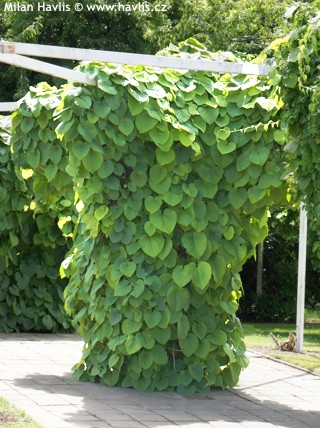
Dutchman's pipe is a vigorous climber native to America, found in moist woodlands from N.E.Canada to S.E.USA. It is cultivated for its dramatic large foliage which looks as if just escaped from a rainforest. The deciduous leaves are 10-30 cm across, fresh green, heart-shaped. In summer small pipe-li ...

VII - VIII

5 - 9m

3 - 9m

full to partial sun

4 (down to -34°C)

for zone 5+6

for zone 7
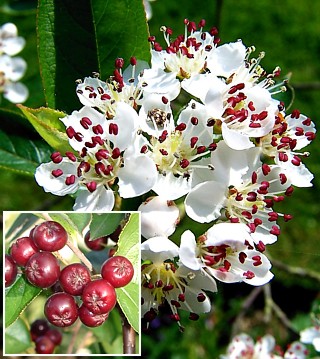
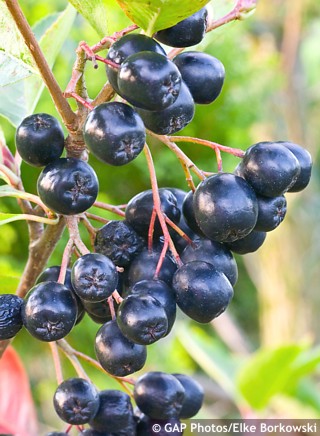
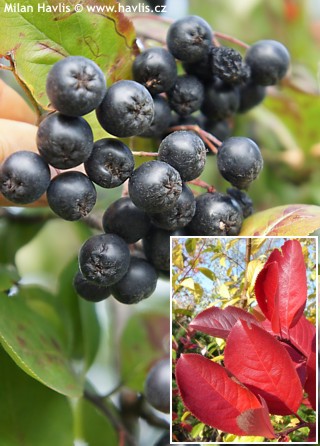
Brilliant is one of the latest varieties of purple chokeberry which is a hybrid between red and black chokeberry. So far you can find it listed under three names: a.melanocarpa, a.arbutifolia, and a. x prunifolia which is probably the most correct name. It is cultivated for several reasons, and the ...

V - V

1 - 2,5m

1 - 1,5m

full sun

4 (down to -34°C)

for zone 5+6

for zone 7
Nero is a Slovak variety of purple chokeberry with large fruit and leaves purple tinged on the reverse. The lustrous fruits are black, about twice as big as black currant berries, and are rich in vitamin C and other important microelements such as ferrum and iodine. They can be eaten fresh, in fruit ...

V - V

1,5 - 2m

1 - 2m

full to partial sun

3 (down to -40°C)

for zone 5+6

for zone 7
Lords-and-ladies is an old favourite among tuberous plants. And as you can tell by the Latin name, it does not come from Bangladesh though it looks rather exotic.
The arrow-shaped leaves are very attractive, marbled green with conspicuous creamy white or yellowish veins. They are popular for flower ...

V - V

0,2 - 0,4m

full to partial sun

5 (down to -29°C)

for zone 5+6

for zone 7
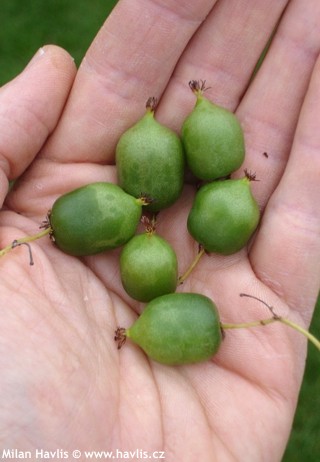
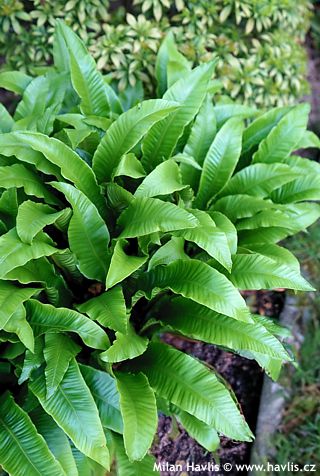
Hart’s tongue fern is an attractive species with large, evergreen leaves. It was widespread in Europe, West Asia, and North America but in some locations including Czech Republic it is already listed among endangered species.
Hart’s tongue fern is the only hardy fern with entire foliag ...

0,3 - 0,4m

0,4 - 0,5m

semi-shade to shade

5 (down to -29°C)

for zone 5+6

for zone 7
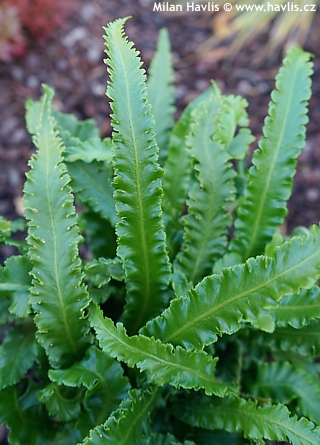
Crispum is a hart’s tongue fern variety from the undulatum group. Its narrow leaves are similar to Angustatum variety but exhibit gently crested margins. They are deep green, 30-40 cm long, dark green, highly glossy, and withstand deep frost without damage, only during very cold spells they ma ...

0,3 - 0,4m

0,4 - 0,5m

semi-shade to shade

5 (down to -29°C)

for zone 5+6

for zone 7
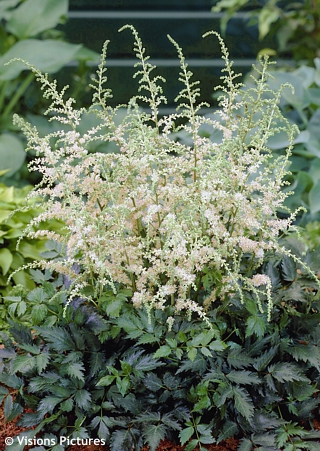
Darwin’s Snow Sprite is a dwarf astilbe from the simplicifolia group. It makes delicate, almost fern-like, elegantly incised at margins, deep green and highly glossy leaves. They are deciduous and emerge bronze tinged. Snow white flowers are formed in loose plumes atop only some 20 cm tall, sl ...

VII - VIII

0,2 - 0,3m

0,3 - 0,4m

semi-shade / partial sun

4 (down to -34°C)

for zone 5+6

for zone 7
Washington astilbe is as iconic as the White House in the US capital of the same name (plus the D.C., obviously). Elegant yet ostentatious, tall enough not to be overlooked but not so much to overshadow its surroundings, and pure in colour like the endeavour of anyone who swears an oath to his count ...

VI - VII

0,4 - 0,6m

0,3 - 0,4m

semi-shade to shade

4 (down to -34°C)

for zone 5+6

for zone 7
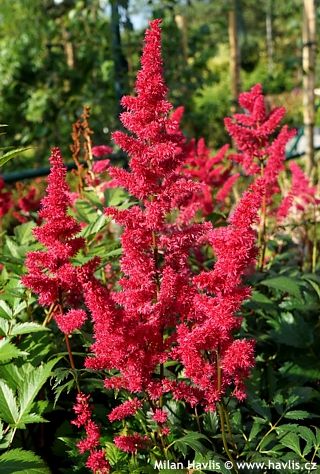
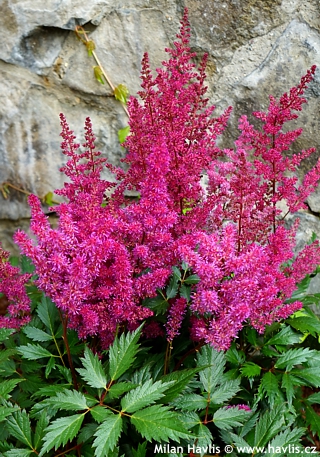
YOUNIQUE™ is a trade name of a new astilbe series from the Netherlands. Plants from this series excel in abundant flowering and healthy foliage. YOUNIQUE™ Carmine (‘Verscarmine’) is a variety from 2009, bred by Jan Verschoor, with deep carmine red flowers that look like baroq ...

VI - VII

0,3 - 0,4m

0,3 - 0,4m

semi-shade to shade

for zone 5+6

for zone 7
YOUNIQUE™ is a trade name of a new astilbe series from the Netherlands. Plants from this series excel in abundant flowering and healthy foliage. YOUNIQUE™ LILAC is a variety from 2008, bred by Jan Verschoor, with dark lilac pink flowers that look like baroque hats plumes. They bloom on 25-30 cm tall ...

VI - VII

0,3 - 0,4m

0,3 - 0,4m

semi-shade to shade

4 (down to -34°C)

for zone 5+6

for zone 7
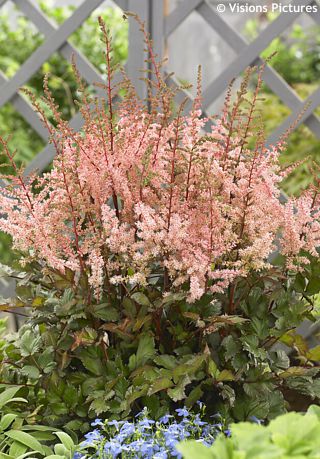
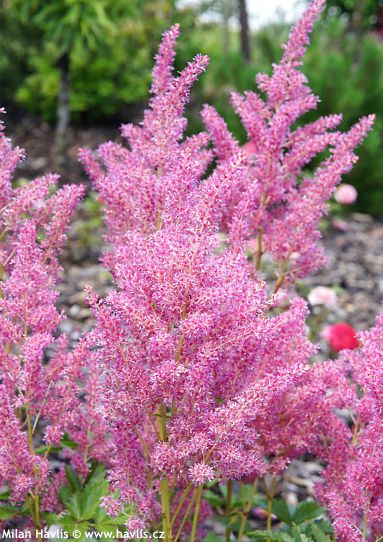
Spotlight astilbe does deserve its name. It is a spectacular variety with soft pink flowers that stand proudly above handsome, dark green, maroon-flushed leaves. They are deciduous, glossy, distinctly serrated at margins, and are usually unpalatable to any pests – especially slugs, making this ...

VII - VIII

0,3 - 0,5m

0,3 - 0,4m

full sun to shade

4 (down to -34°C)

for zone 5+6

for zone 7
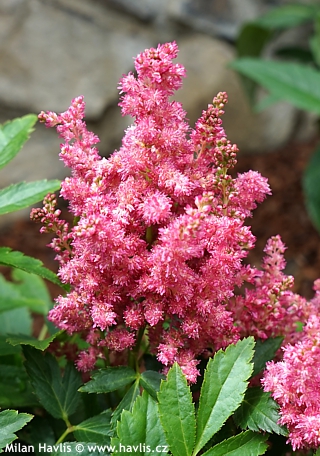
Fireberry astilbe was bred by Dutch perennial specialist Jan Verschoor as an a. arendsii x a. japonica hybrid. Patent No. PP20658 was granted in 2010. It is a compact to almost dwarf variety producing short, congested inflorescence composed of vibrant pink flowers. They open from late June atop shor ...

VI - VII

0,3 - 0,4m

0,3 - 0,4m

semi-shade to shade

4 (down to -34°C)

for zone 5+6

for zone 7
Sugarberry is a new astilbe from 2010, bred by a Dutch breeder Jan Verschoor. Astilbe is sometimes wrongly called false spiraea which is a name for sorbaria, however, this variety’s flowers do resemble spiraea x billiardii. They are soft pink, plume-like and fluffy, yet compact and dense unlik ...

VI - VII

0,2 - 0,3m

0,3 - 0,4m

semi-shade to shade

5 (down to -29°C)

for zone 5+6

for zone 7
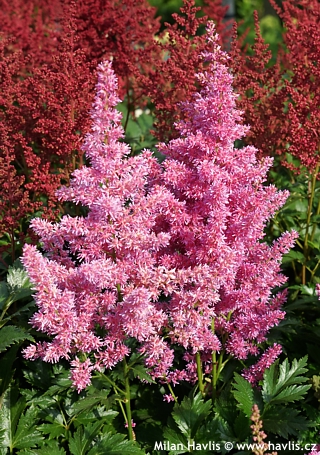
YOUNIQUE™ is a trade name of a new astilbe series from the Netherlands. Plants from this series excel in abundant flowering and healthy foliage. They are a cross between a.arendsii and a.japonica, bred by Jan Verschoor. YOUNIQUE™ Pink is variety with dense, bright bright pink plumes. They bloom on 2 ...

VI - VII

0,3 - 0,4m

0,3 - 0,5m

semi-shade to shade

4 (down to -34°C)

for zone 5+6

for zone 7
YOUNIQUE™ is a trade name of an attractive astilbe series from the Netherlands. Plants from this series excel in abundant flowering and healthy foliage. They are a cross between a.arendsii and a.japonica, bred by Jan Verschoor. YOUNIQUE™ Ruby Red brings shorter but intensely coloured plu ...

VI - VIII

0,3 - 0,4m

0,3 - 0,5m

semi-shade to shade

4 (down to -34°C)

for zone 5+6

for zone 7
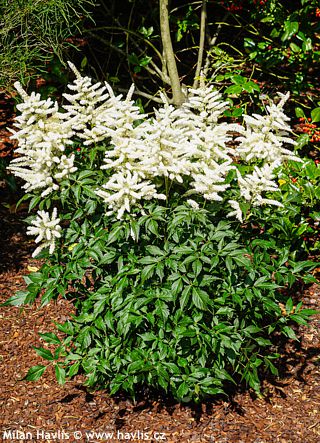
YOUNIQUE™ is a trade name of an attractive astilbe series from the Netherlands. Plants from this series excel in abundant flowering and healthy foliage. They are a cross between a.arendsii and a.japonica, bred by Jan Verschoor. YOUNIQUE™ White makes large and tall plumes of pure white co ...

VI - VIII

0,3 - 0,4m

0,3 - 0,5m

semi-shade to shade

4 (down to -34°C)

for zone 5+6

for zone 7
Gloria Purpurea is a historic cultivar of false spiraea bred by Georg Adalbert Arends around 1920, at the peak of his hybridizing work. Its pedigree includes all the species he used in his breeding: A. chinensis (for dense inflorescences and drought tolerance), A. japonica (for early flowering and a ...

VII - VIII

0,6 - 0,7m

0,3 - 0,5m

semi-shade to shade

4 (down to -34°C)

for zone 5+6

for zone 7
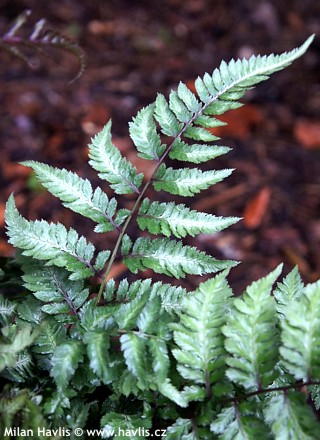
Red Beauty is a Japanese painted fern variety with pale green leaves with silver grey hues especially on young leaves whose midribs are distinctly dark magenta purple, just like its stems. As this colour disappears from the stems as the leaves mature, it remains on the midribs and contrasts beautifu ...

0,3 - 0,4m

0,3 - 0,5m

semi-shade to shade

4 (down to -34°C)

for zone 5+6

for zone 7
This variety of Japanese painted fern is a spectacular plant. Its leaves are silvery grey, almost metallic. The stems and midribs are dark maroon-purple. Such fantastic combination makes it a must have for every fern collector.
In spring cut off all foliage to encourage growth of new leaves. It ne ...

0,3 - 0,4m

0,4 - 0,5m

semi-shade to shade

4 (down to -34°C)

for zone 5+6

for zone 7
This evergreen shrub of Japanese aucuba is a commonly known favourite especially in Britain and in milder parts of humid regions of Germany and Benelux. The first specimen was brought from Japan to Europe in 1783, and has been sought after ever since for its beautifully varigated/golden-spotted leav ...

1 - 1,5m

1 - 1,5m

semi-shade to shade

6 (down to -23°C)

for zone 5+6

for zone 7
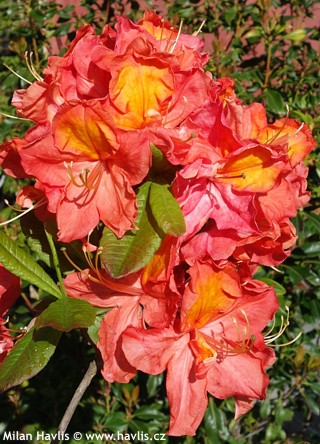
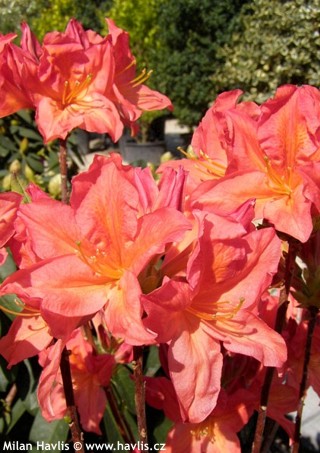
In 1977 Hans Hachmann introduced a sensational deciduous azalea with the richest merge of red and orange colour. Its name is Feuerwerk (Fireworks) and it does look as if taken from the middle of a blazing fire. The individual flowers are large – 7-8 cm across, only lightly scented, and appear ...

V - VI

1 - 2m

1 - 2m

full sun

4 (down to -34°C)

for zone 5+6

for zone 7
Swamp azaleas are a unique species of deciduous azalea of North American origin. These azaleas offer later flowering and extremely fragrant flowers. Juniduft is my favourite variety of swamp azalea. It produces medium sized, sweetly scented, soft pink flowers with a greenish-yellow blotch which make ...

VI - VI

1,3 - 1,8m

1 - 1,8m

full to partial sun

5 (down to -29°C)

for zone 5+6

for zone 7
“Mandarin Lights” comes from the Northern Lights line. This one has bright orange flowers with shades of red and yellow and frilled edges. Excellent hardiness to -35°C.
Deciduous azaleas are ericaceous plants, loving insulate position with always moist soil. During temporary summer dry ...

V - VI

1,3 - 1,5m

full sun

4 (down to -34°C)

for zone 5+6

for zone 7
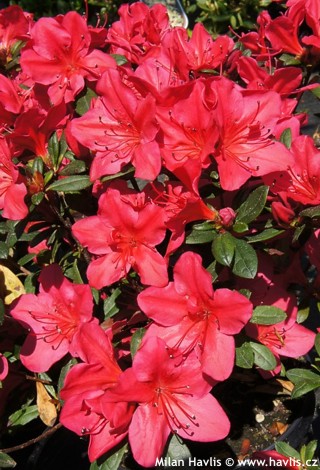
Sarina is a large-flowered variety of this deciduous azalea, bred by Hans Hachmann already in 1963. Its flowers are rich scarlet red, slightly frilled at margins, and have a large, golden orange blotch on the upper lip. Fragrance is faint. Deciduous leaves are oval to elongated, mid green in summer ...

V - VI

1,5 - 2m

1 - 1,5m

full sun

4 (down to -34°C)

for zone 5+6

for zone 7
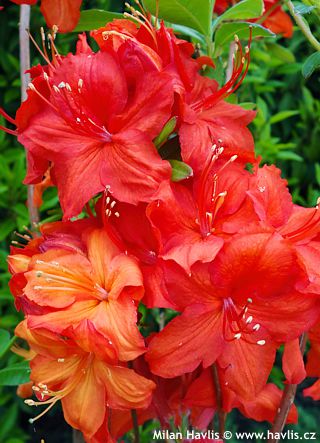
Satan azalea says it all in its name. Fiery orange red flowers are large and sweetly scented, and open early in the azalea season – in the first half of May. Deciduous leaves are mid green, oval to elliptic, fresh green in summer and dark red in autumn. It grows moderately into an upright shru ...

V - VI

1,5 - 2m

1,5 - 2m

full sun

4 (down to -34°C)

for zone 5+6

for zone 7
Tunis azalea could be a perfect deciduous azalea choice for those who love striking colours. This variety offers large, rich salmon-red flowers with orange throats. Petal margins are a little undulated. It grows at medium speed rate forming a rather symmetrical shrub.
Deciduous azaleas are ericaceo ...

V - VI

0,5 - 1,5m

0,5 - 1,5m

full sun

4 (down to -34°C)

for zone 5+6

for zone 7
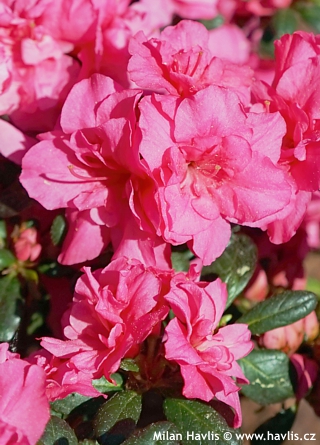
Amoena is a Japanese azalea with small to mid-sized, bright, deep fuchsia pink flowers, hose in hose, that totall cover the plant when in full bloom. They come out in mid May and continue until early June. Thanks to their bright colour it will light up the daker corners of your garden.
...

V - VI

0,4 - 0,8m

0,4 - 1m

semi-shade to shade

5 (down to -29°C)

for zone 5+6

for zone 7
Arabesk is an attractive variety of Japanese azalea with large, deep red flowers. They come out in profusion from mid until end May. The evergreen foliage is dark green, with some burgundy red shades in autumn and winter, changing back to green before it starts flowering. This azalea grows slowly, m ...

V - V

0,4 - 0,8m

0,4 - 1m

semi-shade / partial sun

6 (down to -23°C)

for zone 5+6

for zone 7
Blaauw’s Pink has attractive, salmon pink small flowers with slightly darker throat. It has irregular growth and belongs to mid-sized azalea.
Leaves are mid to dark green, ovate, only about 2-3 cm long. In semi-shade and shade they remain on the shrub throughout winter, if placed in full sun ...

IV - V

0,3 - 1m

semi-shade / partial sun

5 (down to -29°C)

for zone 5+6

for zone 7
Blue Danube is a German variety of Japanese azalea. It is a slow and dense growing plant with profusion of large, 3-4 cm across, widely open, purple-violet flowers with a darker blotch just like rhododendrons have. Leaves are small, almost flat, elliptic to oval, deep green and partly hairy. They ar ...

V - V

0,4 - 0,8m

0,5 - 1,3m

semi-shade / partial sun

5b (down to -27°C)

for zone 5+6

for zone 7
Canzonetta is a Japanese azalea bred by Hans Hachmann in 1987, and is still among the most popular varieties until today. The reasons are rich colour, compact shape, and reliable evergreen foliage. Canzonetta bears medium-large double flowers of rich magenta red colour. Leaves are small, broadly ell ...

V - V

0,3 - 0,5m

0,6 - 1,3m

full to partial sun

6 (down to -23°C)

for zone 5+6

for zone 7
Elsie Lee is a fantastic Japanese azalea variety bred already in 1960. It produces large, 5-7 cm across, double flowers of pastel pink colour. They come out in profusion usually from mid May for 2-3 weeks. Evergreen leaves are small, elliptic, and glossy. It was bred by Anthony Sammarello in Ohio, U ...

V - VI

0,6 - 1m

0,6 - 1m

full to partial sun

5b (down to -27°C)

for zone 5+6

for zone 7
F.C.F. is, so far, a non-registered variety of Japanese azalea from Italy. This small shrub produces abundance of semi-double flowers already in mid May. They are rich pink and completely cover the plant. The evergreen leaves are elliptic to oval, partly glossy, mid green and turn bronze in autumn a ...

V - V

0,5 - 1,3m

0,5 - 1,3m

semi-shade to shade

6 (down to -23°C)

for zone 5+6

for zone 7
Another red flowering Japanese azalea from Hans Hachmann was bred in 1987 and was named Fridoline. It has medium-sized flowers: 4-4,5 cm wide of bright red colour. It blooms in late spring, from end May until mid June. Slow grower, mound-forming.
Leaves are mid to dark green, ovate ...

V - VI

0,3 - 0,8m

0,5 - 1m

semi-shade / partial sun

5 (down to -29°C)

for zone 5+6

for zone 7
Girard’s Fuchsia is an eye-catching Japanese azalea with vivid magenta-pink flowers. They appear quite large – 4-4,5 cm on the background of small leaves. The evergreen foliage is mid green, turning deep burgundy red in autumn and winter, changing back to green with warm days of spring. This azalea ...

V - VI

0,4 - 1m

0,4 - 1,3m

full to partial sun

6 (down to -23°C)

for zone 5+6

for zone 7
Hachmann's Rokoko is another beauty from the collection of dwarf or low growing Japanese azaleas bred by German rhodo/azalea guru Hans Hachmann. It produces medium large, about 5 cm across, semi-double flowers of rich pink colour. They open from mid May until early June on the background of small, ...

V - VI

0,3 - 0,5m

0,8 - 1,3m

semi-shade / partial sun

5b (down to -27°C)

for zone 5+6

for zone 7
Johanna is extremely popular for its deep red flowers anddark leaves. It flowers so abundantly that leaves almost disappear under the cloud of flowers. It is a slow grower forming a nice, mounding, compact shrub.
Small, ovate to rounded leaves are mid green as they emerge, turning deep burgu ...

IV - V

0,3 - 0,8m

semi-shade to shade

5 (down to -29°C)

for zone 5+6

for zone 7
Kermesina Rose is a must have for everyone who likes varigated or multi-cloloured flowers. These are pink with a clear white margin. It is a slow grower forming an irregular, mounding, compact shrub. It may happen to this variety that a certain amount of flowers comes out without white margins ...

IV - V

0,3 - 0,6m

semi-shade to shade

5 (down to -29°C)

for zone 5+6

for zone 7
Lady Dark is a new compact variety of evergreen - Japanese azalea. It makes profusion of purple violet flowers from mid May for about 2-3 weeks. They are single, open wide, and reveal delicate dotting on the upper petal. Leaves are small, narrowly elliptic, glossy, and usually reliably evergreen. It ...

V - VI

0,5 - 0,6m

0,6 - 0,8m

full to partial sun

5 (down to -29°C)

for zone 5+6

for zone 7
Maischnee® is another Japanese azalea bred by German rhodo/azalea guru Hans Hachmann. It produces extra large, usually 7 cm across, pure white, open wide flowers late in the azalea season - commonly from late May until mid June. Profusion of flowers covers the shrub completely. The plant grows low a ...

V - VI

0,3 - 0,5m

0,5 - 1,3m

semi-shade / partial sun

5b (down to -27°C)

for zone 5+6

for zone 7
Melina is a stunning variety of Japanese azalea. Its double or even triple flowers are bright pink and appear in rounded inflorescens late in the spring – end May/early June. It grows slowly and compact, spreading.
Leaves are mid to dark green, ovate, only about 2-3 cm long. In semi-sha ...

V - VI

0,3 - 0,8m

0,5 - 1,5m

semi-shade / partial sun

5 (down to -29°C)

for zone 5+6

for zone 7
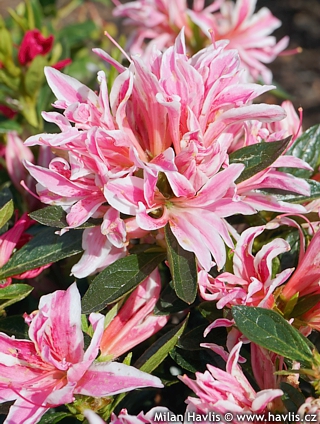
Pink Poetry® is simply charming. It is an evergreen Japanese azalea discovered by Manfred Mann in his nursery in German nursery town Westerstede as a mutation of Gislinde variety with deep pink flowers. It is one of the few unique varieties with bi-coloured flowers. They are soft pink, margined whit ...

V - VI

0,5 - 0,8m

0,8 - 1,3m

full to partial sun

5b (down to -27°C)

for zone 5+6

for zone 7
Pink Spider is a fabulous Japanese azalea for collectors who obviously do not suffer from arachnophobia. This exotic looking jewel produces semi-double flowers with narrow, acuminate flower petals. They are bright pink with purple pink dotting and white margins. They open in profusion from about mid ...

V

0,6 - 0,8m

0,6 - 1m

semi-shade / partial sun

7a (down to -18°C)

for zone 5+6

for zone 7
Purple Splendor is an old favourite with medium-sized, bright purple flowers with burgundy blotching and wavy margins of the petals. It belongs to the Gable hybrid group which means that its flowers appear later than on other Japanese azaleas – from end May until early June. It grows moderately ...

V - VI

0,5 - 0,8m

0,5 - 1,5m

full sun to shade

5 (down to -29°C)

for zone 5+6

for zone 7
Rosebud is an old variety of Kurume Japanese azalea bred an introduced by J.J.Chisholm in 1934. It bears unique, double flowers of soft pink colour. They look like those on Indian azaleas but are very hardy and bloom from mid May until early June. Evergreen leaves are small, elliptic, and glossy. Ro ...

V - VI

0,5 - 0,8m

0,5 - 0,8m

full to partial sun

5 (down to -29°C)

for zone 5+6

for zone 7
Rosinetta® is another unique Japanese azalea bred by Hans Hachmann. It has pure pink, double or tripple flowers that are 4-6 cm wide and come out late in May, and continue blooming until mid June. It grows slowly, 10-year old plant is about 60 cm high and 80 cm wide.
Leaves are mid ...

V - VI

0,4 - 0,8m

0,5 - 1,5m

semi-shade / partial sun

5 (down to -29°C)

for zone 5+6

for zone 7
Schneeperle® is a gorgeous, pure white Japanese azalea from Hans Hachmann. Its double flowers are snow white and abundant. Individual flowers are abou 4-5 cm wide and come out from mid May until early June. It grows slowly, 10-year old plant is about 35 cm high and 55 cm wide.
Leav ...

V - VI

0,3 - 0,5m

0,5 - 1,3m

semi-shade / partial sun

5 (down to -29°C)

for zone 5+6

for zone 7
JULIETTE is an evergreen Japanese azalea bred by Holger Hachmann in 1990 as a cross between Squirrel and Chippewa. It was introduced in 2004. Its flowers are 3-4 cm across, open wide, soft red to salmon red with orange tones and slightly undulated margins. They come out in May for 2-3 weeks. Evregre ...

V

0,8 - 1m

0,8 - 1m

semi-shade / partial sun

5b (down to -27°C)

for zone 5+6

for zone 7
FLASH DANCE® is a modern series of evergreen azaleas from French nursery Minier from 2017. FLASH DANCE® SALMON produces large, single flowers that are soft salmon pink, and open in profusion from about late April for 3-4 weeks on the background of small, dark green, almost rounded, highly glossy, ev ...

IV - V

0,8 - 1m

0,8 - 1,3m

semi-shade / partial sun

5b (down to -27°C)

for zone 5+6

for zone 7
FLASH DANCE® is a modern series of evergreen azaleas from French nursery Minier from 2017. FLASH DANCE® PINK produces semi-double flowers with two rows of larger petals, and a few dwarf sepals in the centre. They are bright pink, and open in profusion from about mid May for 2-3 weeks on the backgrou ...

V

0,8 - 1m

0,8 - 1,3m

semi-shade / partial sun

5b (down to -27°C)

for zone 5+6

for zone 7
Satschiko azalea is sold under a trade name Geisha Orange and is really very close to orange. It has very soft red flowers with salmon orange tones. They open from late April and bloom for almost 3 weeks. Evergreen leaves are small, oval, dark green, and glossy. Geisha Orange azalea forms a compact ...

IV - V

0,3 - 0,5m

0,8 - 1,3m

semi-shade / partial sun

5b (down to -27°C)

for zone 5+6

for zone 7
WALBERTON’S® MAUVE RUFFLES is an evergreen azalea producing extraordinary flowers. They are large, semi-double or fully double, mauve to lilac pink with ruffled margins. They open in profusion from about late April for 3-4 weeks on the background of small, dark green, narrowly elliptic, partially gl ...

IV - V

0,8 - 1,3m

0,8 - 1,3m

semi-shade / partial sun

5b (down to -27°C)

for zone 5+6

for zone 7
When Carolina azalea comes into bloom, it is as if the shrub has dressed itself in a ceremonial kimono – large, widely opened flowers with a rosy to salmon pink center, white edging, and purple speckling resemble painted plates overlapping in the tiered structure of the plant. Its habit is dense but ...

V - VI

0,5 - 1,5m

0,5 - 1,5m

semi-shade / partial sun

5b (down to -27°C)

for zone 5+6

for zone 7
The hybrid azalea Carolina Salmon derives from the variegated cultivar Carolina, but here the difference is striking: Carolina Salmon is entirely single‑coloured. If just for a split second the word dull came up, think again, or even better – look again! The combination of rich salmon‑pi ...

V - VI

0,5 - 1,5m

0,5 - 1,5m

semi-shade / partial sun

5b (down to -27°C)

for zone 5+6

for zone 7
Nuccio’s Lucky Charm is another fascinating Satsuki azalea. This hybrid bears medium-large flowers of dusky pink colour. The first buds begin to open on the first hot days of June (usually mid of the month) and continue blooming for as long as 4 weeks. It was bread by Nuccio Nursery of Southern Cali ...

VI - VII

0,4 - 0,6m

0,4 - 1,3m

full to partial sun

6b (down to -21°C)

for zone 5+6

for zone 7
Nuccio’s Wild Cherry is one of those great Satsuki azaleas with large flowers. They are cherry red with a light burgundy red blotch. It was bread by Nuccio Nursery of Southern California wich is a leading nursery for Satsuki azaleas and camellias. The flowers appear from early June and continue popp ...

VI - VI

0,5 - 0,6m

0,5 - 1m

full to partial sun

6b (down to -21°C)

for zone 5+6

for zone 7
Orchidea Empress is a gorgeous name for a gorgeous azalea. It is another of late flowering hybrids, this time with bright pink, hose-in-hose flowers that appear from about mid June for 3-4 weeks. It is never the whole shrub blooming, individual buds burst out continuously one by one. It is not only ...

VI - VII

0,5 - 1m

0,5 - 1,3m

semi-shade / partial sun

6b (down to -21°C)

for zone 5+6

for zone 7
Perla del Verbano is a sensational new variety of evergreen hybrid azalea that originated in Northern Italy. It bears profusion of bright pink, double = hose in hose flowers from end June until late July. They appear continuously so you can enjoy them for as long as a month under ideal conditions. P ...

VI - VII

0,5 - 0,8m

0,5 - 1,5m

full to partial sun

6b (down to -21°C)

for zone 5+6

for zone 7
Royal Pink is a great name for a great plant. This Japanese azalea offers very large, double flowers of clear pink colour. They are 8-9 cm across and come out from mid May until early June. In late May the shrub is literally flooded by the profusion of flowers that almost completely cover the foliag ...

V - VI

0,5 - 1m

0,5 - 1,5m

semi-shade to shade

6 (down to -23°C)

for zone 5+6

for zone 7
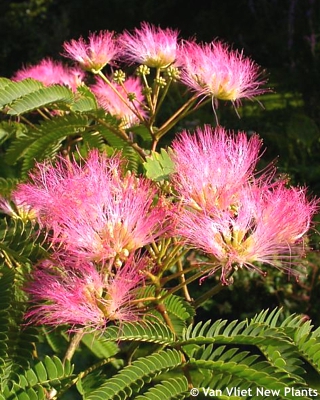
Shoka (sometimes also misspelled as Sogha) is a hybrid Satsuki azaleawith large flowers. They are predominantly white with bright purple pink blotch, or they can come out lilac-pink with the same blotch, or they can be either colour with a stripe of the other colour. Quite picky this azalea, isn’t i ...

V - VII

0,3 - 0,6m

0,5 - 1,3m

full to partial sun

6b (down to -21°C)

for zone 5+6

for zone 7
If you are fond of summer-flowering hybrid azaleas then this variety can easily become a jewel in your garden. Its name is Summer Sun and it is another Satsuki azalea. Soft red flowers look very attractive on the background of deep green foliage. They open in late June or early July and continue blo ...

VII - VII

0,4 - 0,6m

0,4 - 1,3m

full to partial sun

6b (down to -21°C)

for zone 5+6

for zone 7
Verbania is a medium late hybrid azalea named after a spa town from North Italy, close to a nursery where it originated. It makes medium large, hose in hose, creamy white flowers with a very elegant, thin, salmon pink margin. They appear from about mid May for almost 3 weeks manifesting the advantag ...

V - VI

0,5 - 1m

0,5 - 1m

semi-shade / partial sun

6 (down to -23°C)

for zone 5+6

for zone 7
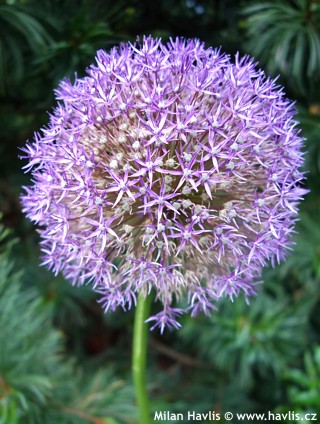


.jpg)


.jpg)


.jpg)


.jpg)


.jpg)


.jpg)