.jpg)
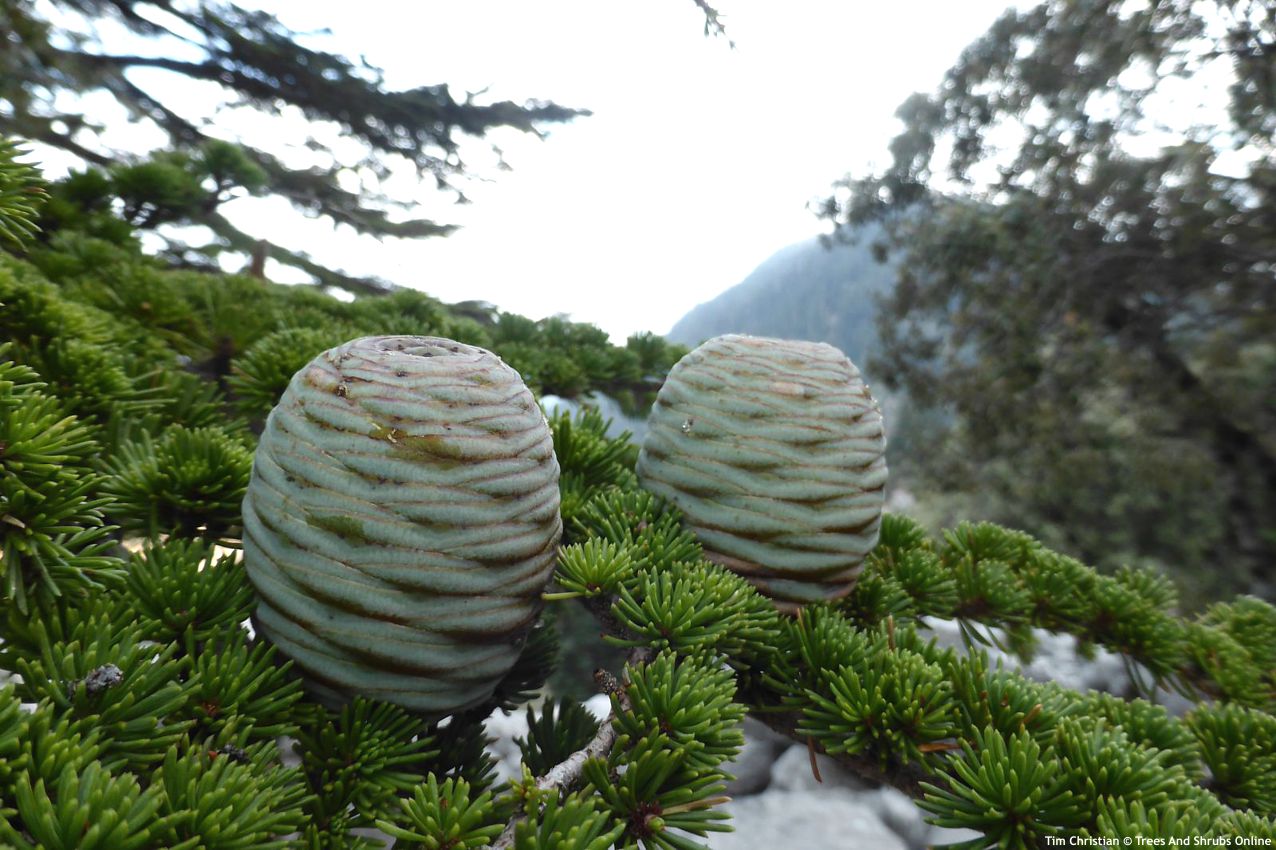
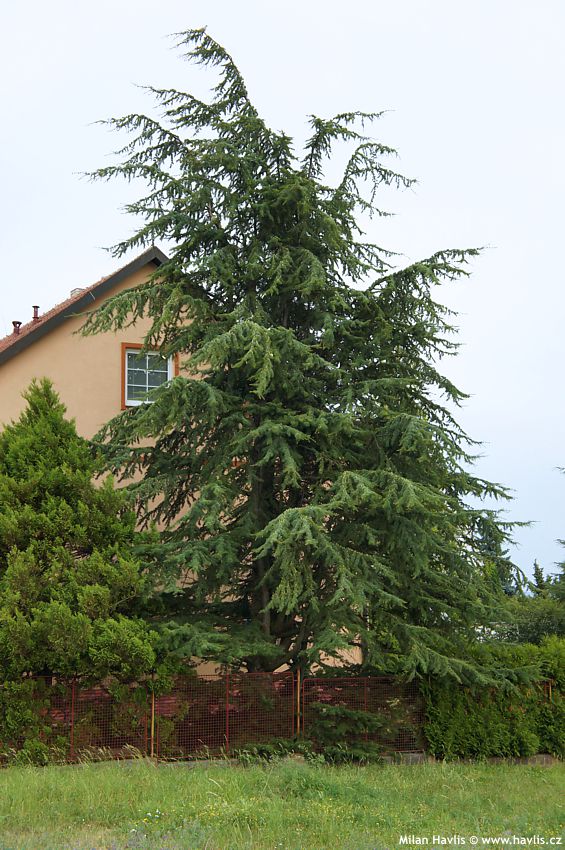
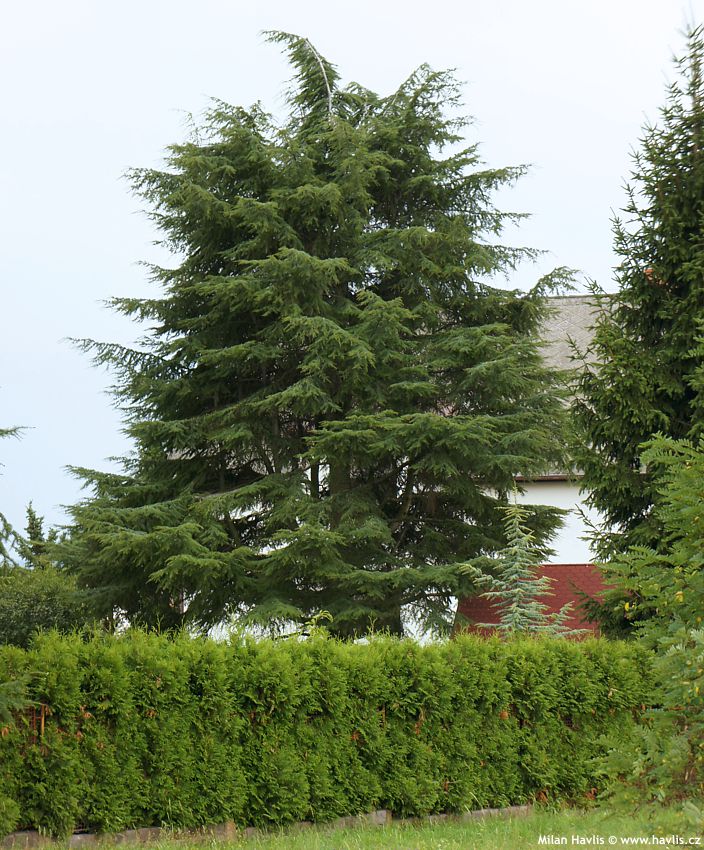
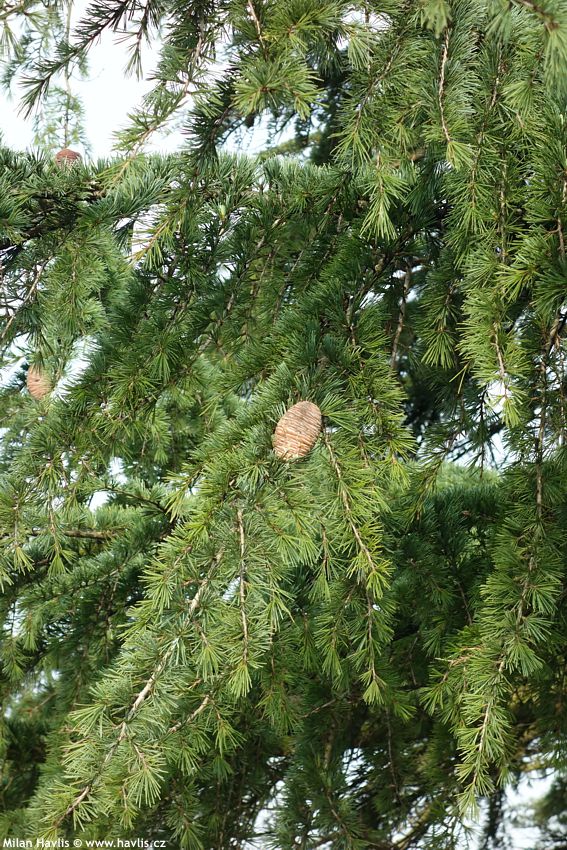
Cedrus atlantica Atlas cedar

 Ectovit (ectomycorrhizal)
Cedrus
The genus of cedars belongs among those trees that people remember longer than the names of kings or cities that have long since vanished from maps. Today it includes only a few species native to the mountainous regions of the Mediterranean and western Asia, even though fossil finds of pollen and wood show that cedars were once far more widespread and that their history reaches deep into the Tertiary period. The very name of the genus, derived from the Greek kedros and the Latin cedrus, evokes fragrant, resinous wood that for millennia symbolized durability, power, and sacredness. Cedars appear in biblical texts, ancient myths, and the architecture of early civilizations, where their timber was used to build temples, ships, and palaces. When you walk beneath mature specimens or watch their dignified, sometimes breathtaking silhouettes rising against the sky, it is easy to understand why they inspire both respect and affectionate reverence. The majesty of cedars is not ostentatious but calm, bringing a sense of slowing down and a particular serenity, because you realize that these trees remember not decades, but centuries.
The Atlas cedar originates in the Atlas Mountains of North Africa, in places where mountain slopes bake in the summer sun and can be surprisingly cold and inhospitable in winter. It grows high above sea level (1300-2600 m) on rocky soils, in open forests where light reaches the ground and the air is dry and clear. This very combination of sun, wind, and poor soil shaped the character of the Atlas cedar—its resilience and its ability to thrive where other trees hesitate. Botanically, the species was defined and described by the French botanist Élie‑Abel Carrière (1818–1896), one of the foremost conifer specialists of the nineteenth century, who devoted himself both to their scientific taxonomy and to practical cultivation. Carrière distinguished the Atlas cedar from the already known Lebanon cedar based on populations from the Moroccan and Algerian parts of the Atlas and named it after its natural range. Early professional descriptions already pointed out differences in crown structure, finer branching, and often distinctly colored needles. These traits, together with good adaptability outside its native habitat, led to the rapid spread of the Atlas cedar in European parks and gardens in the second half of the nineteenth century, where it was perceived not as a botanical curiosity but as a naturally convincing conifer, readily understood by the eye and experience of gardeners of the time. It reached North America only at the turn of the nineteenth and twentieth centuries, already as an established conifer with a confirmed reputation.
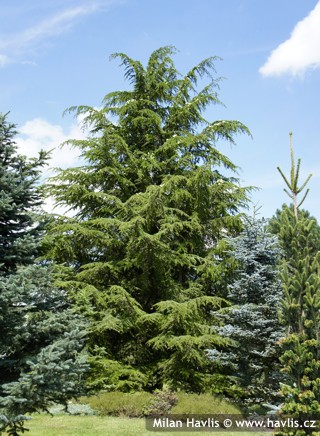
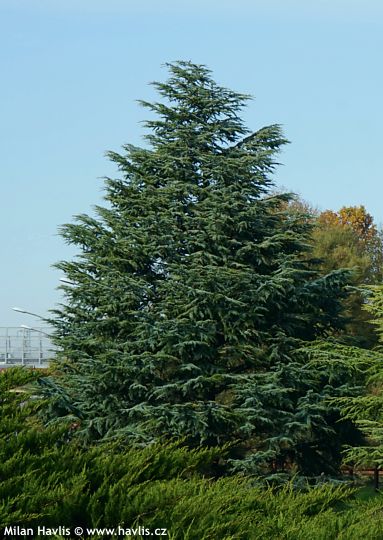
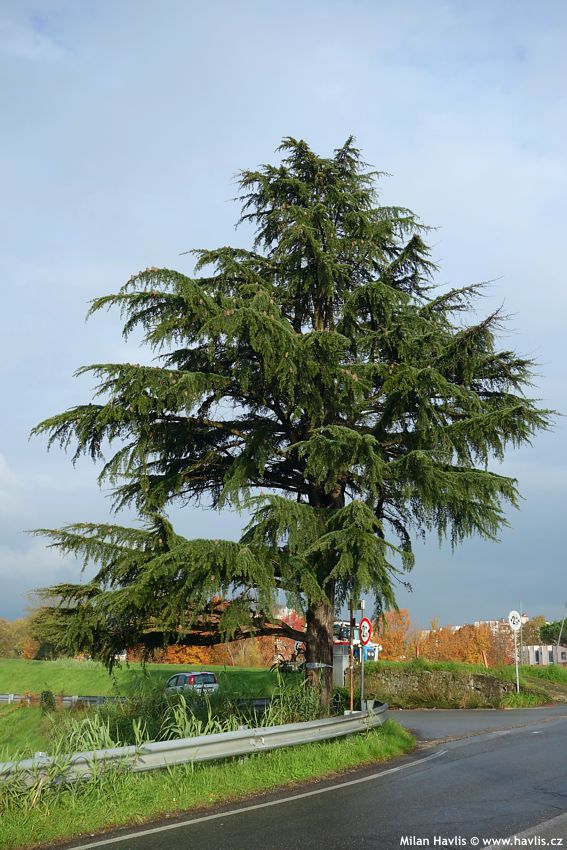
The Atlas cedar is a stately, long‑lived conifer whose appearance changes markedly over the course of its life, eventually reaching a height of about 20 to 30 meters and forming a broad, spreading crown typically 10 to 15 meters wide. In youth it forms a regular, narrowly conical canopy with a prominent terminal leader, which with age gradually opens, flattens, and develops a broader, often picturesquely irregular shape. The main branches are arranged in tiers and carry finer lateral branchlets set horizontally to slightly drooping, sometimes gently bending, which gives the tree a lighter and more airy expression than that of the Lebanon cedar. The needles are stiff, four‑angled, usually 2 to 3 cm long, arranged in clusters on short shoots and singly on long annual shoots. Their colour is one of the most variable features of the species – from deep green through gray‑green to striking bluish tones – and the intensity of colouration can vary not only among different populations but even among seedlings from the same tree. This very variability became the basis for the selection and breeding of ornamental forms. Male and female cones occur on the same tree; the upright cones mature over two to three years and, when they disintegrate, release winged seeds.
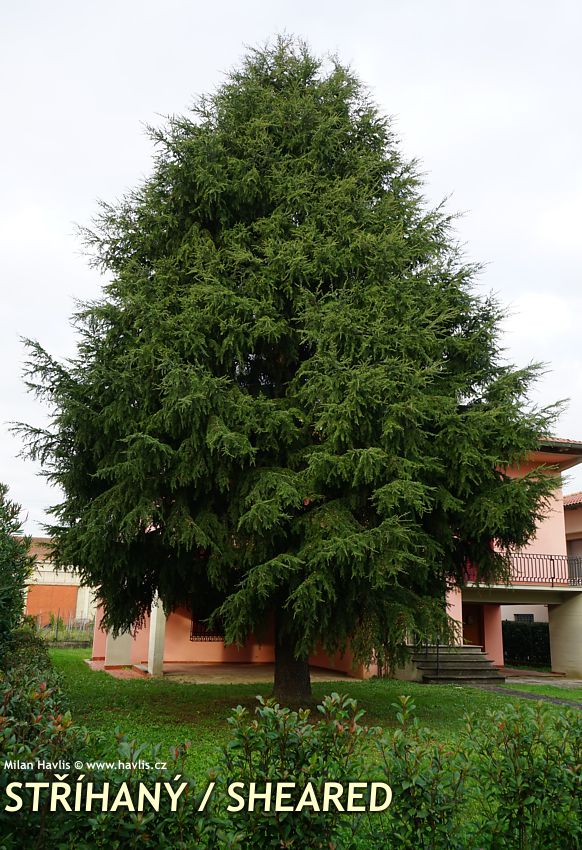
Overall, the Atlas cedar appears robust but not heavy – its morphology combines the strength of a mountain tree with a delicacy of detail that fully reveals itself only on closer inspection. This balance allows it to be used in a wide range of landscapes, from expansive parks to surprisingly intimate gardens. It is also a frequent in Japanese gardens. In southern Europe, especially in Italy, it is handled with a lightness that might seem bold by our standards: lower branches are often removed up to a height of about three meters, and the canopy is allowed to spread freely above the space beneath. The result is a tree under which one can walk, sit, breathe, or even park, and which in summer heat functions as a natural sunshade – providing shade without weighing the space down, cooling without enclosing it or depriving it of light.
Last update 17-01-2026
The Atlas cedar is a tree that takes care of itself, provided it is given the right place. It thrives best in fully sunny positions, where the crown can mature evenly and the needles retain their characteristic colouration. It prefers well‑drained, rather dry soils that are low in nutrients, while heavy and persistently waterlogged soils are poorly tolerated. Once established, it is highly resistant even to prolonged drought and usually manages without irrigation. The frost hardiness of mature trees is generally given as around −25 °C; young plants, however, may react sensitively in their first years to bare frosts and sudden temperature fluctuations, whereas older specimens with well‑ripened wood tolerate even short‑term drops to about −27 °C.