.jpg)
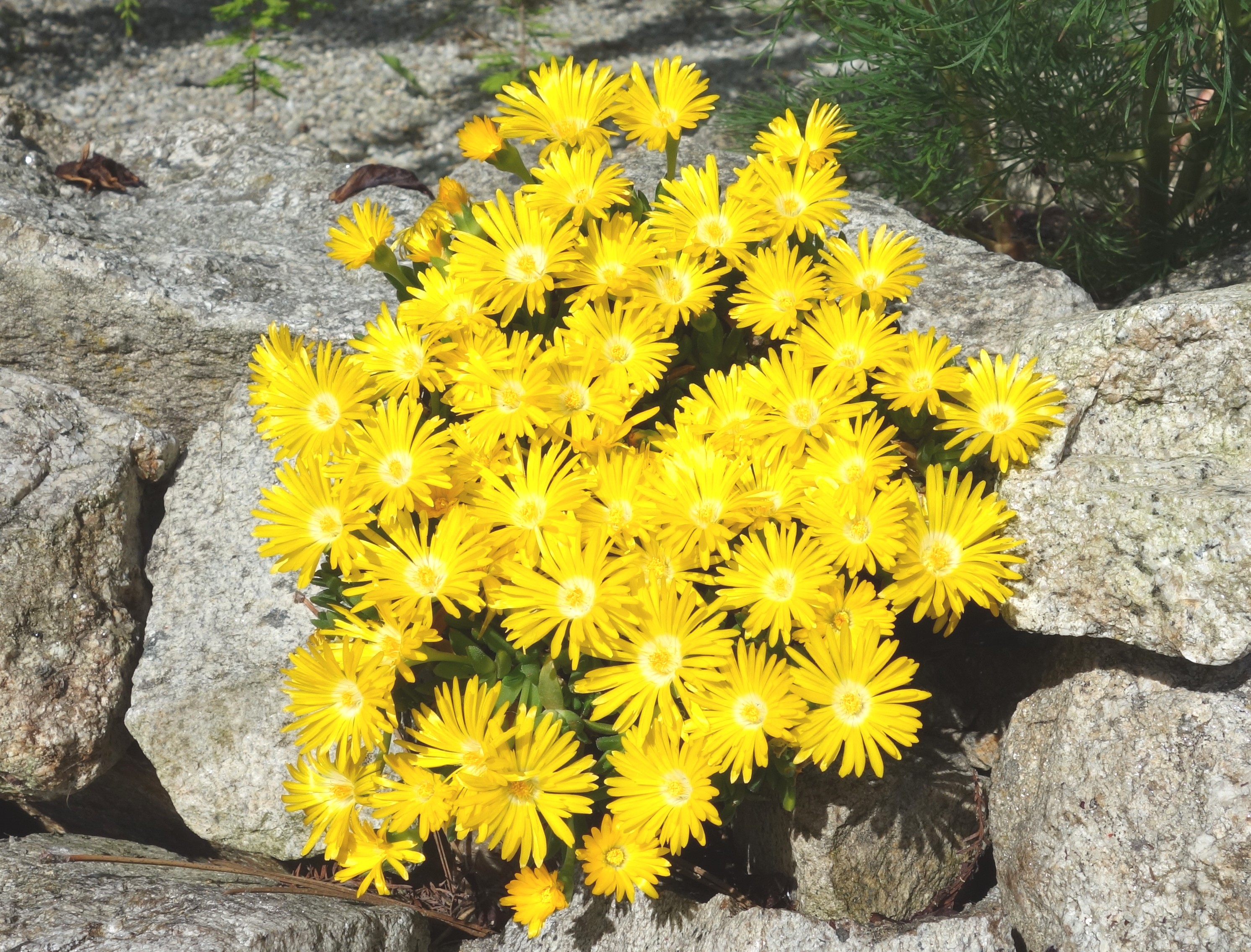
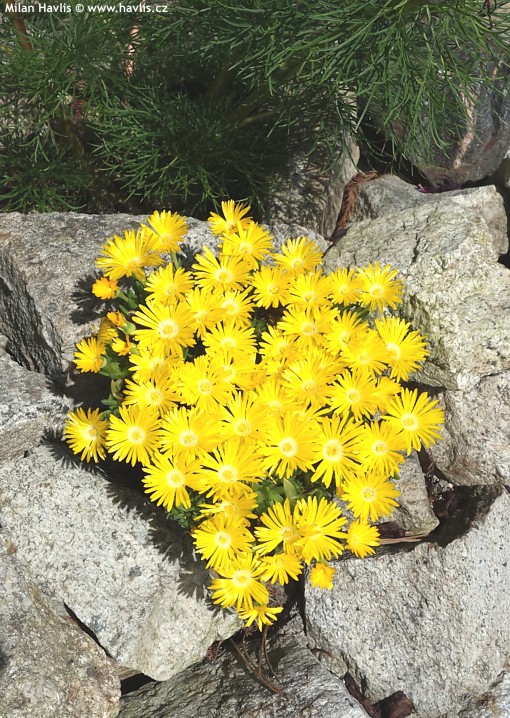
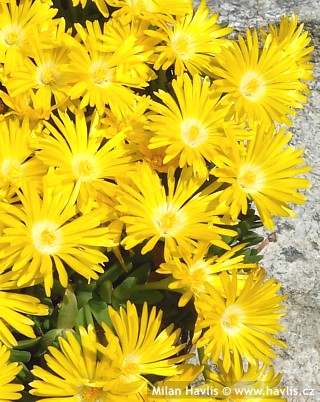
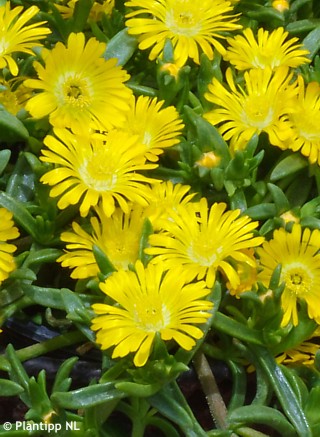
Delosperma congestum 'GOLD NUGGET' hardy ice plant

 Symbivit Tric (arbuscular)
 Symbivit (arbuscular)
Delosperma
Delosperma is a genus of low-growing, perennial succulent plants in the family Aizoaceae, native mainly to the mountainous and semi‑desert regions of southern Africa, where it inhabits rocky slopes, crevices, and places where water disappears before it has a chance to soak in. The genus was described in the early 20th century by the British botanist Nicholas Edward Brown (1849–1934), who noticed the tiny, glistening cells on the surface of the leaves—features that gave the plants their name, derived from the Greek delos ("conspicuous") and sperma ("seed"). Iceplants are characterized by their fleshy, evergreen leaves capable of storing water for long periods, and by their strictly mat‑forming, creeping habit, which allows them to create dense, low carpets. During flowering, these inconspicuous cushions transform into a blaze of daisy‑like blooms that open only in full sun and rank among the most rewarding ornaments of dry, heat‑exposed sites.
The species Delosperma congestum, botanically described in 1954 by the South African botanist Louisa Bolus, originates from higher mountainous regions of southern Africa, where it grows in cooler locations with pronounced temperature fluctuations, intense sunlight, and very low rainfall. In its natural habitat, it colonizes shallow, stony soils and rock crevices where water disappears quickly after rain and the roots are exposed to alternating periods of drought and short‑term cold. The species epithet congestum, meaning “dense” or “crowded,” perfectly reflects its natural growth habit—compact, tightly packed cushions of short, fleshy leaves that minimize water loss and protect the plant from environmental extremes. Delosperma congestum reached European gardens only in the second half of the 20th century, when it became clear that it was not merely a botanical curiosity from African mountains, but a long‑lived and exceptionally reliable rock garden plant for dry, sun‑baked sites. It was this species that later became one of the key foundations for breeding frost‑hardy ice plants, now considered a standard component of modern drought‑tolerant plantings.
Gold Nugget is among the most compact and reliable selections of hardy ice plant. It forms low, firm cushions of short, fleshy, evergreen leaves of a light green colour, densely packed and often gently sparkling in full sun due to tiny reflective cells on the surface, giving the plant a lightly sugar‑coated appearance. The leaves remain tightly clustered even with age, and the mat does not break apart into loose runners. The main ornamental feature is the rich golden‑yellow, glossy, daisy‑like flowers, produced in abundance from late spring into summer and capable of almost completely covering the plant in full sun. The flowers open only in bright weather and close again in the evening, a typical and practical trait of ice plants that helps conserve both energy and moisture. Overall, the plant has a very clean, compact appearance, without excessive spreading or the need for maintenance.
The growth of ‘Gold Nugget’ is strictly prostrate and very low, usually reaching only a few centimeters in height, while gradually spreading sideways to form continuous mats. Thanks to its stability and even growth, it is well suited to rock gardens and dry stone walls, as well as to containers with perfect drainage and a specially formulated substrate for succulent plants, where it looks natural and never outgrows its space. The cultivar was most likely selected in the 1980s as the showiest form within the species.
Last update 02-06-2015; 15-02-2026
Delosperma congestum requires full sun and perfectly well‑drained soil; the drier and poorer the site, the better it performs. Watering should be limited and only occasional only after transplanting, as prolonged moisture – especially in winter – is the most common cause of failure. The soil should be neutral to slightly alkaline, with a high proportion of mineral components. Fertilization is unnecessary, but in containers the plant benefits from a very light application of a mineral fertilizer during the growing season, preferably based on potassium and phosphorus; nitrogen‑rich fertilizers should be avoided. Frost hardiness reaches down to −30 °C (USDA zone 5), with some growers reporting even lower tolerance under dry conditions and excellent drainage. In containers, winter protection should focus on keeping the plant dry rather than warm, ideally by placing the pot under a roof overhang. The plant is evergreen, non‑toxic, and free of special demands or risks, making it suitable even for low‑maintenance gardens.