

































Deutzia × 'MONT ROSE' deutzia

 Symbivit Tric (arbuscular)
 Symbivit (arbuscular)
Deutzia
Deutzias are deciduous shrubs belonging to the hydrangea family, with their natural range centred mainly in East Asia, while a smaller number of species originate from Central America. The first European encounter with this genus took place in Japan, where Engelbert Kaempfer (1651–1716) observed Deutzia scabra as early as 1712, yet it took more than a century for deutzias to find their way into European gardens. The Latin name of the genus was given by the Swedish botanist Carl Peter Thunberg (1743–1828) around 1784, in honour of his friend and patron, the Dutch botanist Johann van der Deutz (1743–1784). From the very beginning, deutzias gained popularity thanks to their abundant white to pink flower clusters that open in late spring, but also because of their remarkable toughness, tolerance of pollution and high frost resistance. These qualities gradually turned them into key shrubs for garden projects even in areas with poorer growing conditions and limited maintenance. In gardens they also provide shelter and food for small animals, thus contributing to biodiversity. An interesting detail is that the bark and leaves of some species were used in traditional Chinese medicine long before the Western world described deutzias botanically.
The cultivar Mont Rose originated at a time when deutzias became the subject of deliberate breeding work and ceased to be merely a botanical curiosity from the Far East. Its parent species come mainly from China and Japan and were selected with a clear aim – to combine reliable, abundant flowering with a soft pink flower colour and a more compact, better‑structured shrub. Deutzia longifolia, a mountain species from China with an elegant habit and naturally pink‑tinged flowers, was used as the primary parent, complemented by species from the Deutzia discolor and Deutzia purpurascens group, which contributed stronger branching, larger inflorescences and greater vigour. At the turn of the 19th and 20th centuries this work was pursued most intensively by French nurseries, above all the famous Lemoine nursery, where many cultivars now regarded as classics were created.
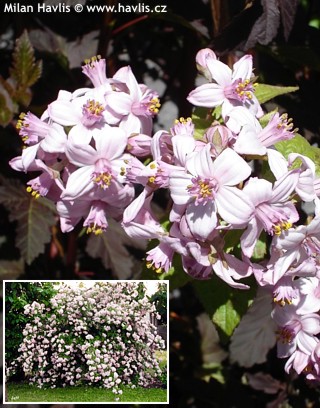
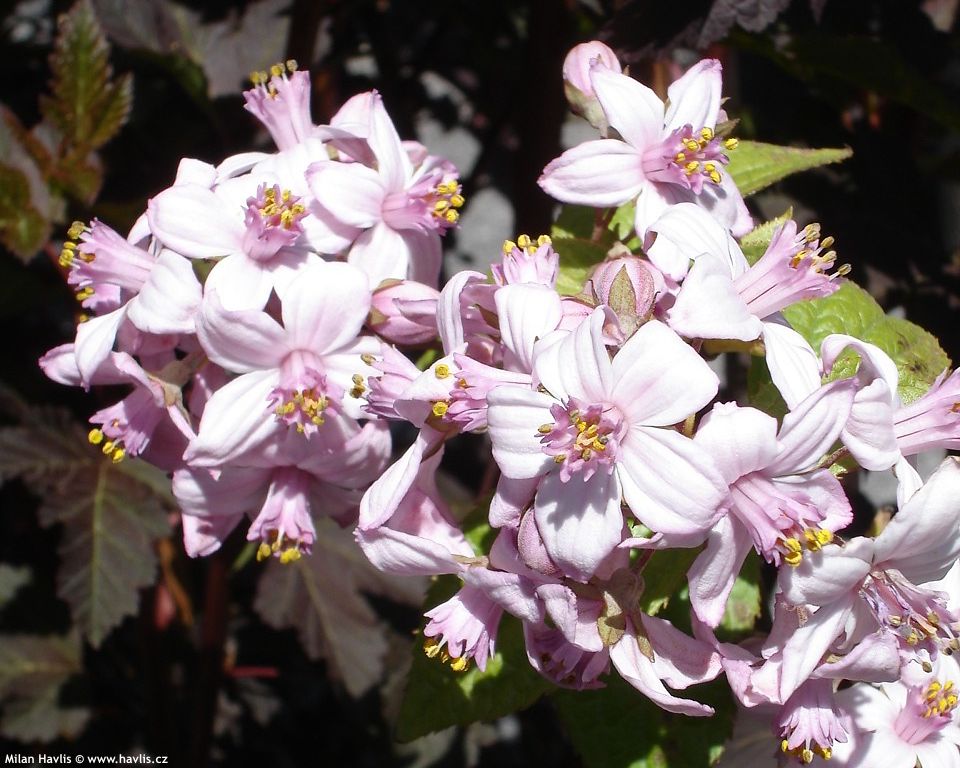
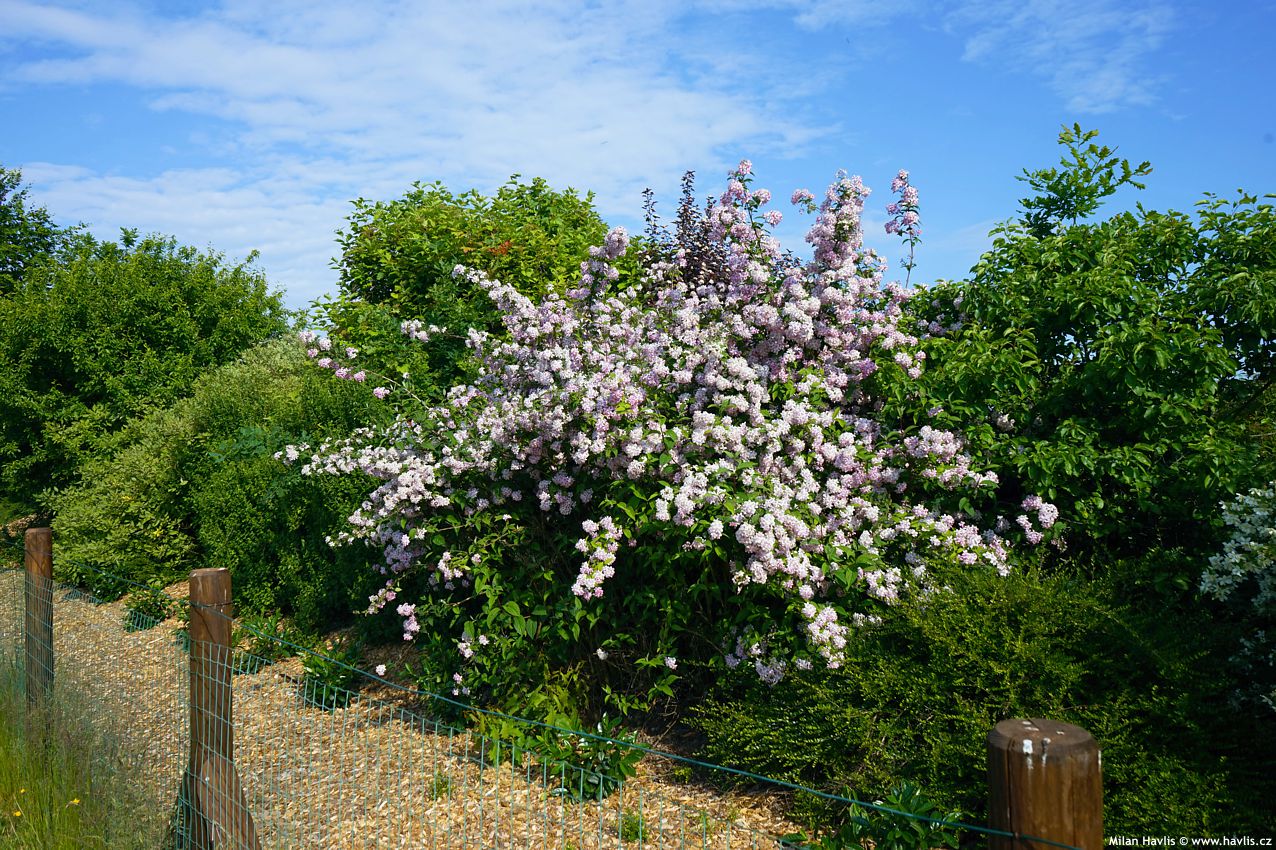
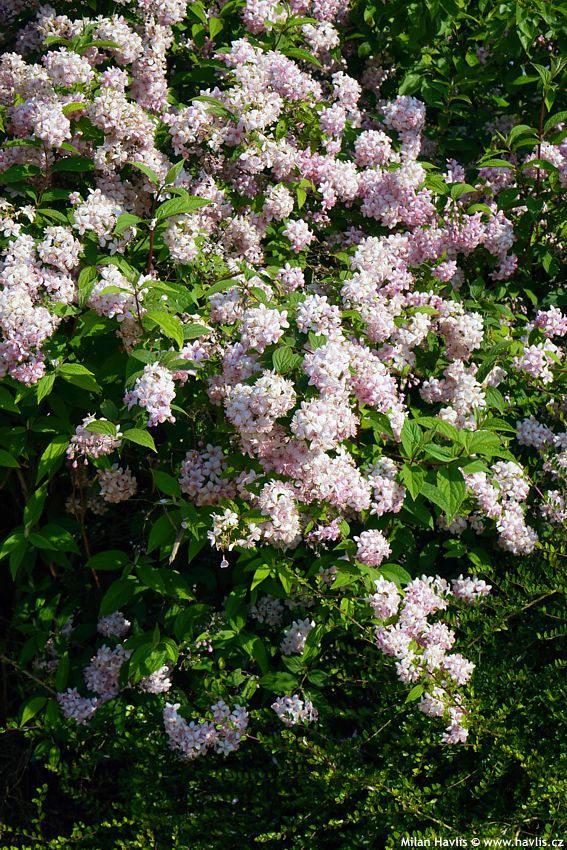
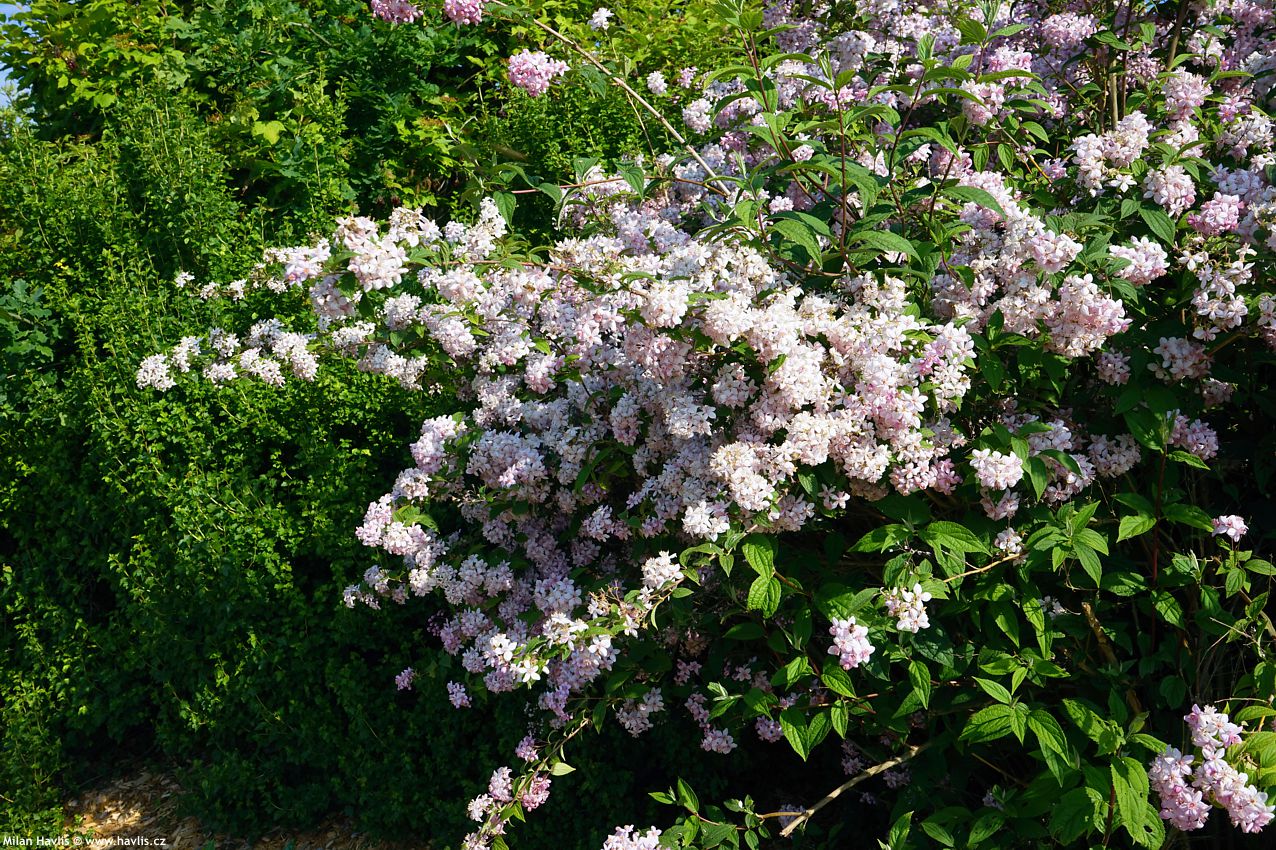
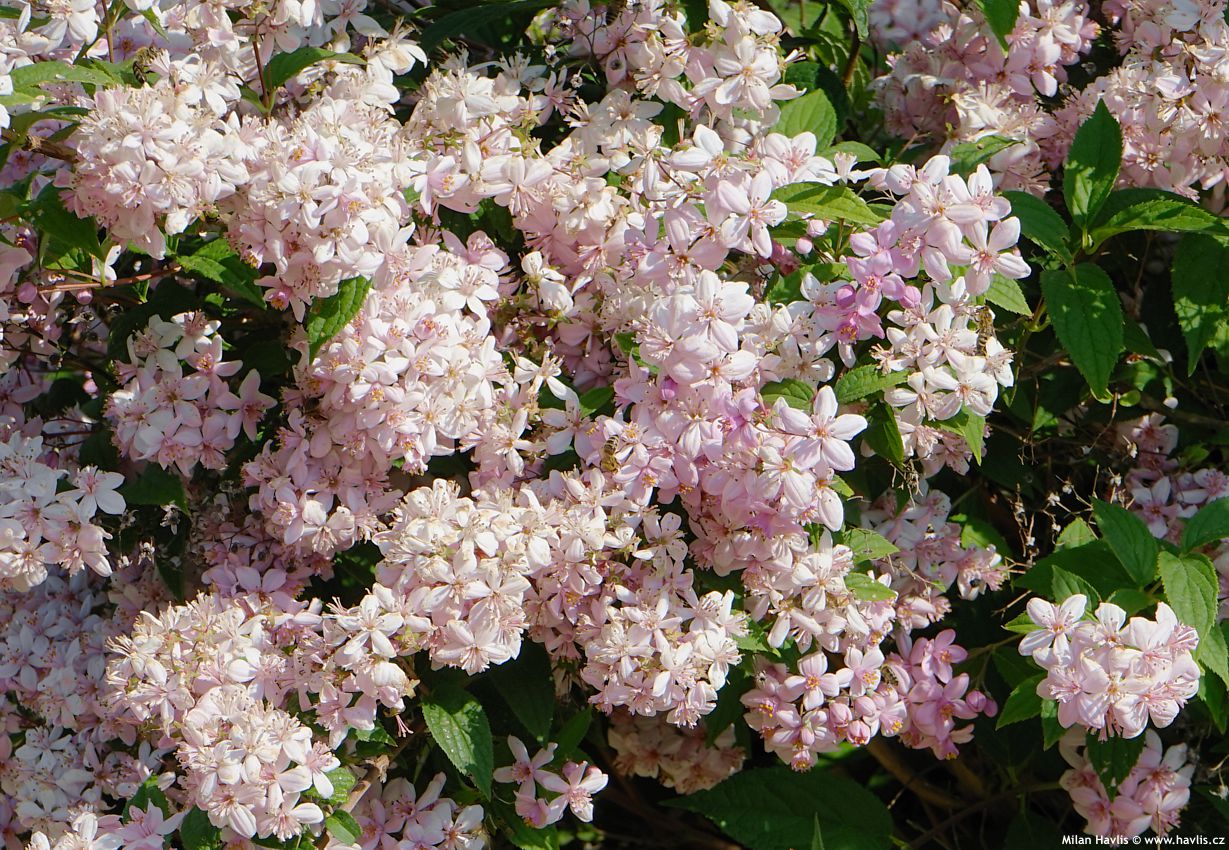
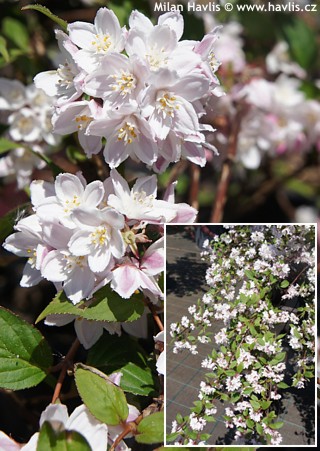
Mont Rose is a profusely flowering deutzia cultivar with pale pink, star‑shaped flowers arranged in dense panicles. This particular shade, as well as the structure of the flowers, is unmistakable and exceptional within the genus. The colour is not garish, rather a powdery pink; the centre is adorned with a small crown and the petals show several fine grooves. The leaves are deciduous, medium‑sized, broadly elliptic, matt green, with the slightly rough surface typical of the genus Deutzia, and after flowering they form a calm background that allows the shape of the shrub to stand out. The plant has an upright habit at first, later spreading habit, with arching branch tips that become smothered with flowers at the peak of bloom. Compared with the species, ‘Mont Rose’ is more compact, more regular and blooms far more profusely, which is precisely why it has become such a popular landscape cultivar. The name can be understood as a poetic reference to a “pink hill” of flowers forming above the shrub in spring, and it perfectly captures the character of this deutzia – discreetly elegant, yet impossible to overlook when in full bloom.
In the garden, ‘Mont Rose’ is valued primarily as a shrub for strong spring effect, capable of taking centre stage for several weeks. It looks best in freely growing groups, where it can develop its naturally arching form and where its pink flowers gently contrast with the darker green of surrounding shrubs. It combines very well with shrubs that flower later, such as spireas, weigelas or hydrangeas, which smoothly take over once the deutzia has finished blooming. Thanks to its moderate size, it is also suitable for smaller gardens, where it can stand alone near a terrace or along a path without appearing heavy or overwhelming. In parks and larger plantings it is often used as a transitional shrub between taller trees and lower perennials, creating a calm yet expressive spring backdrop. It also works beautifully among evergreen shrubs with an almost unchanging façade, to which it adds a welcome sense of movement and seasonal change.
Last update 07-05-2011; 27-01-2026
The cultivation requirements of hybrid deutzias are minimal. They perform best in full sun to light shade, where they flower abundantly and form a compact shrub. The soil should be well‑drained, moderately fertile and evenly moist, but the plants tolerate less‑than‑ideal conditions and short periods of drought surprisingly well. They dislike only permanently waterlogged sites and heavy, poorly aerated soils. For the best shape, we recommend one important action: prune the shrub immediately after flowering. Remove up to 70 per cent of the length of the shoots that have flowered. This rejuvenates and thickens the plant and prevents it from being disfigured by dried seed capsules. Feeding is unnecessary; ordinary garden soil is sufficient. Frost hardiness is high, at least down to –30 °C, and even lower in well‑established plants, and under Central European conditions no winter protection is required (USDA zone 5).

Goods are shipped all over Europe. For Russia and U.K. and for further details please read about SHIPPING OPTIONS HERE.
Are you interested in a serious discount for orders NOV-FEB? Check your options here.
THE PRICES INCLUDE VAT of 15%. For quick conversion you can use 1 CZK = approx. 0.04 EUR
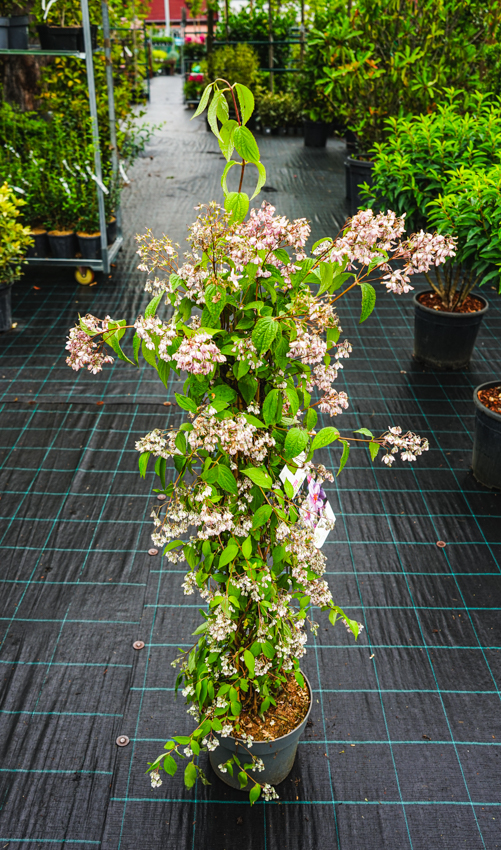
- STANDARD QUALITY - Plants of this group are 1st class quality with number of branches and overall density adequate to their size and age, considering they were container grown.
- DE LUXE QUALITY - This label guarantees a luxurious quality of manually selected plants that, compared to their height and age, are exceptionally dense and beautiful.
- EXTRA - These plants are usually mature and bigger specimens with exceptional overall appearance.
- STANDARD (as described in the plant form) means a tree with a trunk of 190-210 cm and a crown at the top, unless specified differently. The commercial size for trees is their girth measured in the height of 1m from ground.
- HOBBY - These plants are of the same quality as our standard-quality plants but younger and therefore cheaper.
- SHRUB - a woody plant with branches growing bushy from the ground level.
- HALF-STANDARD or MINI-STANDARD - a small tree with shorter trunk, its size is usually specified.
- FEATHERED - These are trees with branches growing already from the base of the trunk and up along the stem.
- GRASSES and PERENNIALS - Sizes given usually read the diameter of the pot or the clump, as specified.
