Hosta 'JULIE MORSS' plantain lily

Hosta
The genus Hosta comprises a group of perennial herbs native to East Asia — chiefly Japan, the Korean Peninsula, northeastern China and the Russian Far East — and in the wild they are typically found in woodland understoreys, on moist slopes and in stream valleys, in partial to full shade. The number of recognised taxa varies in the specialist literature depending on species concept; common estimates fall around 40–50 species. Hostas were first recorded by the European traveller Engelbert Kaempfer (1651–1716), significant early botanical work from Japan was contributed by Carl Peter Thunberg (1743–1828), and the generic name Hosta was formally established by Leopold Trattinnick (1764–1849) in honour of the Austrian physician and botanist Nicolaus Thomas Host (1761–1834), who played a notable role in developing the imperial botanical collections in Vienna. The historical synonym Funkia, referring to Heinrich Christian Funck (1771–1839), appears in older sources but today Hosta is the internationally accepted name. The genus has undergone several taxonomic revisions because of its high variability, and modern systematics place it in the family Asparagaceae (subfamily Agavoideae).
The historical use of hostas in their native lands was markedly more utilitarian than is sometimes suggested. In Japan some species were cultivated primarily as food — young shoots and leaves are known locally as urui and are still consumed regionally — while ornamental use developed more slowly. Hostas reached Europe and North America mainly as botanical specimens in the nineteenth century, with notable collectors and introducers such as Philipp Franz von Siebold (1796–1866), who systematically documented Japanese flora, sent extensive collections to Europe and co‑published the important Flora Japonica. Ornamental use in gardens expanded gradually; in the twentieth century a strong collector culture emerged around hostas, institutionalised in part by the American Hosta Society (founded 1968). The AHS organises cultivar registration, publishes specialist literature and supports regional and national shows and competitions; awards such as “Hosta of the Year” and local exhibition prizes have a measurable effect on the popularity and distribution of cultivars. Alongside the AHS, university arboreta and specialist horticultural institutions maintain collections, perform evaluations and act as hubs for knowledge exchange between collectors and breeders.
Breeding of hostas concentrates primarily on the leaf — its size, shape, patterning and colour — as well as on overall plant habit and, in some lines, on flower number and fragrance; historically they were long associated with the Liliaceae because of their floral traits. The species most frequently used as parents in hybridisation are Hosta sieboldiana, Hosta fortunei and Hosta plantaginea (the latter prized for its fragrant flowers), which have provided the genetic foundation for many modern cultivars. The result is thousands of registered cultivars exhibiting a wide spectrum of leaf textures and colours. Collectors’ enthusiasm stems from the slow, “characterful” development of hostas — each plant matures into a distinctive form, leaves alter texture and hue with light and age — and from the pleasure of comparing subtle differences between varieties. Active participants in the contemporary scene include long‑standing registrars and experts associated with the AHS as well as commercial growers and specialist nurseries (for example Plant Delights and Tony Avent), who combine scientific methods with collector demand and thus keep breeding and the exchange of new cultivars alive.
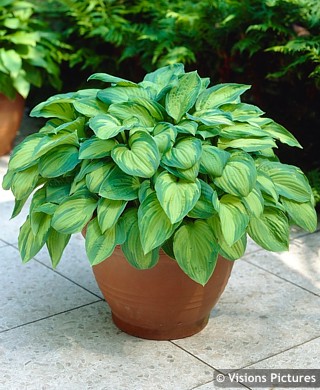
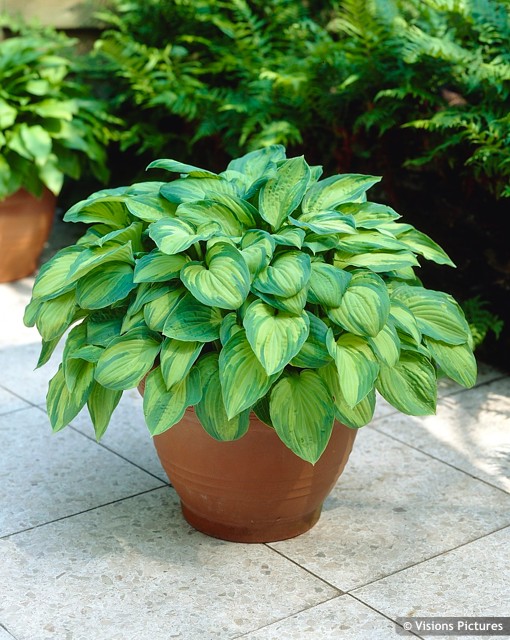
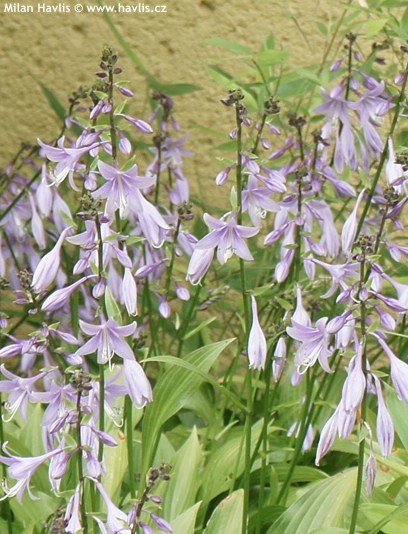
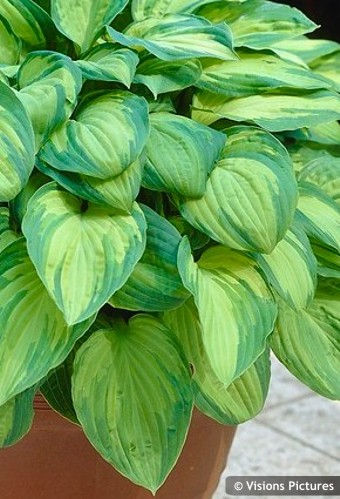
Julie Morss is not just name of this plantain lily, but also the name of a British hosta pioneer. This variety has broadly ovate, thick leaves that emerge almost yellow and green, and quickly turn pale green in the centre and darker green at margins. Flowers are bell-shaped, light lavender violet, atop stems reaching some 40 cm. The plant without flowers is quite dense and has a compact, mounding habit.
Hostas need constantly moist, fertile soil that never dries out – keep it always mulched. They respond well to fertilizing and produce stronger foliage and denser tufts. Ideal location is partial shade, or full sun with some shade during the day. Full shade is fine but plants may not flower as freely or at all. Drought can result in weakened plants that will be prone to diseases, and combination of drought and full sun will damage most variegated cultivars. Beware of slugs and snails who come to feast on their leaves without an invitation. Being deciduous, remove all wilted foliage from previous year in early spring and make sure not too damage emerging bourgeons. They cope well with polluted environment in cities. Hardy to about -40 °C (USDA zone 3).
Last update 31-01-2013