












.jpg)
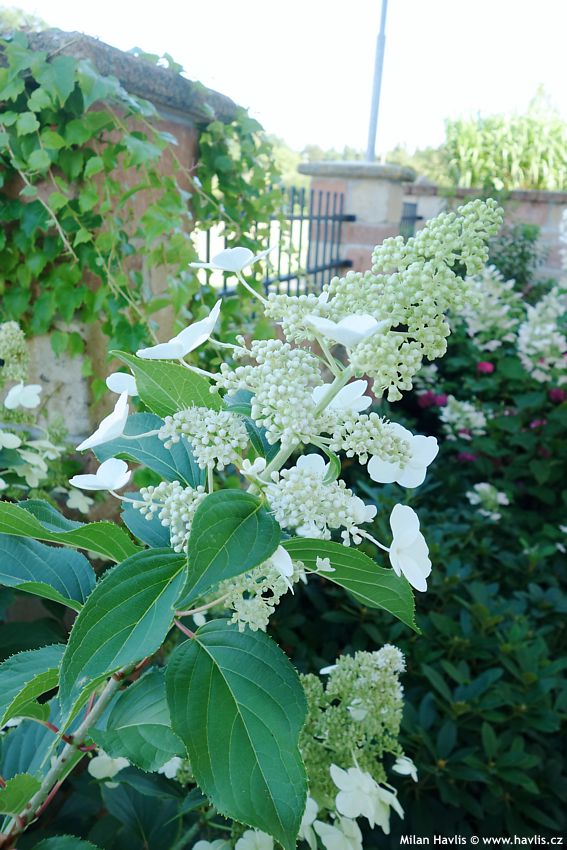
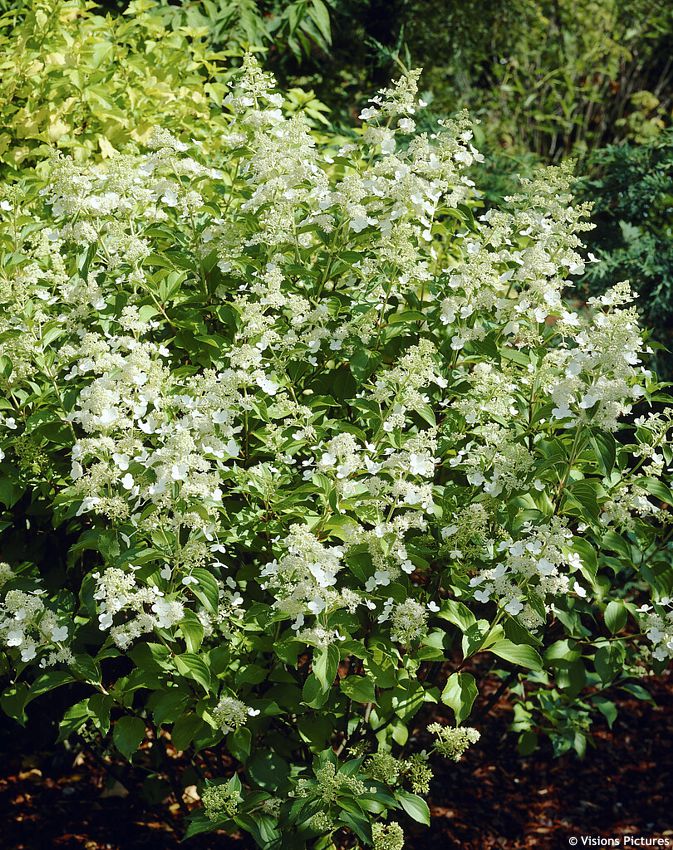
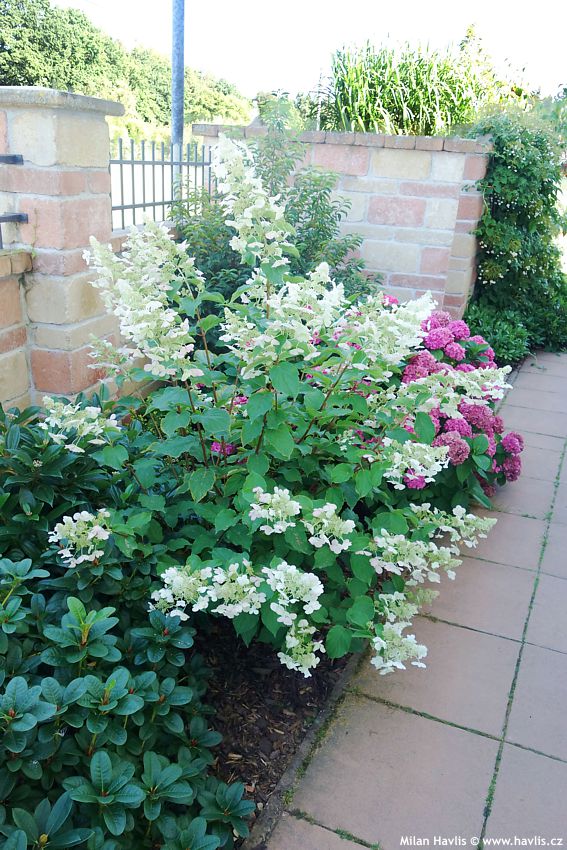
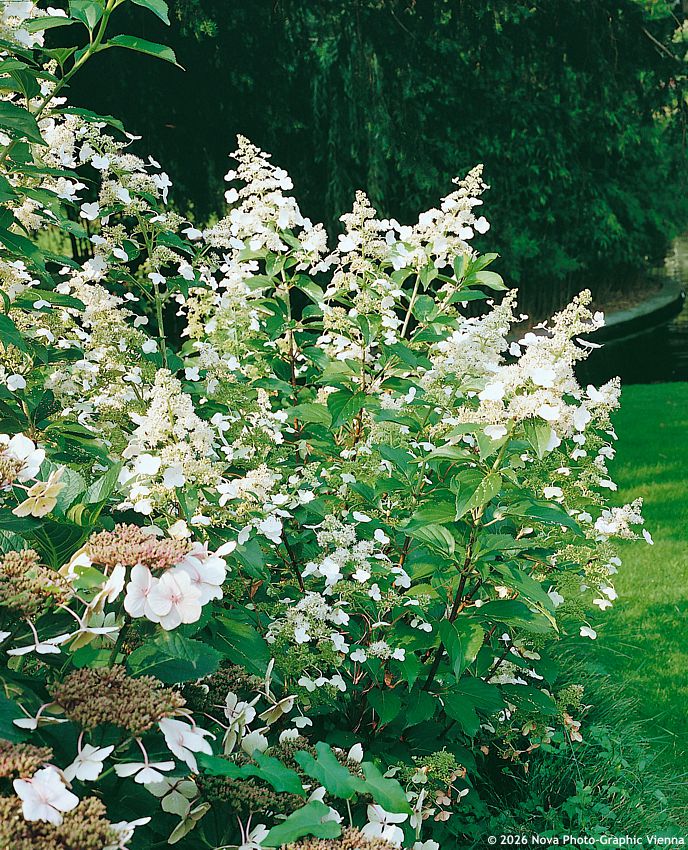
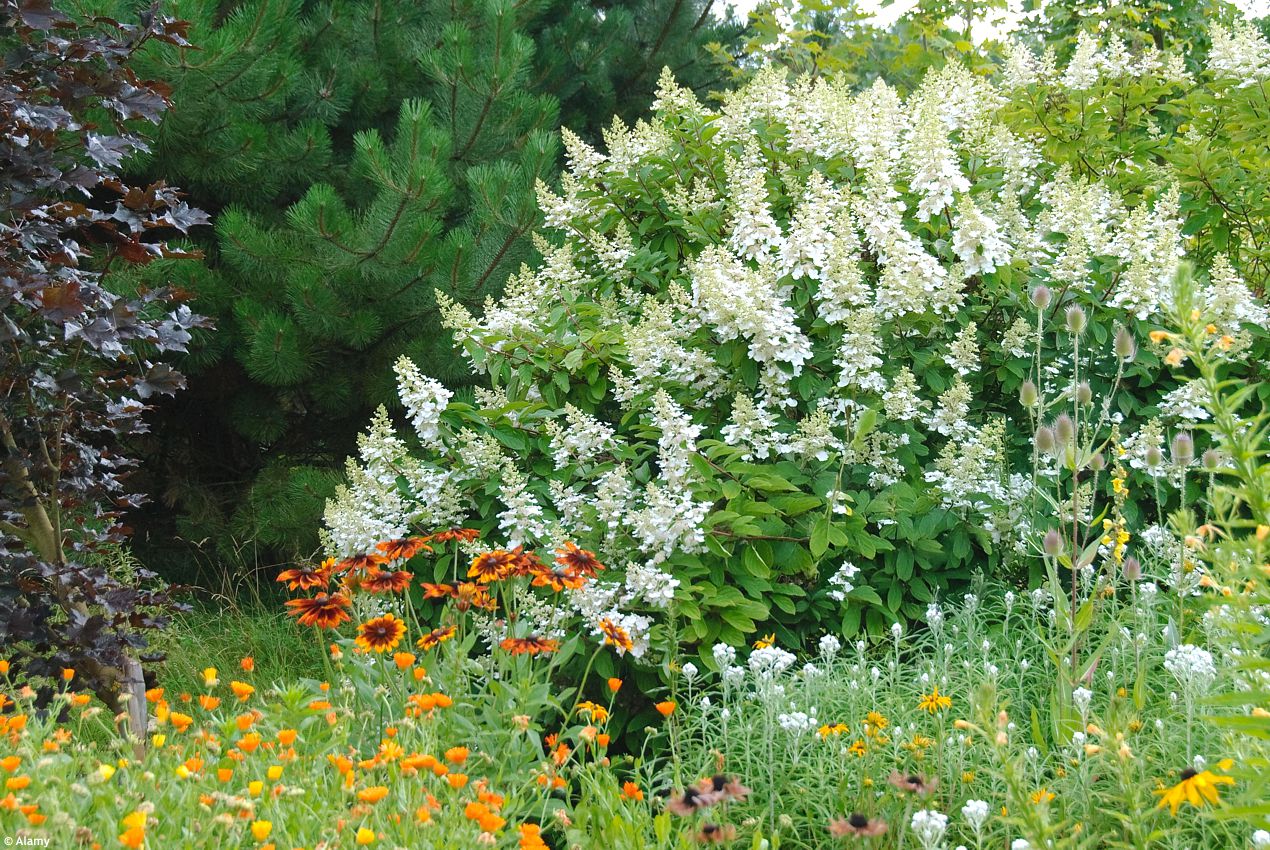
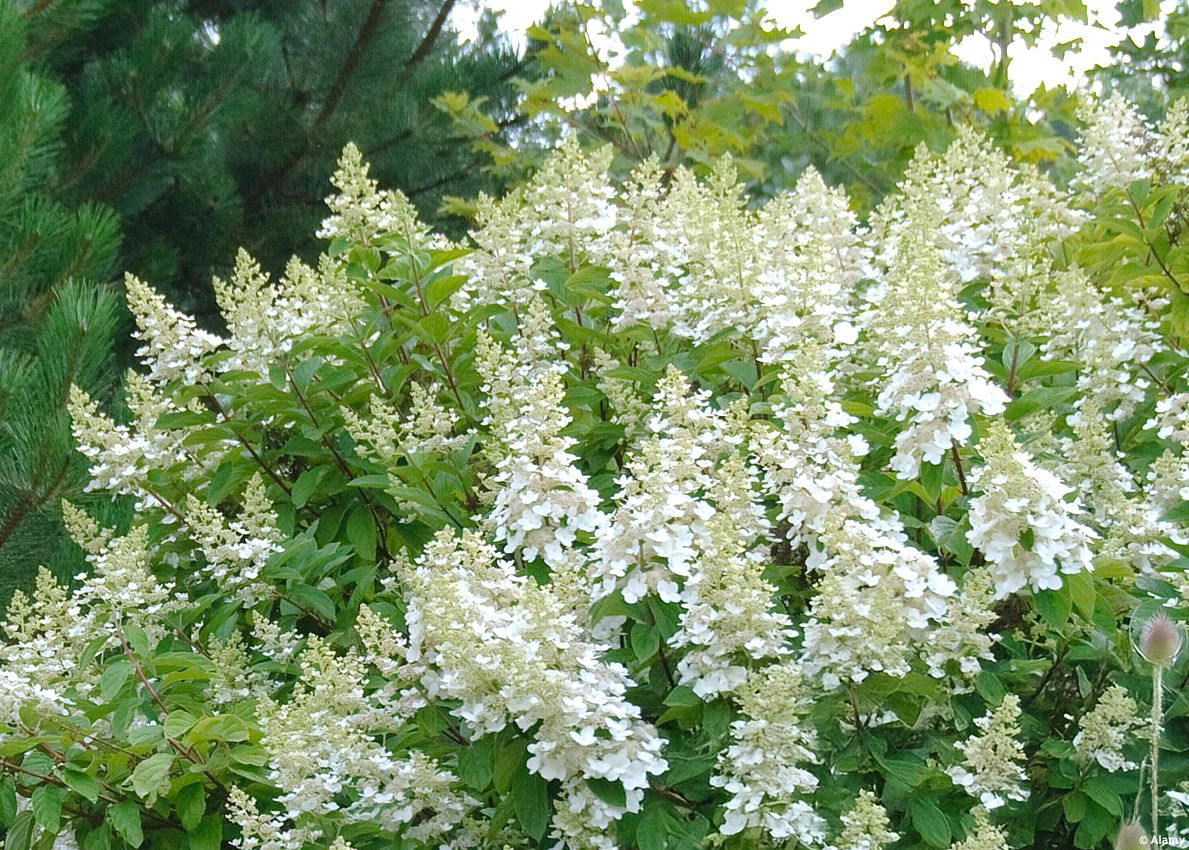
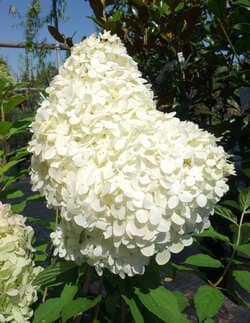
Hydrangea paniculata 'KYUSHU' panicle hydrangea

 Symbivit Tric (arbuscular)
 Symbivit (arbuscular)
Hydrangea
The panicle hydrangea (Hydrangea paniculata) is a deciduous shrub or small tree native to East Asia, naturally occurring in the mountain forests and valleys of China, Korea, Japan, and Russia’s Sakhalin Island. It is distinguished by its strikingly conical panicles composed of small fertile and showy sterile florets, which shift in color over the season from white through pink to wine-red, and by its high tolerance for full sun. The species was botanically described in 1829 by the German physician and botanist Philipp Franz von Siebold (1796–1866), who encountered it during his work in Japan. It reached Europe through botanical collections and expeditions of the 19th century, with the first cultivars such as ‘Grandiflora’ and ‘Floribunda’ spreading in gardens only toward the end of that century.
A milestone in the breeding of Hydrangea paniculata came with the expedition of American dendrologist Charles Sprague Sargent to Japan in 1892. He brought back seeds from which, in the following years, the cultivar ‘Praecox’ was raised—the first documented variety with early flowering. Its beauty was already praised in 1897 in the journal Garden and Forest, and when the plant became established in cultivation, Sargent himself called it in 1922 one of the most beautiful shrubs in the Arnold Arboretum. The original specimen still grows there today as a living botanical monument more than a century old.
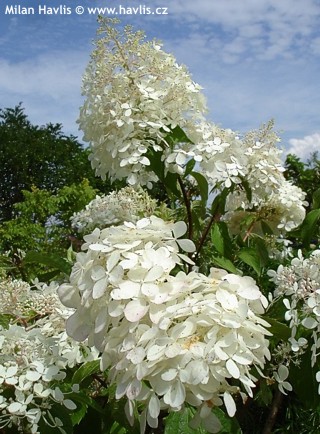
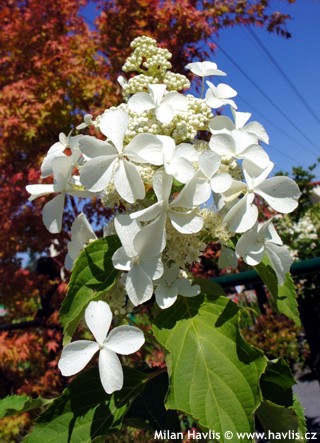
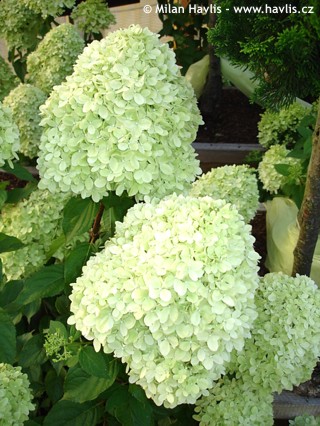
Kyushu is a time‑tested cultivar of panicle hydrangea, rightly regarded today as a classic. It is an upright, medium‑ to strongly‑growing shrub with a naturally open habit; in maturity it commonly reaches 1.5–2.5 m in height and about 1–1.5 m in width. It produces tall, conical inflorescences 20–35 cm long, composed mainly of fertile – small and often fragrant – florets, with a smaller proportion of sterile flowers. Flower colour begins cream‑white to faintly greenish and may take on a subtle pinkish tinge in autumn; it should not, however, be described as distinctly autumn‑pink. Flowering runs from July into early autumn. The deciduous leaves are elliptic, medium‑sized and deep green; the petioles can show a slight reddish cast, and the stems of this form are notably greener than those of other panicle hydrangeas with similar blooms.
The cultivar originates from Japan, specifically the Aso‑san region of Kyūshū. Soft cuttings collected at that locality were taken by Captain Collingwood Ingram in 1926 and later passed to Robert and Jelena de Belder at the Kalmthout Arboretum in Belgium. There the distinctive form was recognised and subsequently named and marketed as ‘Kyushu’, honouring its place of origin. Collingwood Ingram (1880–1981), besides holding the rank of captain in the Royal Navy, was a prominent British gardener and plant collector, a specialist in Japanese woody plants (notably Prunus). His field collecting, careful documentation and promotion of Japanese forms substantially enriched European collections and horticultural practice.
Last update 19-02-2026
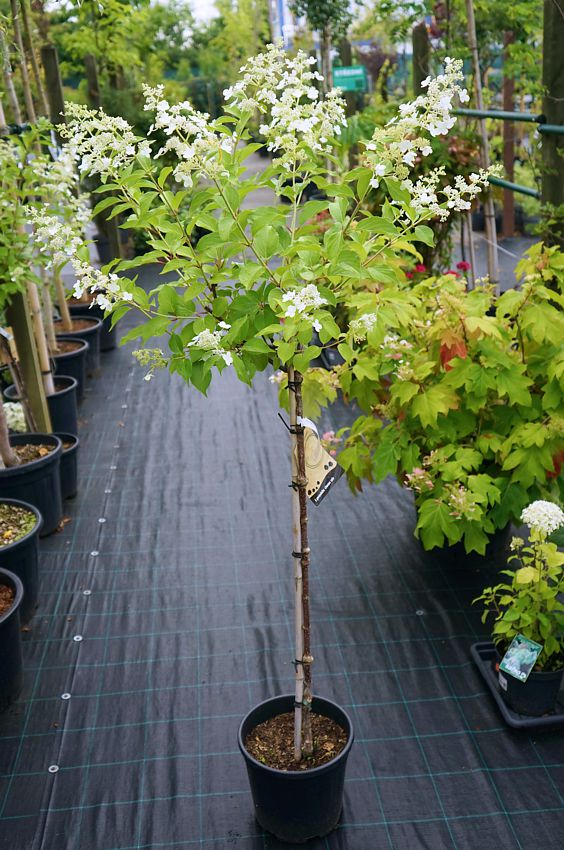
Panicle hydrangeas thrive best in full sun but cope well with light partial shade provided they have sufficient moisture. Soil type is not critical, yet in fertile, deeper and well‑drained ground they produce the largest flower heads and the strongest framework. After planting they need regular watering, as their shallow root system dries out quickly during the first two years; once established they tolerate short summer droughts, although they remain healthier and less prone to wilting in evenly moist soil. They respond very well to feeding, but fertilisers with a lower nitrogen content are preferable to encourage flowering rather than overly lush growth that weakens the stems. They tolerate any aspect and a wide pH range. Each spring before budbreak they require a hard prune, leaving roughly 10 to 20 cm of the previous year’s wood, as they flower exclusively on new shoots. They grow well in containers but need more frequent watering and a sheltered position away from strong winds, which can snap young stems carrying heavy flower heads. Standard forms require a firm staking system, which must be renewed after four to five years to support the increasing weight of the crown. Their cold tolerance reaches approximately –34 °C (USDA zone 4).
Goods are shipped all over Europe. For Russia and U.K. and for further details please read about SHIPPING OPTIONS HERE.
Are you interested in a serious discount for orders NOV-FEB? Check your options here.
THE PRICES INCLUDE VAT of 15%. For quick conversion you can use 1 CZK = approx. 0.04 EUR
- STANDARD QUALITY - Plants of this group are 1st class quality with number of branches and overall density adequate to their size and age, considering they were container grown.
- DE LUXE QUALITY - This label guarantees a luxurious quality of manually selected plants that, compared to their height and age, are exceptionally dense and beautiful.
- EXTRA - These plants are usually mature and bigger specimens with exceptional overall appearance.
- STANDARD (as described in the plant form) means a tree with a trunk of 190-210 cm and a crown at the top, unless specified differently. The commercial size for trees is their girth measured in the height of 1m from ground.
- HOBBY - These plants are of the same quality as our standard-quality plants but younger and therefore cheaper.
- SHRUB - a woody plant with branches growing bushy from the ground level.
- HALF-STANDARD or MINI-STANDARD - a small tree with shorter trunk, its size is usually specified.
- FEATHERED - These are trees with branches growing already from the base of the trunk and up along the stem.
- GRASSES and PERENNIALS - Sizes given usually read the diameter of the pot or the clump, as specified.
