Osmanthus heterophyllus 'PURPUREUS' holly osmanthus, false holly

Osmanthus
Osmanthus, called sweet olive in English, takes its name from Greek words osme (fragrance) and anthos (flower). The genus comprises roughly 25–30 species, along with numerous cultivated forms, many of which are often mistaken for hollies because of the shape and firmness of their leaves. Osmanthus reached Europe during the 18th century, when botanical gardens and plant collectors began to focus intensively on woody plants from East Asia. The genus was first scientifically described by Carl Linnaeus (1707–1778) in 1753, but the detailed classification of individual species as we know it today is largely the work of later botanists, particularly Japanese and European taxonomists of the 19th century, who were able to study living plants in their native habitats.
Osmanthus plants caught my attention at first sight in 2004, and I became a collector long before I had read about their supposed sensitivity to our climate. You know the saying, “Never say something can’t be done, because someone may come along who doesn’t know that and does it”? I simply planted one after another in my garden and observed how they behaved. They were tested most severely during the harsh winter of 2006/2007, yet not a single plant died. Scorched leaves grew back, frost‑damaged twigs were pruned away, and some specimens are now taller than I am. I have also noticed a remarkable genetic tolerance to drought, although I still need more time to distinguish those that cope well with both summer and winter dryness from those that require watering during winter.
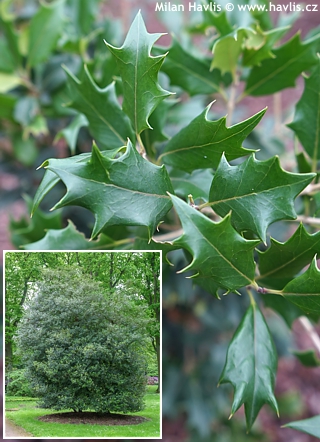
Osmanthus heterophyllus, the holly osmanthus, originates from central and southern Japan (Honshu, Shikoku and Kyushu) as well as Taiwan, where it has been regarded as an integral part of everyday life for centuries. It was botanically described by Carl Peter Thunberg (1743–1828), a Swedish botanist who was among the very few Europeans allowed to study Japanese flora on site, and thanks to him the species entered European collections at the turn of the 18th and 19th centuries. In Japan it was planted near houses, temples and in traditional gardens as a quiet form of protection and a valued evergreen backdrop. Its twigs were used in New Year arrangements and rituals as symbols of strength and endurance, the wood served for small‑scale crafts, and the plant was appreciated for its reliability close to human dwellings.
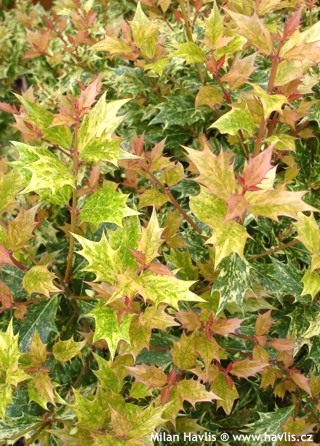
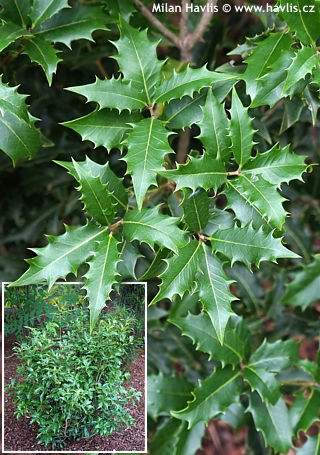
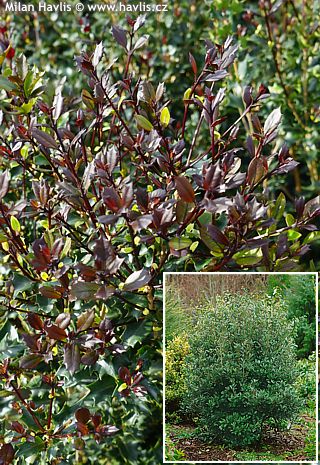
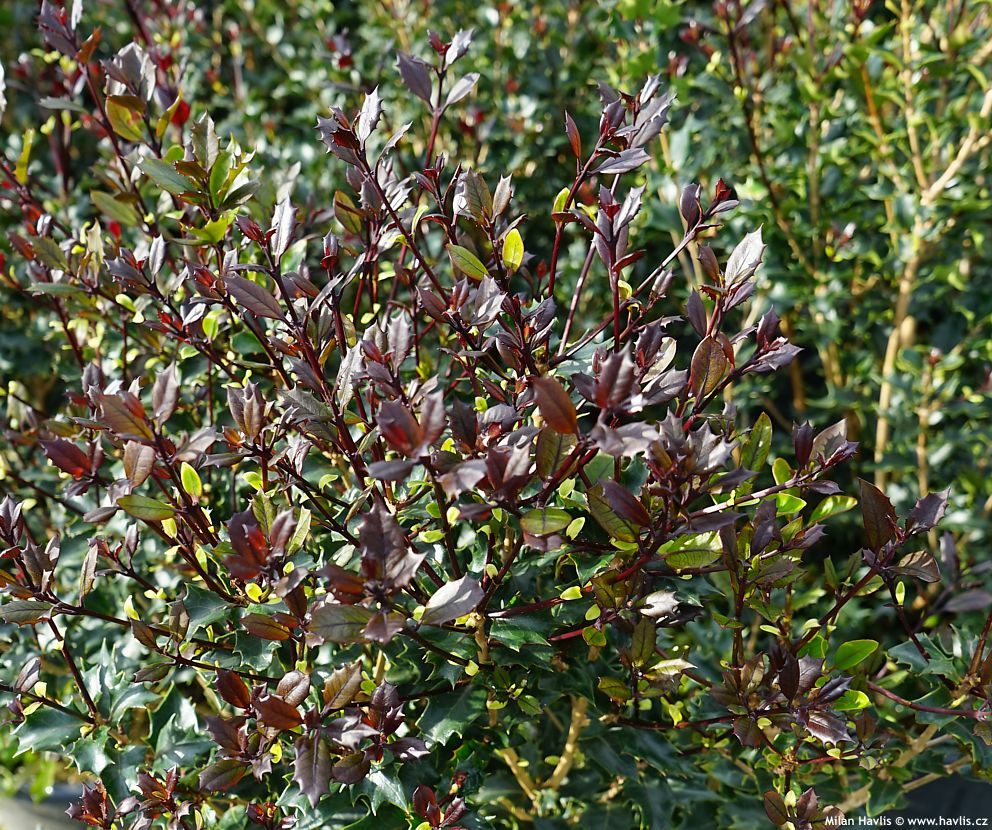
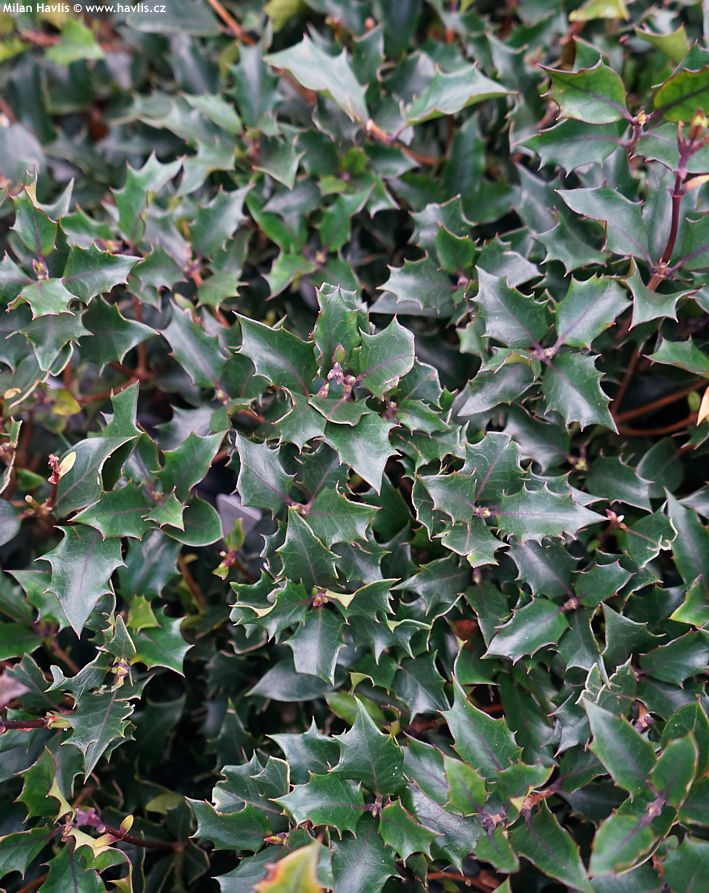
Purpureus is a popular holly osmanthusvariety producing evergreen, leathery, and highly glossy leaves which emerge deep maroon, almost black, and mature to a very dark green shade with maroon hues. Leaves of young plants are margined with spines and resemble hollies but can easily be distinguished: holly leaves are alternate while osmanthus leaves are opposite. The presence and quantity of leaf spines as well as the foliage size may vary with each clone or mother plant from which cuttings were taken, and significantly decreases with age: mature plants have almost entire, camellia-like foliage.
False holly is known for very fragrant flowers which are tiny, sweetly scented, snow-white, and appear in autumn. If pollinated by a male plant they are followed by small, purplish black, non-toxic berries, but that happens rarely.
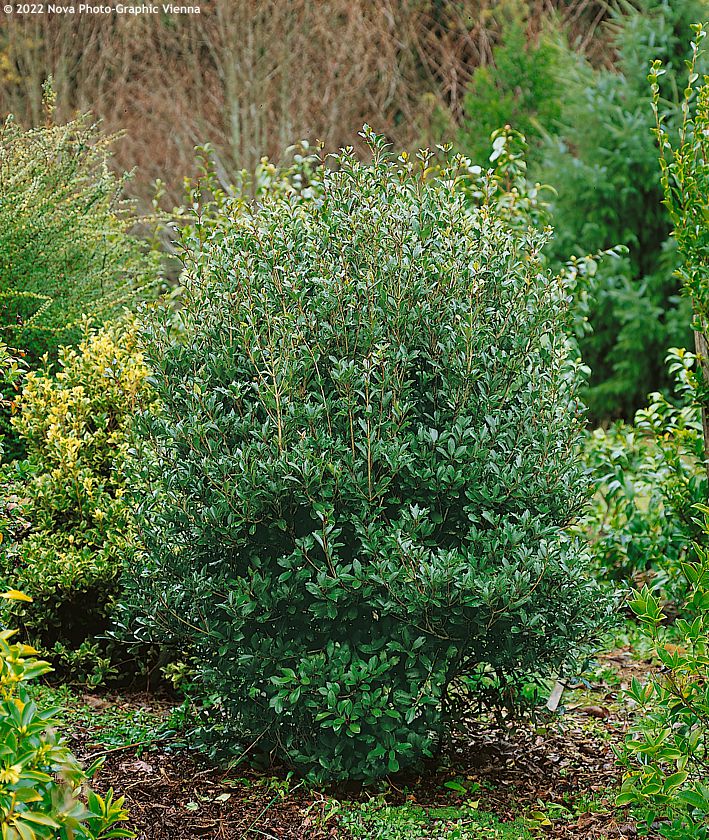
Purpurea false holly is also popular for its slower growth and more compact habit. It naturally forms upright growing shrubs which grow 20-25 cm per year and become oval with age. The branching is dense and plant size and shape can be easily maintained and shaped by pruning. Spring pruning enhances branching, summer trimming is great for shaping. The twigs and bark are light gray and smooth.
Spine-leaved osmanthus has long been used as a natural barrier against wild animals and cattle. Another significant advantage is that they are long-lived shrubs or trees, and we are not talking about decades but hundreds of years. There are records of specimens whose age was estimated to 950 or more years. In other words, if located in an ideal spot it can be a plant that will be passed on by one generation to another. It looks great as an attractive evergreen specimen shrub or small tree and does a good job as a hedge, too.
Grow osmanthus in moist but well-drained, humus rich, preferably acidic soil. Provide plenty of mulch for winter to protect the roots from fast freezing. It loves full sun but in colder regions find it a location sheltered from late winter and early spring sunlight but with plenty of light during the growing season. Use only plants with mature wood in zone 6 and transplant it no later than late summer in order to avoid frost damage after the first winter. It is trialled hardy to -24 °C (USDA zone 6). It will withstand a few degrees lower with some wood damage but regenerates readily after spring pruning. It does not suffer from diseases, but vine weevil can be a problem.
Last update 17-01-2023