Parrotia persica 'VANESSA' Persian ironwood

 Symbivit Tric (arbuscular)
 Symbivit (arbuscular)
Parrotia
The genus Parrotia is small but botanically remarkable. It belongs to the witch‑hazel family (Hamamelidaceae), known above all for witch‑hazels with fragrant winter flowers, as well as Fothergilla and Corylopsis. The genus includes only a few species, the best known being the Persian ironwood, while its Chinese relative Parrotia subaequalis is rare and endangered. Scientists have found Parrotia pollen in middle Miocene fossils, proving its existence on our planet 12 to 14 million years ago – surprisingly in what is now southern Austria, where a subtropical climate prevailed at the time. It is valued above all for its extraordinary resilience – tolerating both drought and damp conditions, adapting well to European climates, and becoming a symbol of toughness. This is likely why in English it earned the name “ironwood”: its timber is exceptionally hard and was used for durable objects.
As its name suggests, the Persian ironwood truly originates in Persia, that is, in present‑day Iran. The precise natural range is the Alborz Mountains in northern Iran near the Caspian Sea. In the mountain forests of Iran and Azerbaijan it sometimes forms entire stands known as parrotietum. It was introduced to Europe in the mid‑19th century and soon appeared in the Royal Botanic Gardens at Kew, from where it spread to other English gardens. It was first described by the German botanist Carl Anton von Meyer, who worked in the Russian Empire, and named it in honour of his contemporary Georg Friedrich Parrot (1791–1841), a German naturalist at the University of Dorpat. Parrot undertook expeditions to Turkey and Persia after 1830, led the first ascent of Mount Ararat, and collected unknown plants along the way. His adventurous spirit captivated Meyer and inspired him to pay tribute in this way.
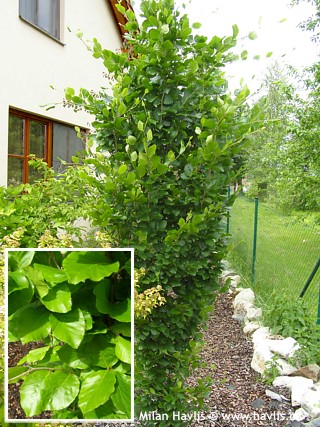
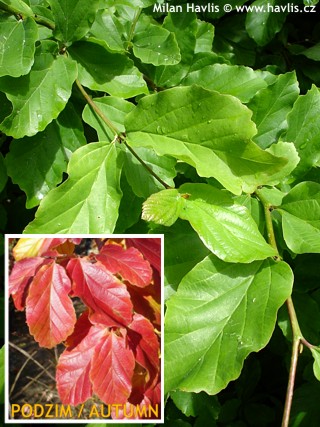
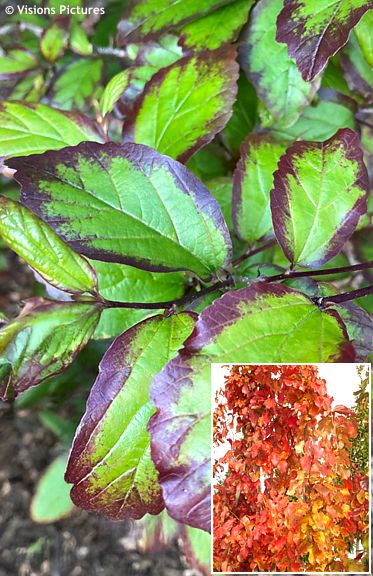
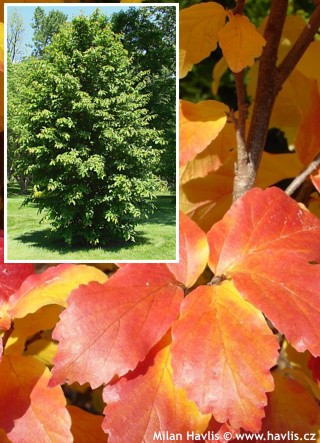
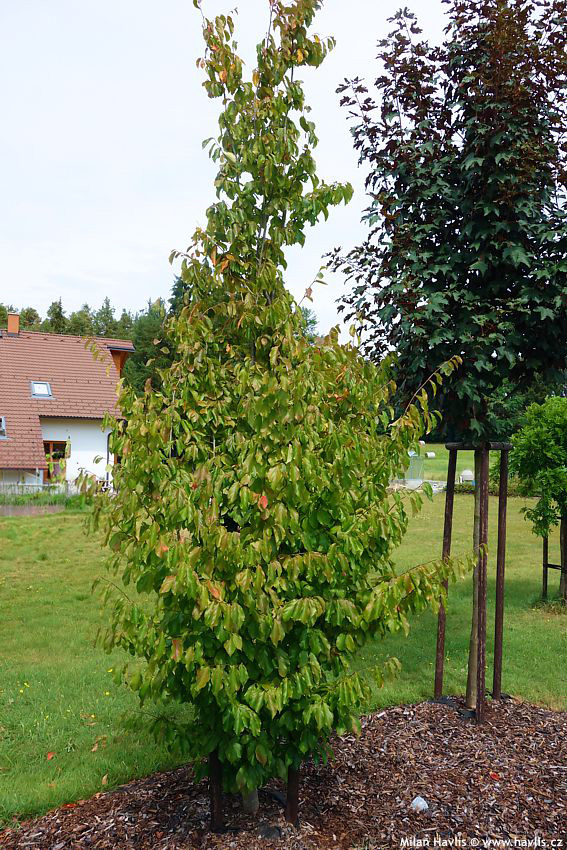
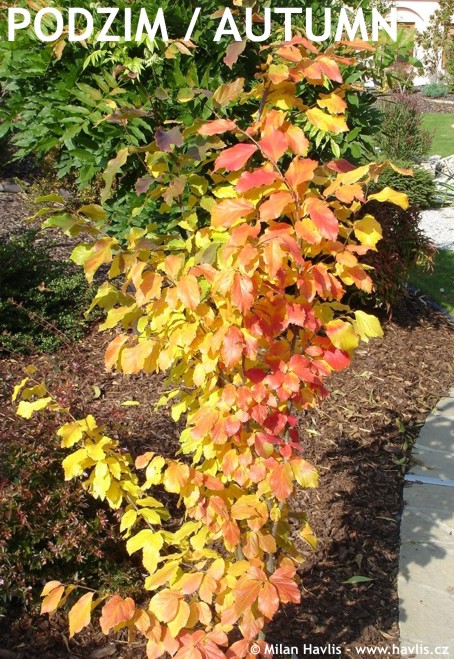
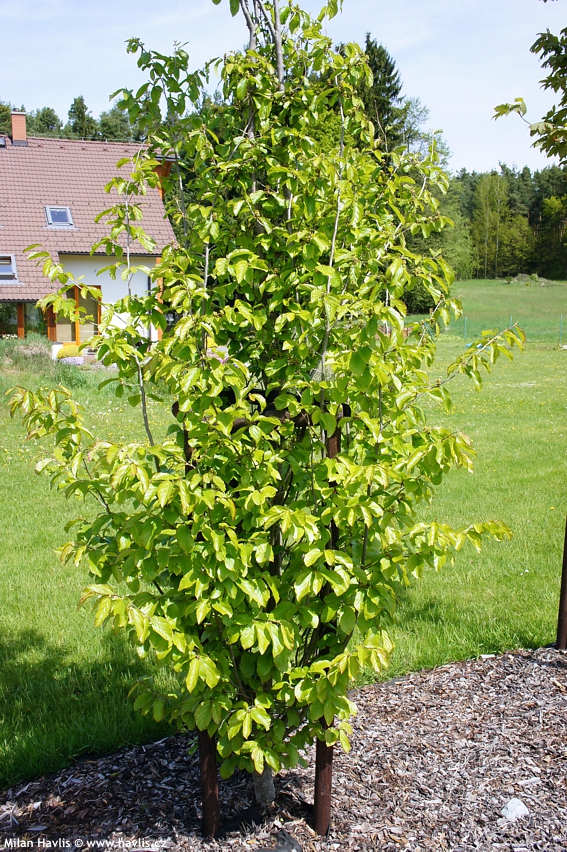
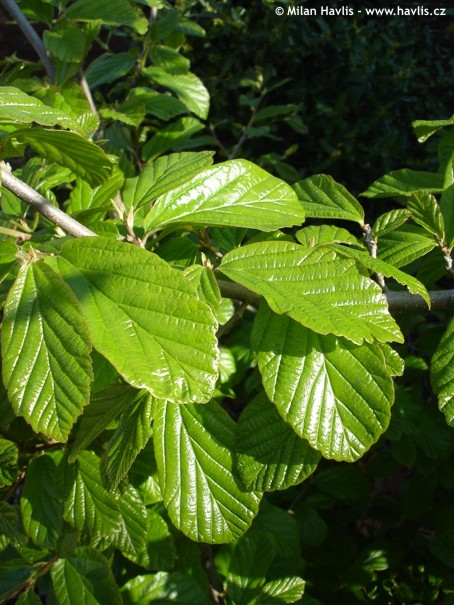
The cultivar Vanessa belongs among the narrowly growing forms of Persian ironwood and is distinguished by attractive, broadly oval leaves with pronounced veins. In spring they are fresh green, in summer some retain reddish margins, and in autumn they transform into several layers of radiant colours reminiscent of the afternoon sun and the approaching dusk. They offer tones of gold, orange, scarlet and a touch of purple. The flowers are small clusters of crimson stamens appearing at the end of winter, inconspicuous yet decorative on closer inspection. The bark peels away in thin plates to reveal a mosaic of cinnamon, grey and green shades, keeping the tree ornamental even outside the growing season. Thanks to these features it is sought after also in the form of a slimmer multi‑stem.
Growth is fairly rapid, but thanks to its columnar habit the tree remains neat and compact. In youth it forms a narrow, elegant shape suitable for smaller gardens or urban plantings. With age, however, the crown broadens and can appear less tidy – for example, a specimen planted in 1998 at the Savill Garden in Windsor had reached 11.5 metres by 2021 but had developed into a rather bushy form. Nevertheless, ‘Vanessa’ remains valued as the most widespread cultivar of Persian ironwood in Europe, especially in the United Kingdom, where it has become the “default” choice for planting in confined spaces.
The cultivar was selected in 1975 by Dutch nurseryman Alphons van der Bom as a seedling with a distinctly upright habit and colourful autumn foliage. In 1983 it was named after the genus of brightly coloured butterflies (Vanessa). It has received the prestigious RHS Award of Garden Merit (AGM). According to Susyn Andrews, the same clone is marketed in the United States under the name ‘Select’, first offered by Buchholz and Buchholz in Oregon in 1993–94. American specimens, however, tend to show more yellow tones, which may indicate the involvement of more than one clone or environmental influence; in New Zealand yellow autumn colour is common to all parrotias.
Last update 09-10-2008; 18-11-2025
Although Persian ironwood usually demands space, PERSIAN SPIRE® fits even into a small garden thanks to its narrow habit. Give it a sunny position where its structure and autumn colouring in warm tones can be fully appreciated. For contrast, combine it with shrubs or trees of sharper autumn hues such as sweetgums or Japanese maples. It prefers fertile, deep soil, moist but well‑drained; once established it copes excellently with drought, urban pollution, severe frosts and summer heat. For the best autumn colours, it is better grown in acidic conditions, though in nature it also thrives on highly calcareous soils. It is virtually care-free: apart from occasional watering only in the first year after planting it needs nothing but admiration. Pruning can be carried out before budbreak from late winter to early spring. It is long‑lived and suffers neither from pests nor diseases. Fully hardy to about −34 °C (USDA zone 4). This variety will tolerate a large planter with regular feeding and watering.