








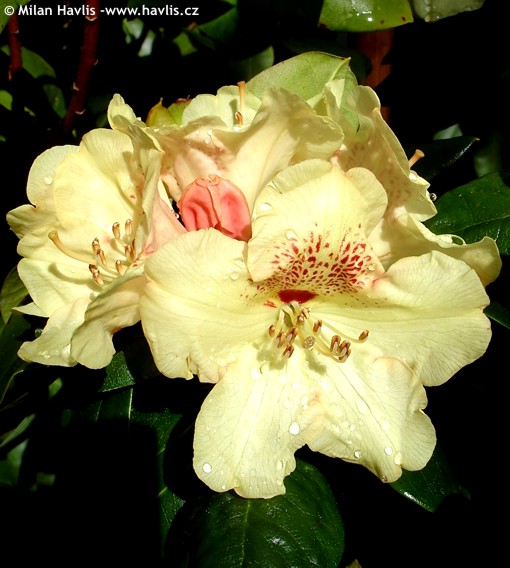
Rhododendron (Yakushimanum) 'GOLDPRINZ' ('Goldschatz') rhododendron

 Rhodovit (ericoid)
Rhododendron
Rhododendron is a large genus within the Ericaceae family, currently comprising around 1,000 recognized species, with the greatest species diversity found in the Himalayas, southwestern China, and the Japanese archipelago. The natural range of the genus extends from Arctic regions of the Northern Hemisphere through the montane forests of Europe and Asia to the tropical cloud forests of Southeast Asia and New Guinea; fossil and molecular evidence points to an ancient origin with major diversification during the Tertiary and Neogene periods. Rhododendrons reached Europe on a larger scale in the 18th and 19th centuries through collecting expeditions and botanical gardens; among the early key figures were Francis Buchanan‑Hamilton (1762–1829) and Nathaniel Wallich (1786–1854), followed later by Robert Fortune (1812–1880). A major breakthrough came with the work of William Jackson Hooker (1785–1865) at Kew and subsequently his son Joseph Dalton Hooker (1817–1911), who during expeditions to Sikkim and the Himalayas described and introduced dozens of new species, profoundly influencing modern breeding. The tradition of plant collecting and breeding was later continued by Ernest Wilson (1876–1930) and others.
Rhododendron yakushimanum is a species native to the small Japanese island of Yakushima, discovered in montane forests and scrub at elevations of approximately 1,200–1,800 m, growing on well‑drained granitic soils and often in full sun, forming low, wind‑resistant shrubs with a dense, compact habit. Takenoshin Nakai (1882–1952) described it as a distinct species, although it was later treated as R. metternichii var. yakushimanum. A defining feature of the species is its indumentum – the felted covering of young leaves – which reduces water loss and protects foliage from temperature extremes and wind. After the first plants were introduced to Europe in the first half of the 20th century by the Japanese grower Koichiro Wada, who sent material to Great Britain between 1930 and 1934, R. yakushimanum rapidly became a cornerstone parent in the breeding of compact, hardy, and highly ornamental hybrids, combining the resilience of yakushimanum with the often more vivid flower colouration or distinctive leaf textures of less hardy parents.
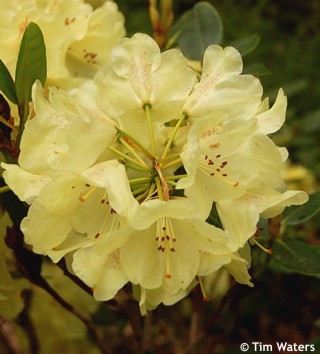
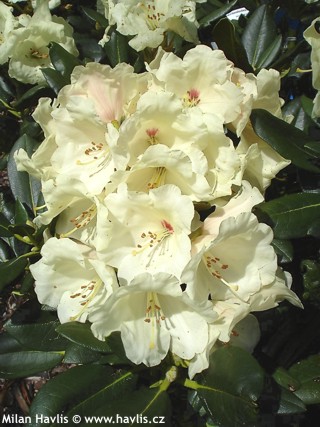
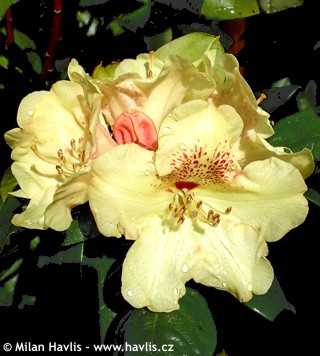
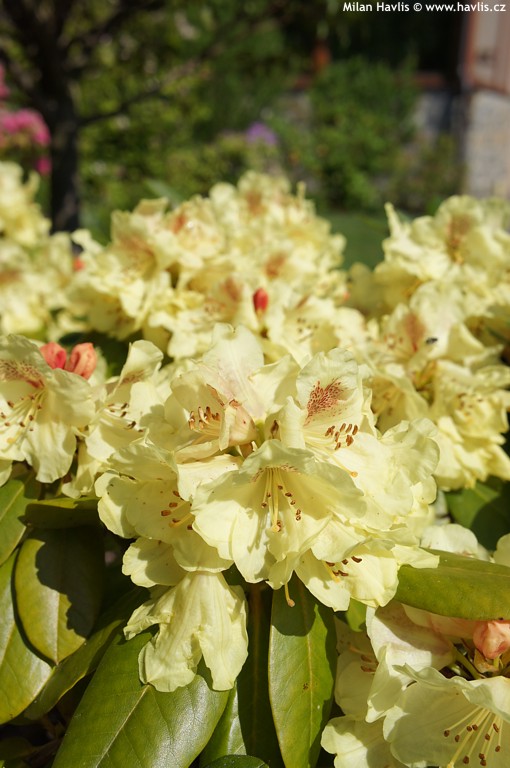
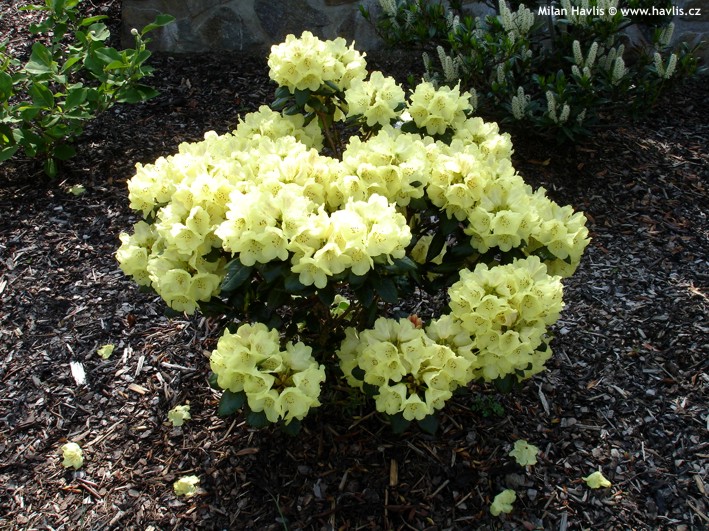
Goldprinz was considered the best yellow-flowering rhododendron when it was launched in 1996 by its breeder Hans Hachmann nursery in Germany. The flowers are banana or gold-yellow with conspicuous burgundy red dots. It is a yakushimanum sport, growing slowly and very compact, flowering reliably and abundantly every year. It likes full sun and needs a sheltered location.
Yakushimanum rhododendrons and their hybrids prefer bright to lightly shaded positions but tolerate full sun throughout the day and cope well with exposed sites subject to wind and cold. They require shallow planting in acidic, humus‑rich, well‑drained soil with consistent moisture but without waterlogging; the roots grow close to the surface and spread laterally, so plants should never be set too deeply, with the top of the root ball kept just below ground level and ideally mulched with leaf litter or bark. For improved appearance, spent flowers may be removed after flowering (deadheading), carefully to avoid damaging new shoots, although this is not essential for plant health. Routine pruning is unnecessary; if rejuvenation or size control is required, pruning should be carried out immediately after flowering, while deeper rejuvenation pruning is best done in late winter before sap flow begins. Fertilize sparingly with fertilizers for ericaceous plants in early spring and, if needed, again during summer; avoid excessive nitrogen and regularly monitor plant health. ‘Goldprinz’ is reliably hardy to at least −25 °C (USDA zone 5b), including flower buds; greater hardiness is possible but has not yet been conclusively documented.