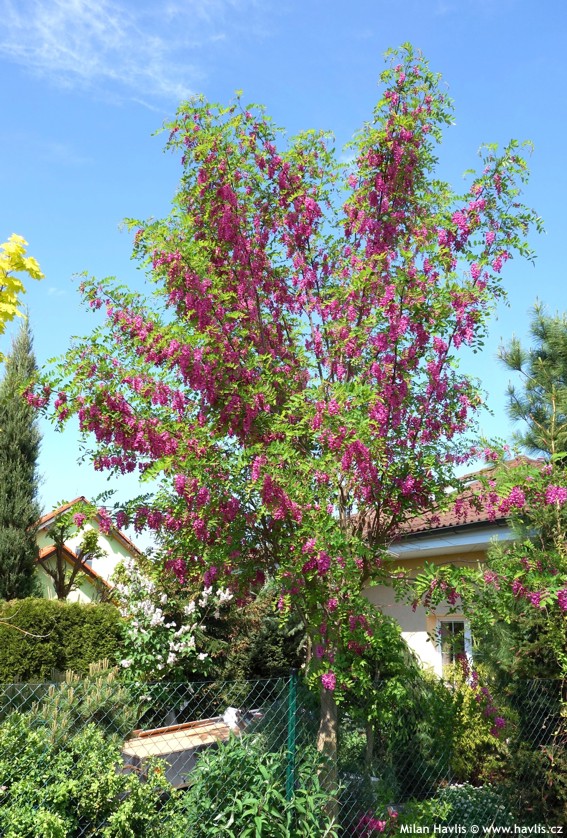
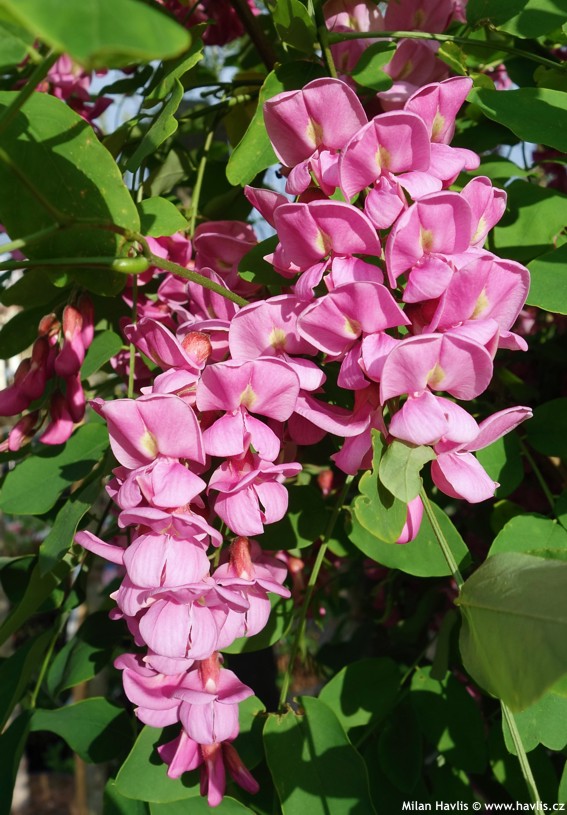
Robinia 'PURPLE ROBE' black locust

 Symbivit Tric (arbuscular)
 Symbivit (arbuscular)
Robinia
Locusts (Robinia) belong to the legume family and form a small genus of deciduous trees and shrubs native exclusively to North America. In their natural habitats they grow mainly on dry, rocky slopes, in open woodland and on disturbed sites, where their rapid growth and symbiosis with nitrogen‑fixing root nodules give them a clear advantage. They were introduced to Europe at the beginning of the 17th century and quickly gained popularity not only as ornamental trees, but also as valuable timber and reclamation species. Typical features of the genus include pinnate leaves, thorny branches and papilionaceous flowers arranged in pendulous racemes that appear in late spring. Black locusts are valued for their tolerance of drought, pollution and poor soils, while their light, airy crowns allow plenty of light to pass through, giving them a distinctive, open character.
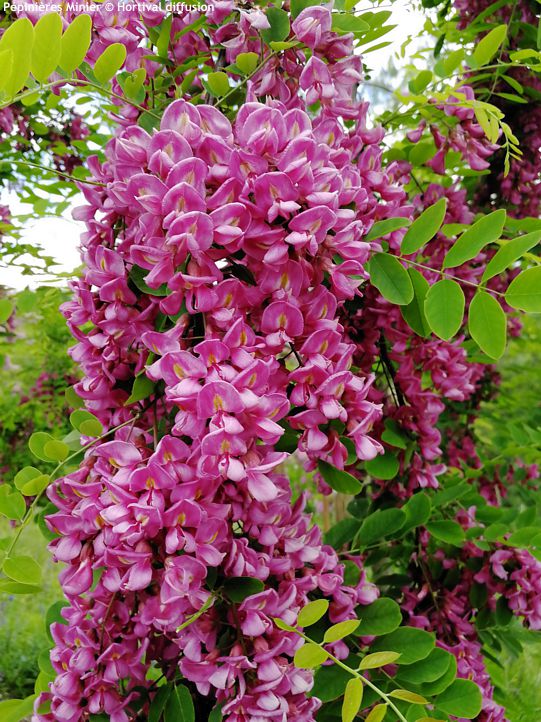
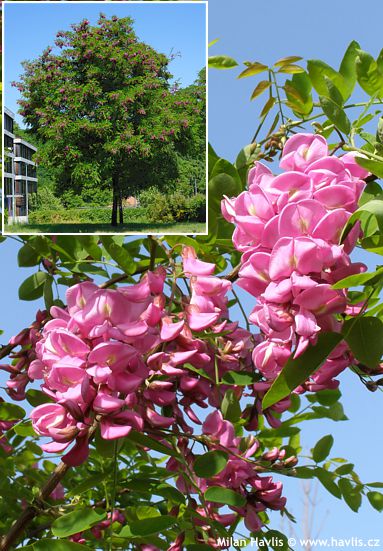
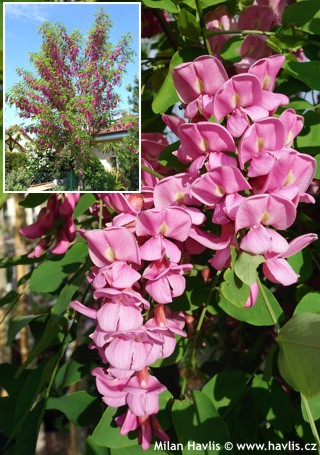
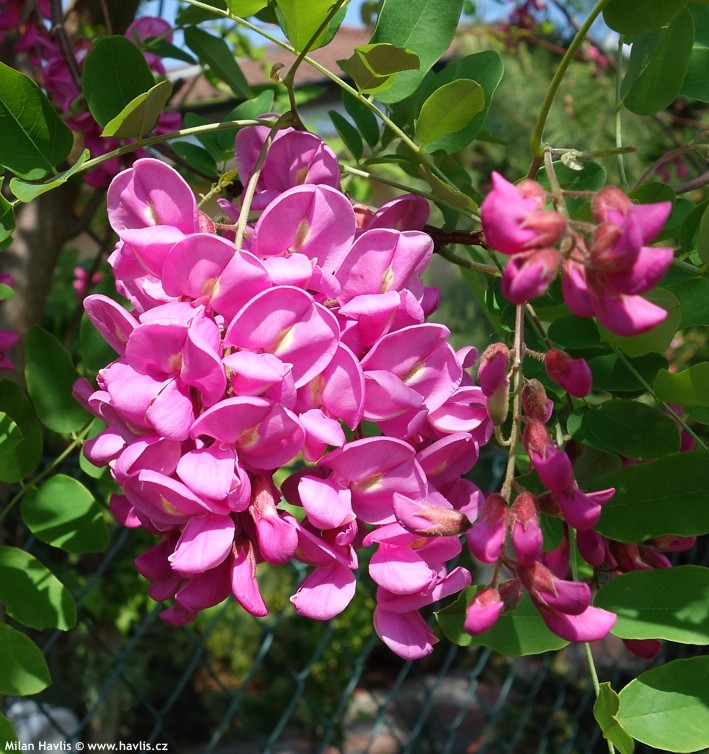
Purple Robe locust makes profusion of 15-20 long racemes of pea-like, deep pink to fuchsia-purple flowers in mid spring. They come out from mid May and continue for about three weeks. You can make the tree flower once again in mid summer by pruning it right after the first flowering in early summer. Locust blooms on new wood, too, so you will be able to enjoy its bright pink flowers again on hot summer days.
Pinnate leaves are mid green and continue emerging until autumn. Thanks to its new leaves the plant keeps its fresh looks all season long. The crown is pyramidal, quite regular in shape and light, providing enough filtered sunlight for plants living underneath. The tree seldom exceeds height of 8 meters. Branches are almost thornless.
Locust needs super-well-drained or dry soil, preferably poor. In wet or boggy soil it will most certainly die. Staking the trunk of a freshly planted tree is necessary for minimum of three years. Annual pruning reduces risk of wind damage. Fully hardy to min. -34°C, possibly more (USDA 4).
Last update 27-05-2018