

































.jpg)
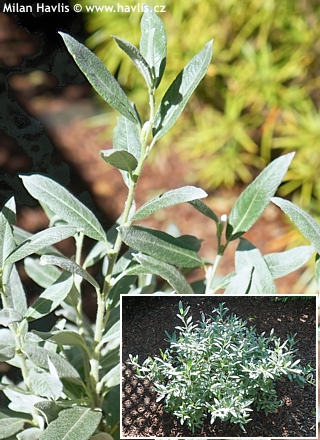
Salix candida 'Jefberg' ICEBERG ALLEY® sageleaf willow, hoary willow

 Ectovit (ectomycorrhizal)
 Symbivit (arbuscular)
Salix
When you walk through the Czech and other Central European landscape, you encounter willows almost everywhere. They stand on damp forest edges, line the banks of ponds and rivers, shade dikes with their broad canopies, and often appear even where the land is left untended – as long as there is enough water in the soil. In some places they grow into tall trees, elsewhere into dense thickets, and there are also species whose smaller stature makes them suitable for ordinary gardens. And you probably appreciate them most in spring, when cutting young willow branches for the Easter whip – a Central and East European tradition – or for weaving baskets. Yet the genus Salix is far broader: it comprises 350–450 species spread across the entire Northern Hemisphere, ranging from mighty trees to dwarf alpine shrubs. Fossil evidence shows they have been with us for 56–34 million years. The genus was formally established by Carl Linnaeus in 1753, but its significance was recognized long before – ancient authors such as the physician Dioscorides and the encyclopedist Pliny the Elder described the healing properties of willow bark rich in salicin, from which modern analgesics later arose. Willows are important not only in the landscape, where they stabilize banks and provide shelter for wildlife, but also in cultural history, where they became symbols of sorrow and lost love – Shakespeare evokes them in Hamlet (Ophelia’s death by the willow) and in Othello (Desdemona sings the “Willow Song”). In modern literature they appear as magical or fantastical elements, for example in Tolkien’s The Fellowship of the Ring (the character Old Man Willow) and even in Harry Potter (the enchanted Whomping Willow).
The sageleaf willow, also referred to as hoary willow, originates from North America, where it grows in cold wetlands with calcareous substrates – in so‑called marl bogs and fens, places where water mixes with minerals and the soil has an alkaline reaction. There it forms compact shrubs with silvery foliage that shimmer like a veil of ice over the green background. In European gardens it is easily mistaken for the Swiss willow (Salix helvetica) from the alpine regions of the Alps and Tatras. Both species share silvery‑grey leaves and a compact habit, and both thrive on alkaline, calcareous soils. Yet while the European willow is at home on rocky, well‑drained mountain sites, the American species is a specialist of wetlands. In North America it was long valued as an indicator of a healthy environment – its presence signaled a stable water regime and sufficient minerals, which was important for local communities. It provided shelter for birds and small wildlife, and in modern times has become a symbol of wetland restoration, planted in botanical gardens as a reminder of rare fen species.
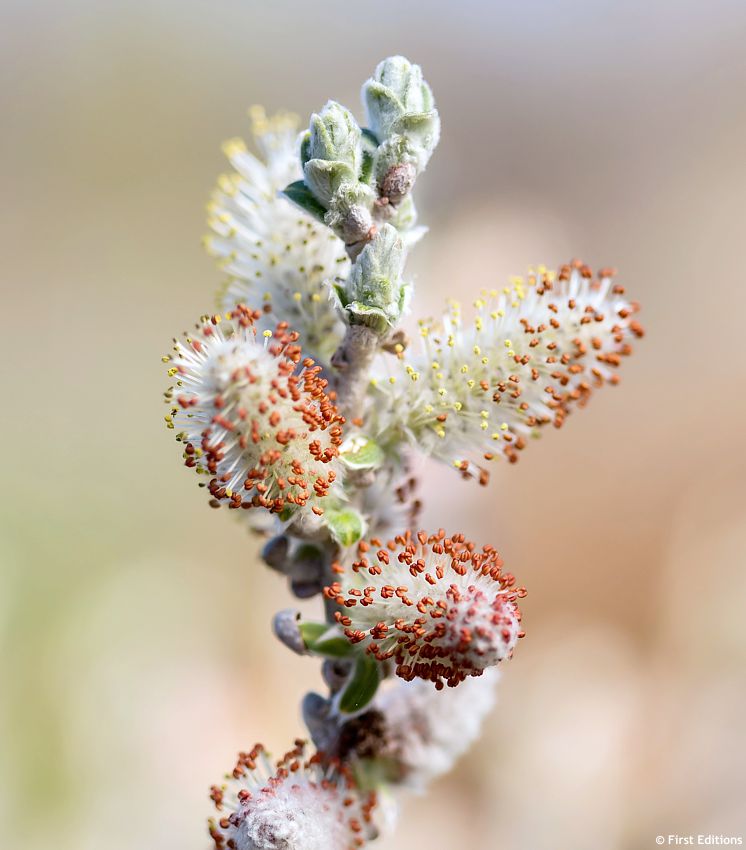
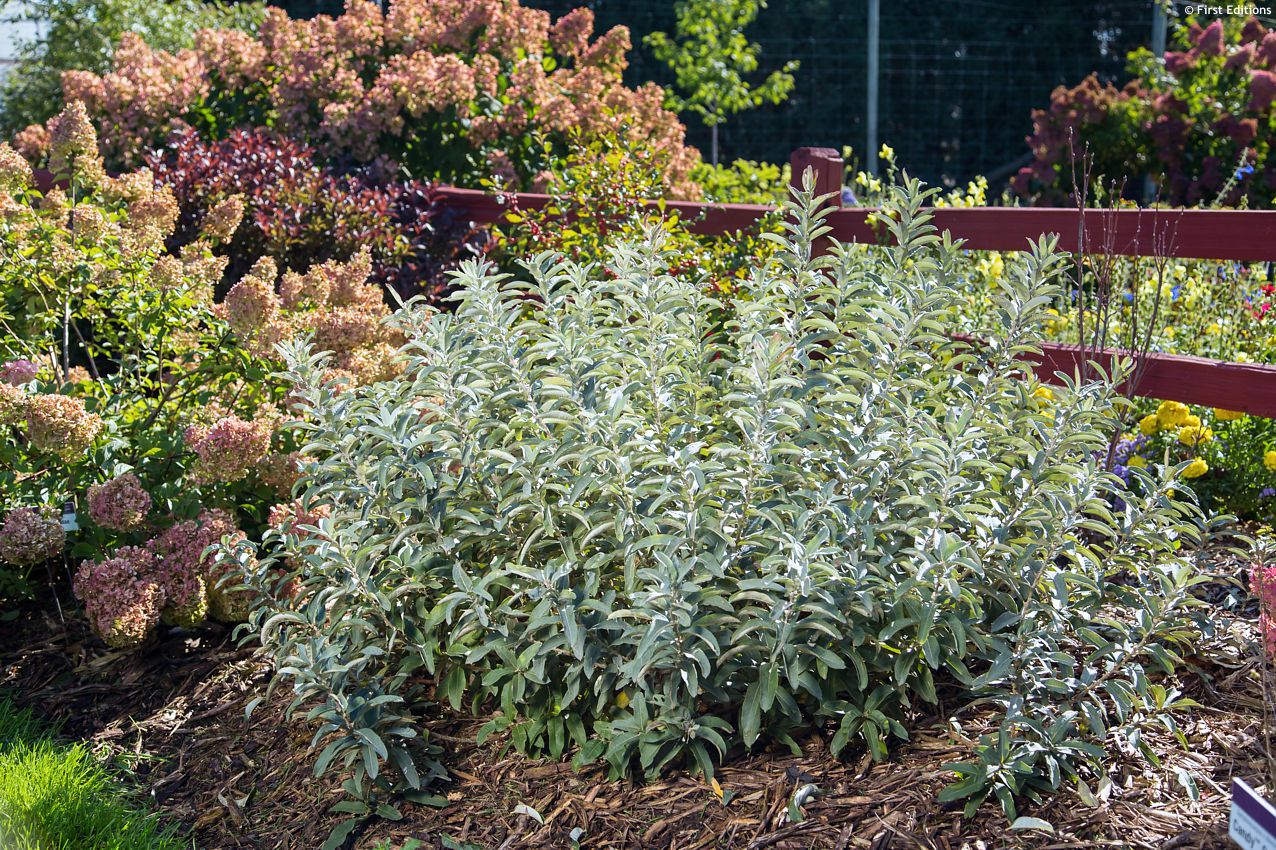
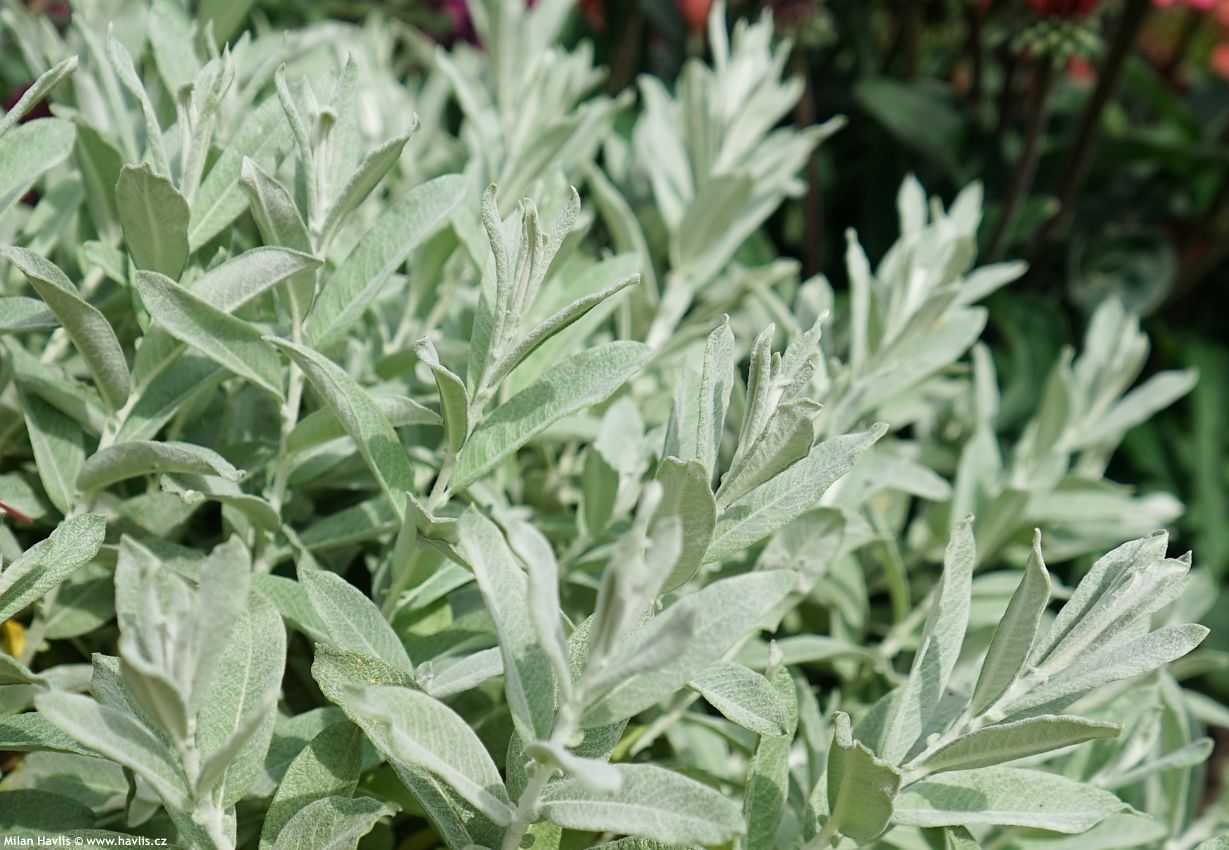
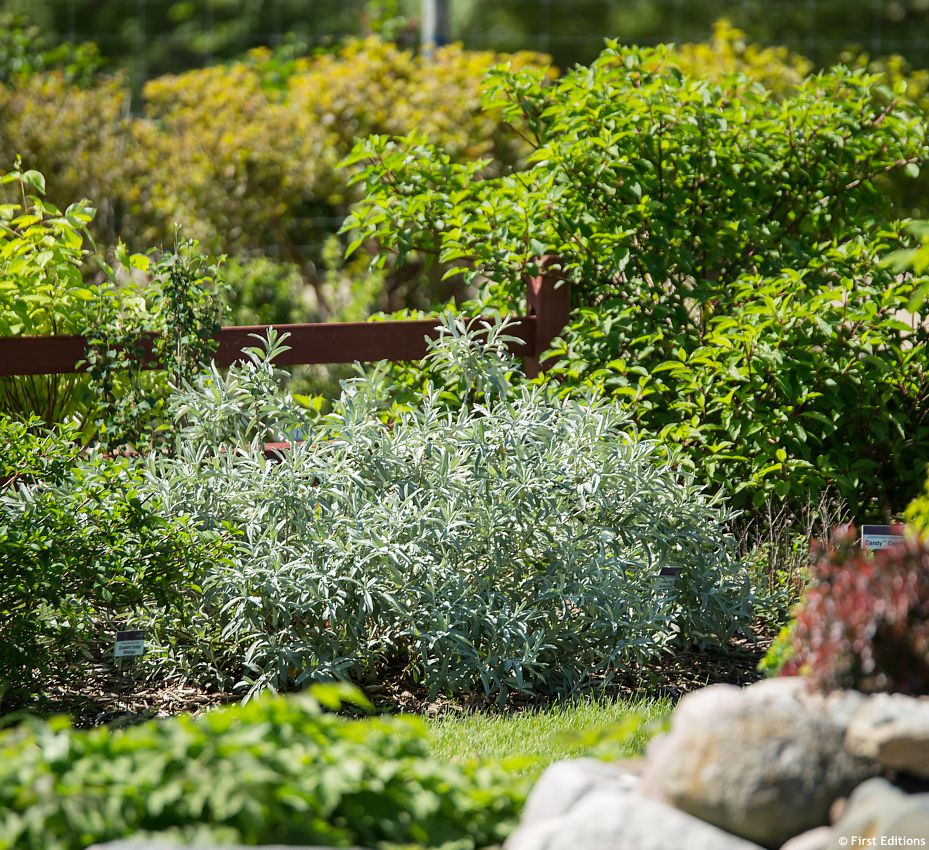
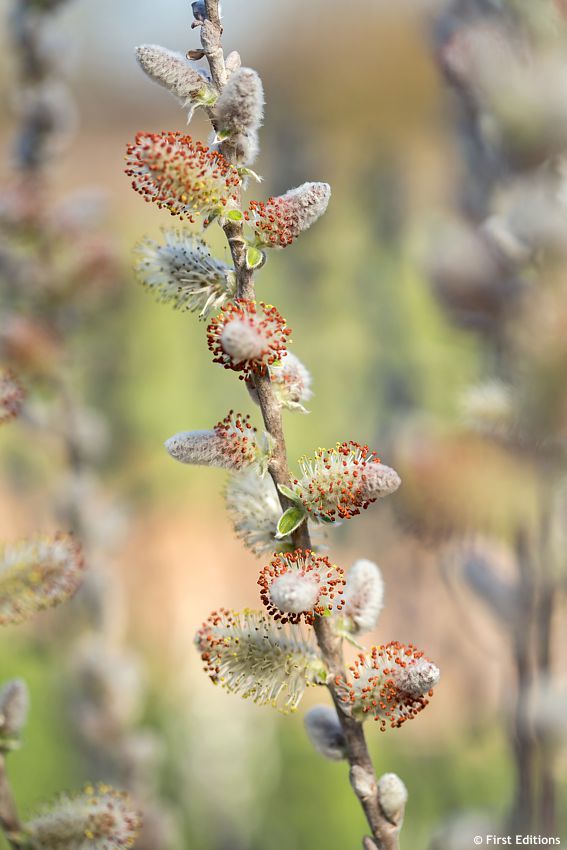
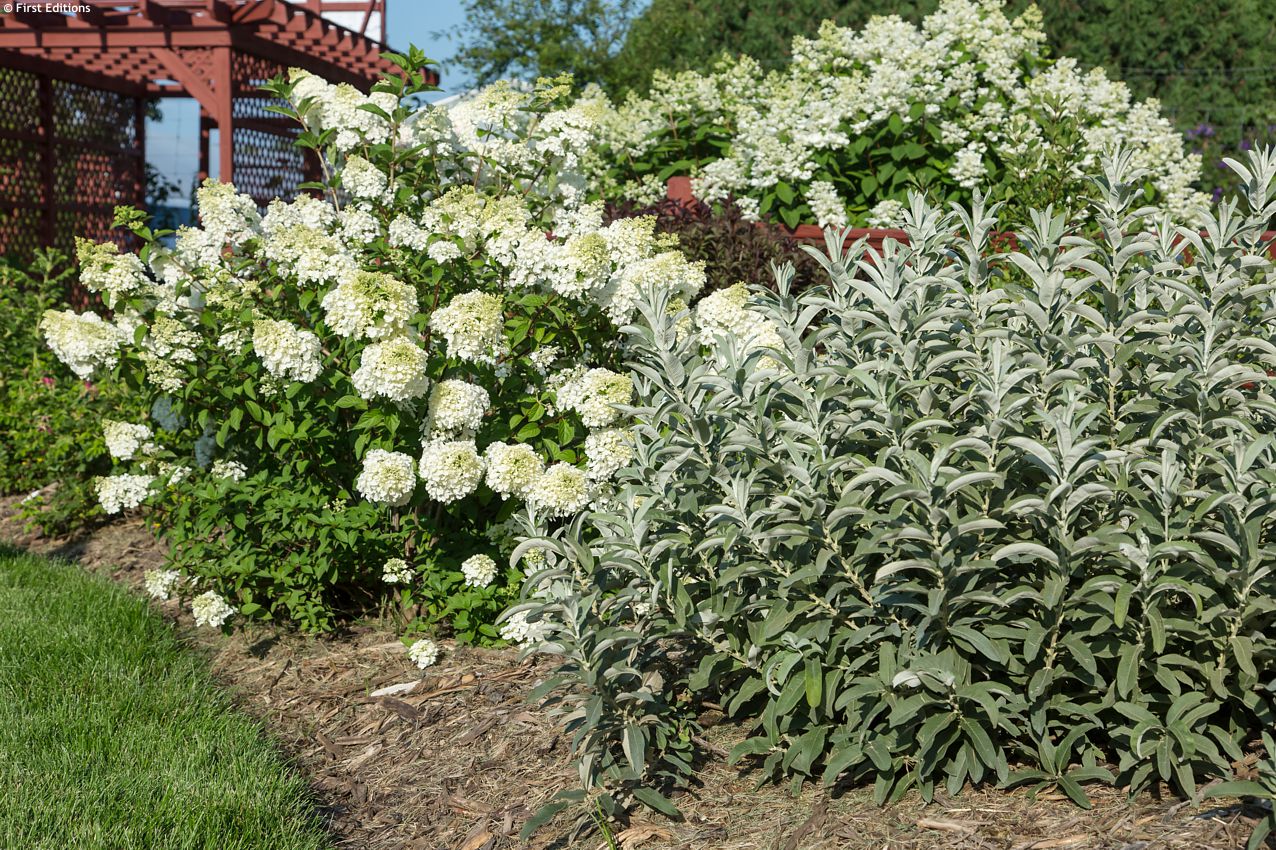
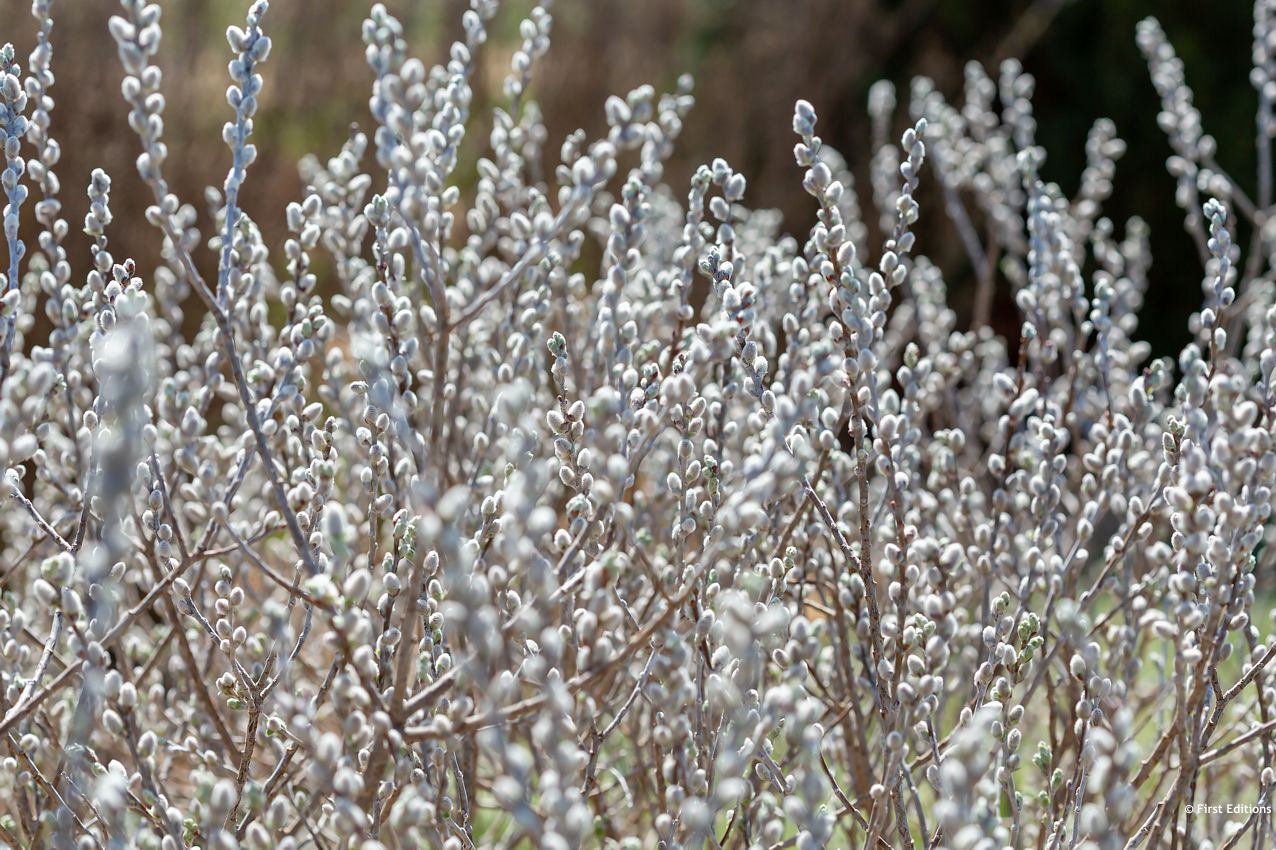
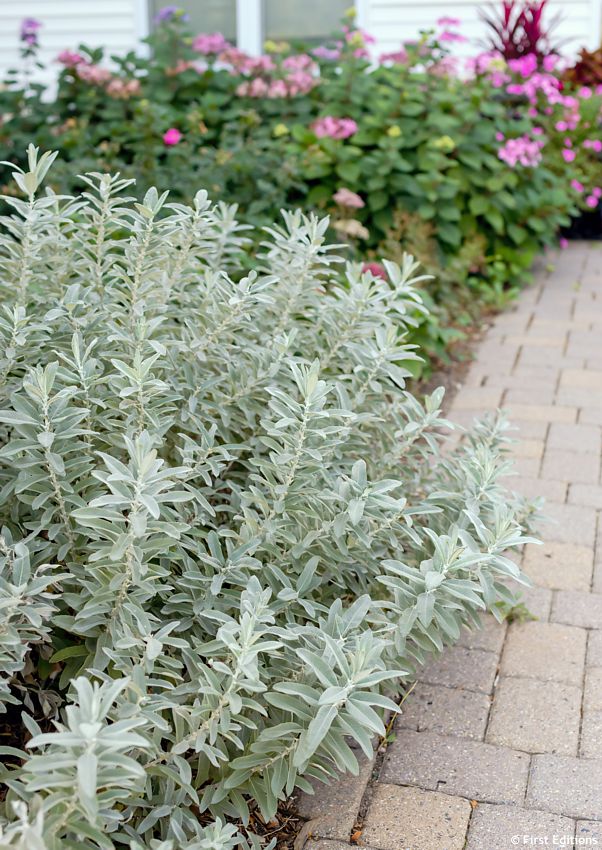
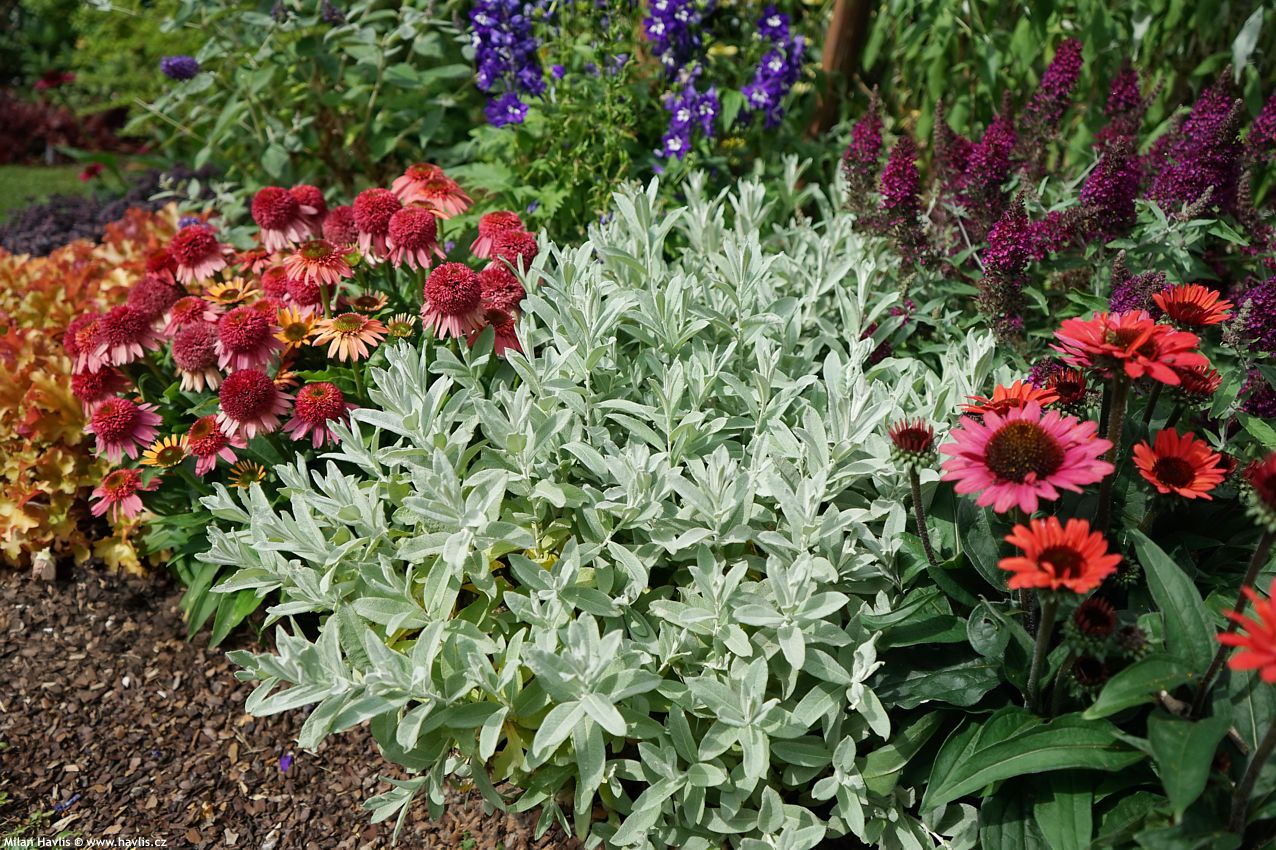
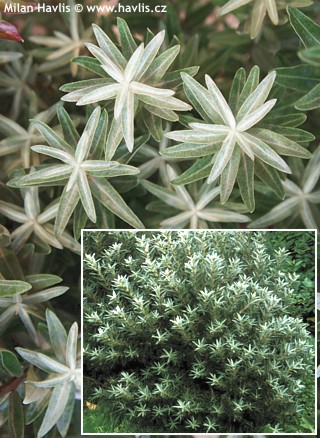
If the title Frozen weren’t protected by copyright, the breeder of this stunning willow might well have considered it. ICEBERG ALLEY® sageleaf willow looks as if covered in icy frost – its leaves are densely silvery‑felted with a bluish‑green undertone, so the whole plant resembles a cloud of frozen mist settled in the garden. And as a bonus – those leaves are as soft as you were caressing rabbit’s ears. It naturally forms compact, (semi)rounded to slightly spreading shrubs, 1.2–1.5 m tall and wide. In spring, before the leaves emerge and partly during leafing (April–May), it produces striking catkins – silvery spikes with red anthers that gradually turn yellow. They are large enough to catch the eye even beside prima donnas like colourful tulips or crown imperials. This detail not only adds ornamental value but also provides a valuable nectar source for bees and other pollinators early in the season.
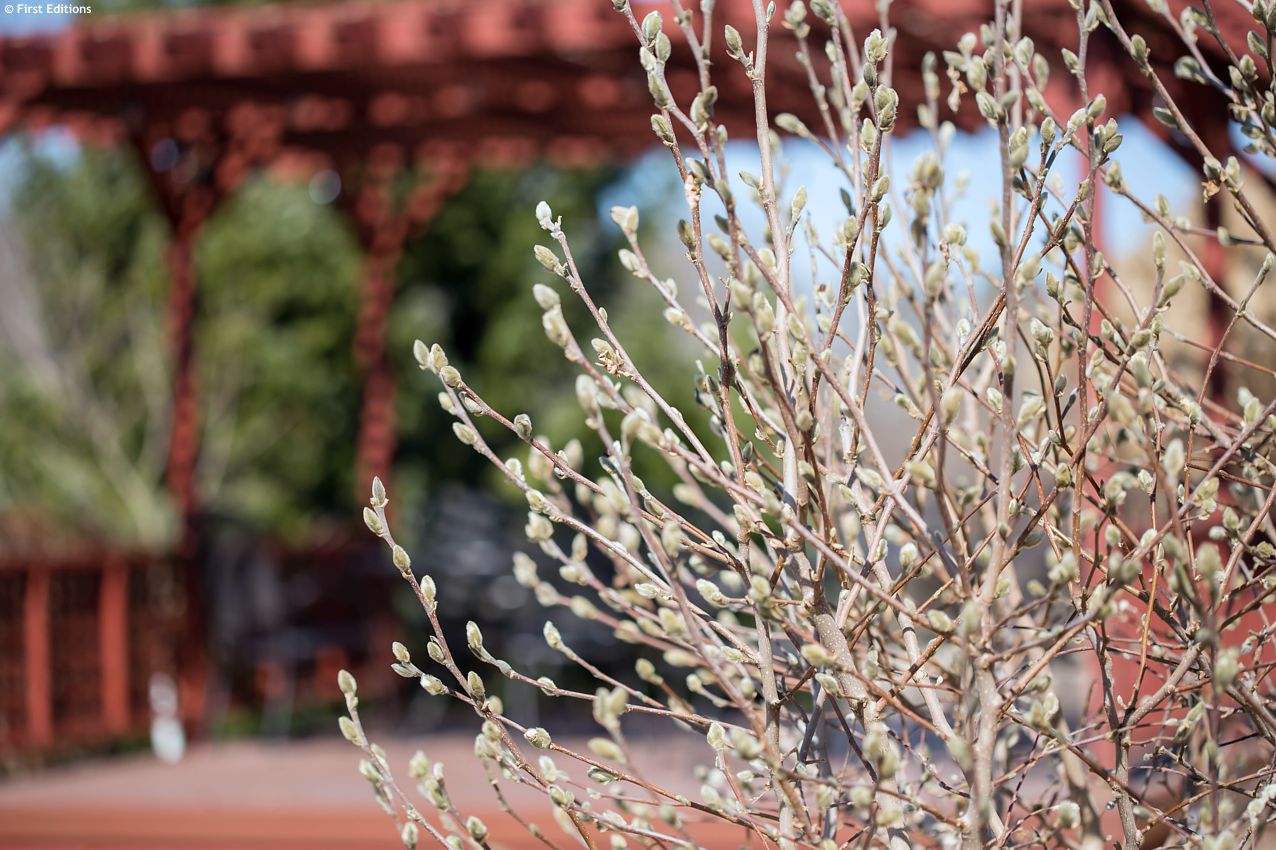
ICEBERG ALLEY® was selected from seedlings in Canada and introduced to the market by Bailey Nurseries Inc. within the First Editions® program in February 2025 during the Plantarium novelty show in Boskoop, the Netherlands. In the garden, its muted colour brings calm energy and elegance, unifying diverse compositions and giving them a steady rhythm. Thanks to its tolerance of moist soils, it is well suited to pond edges, rain gardens, and damp perennial borders. It shines alongside plants with contrasting foliage and similar (or no) demands such as red‑leaved ninebarks and barberries, panicle and oakleaf hydrangeas, and it is simply spectacular in semi‑bog compositions with bog rosemary, leatherleaf, or inkberry. For perennials, choose Siberian irises, daylilies, moisture‑loving sedges, or sweet flag – they highlight its compact shape while adding different textures. Moreover, although the plant is deciduous, its juvenile silvery stems and soft catkins bring charm even during dormancy period, making it a worthy partner to evergreens.
Last update 03-12-2025
The hoary willow is an undemanding shrub that appreciates moist, alkaline to neutral soils and full sun to partial shade. It thrives in naturally water‑saturated environments – near ponds, in rain gardens, or on borders that don’t dry out – but it will also manage in an ordinary bed, provided you don’t let it completely dry out. It can be pruned and shaped freely, always after flowering, though compact cultivars rarely need pruning. It is exceptionally hardy, reliably overwintering down to USDA Zone 2, which corresponds to Siberian or Alaskan winters and minimum temperatures of −46 °C. This means it can be grown without worry even in the harsher climates of Central and Northern Europe. And it keeps its ornamental appeal year‑round – from spring catkins to summer silvery foliage and the winter structure of its branches.

Goods are shipped all over Europe. For Russia and U.K. and for further details please read about SHIPPING OPTIONS HERE.
Are you interested in a serious discount for orders NOV-FEB? Check your options here.
THE PRICES INCLUDE VAT of 15%. For quick conversion you can use 1 CZK = approx. 0.04 EUR
- STANDARD QUALITY - Plants of this group are 1st class quality with number of branches and overall density adequate to their size and age, considering they were container grown.
- DE LUXE QUALITY - This label guarantees a luxurious quality of manually selected plants that, compared to their height and age, are exceptionally dense and beautiful.
- EXTRA - These plants are usually mature and bigger specimens with exceptional overall appearance.
- STANDARD (as described in the plant form) means a tree with a trunk of 190-210 cm and a crown at the top, unless specified differently. The commercial size for trees is their girth measured in the height of 1m from ground.
- HOBBY - These plants are of the same quality as our standard-quality plants but younger and therefore cheaper.
- SHRUB - a woody plant with branches growing bushy from the ground level.
- HALF-STANDARD or MINI-STANDARD - a small tree with shorter trunk, its size is usually specified.
- FEATHERED - These are trees with branches growing already from the base of the trunk and up along the stem.
- GRASSES and PERENNIALS - Sizes given usually read the diameter of the pot or the clump, as specified.
