

































.jpg)
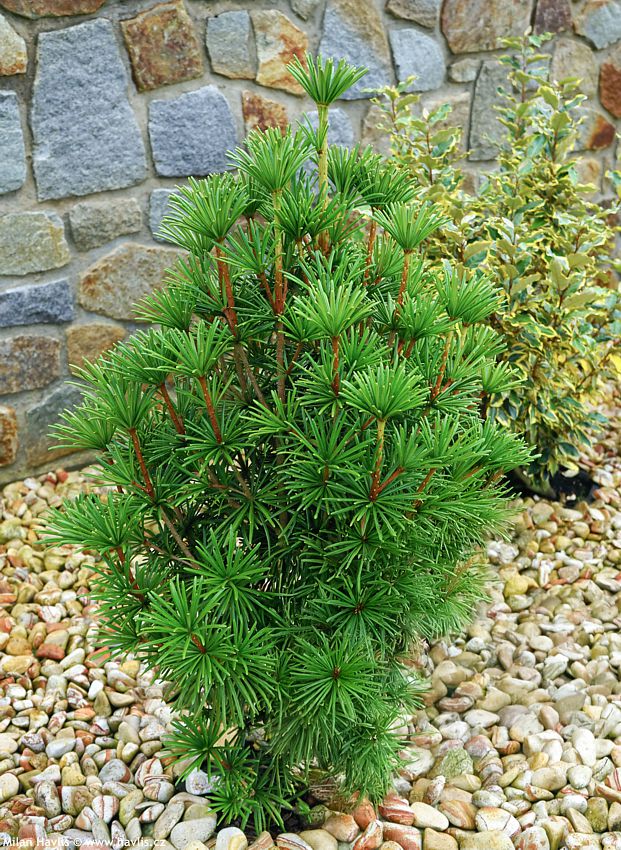
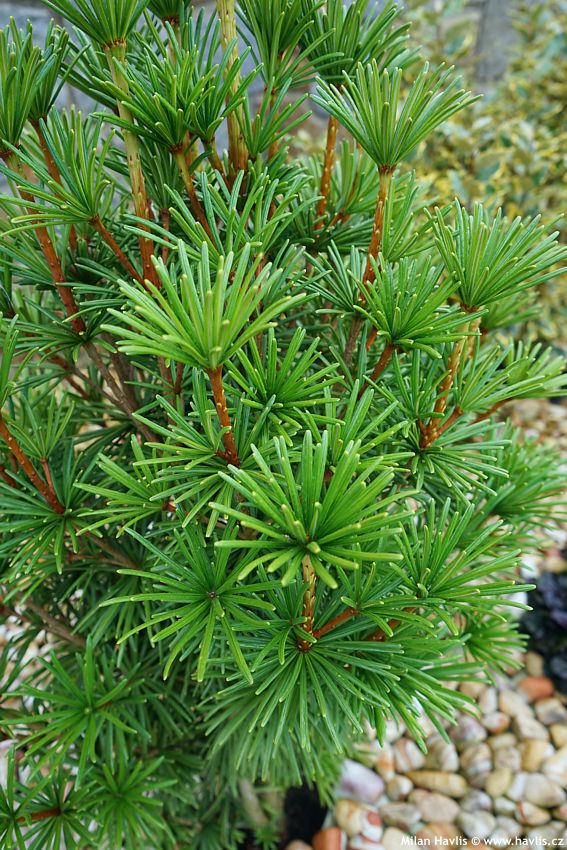
Sciadopitys verticillata 'STERNSCHNUPPE' Japanese umbrella pine

 Symbivit Tric (arbuscular)
 Symbivit (arbuscular)
Sciadopitys
The Japanese umbrella pine (Sciadopitys verticillata) ranks among the oldest surviving conifer species and represents a remnant of vegetation that was already widespread during the Tertiary period. From a botanical perspective, it is an extraordinary tree: the sole living species of the genus Sciadopitys and the only representative of the entire family Sciadopityaceae, with no close relatives among modern conifers. This isolated position makes it a true evolutionary relic that has survived virtually unchanged for millions of years. It continues to attract attention primarily because of the structure of its needles. Although they may resemble those of a thick‑needled pine at first glance, they are in fact much closer to the foliage of long‑extinct horsetails. In its native land, the tree is valued not only for its unique appearance but also for its longevity, stability, and ability to endure changing conditions. In Japanese culture, it has a long tradition as a sacred tree, often planted near Shinto shrines and Buddhist temples.
In the wild, the Japanese umbrella pine grows exclusively in Japan, specifically in the mountain forests of the islands of Honshu and Shikoku. Its main natural habitats lie on Mount Kōya and in the Kiso River valley in Wakayama Prefecture, where it forms part of moist, shaded woodland with acidic soils. European botanists were introduced to the species in 1842, when it was formally described by Philipp Franz von Siebold and Joseph Gerhard Zuccarini based on material brought from Japan. The first living plant was sent to England by the botanist Thomas Lobb in 1853, although it did not survive. During the 1860s, seeds were repeatedly imported into Europe, enabling the species to spread more widely in cultivation.
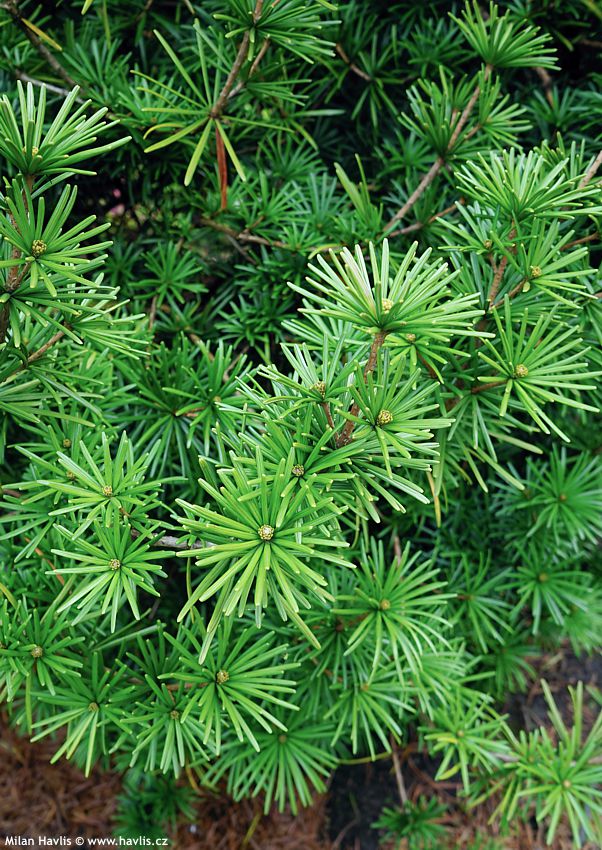
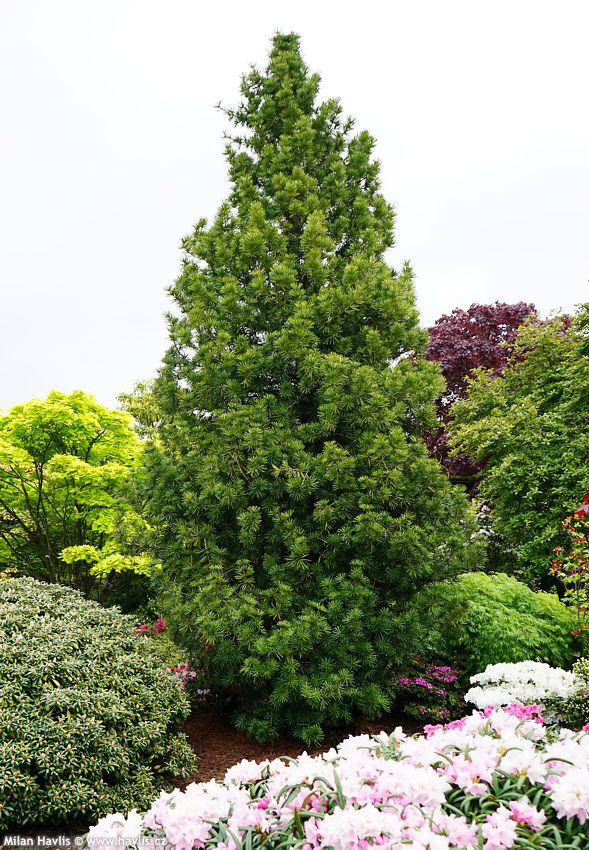
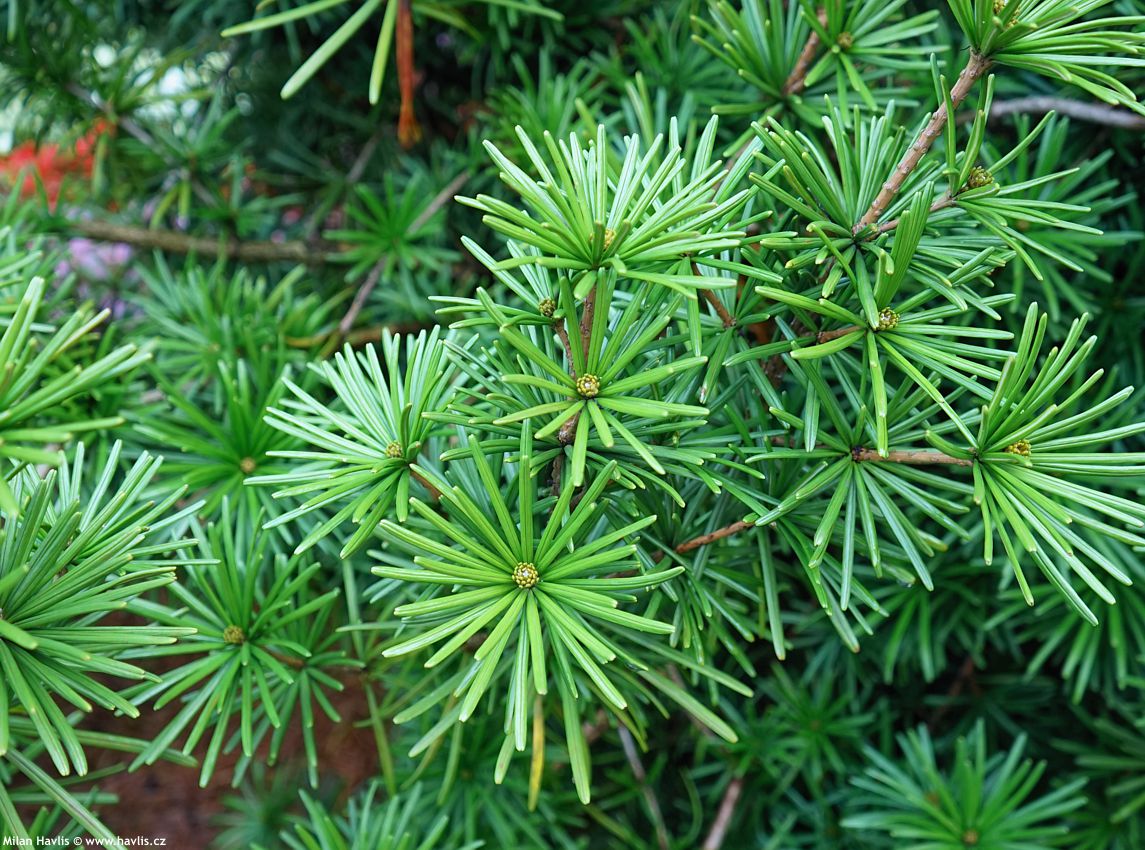
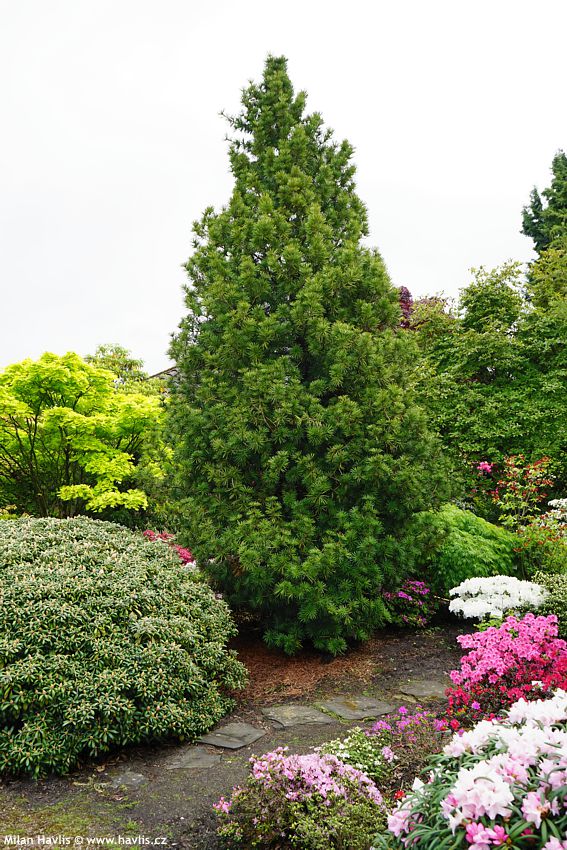
Sternschnuppe is a Japanese umbrella pine variety which belongs among the dwarf cultivars that grow more slowly than the species, yet in full maturity still exceed the scale of an ordinary garden gnome, hat included. It is easily recognised by its shorter, visibly flatter needles, which densely clothe the shoots and, together with the short annual increments, create a compact, almost congested habit. The needles are evergreen, characteristically fleshy and soft, usually 4 to 5 cm long, deep green and glossy, giving the entire plant a distinctly sculptural, almost carved appearance. Growth is consistently even, without any tendency to thin out or become irregular, and the plant naturally develops a slender, conical outline. In gardens, a typical size ranges between 2 and 3 metres in height and around 1.5 metres in width, however, under ideal soil and climatic conditions it can reach up to twice these dimensions, as we observed at the German rhododendron nursery H. Hachmann, where stable moisture (of soil as well as air humidity), nutrient-rich heathland loam and less significant temperature fluctuations create near-optimal growing conditions.
The cultivar was introduced around 1992 by the Wittboldt-Müller nursery in Verden, near Hamburg in northern Germany, where it was given the name ‘Sternschnuppe’, meaning “shooting star”. The name most likely refers to the chance nature of its origin, as it was discovered as a solitary mutation of the botanical species rather than the result of deliberate breeding.
In the garden, ‘Sternschnuppe’ forms a smaller, relatively slender but long-lived specimen tree suited to small and medium-scale settings, one whose soft, tactile needles invite you to reach out and touch it whenever you pass by. It fits naturally into calm parts of the garden, along paths, near terraces or in collection plantings of slow-growing woody plants. It combines particularly well with shrubs, small trees and more expressive perennials that play with contrasting textures, such as Mexican orange blossom, Japanese maples, pieris, leucothoe, evergreen ferns or dwarf conifers of differing colours and forms.
Last update 13-02-2013; 19-02-2026
Despite its exotic appearance, the Japanese umbrella pine is far from delicate. With a well‑chosen site, it requires little care beyond watering during the first year after planting. The key is an acidic, humus‑rich, well‑drained soil with even moisture, avoiding both prolonged waterlogging and drought; permanent mulching is ideal. It thrives best in a sunny position, and, in moist soil, it even tolerates midday scorching sun. It can also be grown in shade, where it tends to stretch toward the light and becomes slimmer and thinner. Exposed, windy sites are unsuitable: not only do the soft branches bend with the wind, but needle drop often occurs. Fertilization is not essential, though it can be beneficial. Pruning is unnecessary but possible on late winter; careful nurseries often use it to produce compact, dense plants at saleable sizes. Older literature frequently describes the species as poorly hardy, but this no longer reflects current experience or modern sources. Practical experience shows that it can withstand several days of frost down to −27 °C without damage, and some modern databases even place it in USDA hardiness zones 4b to 5 (down to −32 °C). The Japanese umbrella pine is also exceptionally long‑lived, capable of surviving for several centuries while retaining its stable form and vitality. It is not a tree for quick results, but a calm, enduring presence in the garden – one whose value increases with time.

Goods are shipped all over Europe. For Russia and U.K. and for further details please read about SHIPPING OPTIONS HERE.
Are you interested in a serious discount for orders NOV-FEB? Check your options here.
THE PRICES INCLUDE VAT of 15%. For quick conversion you can use 1 CZK = approx. 0.04 EUR
- STANDARD QUALITY - Plants of this group are 1st class quality with number of branches and overall density adequate to their size and age, considering they were container grown.
- DE LUXE QUALITY - This label guarantees a luxurious quality of manually selected plants that, compared to their height and age, are exceptionally dense and beautiful.
- EXTRA - These plants are usually mature and bigger specimens with exceptional overall appearance.
- STANDARD (as described in the plant form) means a tree with a trunk of 190-210 cm and a crown at the top, unless specified differently. The commercial size for trees is their girth measured in the height of 1m from ground.
- HOBBY - These plants are of the same quality as our standard-quality plants but younger and therefore cheaper.
- SHRUB - a woody plant with branches growing bushy from the ground level.
- HALF-STANDARD or MINI-STANDARD - a small tree with shorter trunk, its size is usually specified.
- FEATHERED - These are trees with branches growing already from the base of the trunk and up along the stem.
- GRASSES and PERENNIALS - Sizes given usually read the diameter of the pot or the clump, as specified.
