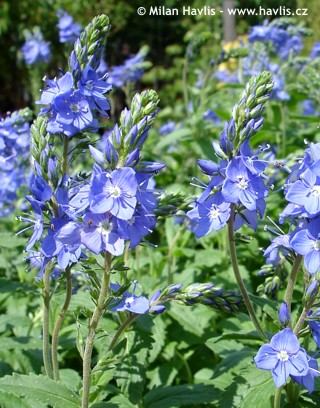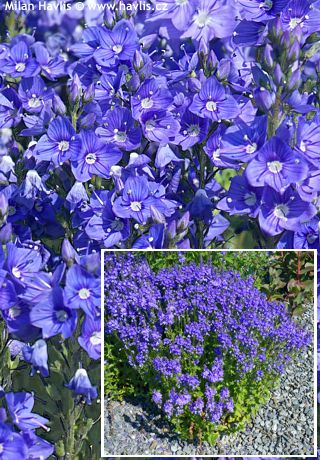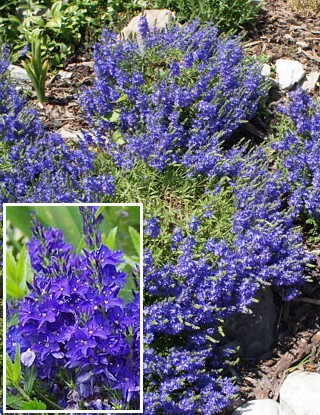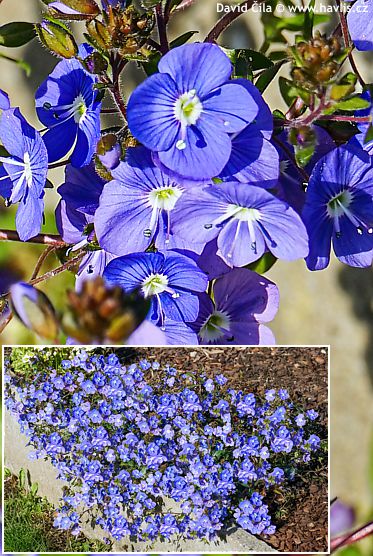


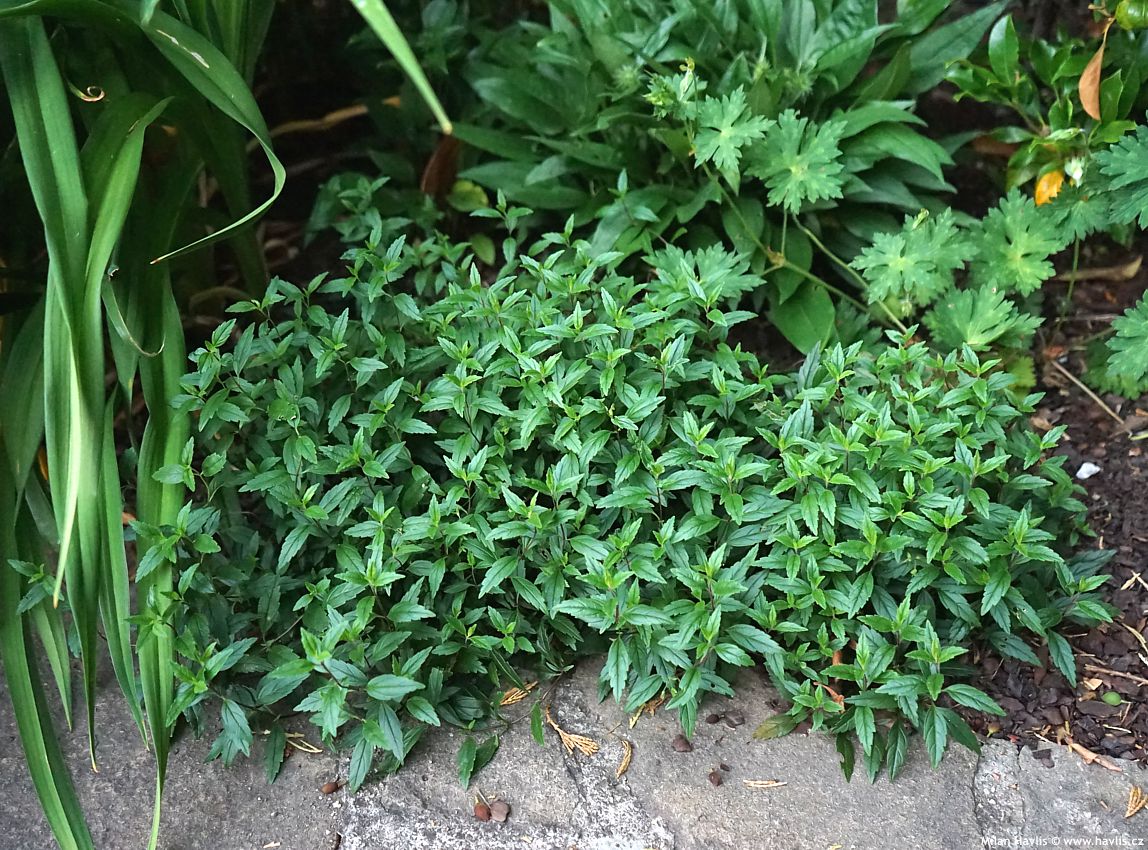
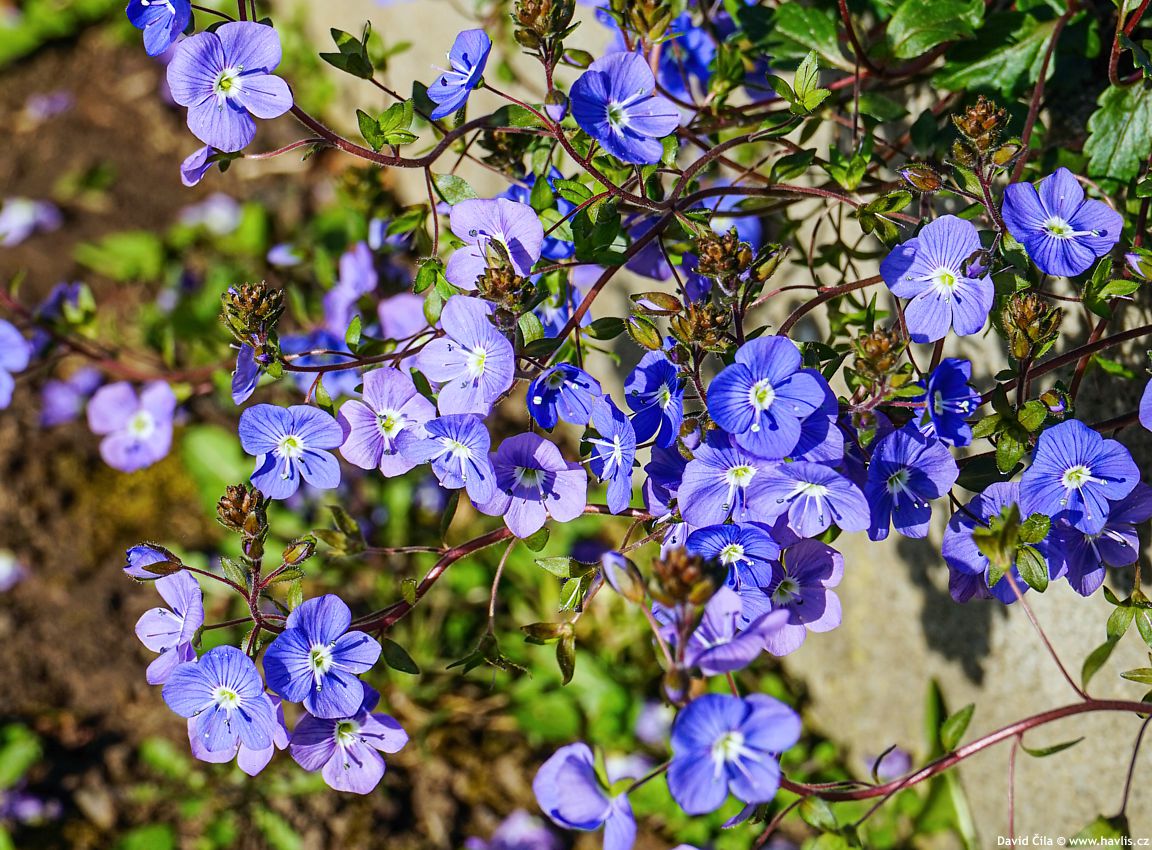
Veronica peduncularis (syn. V. umbrosa) 'GEORGIA BLUE' creeping speedwell

 Symbivit Tric (arbuscular)
 Symbivit (arbuscular)
Veronica
The genus Veronica belongs among the most numerous and the most diverse groups of flowering plants of the temperate zone. It includes several hundred species distributed almost worldwide, from alpine meadows and forest understories to dry steppes and coastal rocks. It was described in the 18th century by Carl Linnaeus, who adopted an already established name linked to the legend of Saint Veronica. The legend says that she offered Christ a piece of cloth during his arduous journey to Golgotha, with which he wiped sweat and blood off his face. His image was said to have miraculously imprinted itself on the fabric, the so‑called vera icon, or “true image”. This idea of a faithful, unembellished imprint of reality was symbolically transferred in pre‑modern botany to speedwells, whose small, clearly drawn flowers were perceived as honest and needing no adornment.
Creeping speedwell (Veronica umbrosa) originates from the Caucasus and northern Iran, from landscapes of woodland edges, moist meadows and rocky slopes where light is filtered through tree canopies and the soil remains fresh for long periods. The species was described in the first half of the 19th century by the botanist Karl Friedrich von Ledebour, one of the key figures in the exploration of the flora of the Russian Empire, who systematically documented the plants of the Caucasus and Central Asia. From the outset, it attracted gardeners with its ability to form continuous groundcover in places where many other perennials struggle. Unlike many other speedwells, it is not tied to open sun or dry soils but naturally inhabits semi‑shaded sites with even moisture. This quality has made it a valuable plant for gardens inspired by woodland, forest edges or mountain landscapes.
Georgia Blue speedwell is especially admired for its early and surprisingly intense flowering at the very turn of winter and spring, at a moment when the garden is still hesitating whether to wake up. Low, creeping shoots quickly spread sideways, forming a continuous carpet of small, deep blue flowers with a delicate pale eye at the centre. After flowering, you will definitely appreciate the foliage: the leaves are small, narrowly lanceolate and marked by several distinct notches along the margins. Young leaves emerge in a rich mahogany tone, gradually maturing to medium green and developing a high, elegant gloss. The cultivar was discovered in the late 20th century in what is now Georgia, in the Caucasus region, and was introduced into horticulture by the British botanist and plant explorer Roy Lancaster, who named it after the place of its discovery. Compared to the species, ‘Georgia Blue’ is lower, denser and more floriferous, which has made it one of the most popular ground‑cover speedwell cultivars.
Last update 26-12-2025
In the garden, ‘Georgia Blue’ serves as a subtle linking element between different plantings or larger garden compositions. It performs beautifully beneath deciduous shrubs that provide light summer shade, along the edges of beds where conditions are not too dry, among stones or beside paths, where it creates a calm yet lively blue line. It acts as a modest helper even in places that are not immediately visible, yet during flowering you will surely come closer to enjoy its clear blue colour. It provides a flowering understory for spring bulbs and then quietly allows them to disappear into its foliage once they have finished. It also pairs easily with ferns, heucheras and shade‑loving grasses, its low growth providing a quiet base for taller plants.