Veronica × media 'Alllove' FIRST LOVE® speedwell

 Symbivit Tric (arbuscular)
 Symbivit (arbuscular)
Veronica
The genus Veronica belongs among the most numerous and the most diverse groups of flowering plants of the temperate zone. It includes several hundred species distributed almost worldwide, from alpine meadows and forest understories to dry steppes and coastal rocks. It was described in the 18th century by Carl Linnaeus, who adopted an already established name linked to the legend of Saint Veronica. The legend says that she offered Christ a piece of cloth during his arduous journey to Golgotha, with which he wiped sweat and blood off his face. His image was said to have miraculously imprinted itself on the fabric, the so‑called vera icon, or “true image”. This idea of a faithful, unembellished imprint of reality was symbolically transferred in pre‑modern botany to speedwells, whose small, clearly drawn flowers were perceived as honest and needing no adornment.
Veronica × media is a natural interspecific hybrid arising from the crossing of spiked speedwell (V. spicata) and long-leaved speedwell (V. longifolia) wherever the two species meet in the wild. The botanical name was introduced by the German botanist Carl Ernst August Weihe (1779–1834), who was the first to describe this recurring natural phenomenon. While V. spicata comes from dry meadows and forms lower, more compact clumps, V. longifolia grows in moister habitats and is taller, with longer and more abundant flower spikes. The hybrid group Veronica × media takes the best from both the parents: medium height, a firm, upright habit, a clear vertical presence in the border and a long flowering season, which has made it a valued part of European gardens since the 19th century.
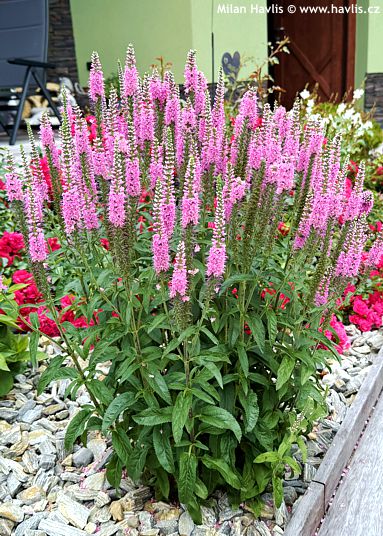
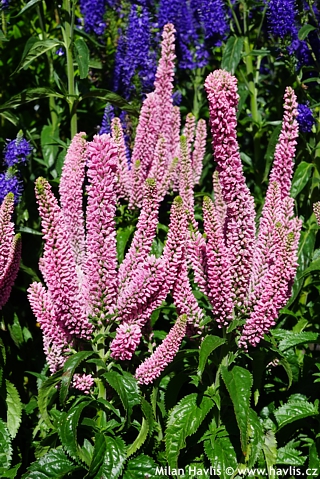
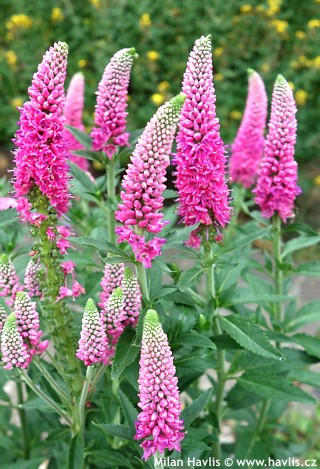
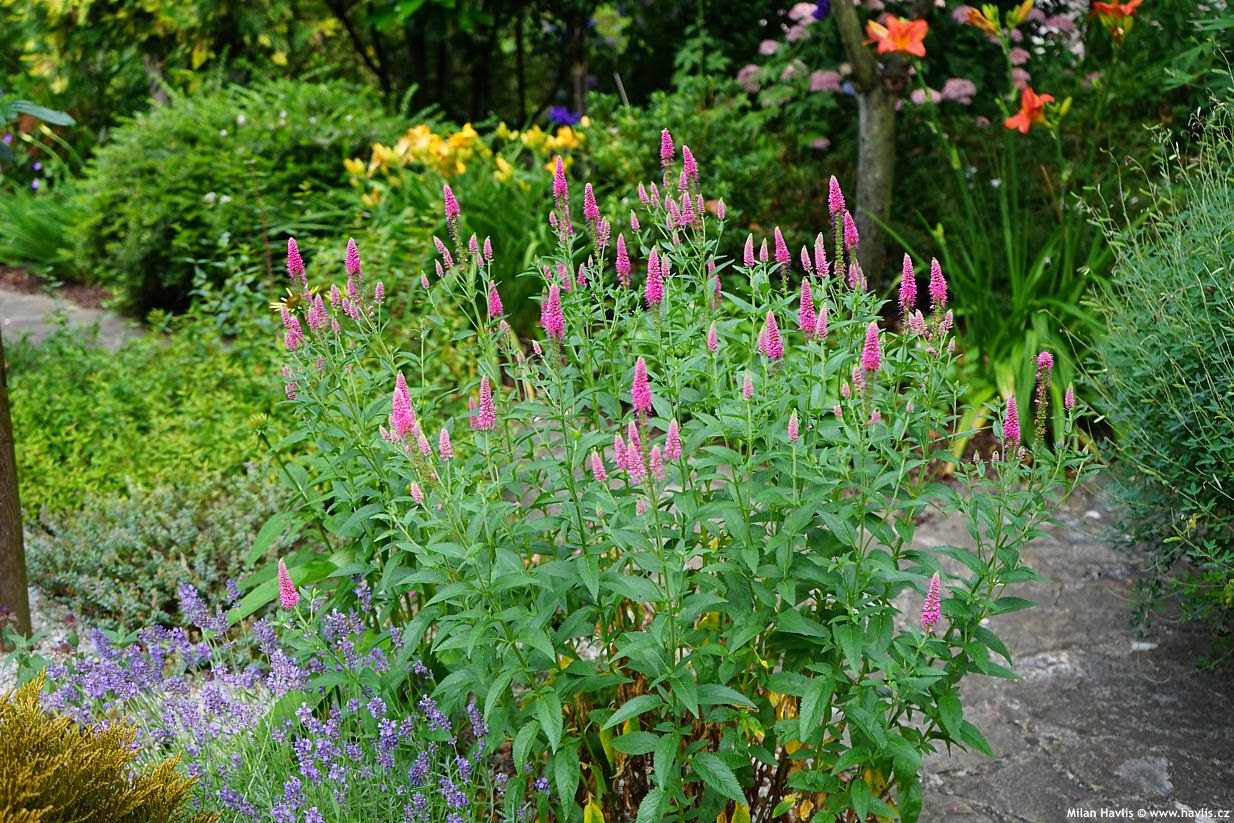
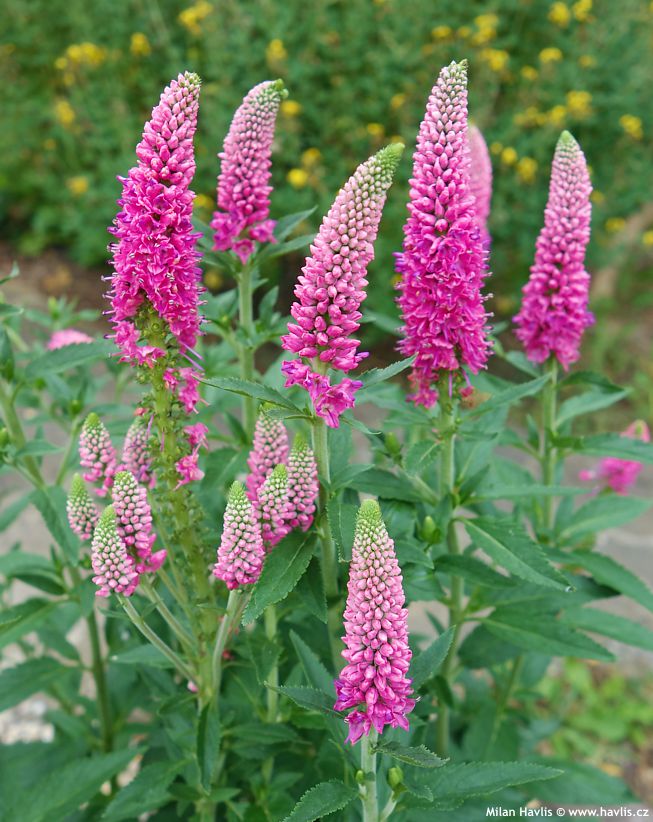
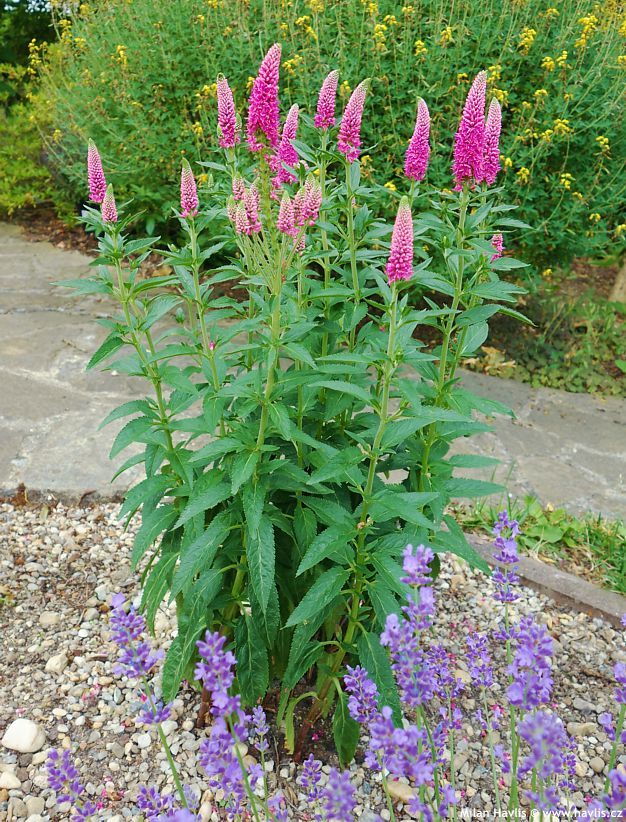
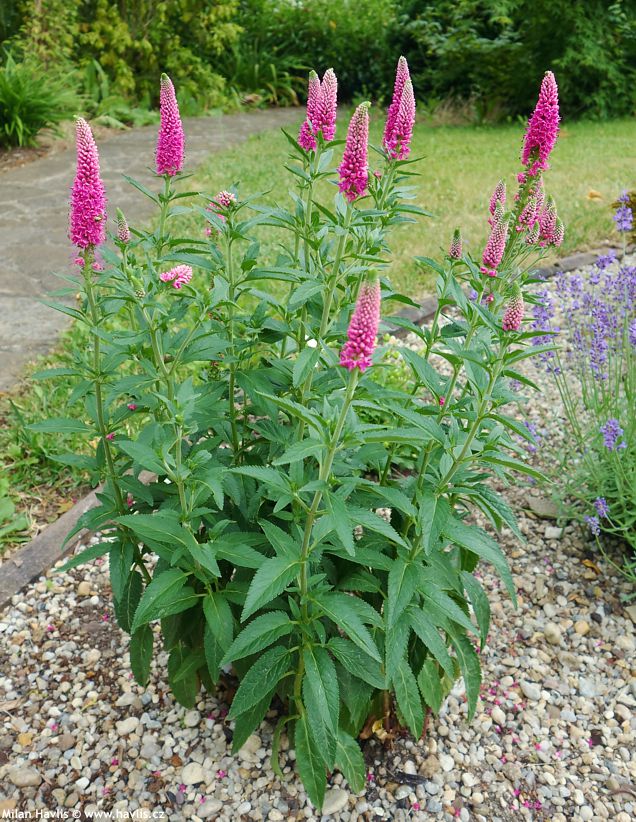
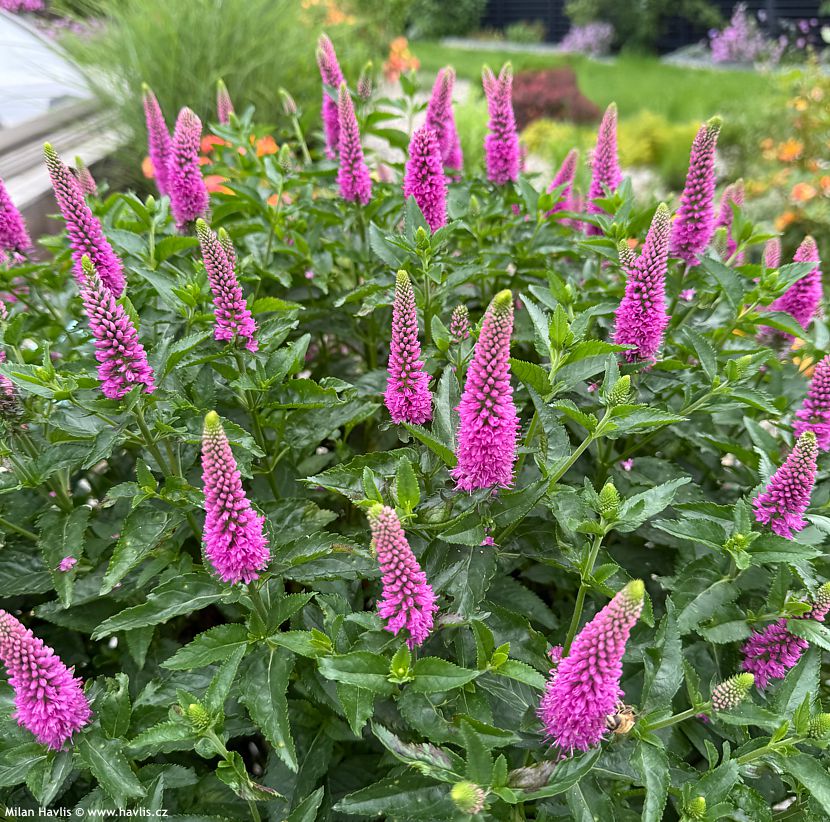
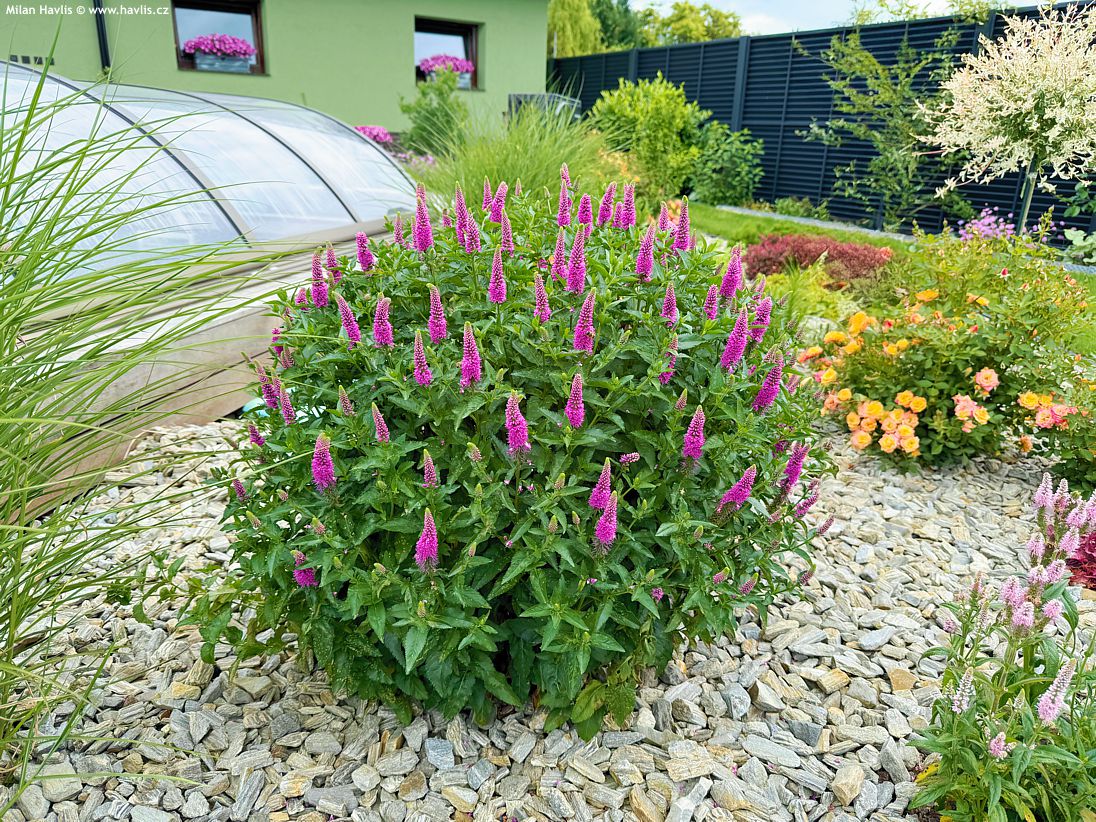
Could there be a more poetic name for a perennial than FIRST LOVE? That is exactly the name of this modern cultivar of hybrid speedwell, which immediately catches the eye with its rich purplish‑pink flowers. The colour is so intense it feels as if someone had fixed tiny pink neon lights to the tips of the stems, glowing across the border from dawn to dusk. The flower spikes are slightly shorter than those of V. spicata, usually 10 to 15 cm, but dense, firm and finished with a gently tilted tip that gives the plant a subtly playful expression. The leaves are broadly lanceolate, finely toothed along the edges and deep green, creating a strong contrast with the bright flowers. The cultivar retains the compact, medium‑sized habit typical of the Veronica × media group but appears fuller and more colourful than either parent species. It was bred by the Dutch grower Wilhelmus van den Hoogen and was granted patent PP21478 in 2010.
FIRST LOVE brings a vivid summer colour to the garden, often stepping in just as spring perennials have finished flowering and are left with only their foliage. It stands out beautifully among plants with softer tones that calm its pink – such as bloody cranesbill, catmint or purple coneflower. In more contemporary plantings it pairs well with grasses, especially smaller forms of tufted hair grass or fine‑leaved carex, which keep the overall rhythm of the border intact. And of course, countless other combinations are possible. Thanks to its firm growth it is suitable even for narrow borders and front yards, where a plant that keeps its shape and does not flop is essential.
Last update 30-06-2017; 19-07-2020; 28-12-2025
Veronica × media ranks among the most reliable summer perennials of temperate climates and require no special care. It grows best in full sun but will tolerate light partial shade if they receive at least half a day of light. It prefers well‑drained, moderately moist soil that does not dry out completely in summer, and it appreciates a thin layer of compost in spring. After the first flowering it is advisable to remove the spent spikes, which encourages a second flush and keeps the clump compact. It can be grown in containers only for short periods, as they quickly exhaust the space and are more sensitive to drying out. Wind does not trouble it; the stems are firm and remain upright. The plant is neither poisonous nor allergenic and overwinters reliably in temperate climates without any protection. Hardiness may vary slightly between cultivars, but the hybrid group tolerates winter lows of around –34 °C (USDA zone 4).