

































.jpg)
Viburnum (Egolf hybrids) 'ESKIMO' viburnum

 Symbivit Tric (arbuscular)
 Symbivit (arbuscular)
Viburnum
The genus Viburnum includes around 150 species distributed across the temperate regions of the Northern Hemisphere, from eastern Asia through the Caucasus and Europe to North and South America. Botanically, it is an exceptionally diverse group: it comprises both deciduous and evergreen shrubs, species with strongly fragrant flowers as well as those with only a faint scent or none at all, and others grown primarily for their (inedible) fruit. This diversity is reflected in common horticultural practice and several informal groups – the fragrant winter viburnums (V. farreri and V. × bodnantense), the fruiting viburnums (V. opulus, V. trilobum), the evergreen Asian viburnums (V. davidii, V. tinus, V. cinnamomifolium), the large-leaved ornamental viburnums (V. plicatum, V. japonicum), and many more, including hybrids that combine traits from several groups. The genus has been known since antiquity, and its Latin name Viburnum appears in the works of Roman authors around the turn of the era, such as Virgil and Pliny the Elder.
As the popularity of viburnums increased, so did the need for more compact plants. Many botanical species proved too large for smaller gardens, which led to targeted breeding. This made it possible to combine a manageable size with frost hardiness, fragrance, long-term stability and good overall health. One of the most important breeders of viburnums was Donald Egolf (1928–1990), a research horticulturist at the U.S. National Arboretum, who successfully linked systematic botany with practical plant breeding. His work was based on his own research into viburnums, which already in the 1960s clarified which species could be meaningfully crossed and how desirable traits were inherited. His breeding programme produced cultivars such as ‘Mohawk’, ‘Cayuga’, ‘Onondaga’, ‘Conoy’ and ‘Eskimo’, all selected for compact growth, reliable flowering and suitability for gardens in temperate climates. Egolf’s contribution, however, extended well beyond viburnums. As the international registrar of the genus and the author of fundamental systematic studies, he played a major role in broader botanical research, and his work still forms the professional foundation of modern breeding not only of viburnums but also of other ornamental woody plants. A notable example is his frost-hardy hybrid crape myrtles, which became the basis of modern cultivation of this genus in cooler regions and are known in the literature as Lagerstroemia × egolfii.
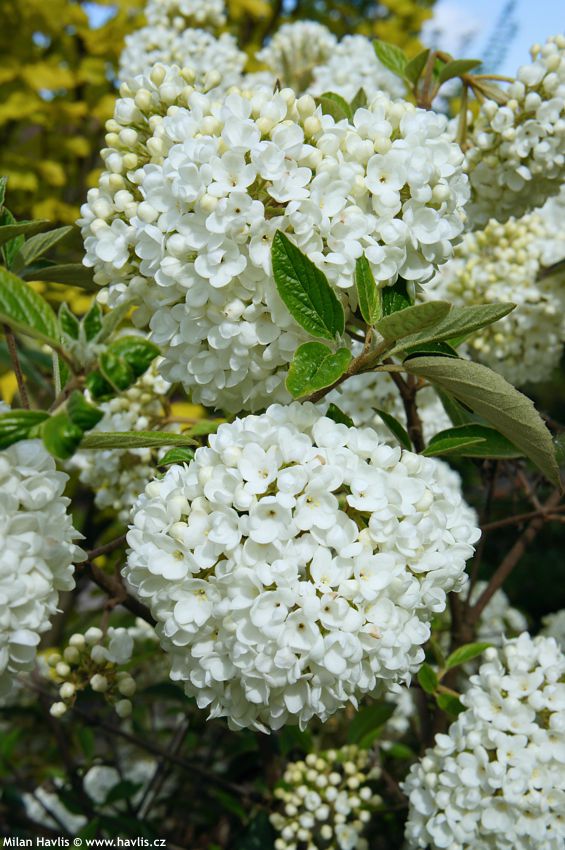
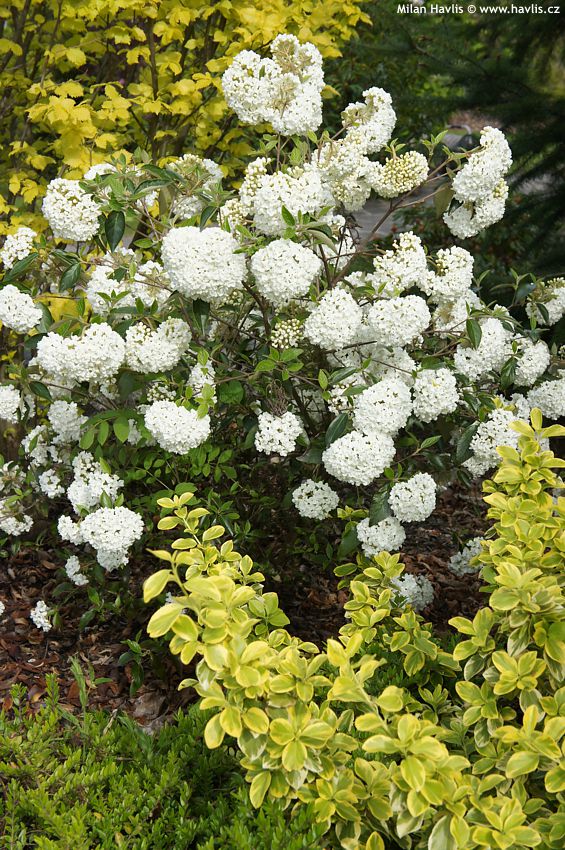
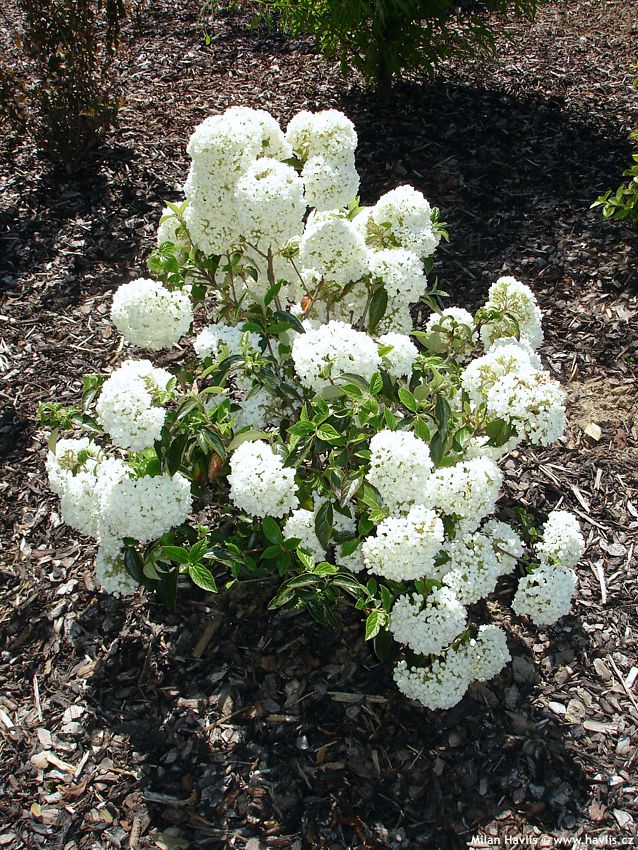
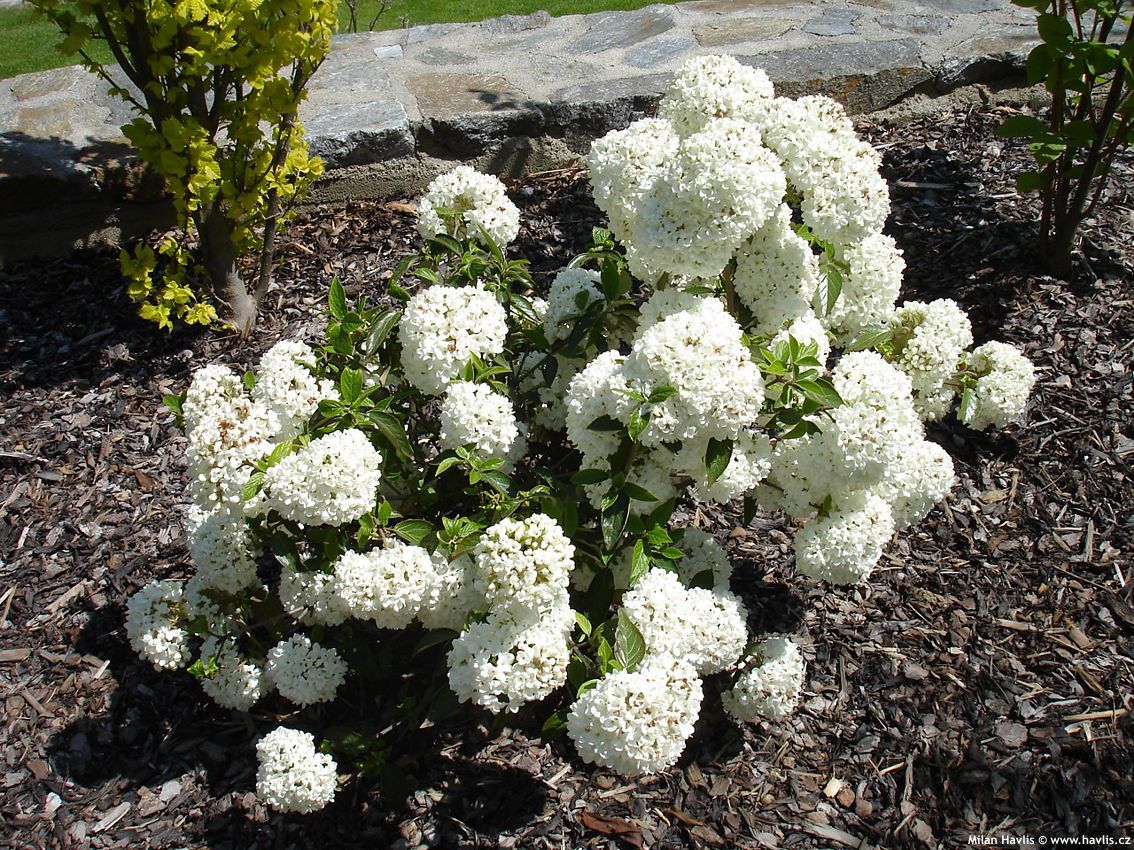
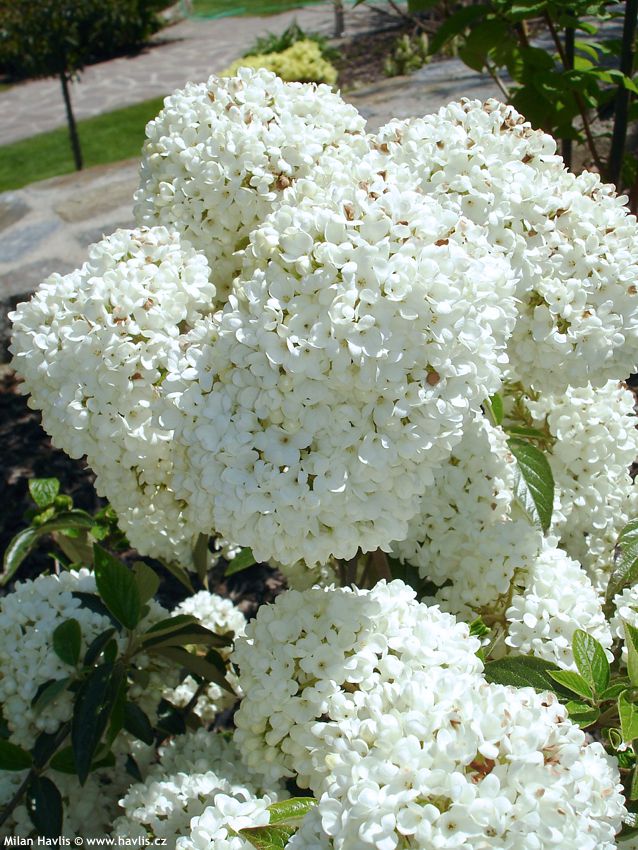
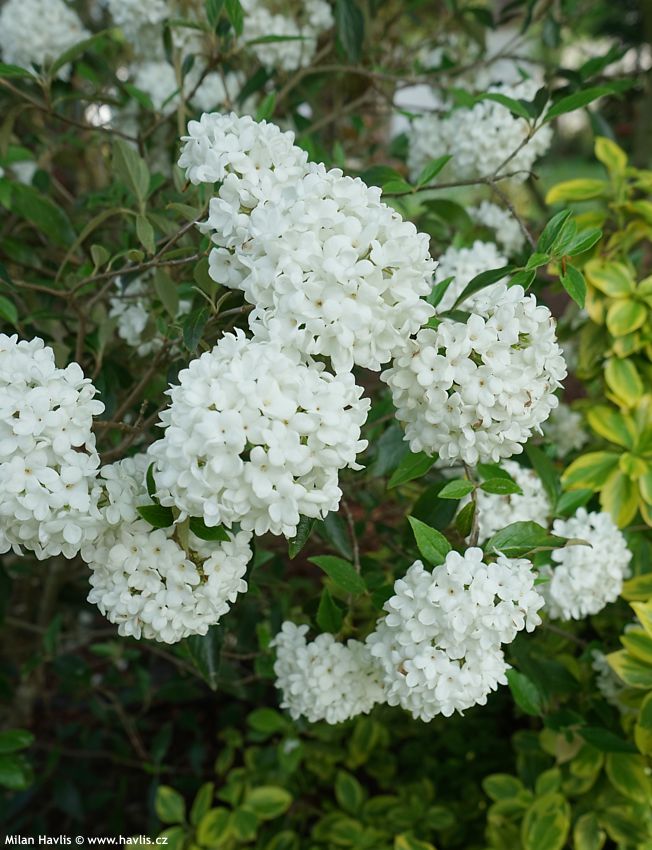
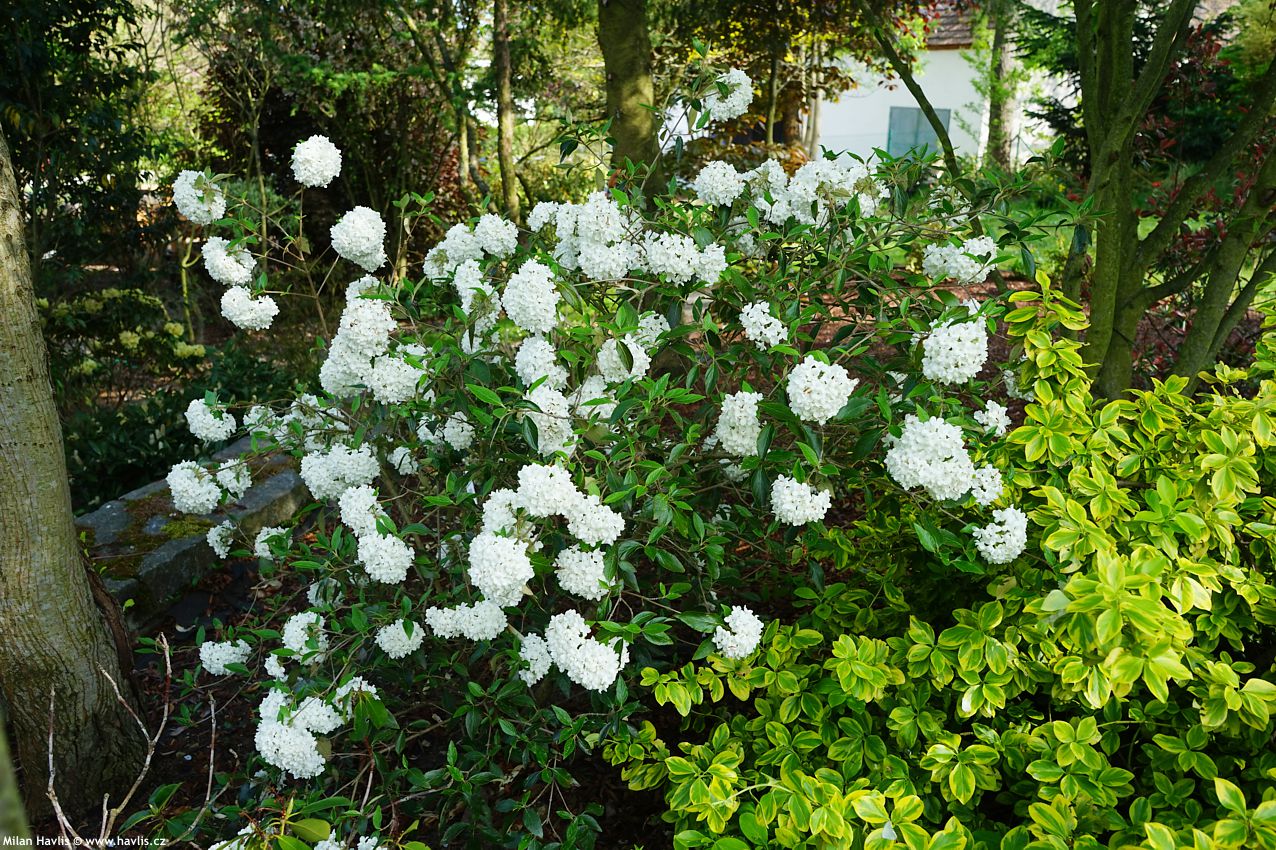
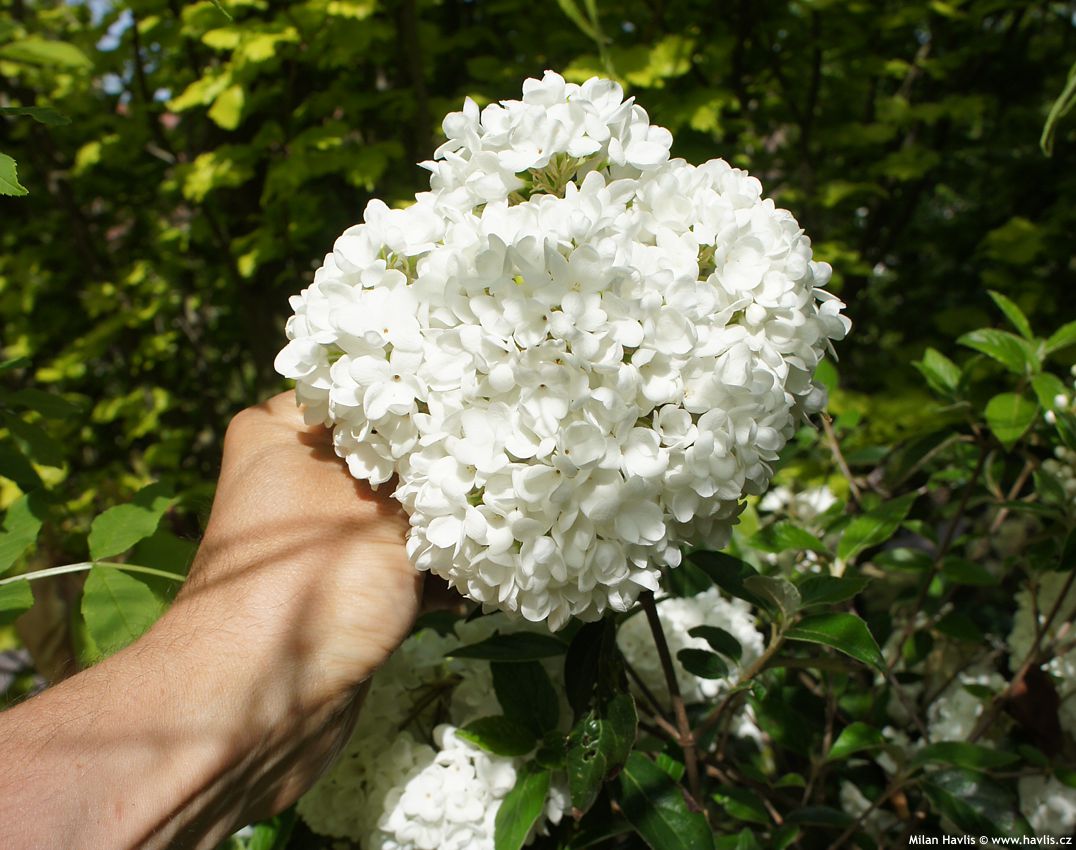
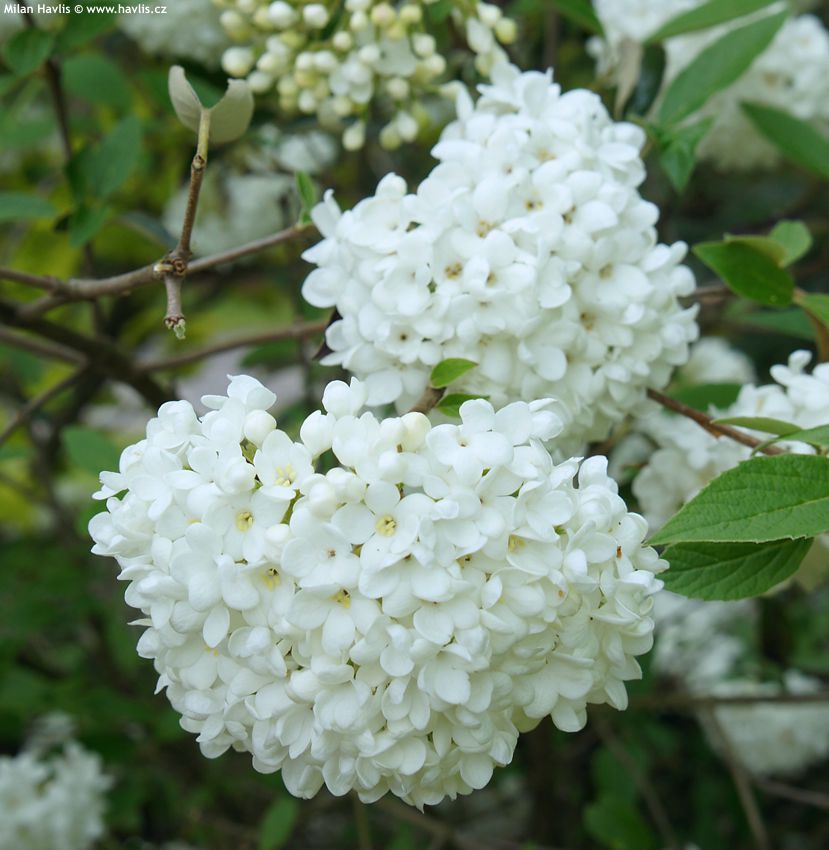
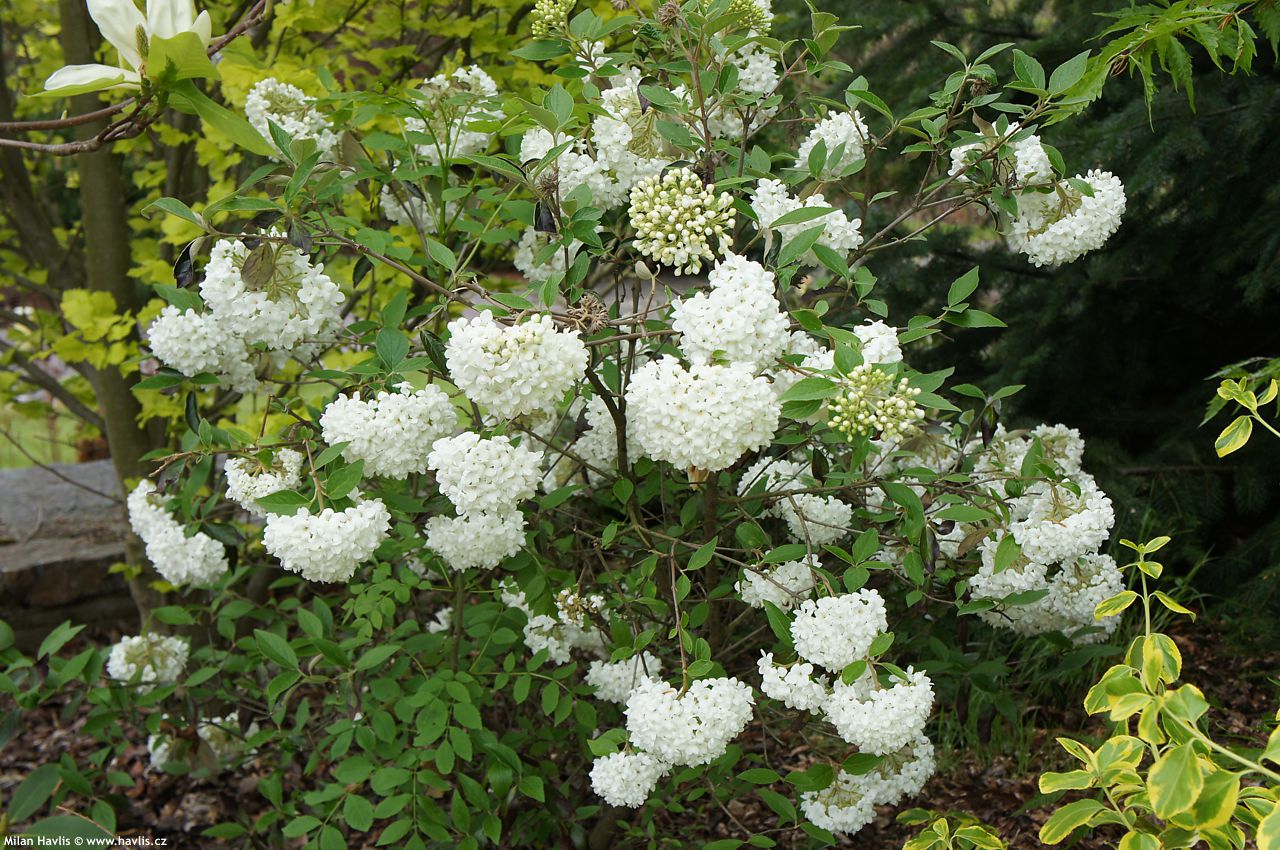
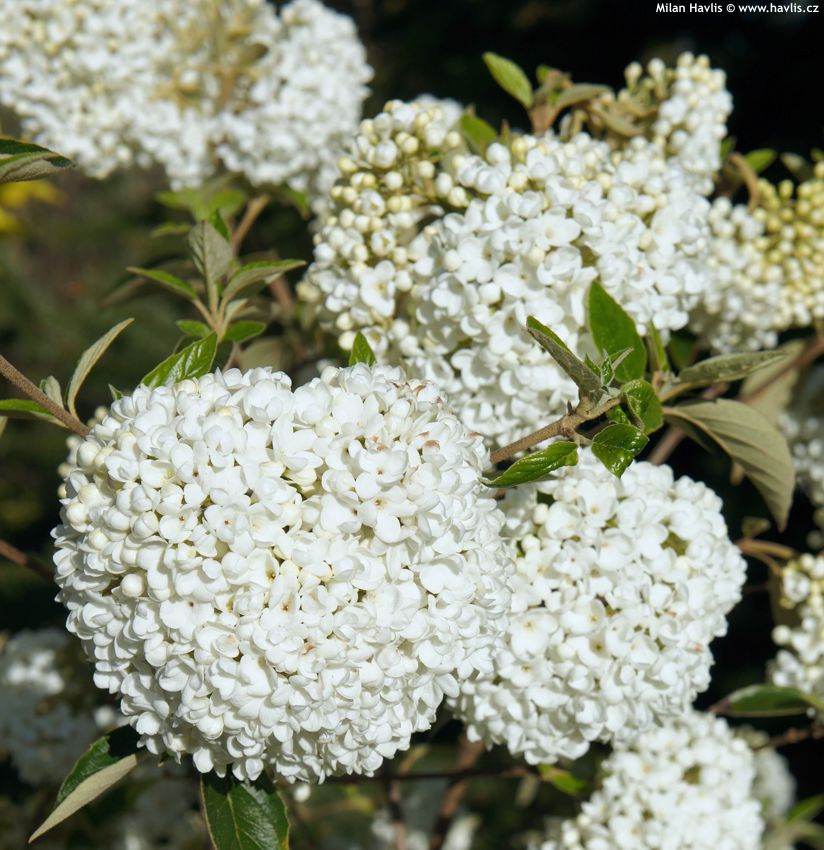
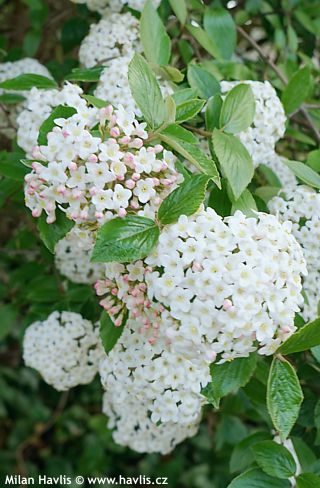
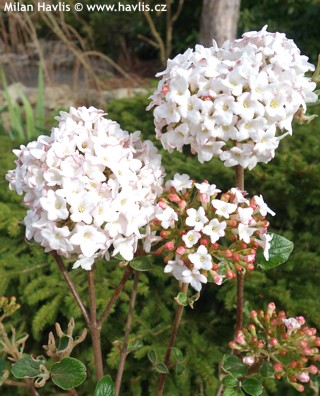
Eskimo viburnum is a compact, free-flowering, densely branched shrub with a naturally rounded habit that it maintains without the need for regular pruning. Its main ornamental feature is the abundance of almost perfectly spherical flower heads composed of small, pure white flowers, which appear in early spring, often before the foliage is fully developed. The flowers are strongly and pleasantly fragrant, with a scent that is sweet yet fresh and, on warmer days, spreads into the surrounding area like a gentle spring breeze. The leaves are medium-sized, 6–10 cm long, obovate to broadly elliptic, with entire margins and a short tip. They are evergreen, thin but leathery, dark green and glossy, with a paler underside. Although evergreen, the foliage is less dense than in many other evergreen shrubs and does not form a completely opaque screen typical for cherry laurels or photinias for instance. Thanks to its modest size and regular shape, ‘Eskimo’ is well suited to smaller gardens, front gardens or as a low specimen plant near paths and terraces, where both its fragrance and form can be fully appreciated. It is also very attractive when trained as a half-standard with the crown set at a height of about one metre.
‘Eskimo’ was bred by Donald Egolf as a complex hybrid of Viburnum × carlcephalum ‘Cayuga’ and Viburnum utile and was introduced to the market in 1981. His aim was to combine strong fragrance and abundant flowering with compact growth, frost hardiness and partial evergreen character. Egolf himself regarded it as one of the most balanced results of his work with viburnums. Growth is slow to moderately fast, around 20–25 cm per year, and the shrub naturally forms a dense, well-branched and regularly rounded shape without a tendency to become bare or sprawling. This makes it suitable as a specimen plant in smaller gardens, in front gardens or as part of low shrub groupings, where it works well either with spring bulbs to emphasise the start of the season or with summer perennials that take over once flowering has finished. Its long-term garden value and reliability were recognised in 1992 by the Pennsylvania Horticultural Society (est. 1827), one of the oldest and most respected horticultural institutions in North America, through the award of its Gold Medal Plant Award. In terms of health, the cultivar is reliable. Young spring shoots may occasionally be affected by aphids, as with other viburnums, especially in warm and dry springs. In most cases, mechanical removal or support of natural predators is sufficient, and chemical control is rarely necessary.
Last update 16-05-2008; 15-03-2026
Hybrid flowering viburnums are undemanding shrubs suitable for most gardens in temperate regions. They perform best in full sun to partial shade, in humus-rich, moderately moist but well-drained soil. They tolerate almost any normal garden soil, with the exception of extremes such as very dry or permanently waterlogged sites. After planting, regular watering is required, but after the first year they are fairly tolerant of short periods of drought. Pruning is not necessary. If shaping or rejuvenation is required, it should always be carried out immediately after flowering, as the plants flower on the previous year’s wood. Feeding is not essential, but can be applied, most commonly in spring using compost or a balanced fertiliser for ornamental shrubs, or in mid-summer to support the formation of flower buds. Frost hardiness is high, to at least −29 °C (USDA zone 5).

Goods are shipped all over Europe. For Russia and U.K. and for further details please read about SHIPPING OPTIONS HERE.
Are you interested in a serious discount for orders NOV-FEB? Check your options here.
THE PRICES INCLUDE VAT of 15%. For quick conversion you can use 1 CZK = approx. 0.04 EUR
- STANDARD QUALITY - Plants of this group are 1st class quality with number of branches and overall density adequate to their size and age, considering they were container grown.
- DE LUXE QUALITY - This label guarantees a luxurious quality of manually selected plants that, compared to their height and age, are exceptionally dense and beautiful.
- EXTRA - These plants are usually mature and bigger specimens with exceptional overall appearance.
- STANDARD (as described in the plant form) means a tree with a trunk of 190-210 cm and a crown at the top, unless specified differently. The commercial size for trees is their girth measured in the height of 1m from ground.
- HOBBY - These plants are of the same quality as our standard-quality plants but younger and therefore cheaper.
- SHRUB - a woody plant with branches growing bushy from the ground level.
- HALF-STANDARD or MINI-STANDARD - a small tree with shorter trunk, its size is usually specified.
- FEATHERED - These are trees with branches growing already from the base of the trunk and up along the stem.
- GRASSES and PERENNIALS - Sizes given usually read the diameter of the pot or the clump, as specified.
