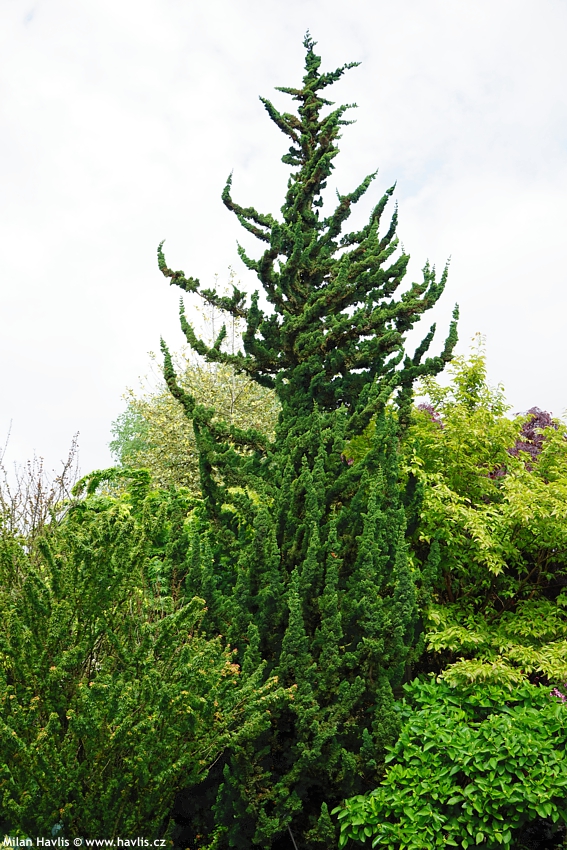
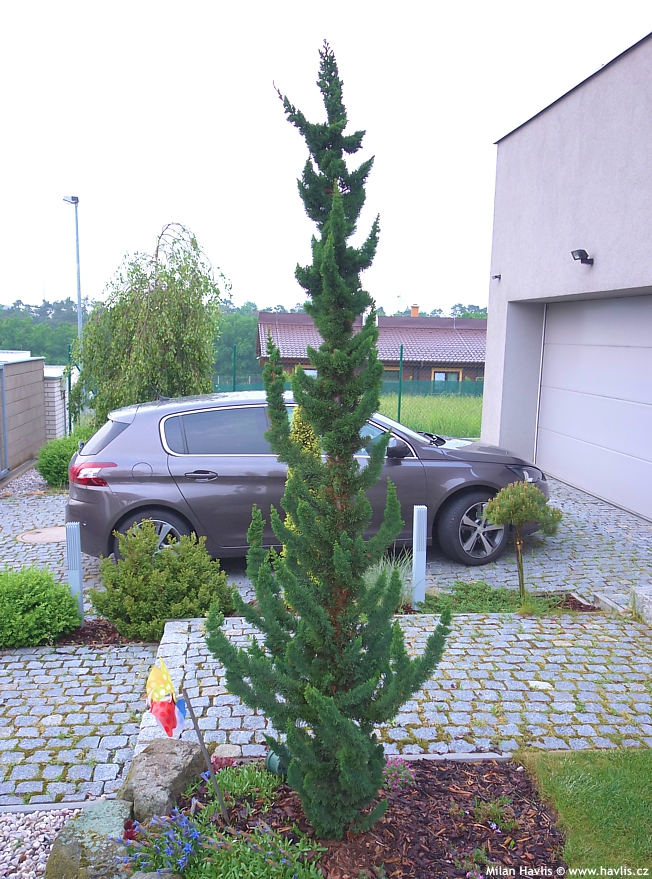
Chamaecyparis lawsoniana 'WISSEL'S SAGUARO' Lawson cypress, false cypress

 Symbivit Tric (arbuscular)
 Symbivit (arbuscular)
Chamaecyparis
The genus Chamaecyparis comprises a small group of coniferous trees native exclusively to eastern Asia and the western regions of North America. Botanically, it belongs to the cypress family and is characterised by its fine branch structure, scale‑like foliage and remarkable diversity of forms and colours, which has made it one of the most important genera of ornamental conifers. The genus was first formally described by Stephan Ladislaus Endlicher (1804–1849) in the first half of the nineteenth century, at a time when Europe was becoming increasingly familiar with the flora of the Far East. Fossil evidence suggests that the ancestors of modern false cypresses were once far more widely distributed, making the genus another example of woody plants that survived major climatic shifts in restricted refuges.
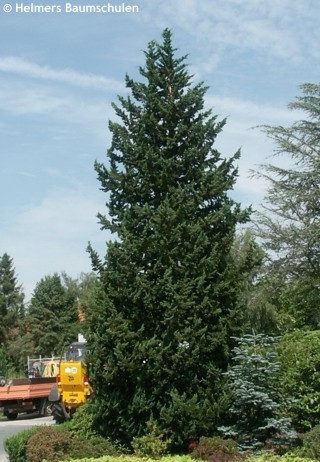
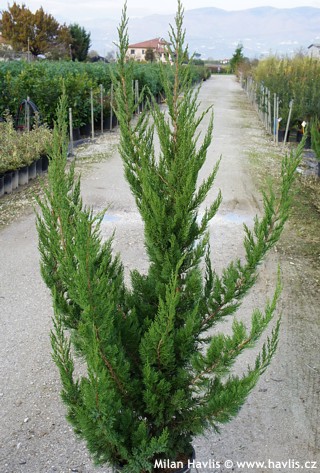
Lawson cypress is native to northwestern America, from Oregon to northern California. It was first discovered by European Americans near Port Orford, Oregon, and was introduced to horticultural market in 1854. It was described by the Scottish botanist Andrew Murray (1812-1878) and named after another Scottish botanist and merchant, Charles Lawson (1795-1873), who became famous by importing new plant species from America to Britain. This cypress tree was one of his discoveries. It is a hardy, evergreen conifer with soft, scale-like needles. Perhaps all over the world in temperate climates, it is widely planted in gardens and parks and is popular for its variability. There are many colourful varieties that brighten up compositions of dark green shrubs and trees and perform also in decorative outdoor containers.
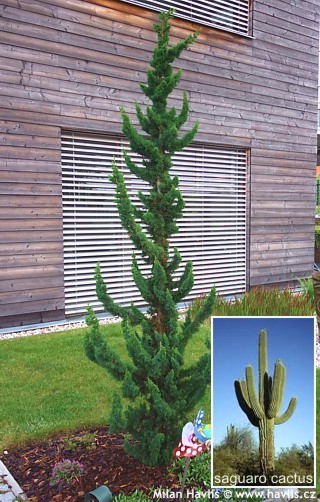
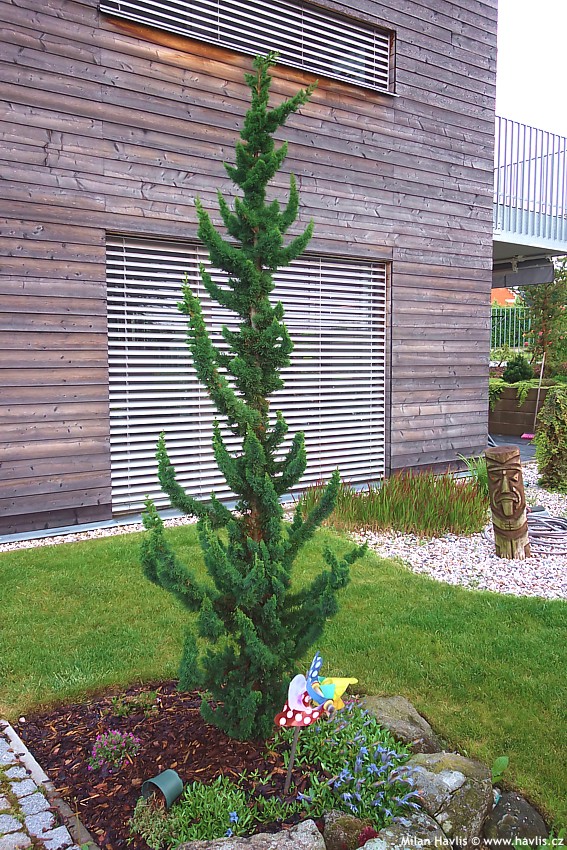
Do you know saguaro cactus? The typical succulent that gets most photographed when one wants to show a parched dessert with just one living plant. This cactus influenced the name of this Lawson cypress. It is a sport/selection of Wisselii variety. It is an evergreen conifer of strictly upright, narrowly columnar habit. Its branches are covered with congested, scale-like, emerald green needles.
The typical features are the arms, similar to those which saguaro cactus makes. They spoil the slim habit and make this plant unique, piece by piece. It is a very slow grower. Pruning is not required but you can model a fantastic shape by removing shorter, horizontal branches along the trunk, leaving only a few strong ones that will form the arms. Do this in mid spring or midsummer. Never cut into old wood.
Last update 22-02-2013
Lawson cypress prefers moist but well-drained, slightly acidic soil but is adaptable to almost all types of soil. Grow it in full sun or half shade either in a garden bed or in a container where moisture must be regularly checked but remove the saucer (it requires more frequent watering than e.g. pine tree) and the plant has to be fed once it has consumed all nutrients from the original soil. In a border it requires no maintenance at all. Fully hardy to min. -29 °C (USDA zone 5).