

































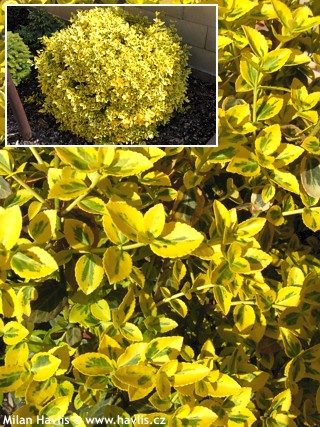
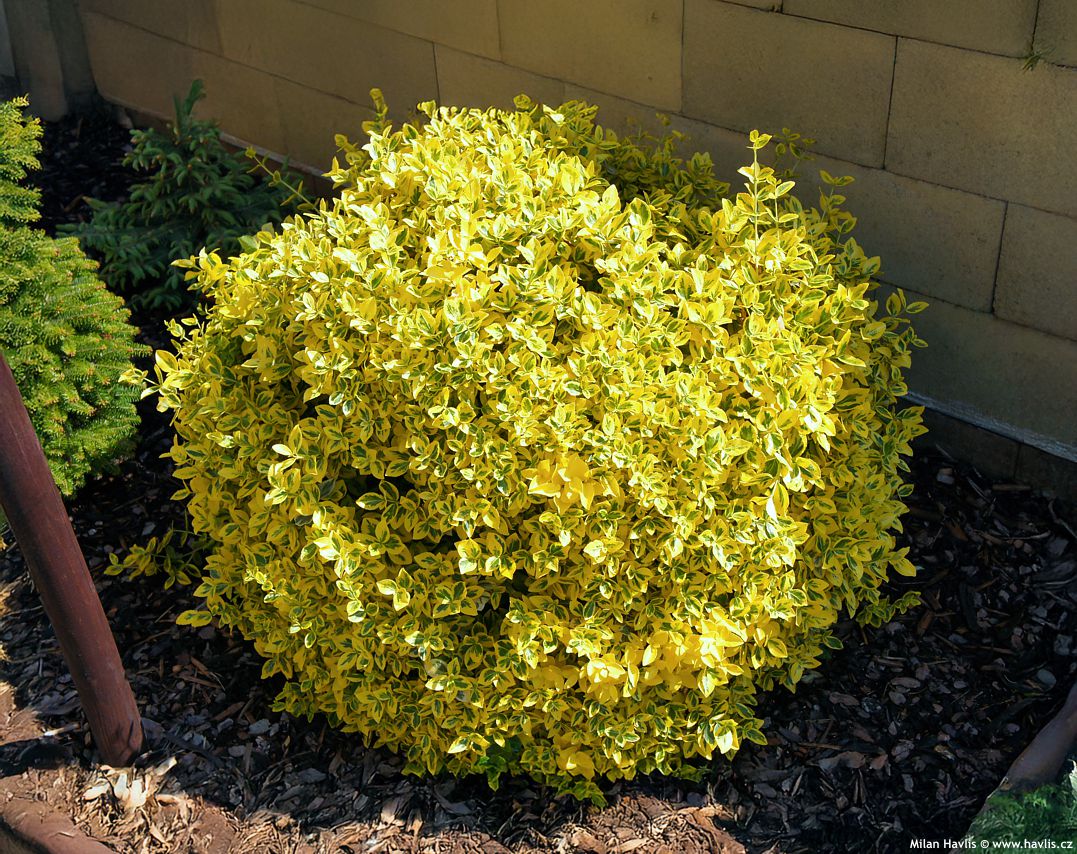
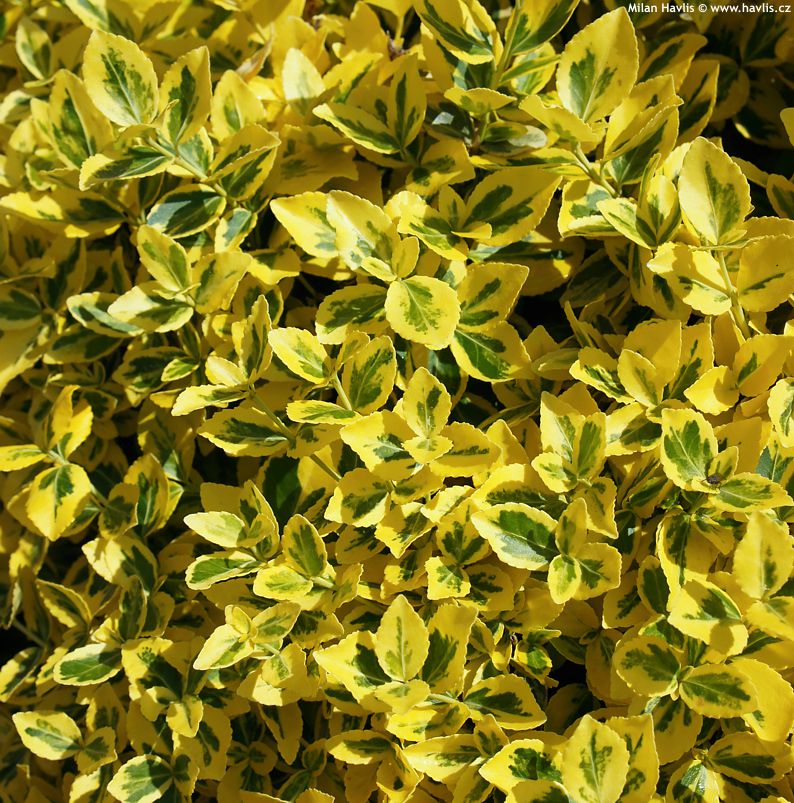
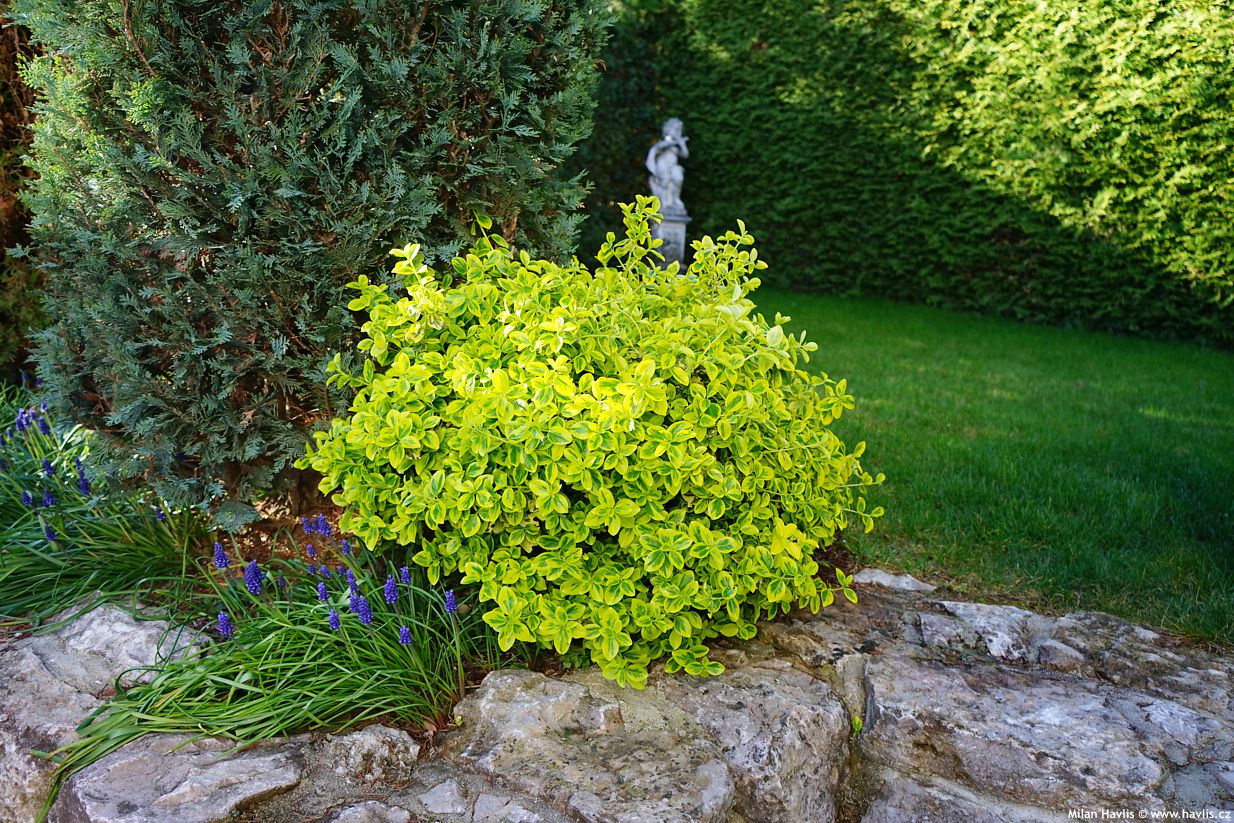
Euonymus fortunei 'EMERALD'n'GOLD' Fortune´s spindle

 Symbivit Tric (arbuscular)
 Symbivit (arbuscular)
Euonymus
The genus Euonymus is a botanically diverse group of woody plants that includes both deciduous and evergreen shrubs as well as small trees. In nature, it occurs mainly in the temperate zone of the Northern Hemisphere – from Europe through the Caucasus to East Asia. Some species have been introduced into subtropical regions of Southeast Asia and Australia. In gardens, the most common representatives are the European Euonymus europaeus with its striking pink fruits, the evergreen Euonymus fortunei, which creeps and climbs walls, and the evergreen Euonymus japonicus, which forms compact shrubs with glossy leaves. The genus is renowned for its adaptability to different conditions, making it a popular choice for urban greenery, hedges, and collection plantings. The wood of some species, especially those with a harder structure, was traditionally used in Asia to make fine brushes for calligraphy – valued for its strength and delicate fibrous texture.
The evergreen group of Fortune's spindle originates in East Asia and includes forms native to China, Japan, Korea and parts of Southeast Asia. The species was first described in detail in the nineteenth century by the Russian botanist Nikolai Turczaninow (1796–1863), who named it Elaeodendron fortunei in honour of the Scottish plant collector and botanist Robert Fortune (1812–1880). At that time, Fortune was actively collecting plants in China, contributing significantly to their introduction into Europe and supplying the first living material of this species. The transfer of the species to the genus Euonymus followed in 1933, supported by the detailed work of Japanese botanists such as Nakai (1882–1952) and Hiroshi Hara (1911–1986), whose descriptions of local forms helped to clarify its position within the genus. In garden culture, it became established as a reliable “green underlay”, a plant that fills empty spaces, maintains shaded structure and, when required, grows either as a groundcover or a climber. What functions as remarkable adaptability in one context has proved problematic elsewhere: in parts of North America the species has become overly successful, behaves aggressively and damages forest ecosystems, and is therefore subject to regulated control in some regions.
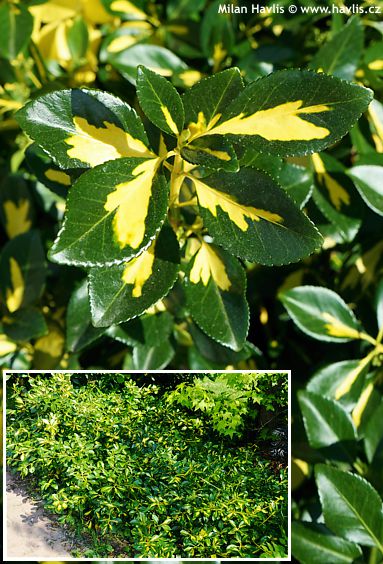
Emerald'n'Gold spindle has bright green leaves in the centre and vivid yellow edges that often override the green colour giving a golden effect to the whole shrub. In autumn and winter majority of leaves turn pink or purple red and if some of them fall down in spring the plant quickly replaces them.
Wintercreepers are excellent, low shrubs that not only withstand low temperatures to some -30°C but retain the foliage without any damage. They can be used as a nice groundcover or a climber if given a support. Just think twice when choosing the right variety to be used in a mixed border in order to complement the other plants with its colours.
Last update 20-11-2010; 25-02-2013
Grow it in full sun or part shade, in medium fertile, slightly moist but well-drained soil. Fortune’s spindle can be pruned in the spring or clipped from spring until midsummer. Fully hardy to -29°C (USDA zone 5), possibly a little more.

.jpg)
