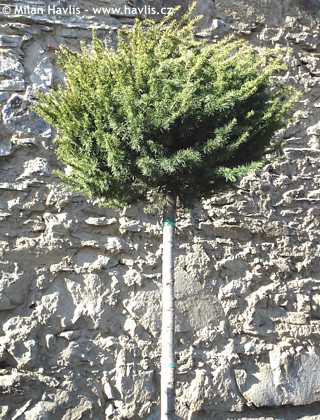
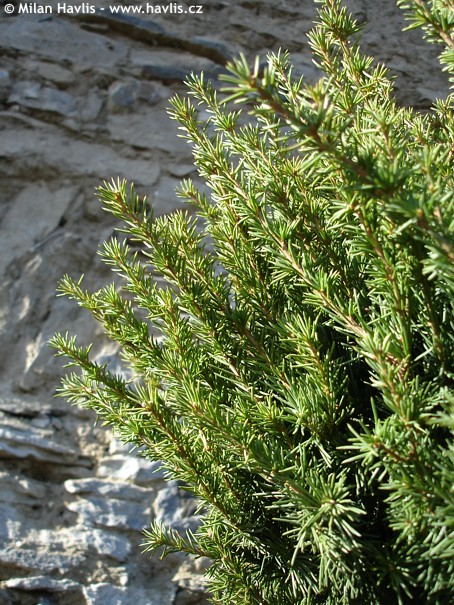
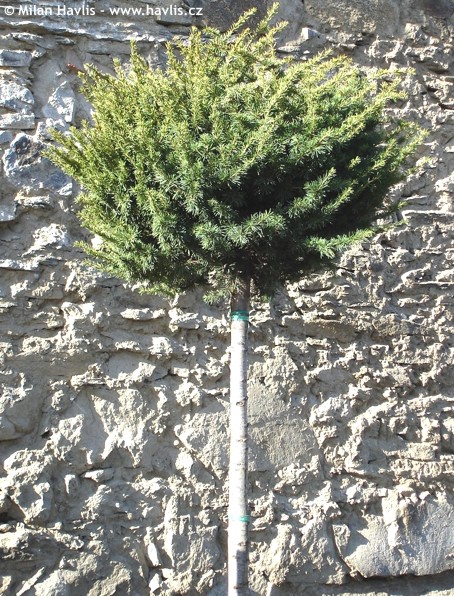
cedrus libani 'NANA' dwarf cedar of Lebanon


 Ectovit (ectomycorrhizal)
cedrus
The genus of cedars belongs among the very few trees that have accompanied human memory for so long that they seem almost timeless. Fossil pollen and petrified wood show that cedars once covered vast areas of Eurasia, before their range gradually contracted during the Tertiary and Quaternary periods to the mountain belts of the eastern Mediterranean and western Asia. Even the name of the genus, derived from the Greek kedros and the Latin cedrus, evokes their fragrant, resin‑rich wood, long regarded as a symbol of durability, sanctity and power. Worth noting is a common linguistic misunderstanding: the Russian word кедр – kedr does not refer to a true cedar, but to the Siberian pine (Pinus sibirica), a completely different genus of conifer. Cedars appear in epics, biblical texts and classical myths; their timber carried the roofs of temples, the keels of ships and the thrones of kings. When you stand beneath an old cedar, time seems to slow, as if the tree knows that a human life is only a brief episode in its own story, which unfolds over centuries.
The Lebanon cedar is the best known of all cedars, not only for its majesty but also for its cultural significance. It originates from the mountain ranges of Lebanon, the Anti‑Lebanon and the Taurus Mountains; modern sources place its natural populations mainly in Turkey, Syria and Lebanon. The species has been known since the time of Linnaeus, who mentioned it in his Species Plantarum, while the formal binomial name Cedrus libani was published by A. Richard in 1823. For millennia, the Lebanon cedar was sought after for its timber – strong, durable, aromatic and almost indestructible. This very quality, however, proved to be its downfall. Ancient civilisations felled it on such a scale that the original cedar forests of Lebanon almost disappeared. From once extensive stands, only small remnants remain, the most famous being the Arz ar‑Rabb reserve, the “Cedars of God”, which became a symbol of Lebanese identity and still appears on the national flag. The Lebanon cedar is therefore not just a tree, but a piece of cultural heritage, a reminder of how the relationship between people and landscape can shift over centuries from reverence to excess.
Nana is a dwarf version of Lebabno cedar which is commonly grafted on standard stems. Needles of this variety are short, bright to deep green. It makes a thick, compact crown with no pruning and is therefore suitable for small gardens, too.
Cedars grow in almost any soil, even chalky, provided it is well-drained. The need full sun. Fully hardy to -27°C (USDA zone 5b).
Last update 16-02-2008.