












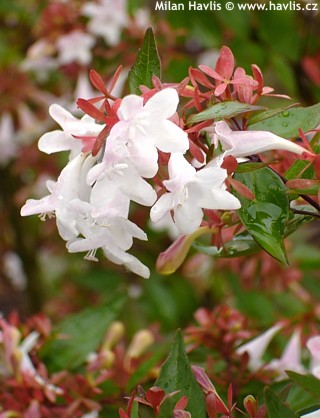


Abelia × grandiflora (syn. a.rupestris) glossy abelia

 Symbivit Tric (arbuscular)
 Symbivit (arbuscular)
Abelia
Abelias (Abelia) are a genus of deciduous or evergreen shrubs in the honeysuckle family (Caprifoliaceae). In the current botanical treatment, the genus comprises only six species native to China, Vietnam, Taiwan and the Ryukyu Islands of Japan. In the wild, they are found mainly along woodland edges, in shrubby habitats and on sunny mountain slopes with well-drained soils. Their characteristic features include small opposite leaves, gracefully arching branches and masses of tubular flowers that appear over an exceptionally long period, from summer well into autumn. Although the individual flowers are not large, their abundance and persistence make abelias among the most valuable late-flowering shrubs.
The genus was first described botanically in 1754 by the Dutch botanist Johannes Gronovius (1686–1762), but its name commemorates a different man: the British physician, naturalist and traveller Clarke Abel (1780–1826), who took part in a diplomatic mission to China in 1816. During the expedition, he assembled valuable botanical collections, including plants of abelias that were then unknown in Europe. His return journey, however, turned into a drama. The ship carrying the collections was wrecked and later attacked by pirates, resulting in the loss of most living specimens. Only those plants that Abel had entrusted before his departure to his friend Sir George Thomas Staunton (1781–1859) in Canton survived. Thanks to this foresight, abelias were not lost and could be preserved for science. The next chapter of their story was written in 1844 by the Scottish plant collector Robert Fortune (1812–1880), who introduced seeds and living plants from China to Europe. This opened the way for their wider cultivation and subsequent breeding, which eventually led to the creation of the best-known garden abelia of all, Abelia × grandiflora.
The greatest success was achieved at the Italian Rovelli Nursery on the shores of Lake Maggiore, where the hybrid Abelia × grandiflora was bred in 1886. It arose from a cross between A. chinensis and A. uniflora, inheriting the finest qualities of both parents. From the former it gained abundant flowering and a pleasant fragrance, while from the latter it acquired its elegant habit and refined growth character. The new hybrid soon surpassed its parents and became, without exaggeration, the most widely cultivated abelia in the world. Its exceptionally long flowering season and attractively coloured persistent sepals provide an ever-changing display from early summer until autumn, setting it apart from many shrubs that reach their peak for only a few weeks before fading into the background. Abelia × grandiflora quickly spread throughout Europe and North America. During the twentieth century, it became the foundation for numerous cultivars differing in size and in the colour of their foliage and flowers.
In our search for the most spectacular shrubs with truly extravagant flowering displays, we often overlook the smaller, remarkably hard-working plants. Yet glossy abelia, botanically known as Abelia × grandiflora or by its older name Abelia rupestris, belongs among those shrubs that are often described as supporting or filler plants, while in reality they are absolute treasures in the garden.
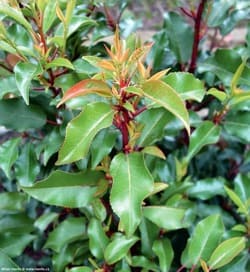
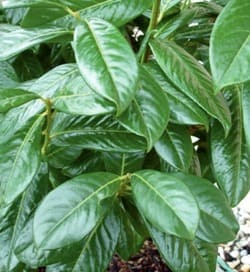
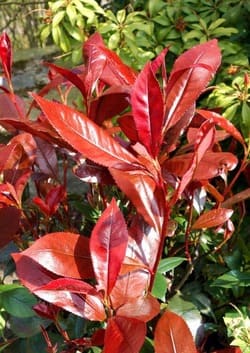
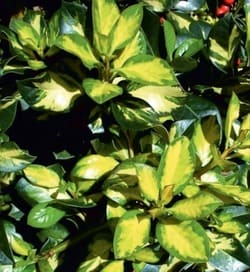
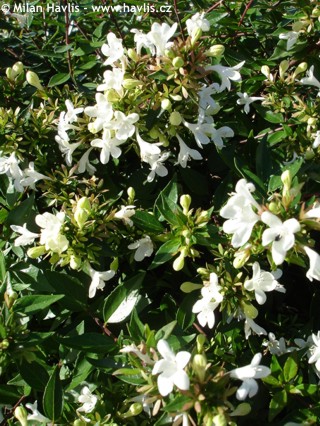
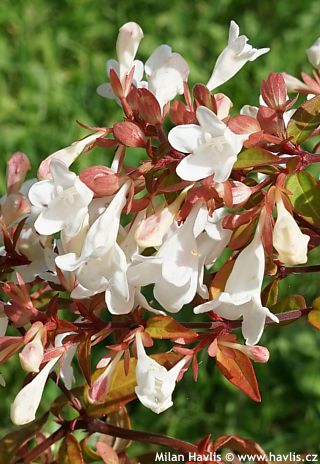
Its greatest asset is its exceptionally long flowering season. From July until the first frosts, it produces countless small, tubular flowers in shades of white to pale pink. What other shrub can boast such endurance? From a distance, the plant may appear rosier than it actually is, as the flowers are accompanied by salmon-pink to purplish sepals that persist on the branches long after flowering has finished, their colour intensifying further as autumn approaches. Equally attractive are its small, pointed and strikingly glossy leaves, which have earned it the English name glossy abelia. Most plants remain evergreen, and during winter the foliage often develops shades of bronze, deep purple or burgundy red. Only during exceptionally severe winters may some leaves be shed, but they are quickly replaced when growth resumes in spring.
Naturally, it forms dense, spreading shrubs with a rounded, dome-shaped habit. The young shoots initially grow upright but gradually branch out and arch gracefully like a green fountain. This lightness of growth is exactly what makes glossy abelia such a valuable garden plant. It softens bold hydrangeas, broad-leaved cherry laurels, shaggy viburnums and even prickly conifers, helping to unify plantings that might otherwise feel heavy or disjointed. It would be a mistake, however, to think of it merely as a supporting or filler plant. In a well-kept border, gravel garden or large decorative planter, it easily becomes an elegant small specimen shrub, admired for its glossy foliage, airy habit and continuous flowering. It does not attract attention through extravagance, but through an understated charm that you often only begin to appreciate after a few years. Like a love at second sight. 😊
Last update 08-01-2009; 06-01-2012; 22-02-2019; 05-11-2026
Glossy abelia thrives best in a sunny position and is happy in partial shade, too. In full sun, flowering is at its most abundant and the foliage develops its richest colouring, while in partial shade the shrub retains its elegant habit and flowers only slightly less freely. It performs well in ordinary garden soil, provided it is well drained and does not remain waterlogged for prolonged periods. Once established, it tolerates long periods of drought without difficulty. It withstands winter temperatures of approximately -25 to -29 °C and generally requires no winter protection. Only young plants may suffer some frost damage during exceptionally severe winters, but they usually recover well in spring. Pruning is not essential, although the plant responds well to it. Any pruning is best carried out in spring after the risk of severe frosts has passed. Smaller cultivars require only light shaping, while larger ones benefit from the occasional removal of the oldest or overly long shoots to maintain a dense, compact framework. Feeding is not needed and, in fertile soils, excessive fertilisation may encourage vigorous shoot growth at the expense of flowering. Glossy abelia's greatest virtues are its ease of cultivation, exceptionally long flowering period and ability to provide interest in the garden for many months with minimal maintenance.


Goods are shipped all over Europe. For Russia and U.K. and for further details please read about SHIPPING OPTIONS HERE.
Are you interested in a serious discount for orders NOV-FEB? Check your options here.
THE PRICES INCLUDE VAT of 15%. For quick conversion you can use 1 CZK = approx. 0.04 EUR
- STANDARD QUALITY - Plants of this group are 1st class quality with number of branches and overall density adequate to their size and age, considering they were container grown.
- DE LUXE QUALITY - This label guarantees a luxurious quality of manually selected plants that, compared to their height and age, are exceptionally dense and beautiful.
- EXTRA - These plants are usually mature and bigger specimens with exceptional overall appearance.
- STANDARD (as described in the plant form) means a tree with a trunk of 190-210 cm and a crown at the top, unless specified differently. The commercial size for trees is their girth measured in the height of 1m from ground.
- HOBBY - These plants are of the same quality as our standard-quality plants but younger and therefore cheaper.
- SHRUB - a woody plant with branches growing bushy from the ground level.
- HALF-STANDARD or MINI-STANDARD - a small tree with shorter trunk, its size is usually specified.
- FEATHERED - These are trees with branches growing already from the base of the trunk and up along the stem.
- GRASSES and PERENNIALS - Sizes given usually read the diameter of the pot or the clump, as specified.
