











.jpg)

Acanthus 'MORNING CANDLE' bear‘s breeches


 Symbivit Tric (arbuscular)
 Symbivit (arbuscular)
Acanthus
Acanthus is a genus of roughly 25–30 species in the family Acanthaceae, first described in Species Plantarum in 1753 by Carl Linnaeus (1707–1778). Its species occur naturally from the Mediterranean through parts of Africa to Asia and northern Australia, with the greatest diversity concentrated around the Mediterranean basin and in tropical Asia. Fossil evidence suggests that members of this group were already prominent herbs of warm regions in deep geological time. Across the genus, the defining features are large basal rosettes of leaves and striking inflorescences that feel more architectural than floral. In English, acanthus is commonly known as bear’s breeches, a name inspired by the size, texture and deeply lobed shape of the leaves, which were likened to the coarse, folded trousers worn by hunters or to the heavy, shaggy hide of a bear. Early botanists and gardeners alike were struck by the plant’s bold presence and its ability to dominate space, making it an easily recognisable genus even for non-specialists.
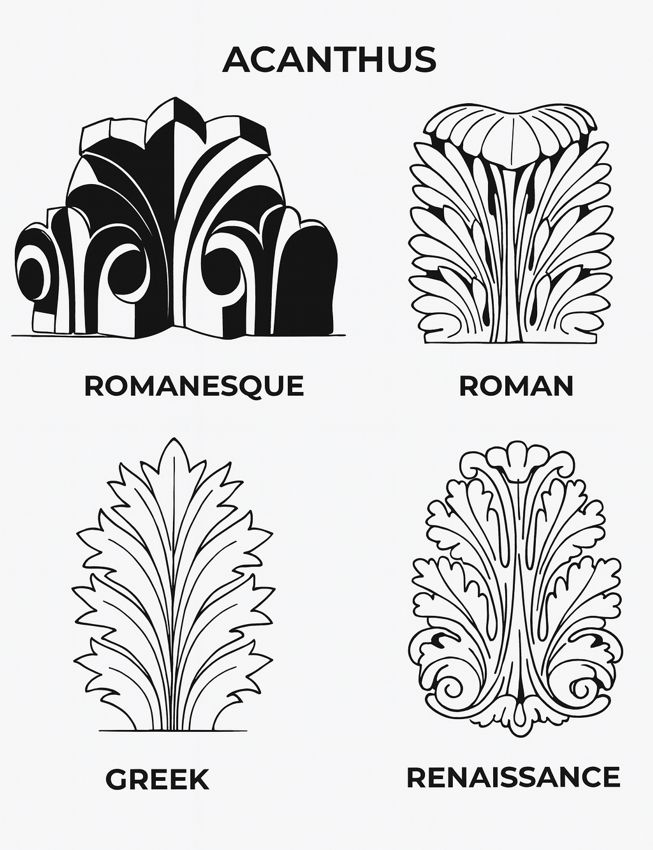
For cultivation outside its native range, including in cooler climates, Acanthus is often improved through hybridisation, most commonly between Acanthus mollis and Acanthus spinosus. This pairing makes practical sense: A. mollis contributes large, sculptural leaves and a softer, more spreading rosette, while A. spinosus adds a firmer, more upright habit and greater tolerance of less-than-ideal conditions. The resulting forms retain the iconic acanthus leaf look but perform better on compromise sites. In the Mediterranean world, the leaf shape carries a strong cultural legacy: the stylised acanthus leaf has been used since antiquity, and especially in Romanesque architecture, as an ornamental motif on column capitals, cornices and portals. The same motif migrated into applied arts, appearing in embroidery, goldsmith’s work and the decoration of trays, bowls and jugs.
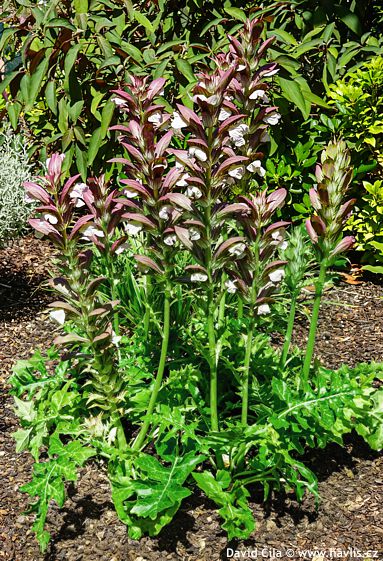
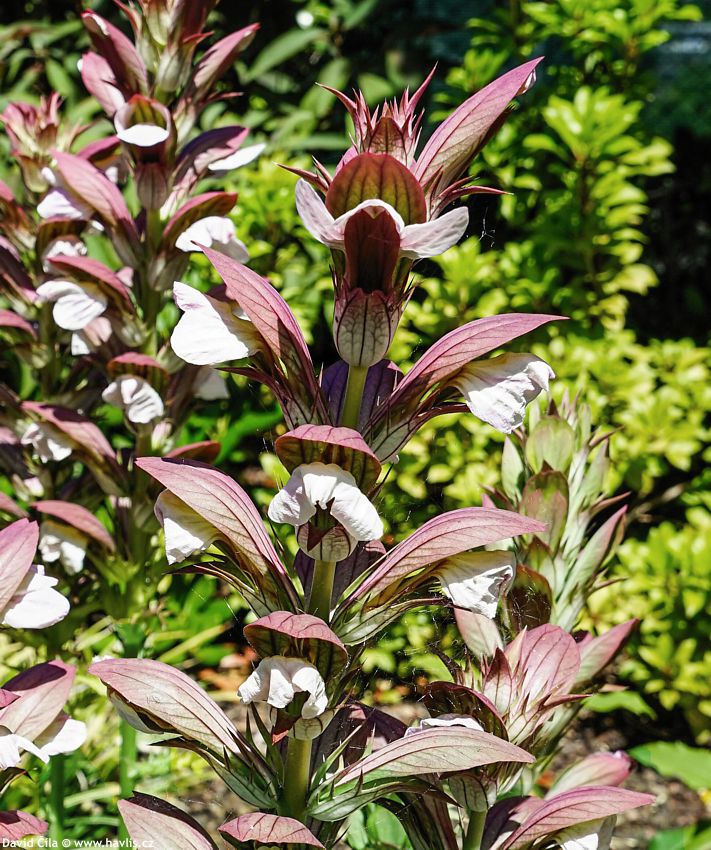
Morning Candle is one of the hardier cultivars of hybrid acanthus, valued for its bold foliage and reliable flowering. Its leaf rosettes form compact, sturdy clumps up to about one metre across, composed of showy leaves that are dark green, highly glossy and deeply lobed, typically 30–50 cm long. The pronounced venation gives them an almost carved, relief-like appearance. Unlike A. spinosus, the leaf margins lack spines, and unlike A. mollis, the plant does not sprawl untidily across the ground. In early July, robust flowering stems emerge, reaching about 1 m, or even 1.5 m on mature plants. They carry spike-like inflorescences with white to creamy flowers set against darker purplish bracts, a combination that inspired the cultivar name Morning Candle. The cultivar is generally believed to have been bred by Dirk de Winter of New Generation Plants in the Netherlands.
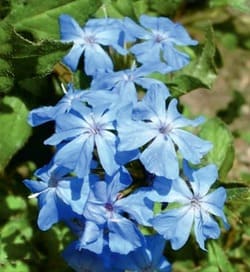
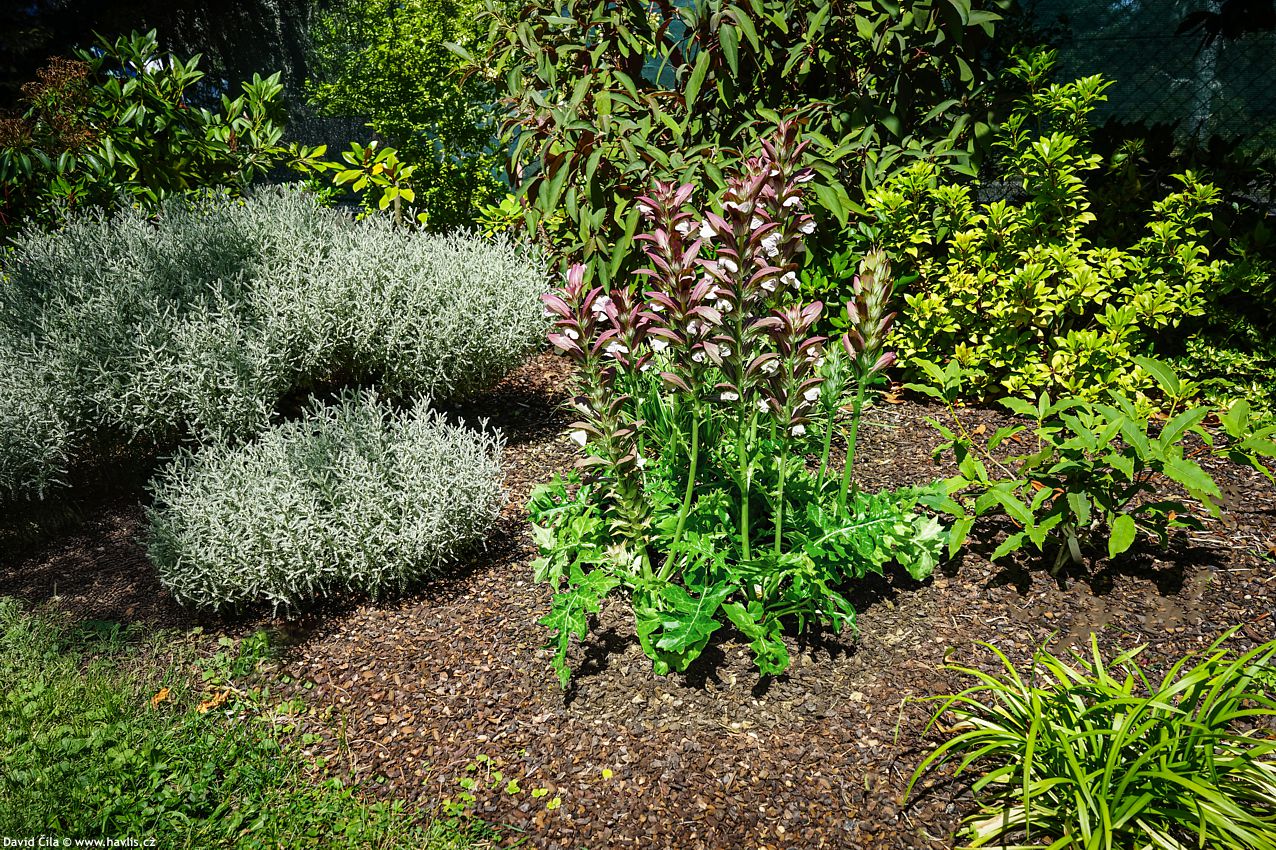
Morning Candle earns its place both in perennial borders and among smaller shrubs, as its architecture holds its own even alongside woody plants. Its dramatic leaves can convincingly evoke the exotic atmosphere of a rainforest or a subtropical garden. Combining it with other perennials requires some restraint, as care is needed to ensure companions are not visually overwhelmed while the acanthus takes centre stage. In a well-maintained garden it stands out beautifully next to cushion-forming herbs such as cotton lavender, curry plant or thyme. Delicate contrasts work best: for example, Verbena species, which are still building their mass when acanthus is in flower, fill the gap beautifully once the plant has retreated to its basal leaves. To heighten the exotic feel, try pairing it with Stokesia or Ceratostigma, both of which bloom later. Among shrubs, excellent partners include Vitex, narrow-leaved Rhamnus and Choisya.
Last update 01-02-2026
In Central Europe, acanthus is treated as a perennial that hates frequent or prolonged waterlogging, especially in winter. Plant it only in well-drained, humus-rich soil with ample nutrients, and mulch generously for winter protection. The mulch shields the roots from frost and from fluctuations in moisture; in spring, remove part of it carefully, but leave a protective layer in place, as the plant appreciates even moisture during early growth. Once established, it is drought-tolerant, yet regular watering during the first two years and in prolonged summer heat will encourage sturdy flower stems and better flowering. Feeding from April to July with a balanced fertiliser or compost promotes large, healthy leaves; avoid excessive nitrogen later in the season, which leads to soft, fragile growth. As for hardiness, well-drained, mulched and sheltered sites have already seen plants survive temperatures down to −20 °C (USDA zone 6b), and further testing is ongoing.