Acer palmatum 'RED PYGMY' Japanese maple

 Symbivit Tric (arbuscular)
 Symbivit (arbuscular)
Acer
Acer palmatum originates from Japan, parts of Korea and China, where it grows in foothill and mountain forests, along woodland edges and in moist, humus‑rich ravines. It is a tree that has fascinated people for millennia, and it was described as a distinct species by the Swedish botanist Carl Peter Thunberg (1743–1828) in 1784, based on plants he encountered during his journey to Japan in 1775–1776 and later treated in his Flora Japonica. Japanese maples reached European gardens in the early 19th century, with documented cultivation in Britain around 1820, from where they gradually spread to other parts of Europe. By the second half of the 19th century they were already present in North American collections and had become valued elements of botanical gardens and private arboreta across the temperate zone. Beyond their ornamental appeal, they also have several practical uses: they are among the most important species for bonsai, form a fundamental component of traditional Japanese garden design, their fine and workable wood is used for small carved objects, and their leaves have served as a source of natural pigments for colouring paper and textiles.
In Japanese culture, Acer palmatum holds an exceptional position that extends far beyond botany. The traditional names kaede 楓 (“frog’s fingers”) and momiji 紅葉 (“children’s hands”) refer to the shape of the leaves and to the gentle, almost intimate closeness with which the Japanese perceive these trees. Their autumn colours have become a cultural phenomenon in their own right, known as momijigari (紅葉狩り), the “search for red leaves”, when people travel to temple gardens, mountains and parks to admire the finest displays. It is a celebration held in similar esteem to the spring hanami (花見), devoted to flowering cherries. Japanese maples appear throughout literature – in the Man’yōshū, the oldest surviving anthology of Japanese poetry from the 8th century, and in Chinese poetry, where they were praised by writers such as Wang Wei (699–759). For centuries they have been a constant motif in painting, woodblock prints, textiles and porcelain. In garden design they symbolise beauty, elegance, tranquillity and changeability – qualities that have become part of the aesthetic code of the entire East Asian cultural sphere. They also enter cultural practice in concrete ways: their leaves are used in ikebana and seasonal decorations, appear in the tea ceremony as an emblem of autumn, and in the Minoo region near Osaka they are prepared as the regional speciality momiji no tenpura (もみじの天ぷら), a sweet delicacy made from salted and deep‑fried maple leaves.
The modern era of Japanese maples is shaped by several key figures and institutions that define their breeding and scholarly documentation. In the Western world, a pivotal role was played by the American dendrologist J. D. Vertrees (1920–1993), author of the first comprehensive monograph Japanese Maples, followed by the British specialist Peter Gregory, long‑time curator of the collection at Westonbirt Arboretum. In Europe, one of the most important centres is the Dutch arboretum and nursery Esveld, founded in 1865 and run by the van Gelderen family; in Japan, traditional nurseries such as Tsukasa Maple and Kobayashi Momiji‑en preserve old regional clones and introduce new cultivars. Among the world’s leading collections are Westonbirt Arboretum in the United Kingdom, the Arnold Arboretum of Harvard University (est. 1872), which has long studied the genus Acer, and the Portland Japanese Garden, where Japanese maples have become an iconic feature and the subject of expert care. In Japan, key institutions include the Kyoto Botanical Garden (est. 1924) and the Koishikawa Botanical Garden in Tokyo (est. 1684), both of which maintain the genetic diversity of original forms.
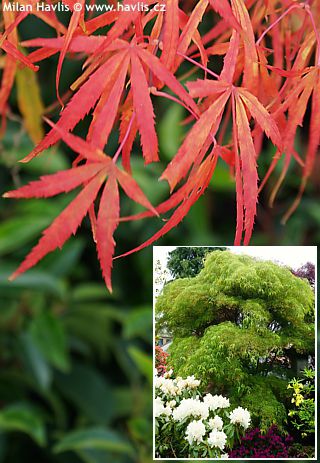
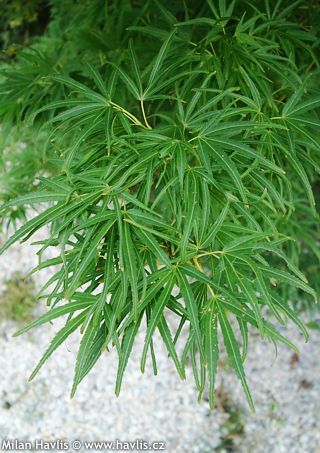
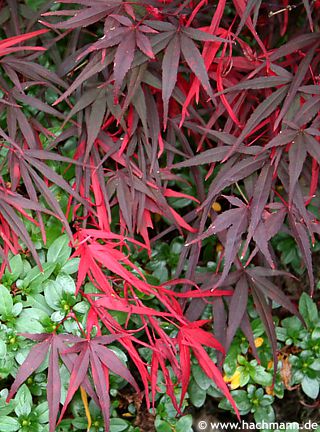
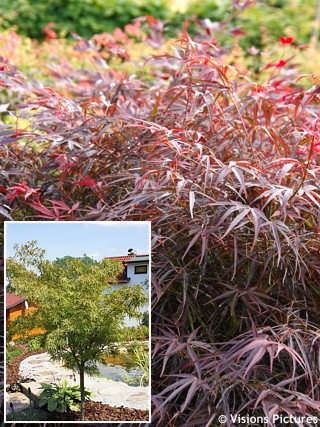
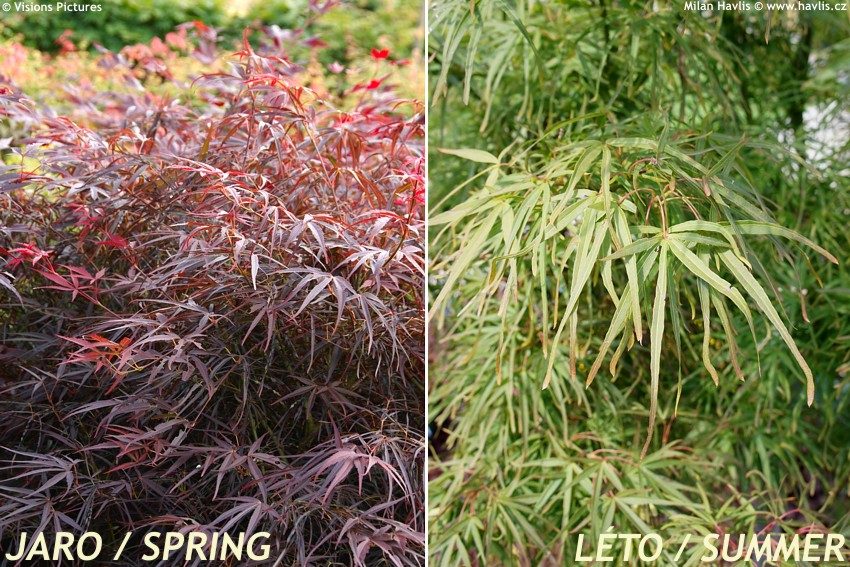
Red Pygmy could be a bit misleading name for this unique Japanese maple. Yes, it is a dwarf variety and it does make rich burgundy red leaves but only in spring. When the days get hotter from May or June onwards in most cases the foliage changes to soft green or almost olive green until autumn, when the leaves turn golden yellow and orange. Nevertheless, they are as beautiful as on all maples from linearilobum group. They are finely cut into long and extremely narrow rays. One might mistake them for bamboo leaves.
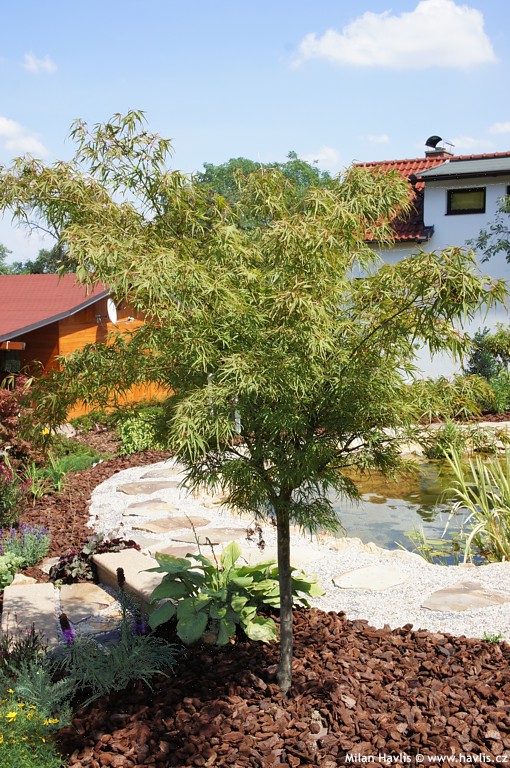
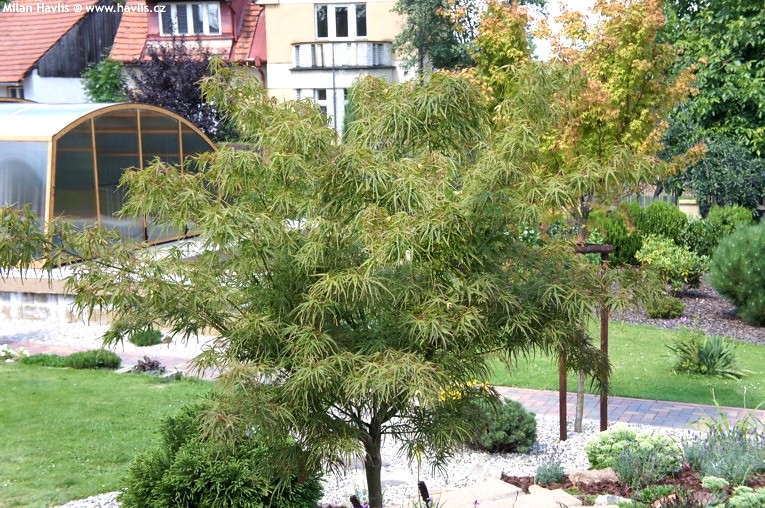
It grows slowly to about 2m tall and wide, but grafted on a stem can get taller by the height of the stem. Red Pygmy maple is naturally dense and bushy, vase-shaped shrub that needs no or very little pruning. It looks great planted as a small specimen near a Japanese-style pond or any water stream. If you prefer mixed borders make sure that its surrounding plants have different shapes, leaf types, and colours so that each plant has its attention. It is an easy plant that requires no maintenance once established.
Last update 31-12-2012
Japanese maples grow best in well‑drained, humus‑rich and slightly acidic soil that remains evenly moist but never waterlogged – in heavy clay they suffer from lack of oxygen, decline quickly and often die. Their roots are shallow, so the soil around the plant should not be disturbed after planting; companion plants should be established immediately and the whole area mulched, ideally for the entire year. Watering is essential after planting until the tree has rooted, and later during prolonged dry periods – they tolerate short droughts poorly compared with cool, moist soil, yet overwatering is equally harmful. Fertilising is neither required nor recommended. Light requirements vary by type. Upright red‑leaved forms are the most tolerant of full, all‑day sun and cope well even with summer heat and short dry spells. Upright green‑leaved forms tolerate sun in temperate climates, but in regions with intense summer heat they require at least partial afternoon shade or regular irrigation. Finely cut dissectum forms and weeping cultivars generally perform better in partial shade or filtered light, where their delicate lobes are less prone to scorching, although in cooler climates they can grow in full sun. Variegated cultivars need sufficient light to maintain their patterning, but direct midday sun easily burns the pale areas, so bright but diffused light suits them best; it is always advisable to follow the specific requirements of each cultivar. Dry, crisped leaf tips without wilting, and blackening of young shoots, are not signs of drought but of monilinia blight, which more frequently affects red‑leaved cultivars and those with coloured stems; prompt treatment with an appropriate fungicide is necessary. Pruning should be limited to essential shaping and the removal of dead or damaged branches, ideally in late summer or during winter, when the risk of heavy sap bleeding is minimal. Fully hardy to USDA zone 5b (about -28°C).