











.jpg)
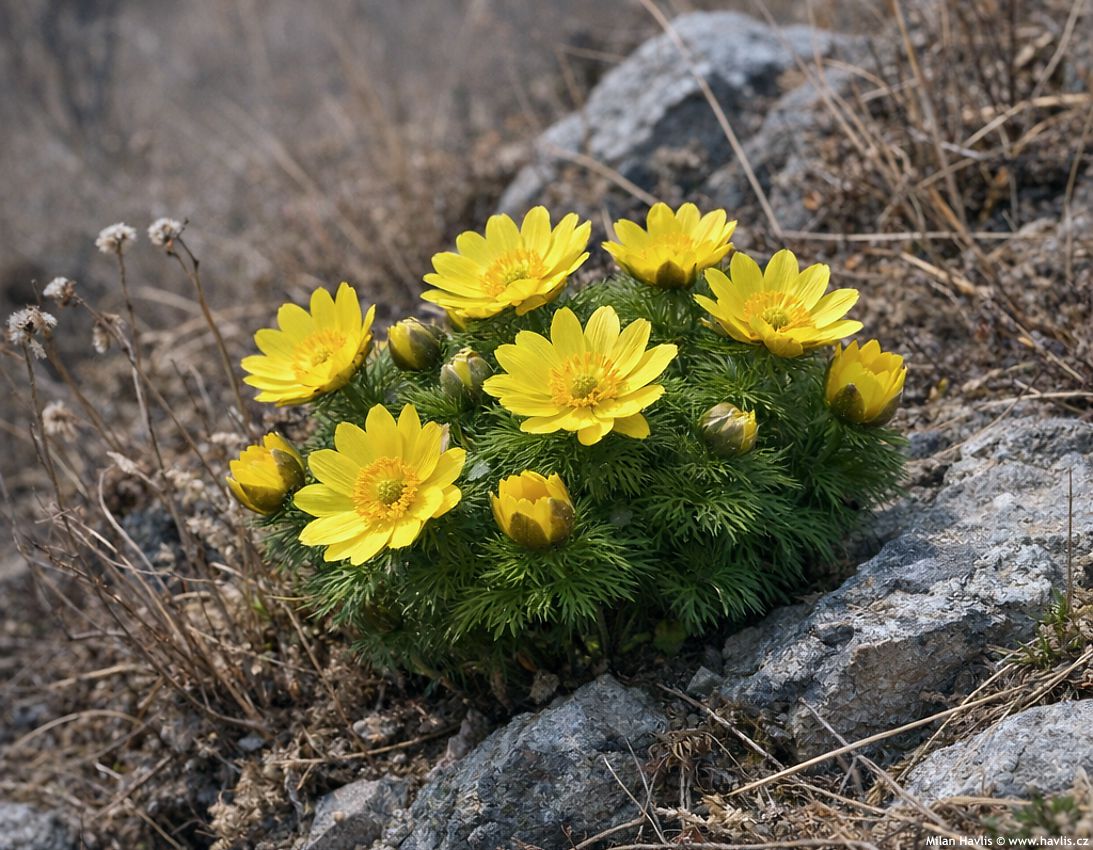
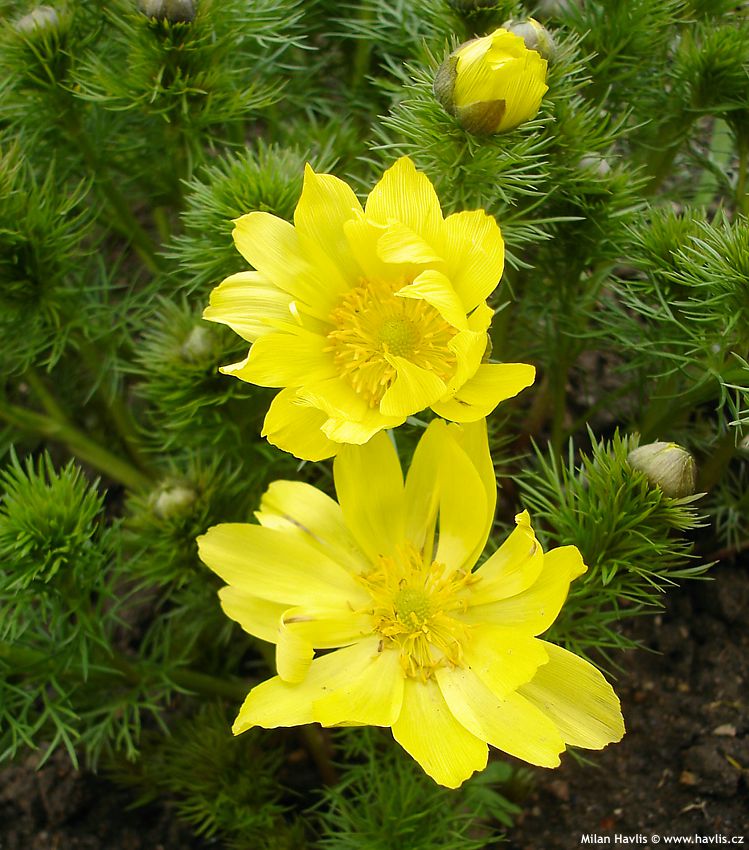
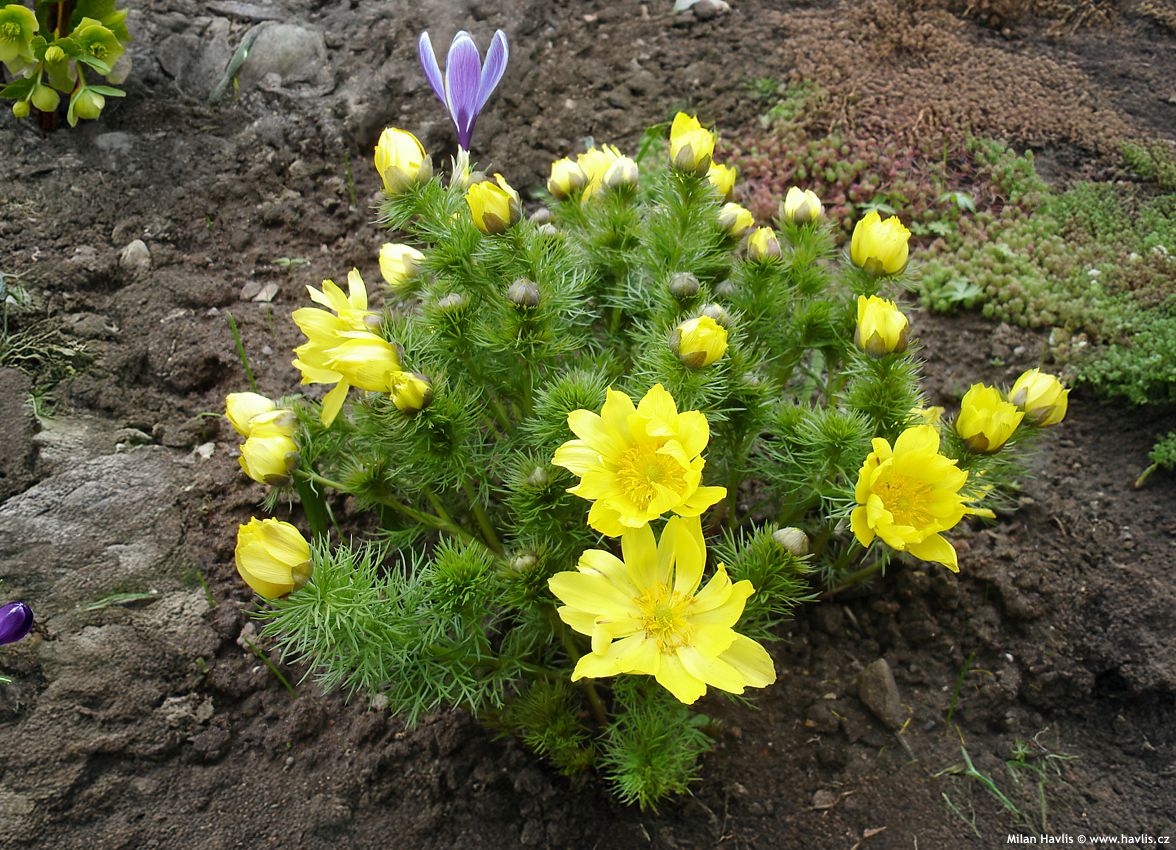
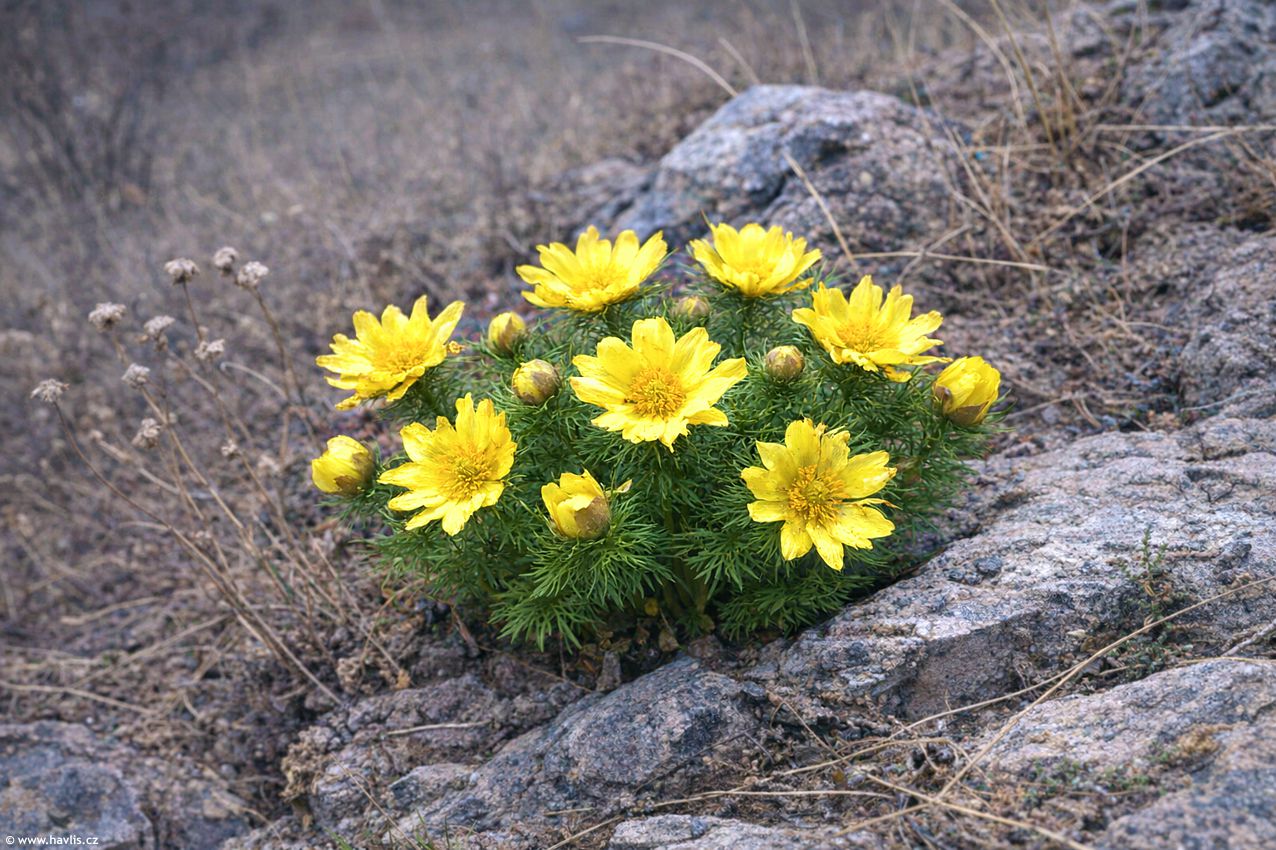
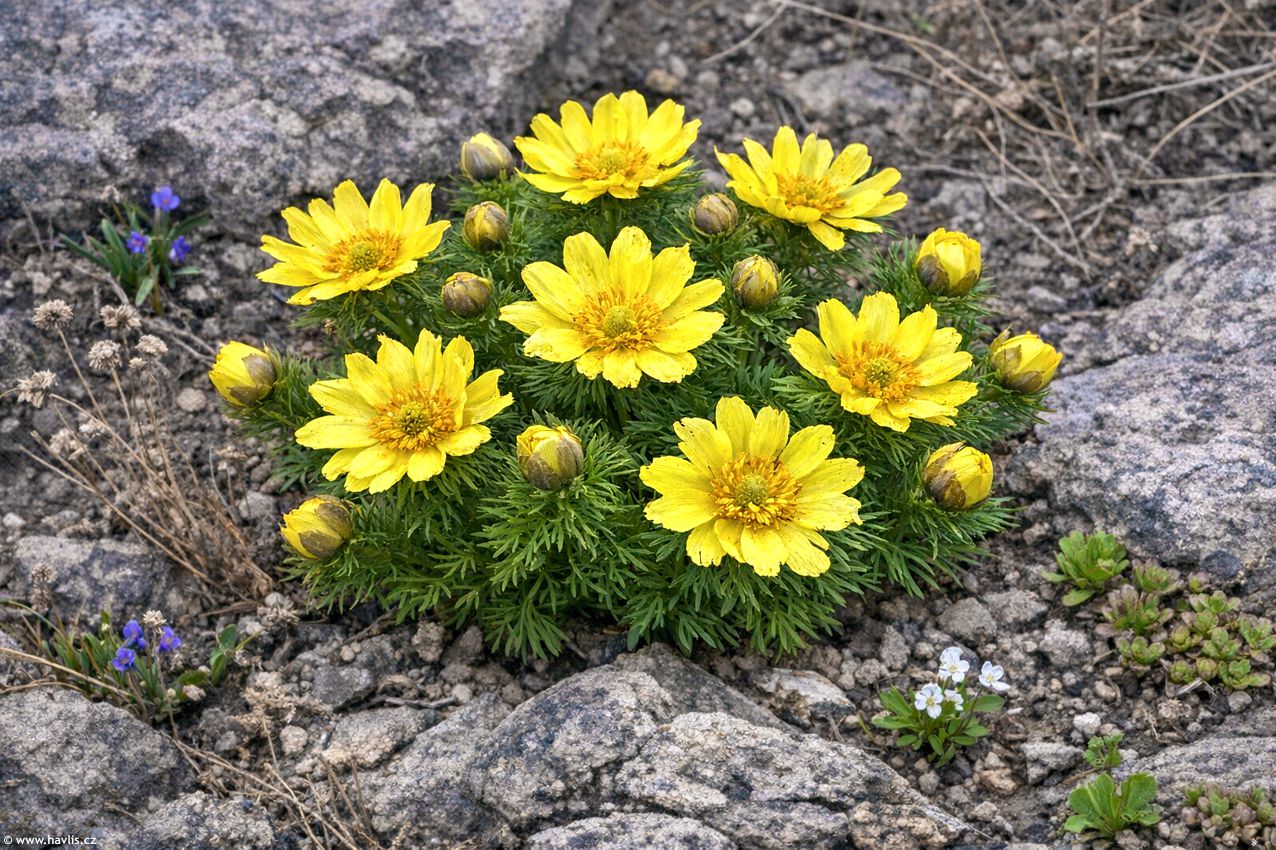
Adonis vernalis pheasant’s eye

 Symbivit Tric (arbuscular)
 Symbivit (arbuscular)
Adonis
The genus Adonis comprises around thirty species of annual and perennial plants, distributed mainly across Eurasia, with a strong presence in dry steppes, forest steppes and open slopes of the temperate zone. The name of the genus refers to Adonis from Greek mythology, a symbol of beauty and transience, which aptly reflects the short but intense flowering period typical of these plants. Botanically, the genus was described by Carl Linnaeus (1707–1778) in 1753 in Species Plantarum, where it was placed among the buttercup family, a group known for its striking flowers and often toxic properties. Its close ecological association with open, dry habitats suggests a long evolutionary history in landscapes shaped by grazing, fire and frequent disturbance.
Spring pheasant’s eye, Adonis vernalis, is one of the best-known and culturally most significant species of the genus. It occurs naturally from Central Europe through Eastern Europe to western Siberia, inhabiting dry meadows, steppe slopes and open scrub on calcareous or otherwise mineral-rich soils. People have always welcomed its appearance in the awakening landscape with enthusiasm, and despite its brief flowering period it has served for centuries as one of the first reliable messengers of warmer days after winter. Once pheasant’s eye came into flower, it was never long before the rest of the landscape turned green. In traditional medicine, the plant found its place thanks to its effects on the heart, which also led to caution and later strict regulation, as the entire plant is poisonous. It propagates poorly and resents transplanting, which is why it appears only rarely in nursery catalogues, and when it does, its price usually reflects the time and effort required to raise it. This combination of beauty, limited availability, medicinal value and potential danger has shaped both the respect and admiration with which we approach pheasant’s eye today, just as we did in the past.
The true charm of spring pheasant’s eye lies in contrast. From a low, unobtrusive clump of finely divided leaves, faintly reminiscent of dill or even pasque flower, a flower emerges in spring that feels unexpectedly self-assured. Bright yellow, glossy, 5-6 cm across, thrown wide open to the sun, as if it knew how lovingly and admiringly we would look at it. And it is right. For a moment, it has all our attention. That was certainly my experience when I used to see it in my grandmother’s garden, where it would suddenly appear one day as if from nowhere. The plant remains compact, never spreading aggressively or trying to outgrow its surroundings, yet it confidently claims the visual space that belongs to it. The leaves are delicate, almost thread-like but firm, and after flowering they form a calm green backdrop that neither distracts nor demands attention.
Pheasant’s eye is reliable but stubborn – it will not do what we force it to do. No dividing, no transplanting, no breeding. Simply plant it and let it play its part. Everything it has to offer will reveal itself in its own time. It teaches patience and gratitude. Compared with other species of the genus, Adonis vernalis is more robust and long-lived, yet at the same time gentler in expression. It is not a plant that pushes itself forward, but one that gradually wins you over, provided you give it peace and space.
Spring pheasant’s eye is well suited to dry perennial borders, slopes, steppe-style plantings and naturalistic schemes, where its early flowering and compact habit can truly stand out. It works well in combination with low-growing and rock-garden perennials; thanks to its fine yet upright character, it complements carpet-forming little flowers beautifully and shines in carefully colour-planned beds composed entirely of spring-flowering plants that bloom together, offering a striking seasonal awakening. Pheasant’s eye is not a plant for mass planting. It is a sparkling jewel on the spring coat of nature, and as such, even a single plant is enough.
Last update: 19-03-2026
Spring pheasant’s eye requires full sun and a poor, well-drained soil with a high mineral content. It does not tolerate waterlogging, heavy soils or frequent disturbance of the roots, so the planting position should be chosen as a permanent one. Feeding is unnecessary and common garden fertilisers are more likely to cause harm, especially those high in nitrogen, which promote leafy growth at the expense of flowering and longevity. Compost and organic fertilisers are unsuitable. Once established, the plant is highly drought tolerant, requires no pruning, and is not recommended for container cultivation. It is fully hardy, tolerating temperatures down to around −34 °C (USDA zone 4).