












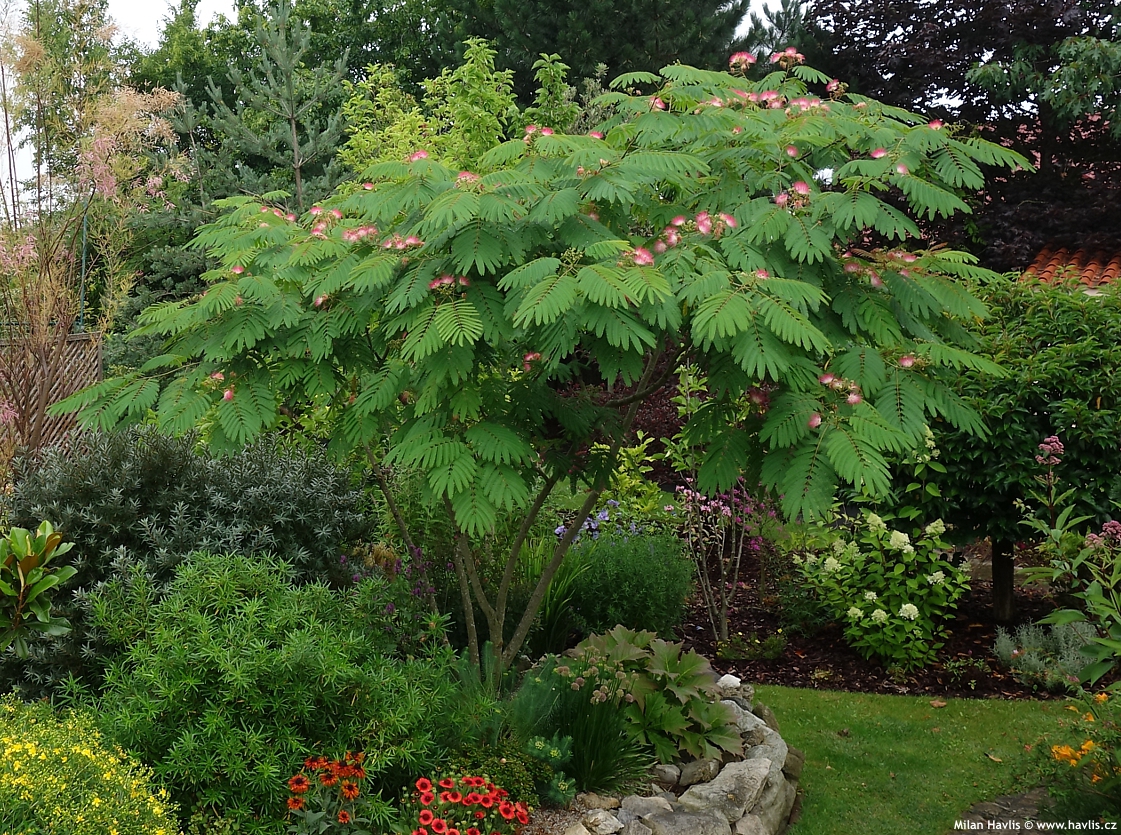
Albizia julibrissin 'Boubri' OMBRELLA® silk tree


 Symbivit Tric (arbuscular)
 Symbivit (arbuscular)
Albizia
Albizia is a genus in the pea family, formerly placed among the mimosas, and includes more than one hundred species distributed from tropical Asia and Africa to northern Australia, with several species reaching the Middle East, from where the first albizias known to Europeans originated. It is a somewhat mischievous genus that puzzled botanists for many years, because the finely bipinnate leaves and brush-like flowers appear in several related groups and the boundaries between them were unclear. These fine-leaved trees were often called mimosas in a general, colloquial and incorrect way. Albizia was correctly defined for the first time by Antonio Durazzini (1735–1787), who noticed that some tropical “mimosas” had inflorescences so distinct that they deserved their own genus. The nomenclature changed several times after his era and some species moved between Albizia, Mimosa and Samanea, but today we know that Albizia julibrissin is the species that gave the genus its European identity and the name Persian silk tree, because it comes from the Middle East and the Caucasus. Fossil finds from the Miocene suggest that trees of a similar type once grew in regions such as southern Europe, where the climate was much warmer and subtropical forests reached far further north. After the continent cooled and these forests retreated, their ancestors withdrew to warmer parts of Asia and Africa, and it was not until the eighteenth century that a handful of them were reintroduced to the warmest parts of southern Europe and later further north.
The most important species for us is Albizia julibrissin, which gave rise to the name Persian silk tree. When it arrived in Europe in the mid-eighteenth century (1745), it was one of the first fine-leaved trees from the regions of Persia and the Caucasus, from where shipments of exotic plants were sent to botanical gardens. Its journey was not accidental. Some specimens travelled the Persian route through Iran and the Ottoman Empire, the same route used for centuries by trade caravans, diplomatic gifts and collections made by European travellers returning from Constantinople, Isfahan or Tabriz with plants they found unusual. Others came by the Caucasian route through Georgia and Armenia, where Russian botanical expeditions collected trees around Tbilisi and Yerevan and sent them to St Petersburg and then to western Europe. This is where the name “Persian” comes from, not as a botanical fact but as a trace of the route the tree travelled before becoming part of European parks. It looked exotic yet friendly, and because its leaves resembled acacias, it quickly received a popular name that became established. Botanical gardens competed for the most interesting collections, and every new tree became a small sensation and an experiment to see whether it would survive and thrive. It is therefore natural that the beauty of this tree attracted botanists from cooler parts of Europe, who challenged it, too, and over time it proved to be surprisingly hardy, growing and flowering at least to zone 6 and some selections coping with even stronger frost.
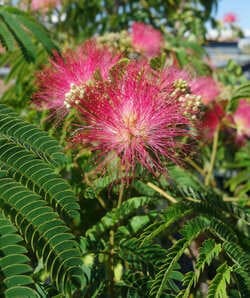
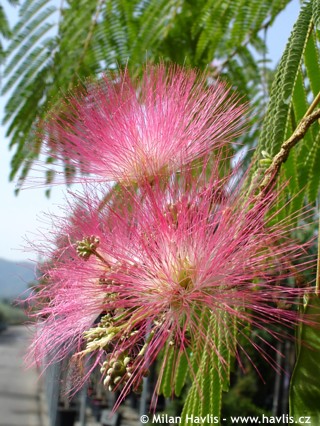
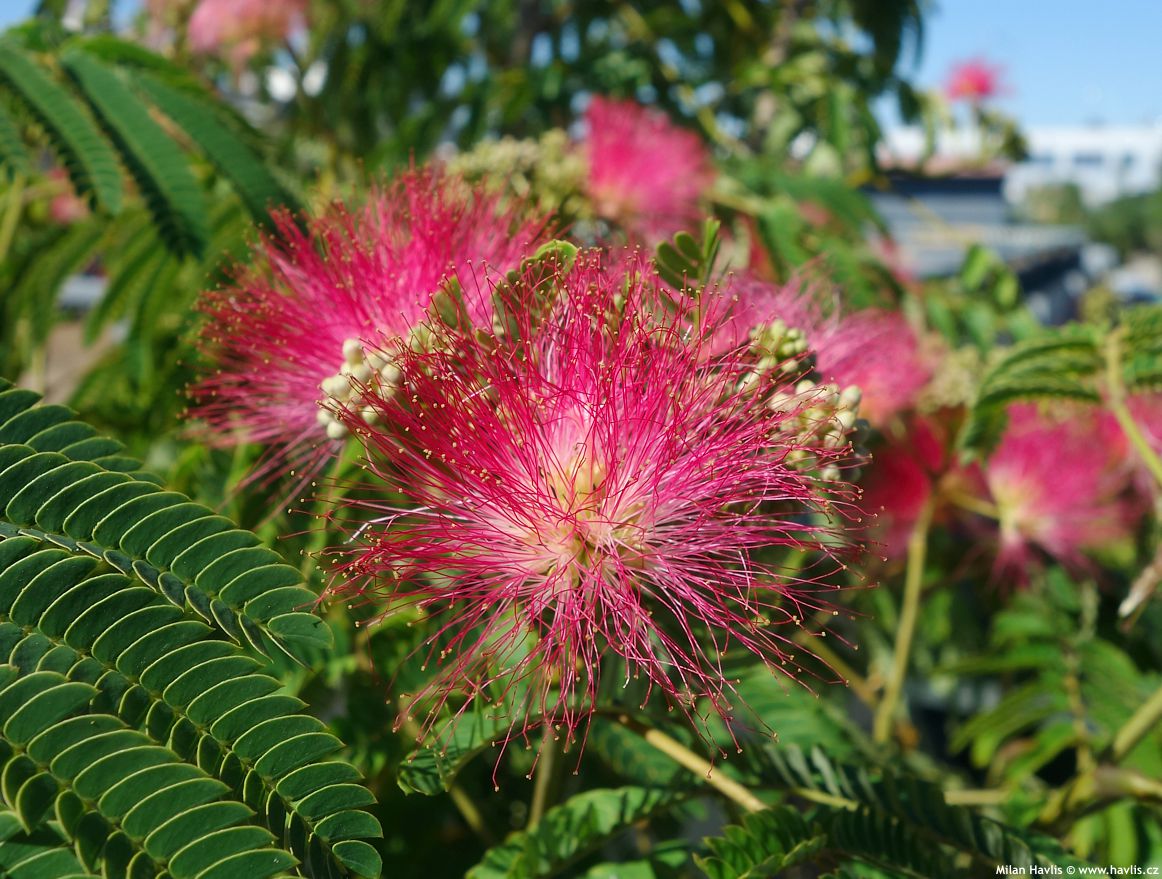
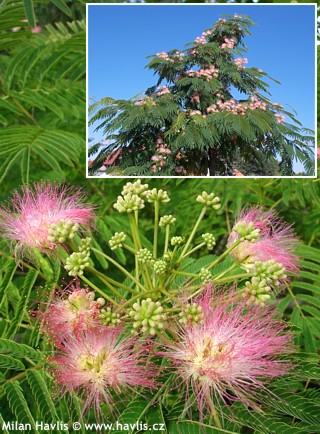
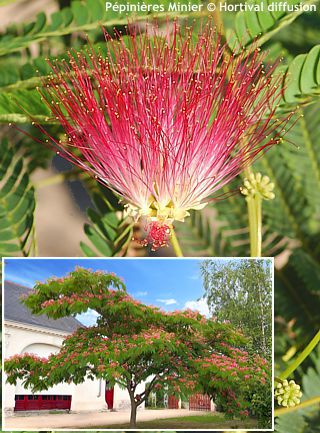
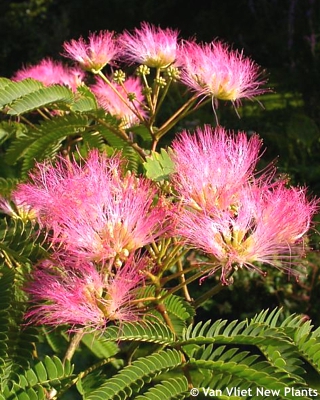
Ombrella® is one of the earliest selections of silk tree, discovered by the French grower and nurseryman André Bourquin in southern France, in the Drôme region near Valence, around 1986. He first noticed the darker, deep green leaves and in summer he was struck by the much richer, raspberry pink flowers which, compared with the species whose pink is more pastel pink, lit up the whole garden. The flowers are exotic fluffy balls 3–5 cm across, formed by long stamens, opening from early July and in suitable conditions continuing until late August or early September. They are gently sweetly scented, a little like candyfloss, and similarly slightly sticky when they fall onto the lawn.
The leaves are bi-pinnate, delicate, fern-like and fold at night to reopen in the morning, just like a sensitive plant when touched. The foliage is dense and soft and creates a pleasant, silky shade, which is why the tree earned the English name silk tree. It is one of the latest trees to leaf out, often not until late May, so there is no reason to worry if it remains bare during a warm spring. Once it wakes up, it grows visibly day by day and within a few weeks forms a full, gently moving crown.
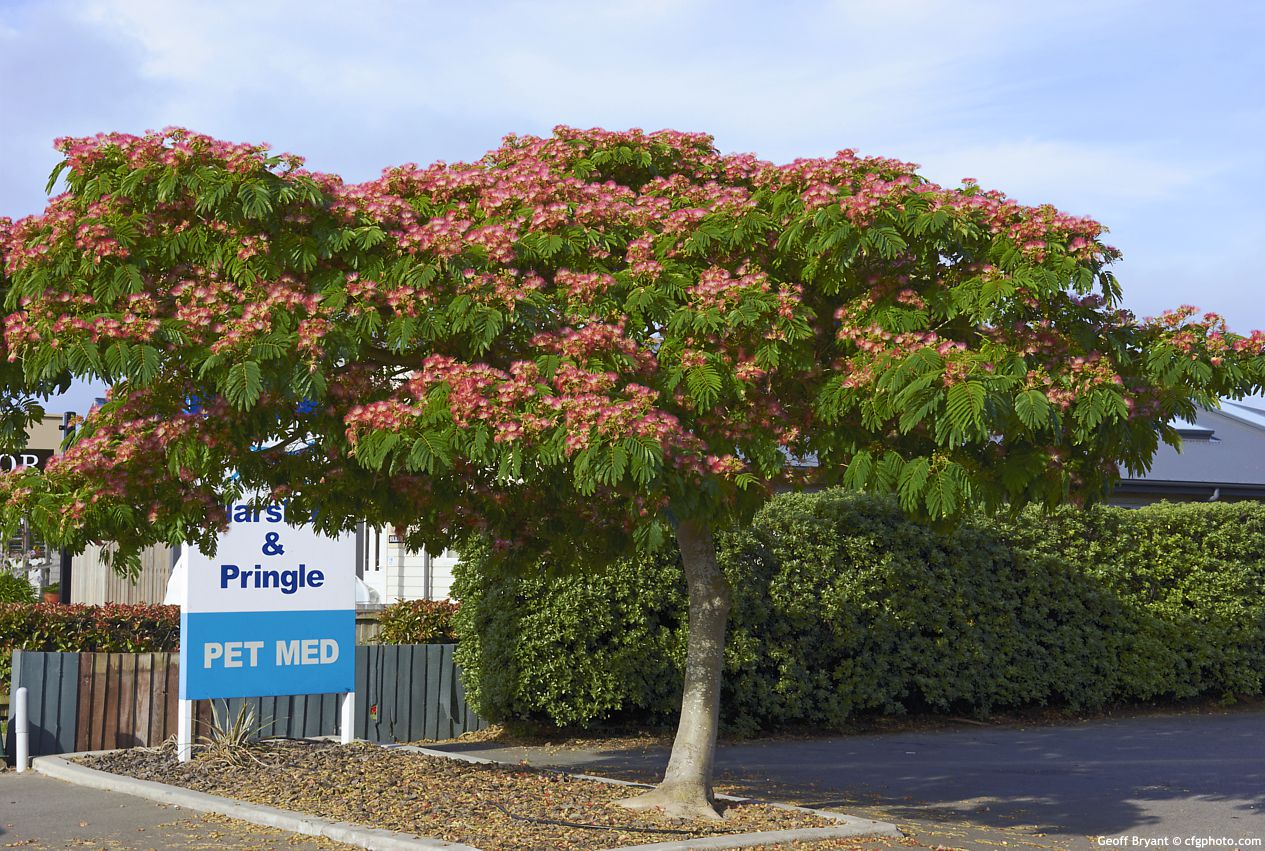
Ombrella® also has a naturally better tendency to form an upright trunk than some other forms, which makes it ideal for tree shapes. The crown is wide, almost flat, irregularly umbrella-shaped, the kind of silhouette that creates an exotic atmosphere in the garden and recalls certain African trees. The name Ombrella was chosen aptly; it is a wordplay derived from the French ombrelle and the Latin umbella, meaning parasol, and refers to the characteristic crown that provides soft, diffused shade. Its hardiness is at least -24 °C (USDA zone 6) when the wood is mature.
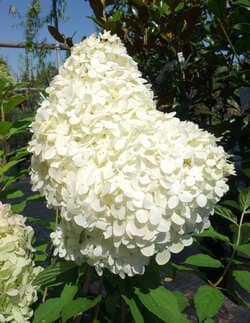
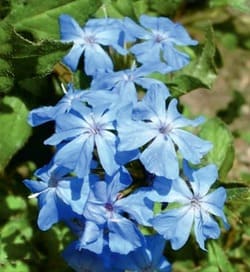
Albizia with a flat crown is exactly the structural element we look for in gardens where we want a distinctive silhouette with a hint of exotic character. It is worth playing with composition and using the Mediterranean game of shapes, where umbrella, sphere, pyramid or pagoda and a slender vertical alternate. Or it can be used as a single specimen in a small summer garden, accompanied only by lower shrubs and perennials that provide spring colour and flowering before the albizia wakes up, and do not disturb during its summer dominance. For maximum summer effect combine it with abelia, vitex, plumbago, ceanothus, hypericum, agapanthus or perovskia, all of which love the same conditions, sun and dry soil. If you water, hydrangeas, both panicle and arborescens types, make a beautiful companion, but plant them further from the tree so that it does not receive their irrigation.
Last update 06-02-2008; 16-08-2026
Above all, albizia needs sun, warmth and well-drained, heat-retentive soil, ideally with dry conditions in winter, because the most common cause of death is not frost but waterlogging of the roots. It thrives in ordinary garden soil if it is not heavy and clayey; in such cases drainage or a raised bed helps. The hardiness of the species is surprisingly high; in suitable conditions it withstands at least -23 °C (USDA zone 6) and in sheltered sites even short drops lower, provided the roots are dry and the wood is mature. This means you should plant only trees whose trunk is no longer fresh green but has begun to mature to a slightly greyish tone. If you have a young plant, overwinter it in a frost-free room for one or two winters until the wood matures. Very young trunks can be protected with jute or fleece for the first two winters, especially the graft and the lower stem. In cold areas a generous winter mulch over the roots helps but remove it in summer so the soil can warm up. It does not require fertilising, but you may use phosphorus-based fertiliser to support flowering from June to the end of July. Avoid nitrogen-based fertilisers. Pruning is usually not required, but it can be carried out in spring once all frost has passed, and only up to a maximum of one third of the previous year’s growth; otherwise it may not flower.
Important: fusarium wilt has now reached Europe. It is a soil fungus commonly present mainly in heavy, waterlogged soils and attacks weakened trees or those with mechanically damaged roots. It shows as sudden wilting and yellowing of leaves on branches in mid-summer; in advanced stages conspicuous lesions appear on the trunk. The best prevention is well-drained soil, dry winter conditions, drainage, planting on a mound and careful handling of roots to avoid injury. Mycorrhiza at planting helps strengthen the root system. Treatment is complicated but possible. A full description of the disease and how to deal with it can be found here.
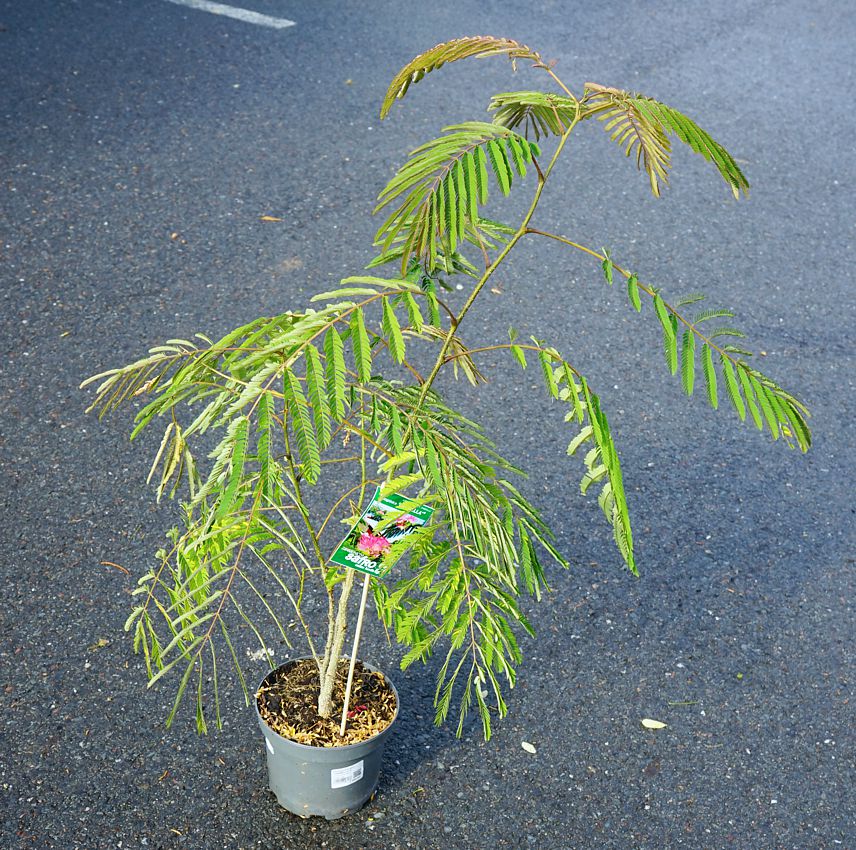
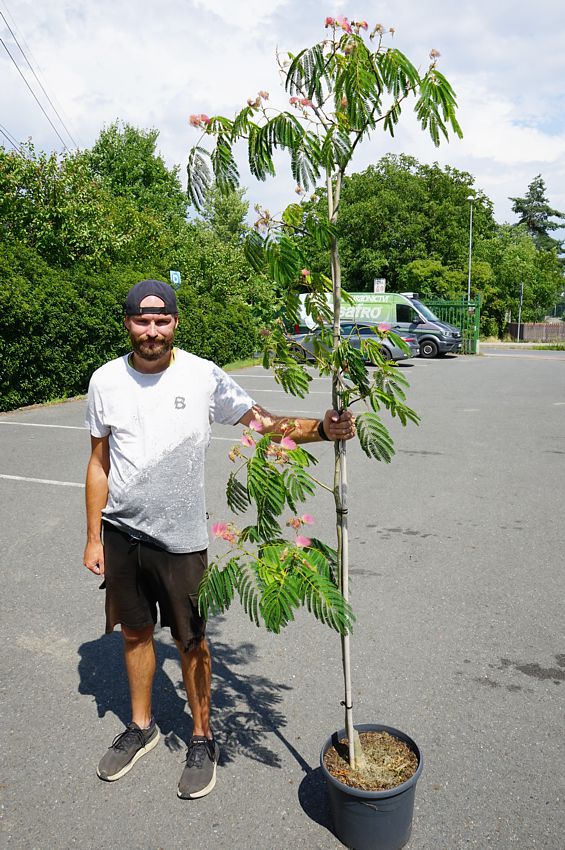
Goods are shipped all over Europe. For Russia and U.K. and for further details please read about SHIPPING OPTIONS HERE.
Are you interested in a serious discount for orders NOV-FEB? Check your options here.
THE PRICES INCLUDE VAT of 15%. For quick conversion you can use 1 CZK = approx. 0.04 EUR
- STANDARD QUALITY - Plants of this group are 1st class quality with number of branches and overall density adequate to their size and age, considering they were container grown.
- DE LUXE QUALITY - This label guarantees a luxurious quality of manually selected plants that, compared to their height and age, are exceptionally dense and beautiful.
- EXTRA - These plants are usually mature and bigger specimens with exceptional overall appearance.
- STANDARD (as described in the plant form) means a tree with a trunk of 190-210 cm and a crown at the top, unless specified differently. The commercial size for trees is their girth measured in the height of 1m from ground.
- HOBBY - These plants are of the same quality as our standard-quality plants but younger and therefore cheaper.
- SHRUB - a woody plant with branches growing bushy from the ground level.
- HALF-STANDARD or MINI-STANDARD - a small tree with shorter trunk, its size is usually specified.
- FEATHERED - These are trees with branches growing already from the base of the trunk and up along the stem.
- GRASSES and PERENNIALS - Sizes given usually read the diameter of the pot or the clump, as specified.
