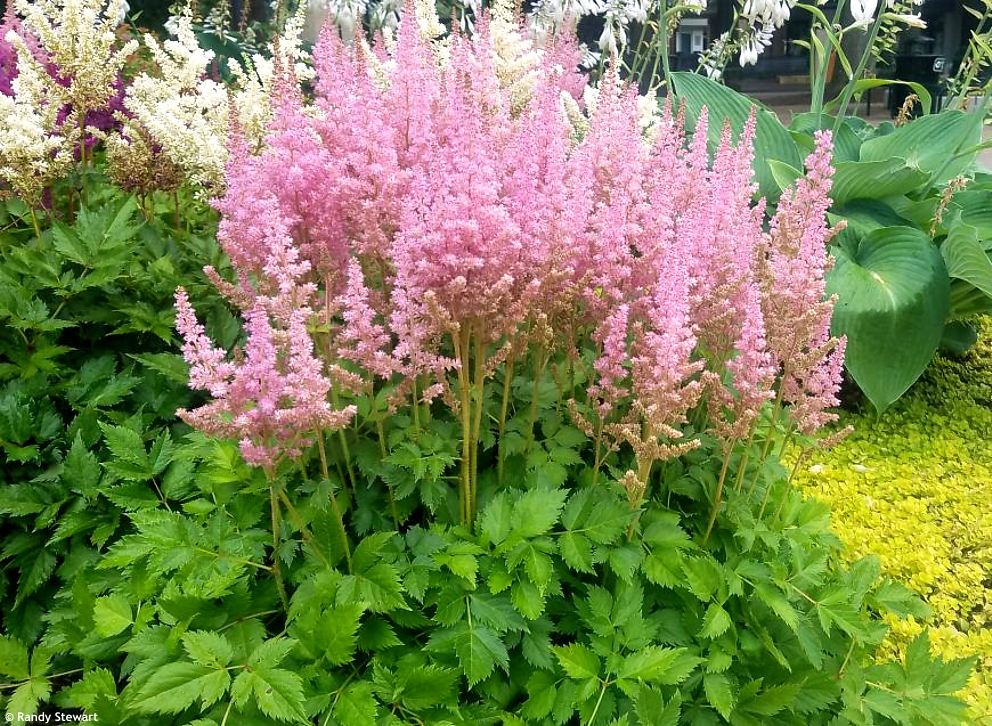
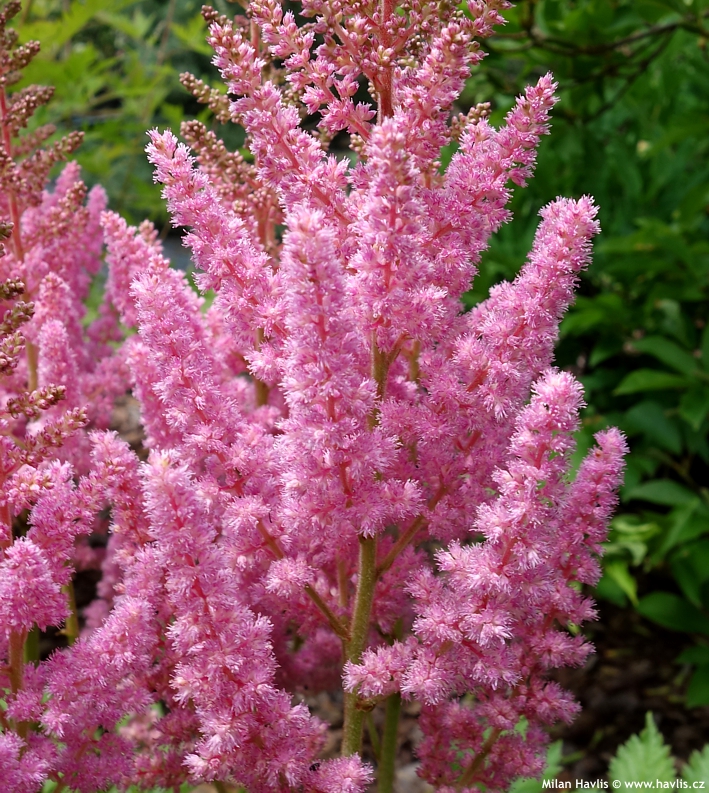
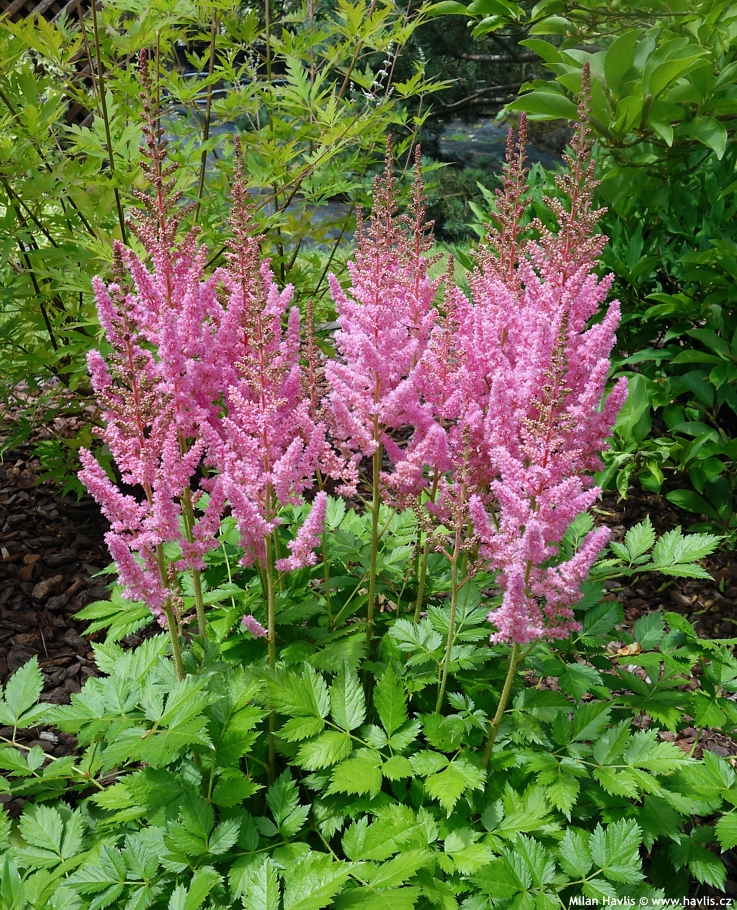
Astilbe chinensis 'VISION IN PINK' Chinese astilbe

 Symbivit Tric (arbuscular)
 Symbivit (arbuscular)
Astilbe
The genus Astilbe comprises about 18 species of perennial, rhizomatous plants in the saxifrage family (Saxifragaceae), native primarily to East Asia (China, Japan, Korea, the Himalayas) and partly to North America. The first specimens were introduced to Europe in the 19th century, for example from Japan by Dutch botanist Philipp Franz von Siebold (1796–1866). Ever heard of him? A rare and beautiful summer-flowering magnolia, Magnolia sieboldii, was named in his honour.
A special position within the genus Astilbe is held by Astilbe chinensis, first described in 1859 by Russian botanist C.J. Maximowicz based on collections made by R.O. Maack in the region of today's Amur Oblast. In the wild, it inhabits mountainous areas of eastern China, Korea, and Japan—found along shaded streams as well as in sunlit sites within moist deciduous forests at elevations between 400 and 3600 meters. It is distinguished by its coarser foliage texture, rust-hairy, sturdy stems, and—above all—its greater tolerance to direct sunlight and dry conditions compared to other Astilbe species.
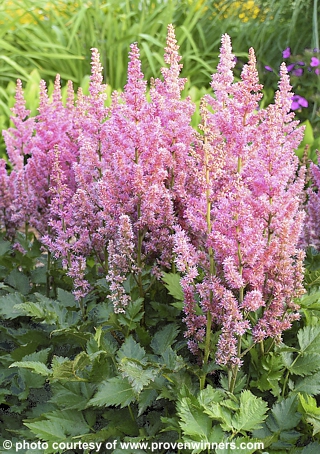
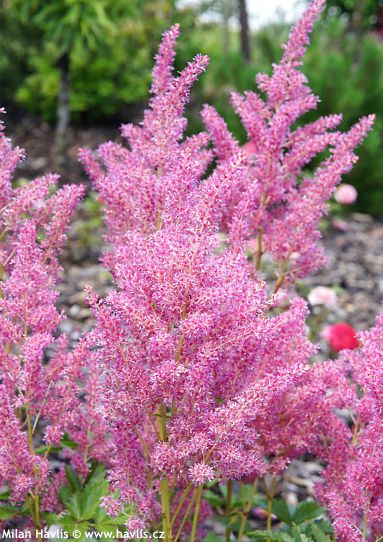
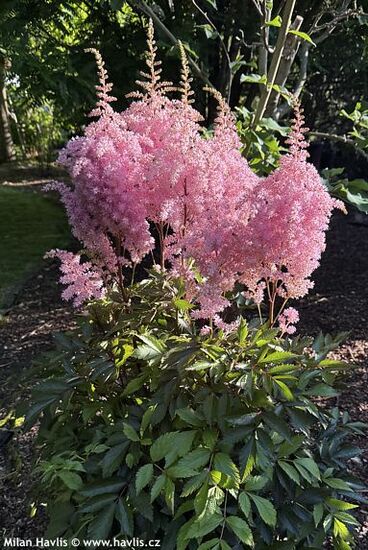
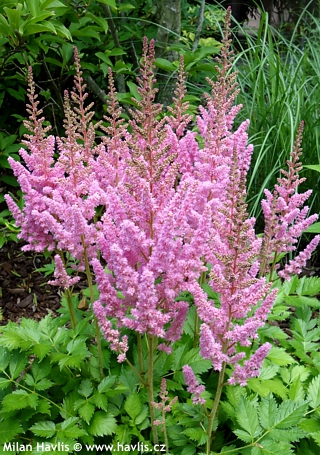
Vision In Pink is sometimes considered a breakthrough in pink astilbes giving this perennial a beautiful shade of clear pink as well as great garden performance and durability. Its flowers have a colour you imagine when someone says pink without a further description. I call it cotton candy pink because for me this colour brings back memories of this sweet stuff we loved as kids at fun fairs. Vision in Pink astilbe makes dense and upright inflorescences atop strong, hard-to-break stems. Blooming begins in July and continues for almost two months.
It forms strong growing, often spreading tufts with many flowering stems and lots of healthy, dark green, deeply incised, coarsely textured, and glossy leaves. The good thing about its foliage is that it is rarely attacked by any pests. And knowing that astilbe loves moist locations, same as slugs do, we can triumphantly confirm that slugs hate astilbe leaving it beautiful all season long. The plants are 20-30 cm tall in leaf and almost twice as tall with flowers.
Grow astilbe in humus-rich soil. If planted in boggy or regularly watered bed they can sit in full sun, too, otherwise choose a semi-shaded or shaded location. However, this variety is exceptionally tolerant of full sun and drought. They are water loving plants and require a good dose of nutrients to look their best. They will not grow in chalky or clay soil that dries out in summer.
Last update 28-09-2022
In their natural habitat, astilbes thrive in mountain ravines and damp forests, where they appreciate shade and moist soil. Thanks to their tolerance for both shade and moisture, they have become popular perennials for planting around ponds and in woodland gardens. They are not difficult to grow as long as they have proper conditions: rich, moisture-retentive soil and a preference for partial shade over full sun. However, given regular watering or a naturally damp site, they will also perform well in full sun. Good fertilization enhances both the size and quality of the blooms. Avoid overly alkaline soils and compacted clays that dry out in summer — they are not suitable. For optimal performance, divide and rejuvenate clumps every four years, removing old and dying rhizomes. Do this in early spring before new growth starts. Old foliage and flower stalks should also be cut back in early spring. Fully hardy to approximately –34 °C (USDA zone 4). Perfect for large planters, too.