Brunnera macrophylla 'MR. MORSE'® brunnera, Siberian bugloss

 Symbivit Tric (arbuscular)
 Symbivit (arbuscular)
Brunnera
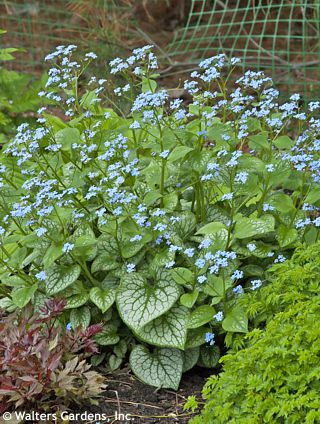
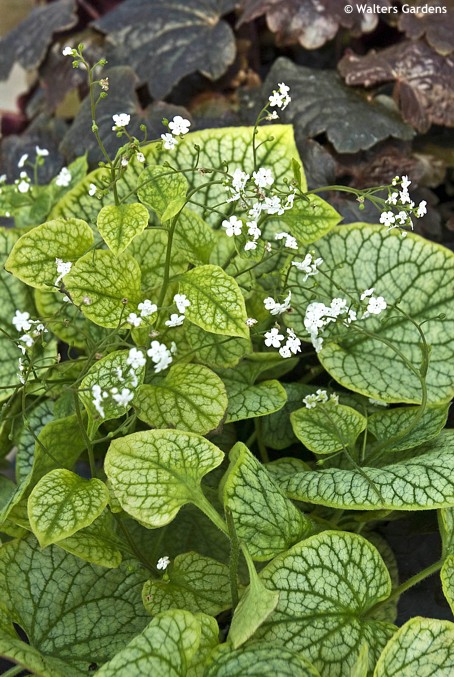
Brunnera or Siberian bugloss is an attractive woodland perrenial with showy foliage, suitable especially for garden enthusiasts who look for the beauty of leaves rather than flowers. The leaves are rounded to heart-shaped and if cultivated in a mass they provide an excellent and lush groundcover under tall multistemmed shrubs or trees.
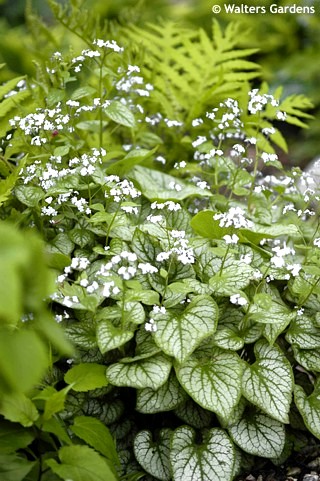
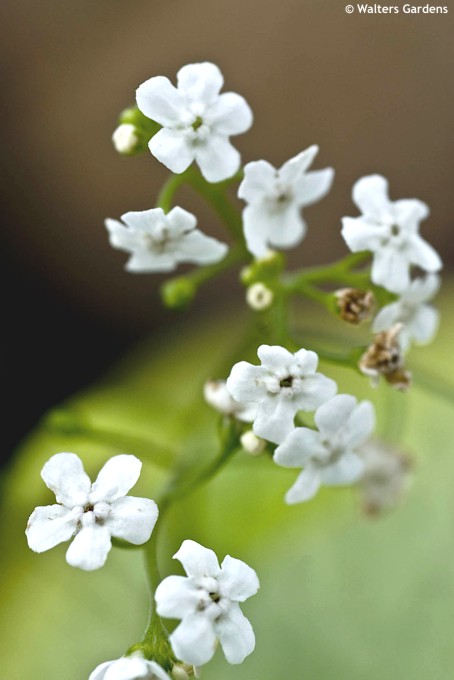
Mr.Morse® is a new patented variety of brunnera with flowers different to many other varieties. Its forget-me-not-like flowers are not blue but pure white which makes it stand apart from all known brunneras registered so far. They come out on approximately 20 cm tall thin stems from early to mid spring. It was found as a naturally occurring mutation among other brunneras by Chris Ghyselen in Belgium.
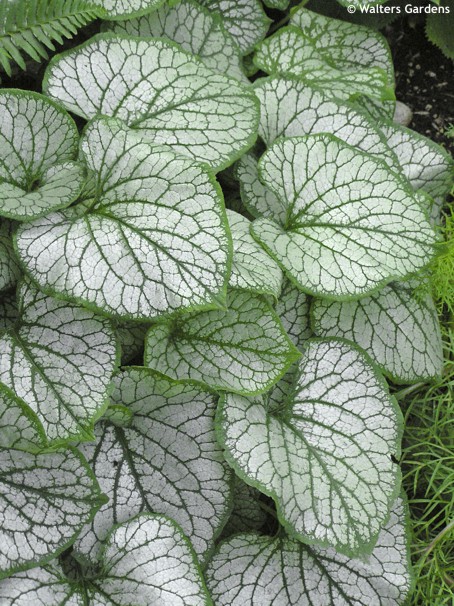
Not every garden enthusiast is looking for flowers when planting brunneras. This rhizomatous perennial is mostly popular for its medium large, soft, slightly pubescent, heart-shaped leaves. They are mid green with silvery marbling letting the original green colour appear only at the margins and as veins.
Last update 24-01-2010
Siberian bugloss is a tuberous perennial that thrives in lightly shaded to fully shaded locations, where it can fully showcase its attractive foliage. It requires well-drained, but moist, and cool soil. It is not susceptible to diseases or pests. Regular fertilizing will enhance growth and produce denser tufts, but it is not needed. Still, if you decide to feed the plant, do so every two weeks from the time the flowers appear until midsummer. Fully hardy to approx. -40 °C (USDA zone 3) and suitable for outdoor containers, too.