

































.jpg)
Buddleja davidii 'BotEx 006' BUTTERFLY CANDY™ LITTLE RUBY butterfly bush, buddleja

 Symbivit Tric (arbuscular)
 Symbivit (arbuscular)
Buddleja
The genus Buddleja, commonly known as butterfly bush, is a botanically diverse and geographically wide-ranging group of woody plants comprising more than 140 species distributed across Asia, Africa and both Americas. Having evolved on four continents, it shows remarkable variability, from small shrubs barely exceeding a metre in height to trees approaching thirty metres. Although now placed in the family Scrophulariaceae, its taxonomic history is complex – in the past it was assigned to Loganiaceae and even to its own family, Buddlejaceae, before modern systematics settled on the current concept. The genus was named by Carl Linnaeus (1707–1778) in honour of the English botanist Adam Buddle (1662–1715), following the recommendation of the physician and plant collector William Houstoun (1695–1733), who sent the first specimens of Buddleja americana from the Caribbean to England roughly fifteen years after Buddle’s death. Its ability to attract winged insects, especially butterflies, earned it the name “butterfly bush” in many languages during the twentieth century. Although no species is native to Europe, Buddleja has become one of the most widely grown ornamental shrubs here. The species differ not only in appearance but also in pollination strategy: American forms often developed long red flowers adapted to hummingbirds, whereas Asian species attract almost solely insects for which they have an abundance of nectar throughout the summer.
Buddleja davidii, David’s butterfly bush, is today one of the best-known shrubs in the world. It originates from central China, particularly the provinces of Sichuan and Hubei, where it grows on rocky slopes, river deposits and limestone outcrops. It reached Europe at the end of the nineteenth century thanks to the collections of the French missionary and naturalist Père Armand David (1826–1900), after whom it is named. The first plants appeared in European gardens in the 1880s, when Dr Augustine Henry sent seed to St Petersburg around 1887, followed shortly afterwards by Jean-André Soulié, who supplied the French nursery Vilmorin. From there, Buddleja davidii spread across Europe within a few years and in England received the RHS Award of Garden Merit as early as 1898. It is an exceptionally adaptable species – rooting on riverbanks, in rubble, in cracks of masonry and on railway embankments. This ability to colonise disturbed ground made it a symbol of post-war urban regeneration, but also a plant that has become invasive in some countries. Its extremely light seed is carried long distances by the wind, which explains why the shrub appears even in places where it was never planted.
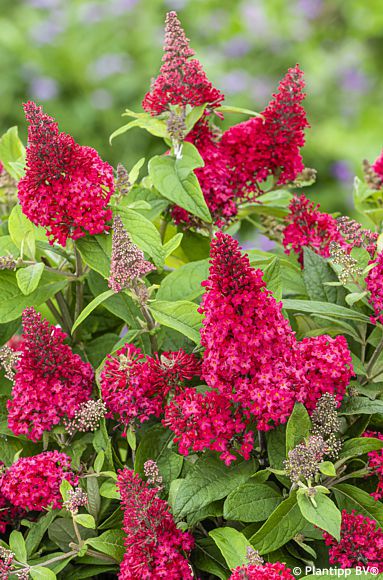
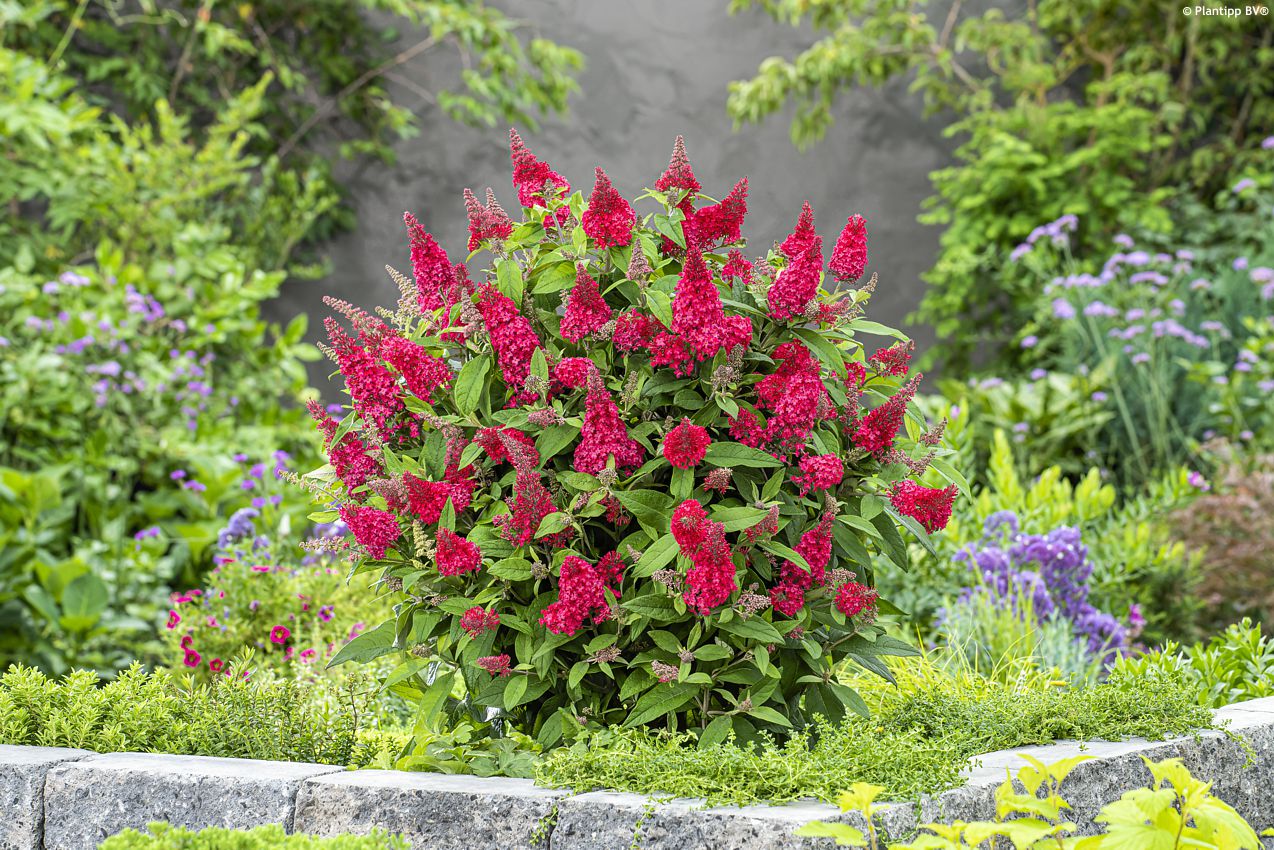
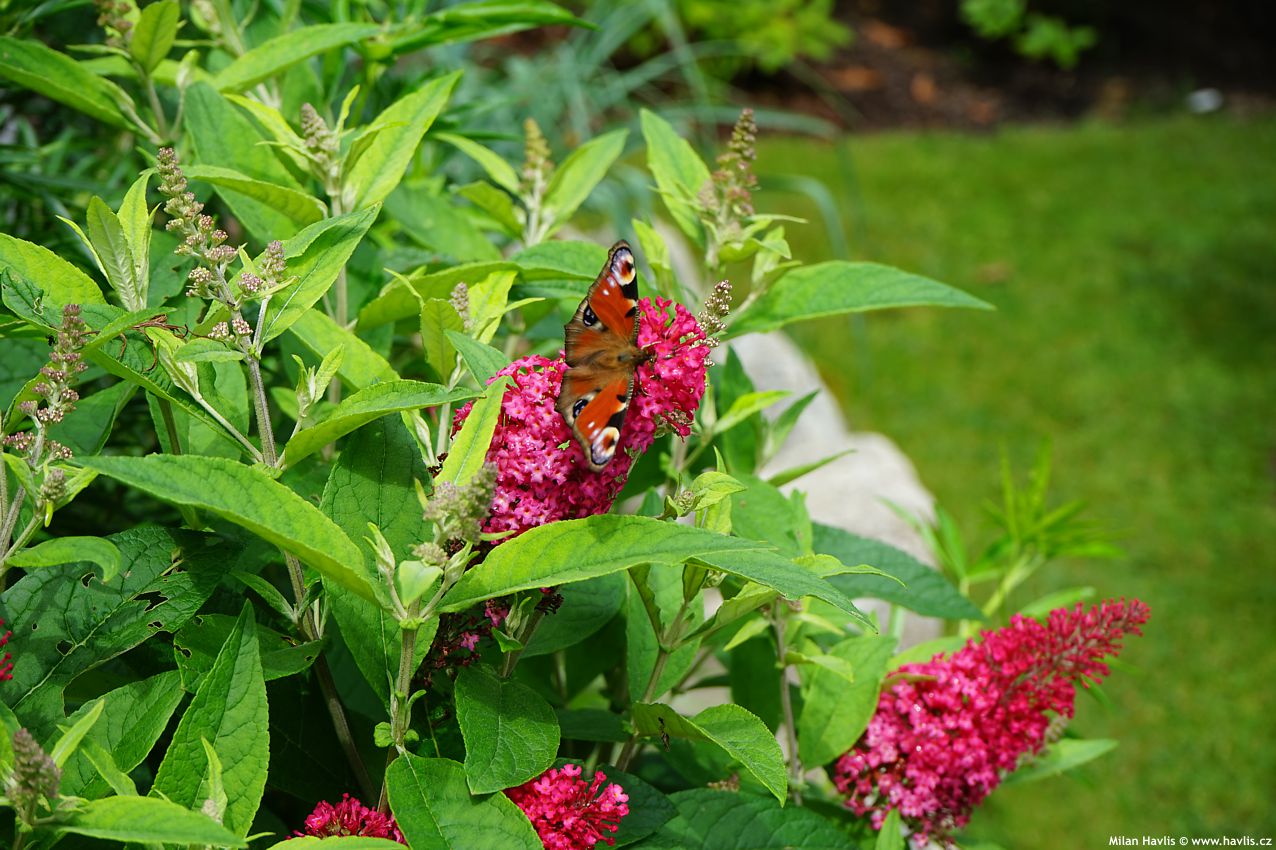
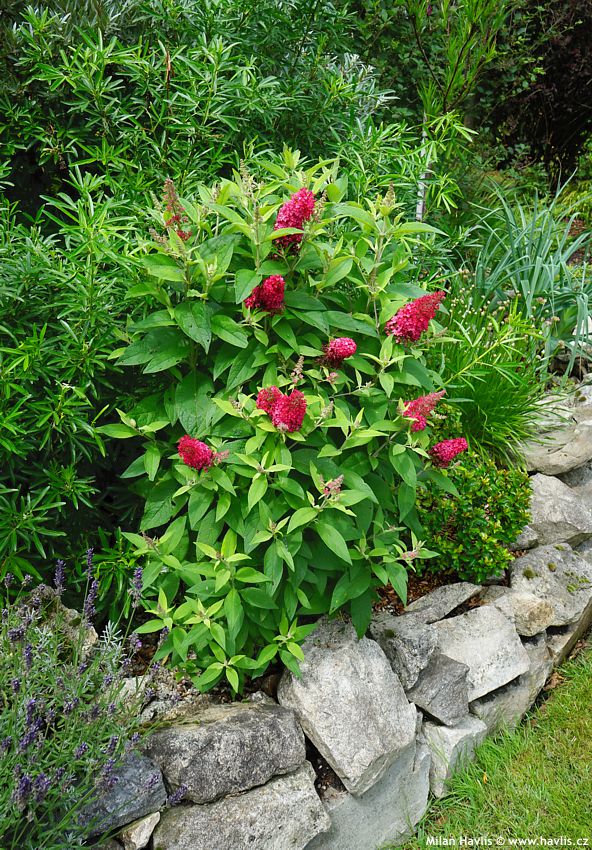
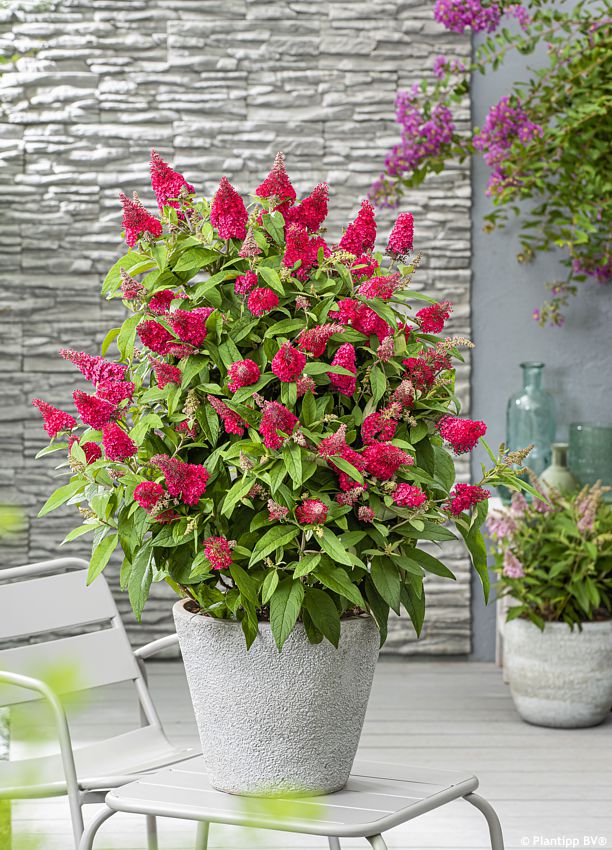
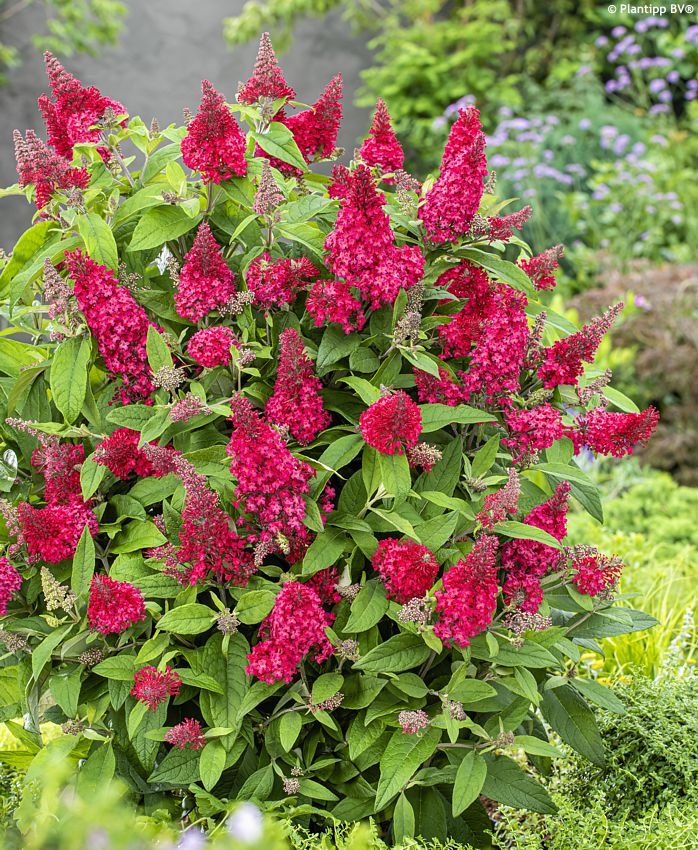
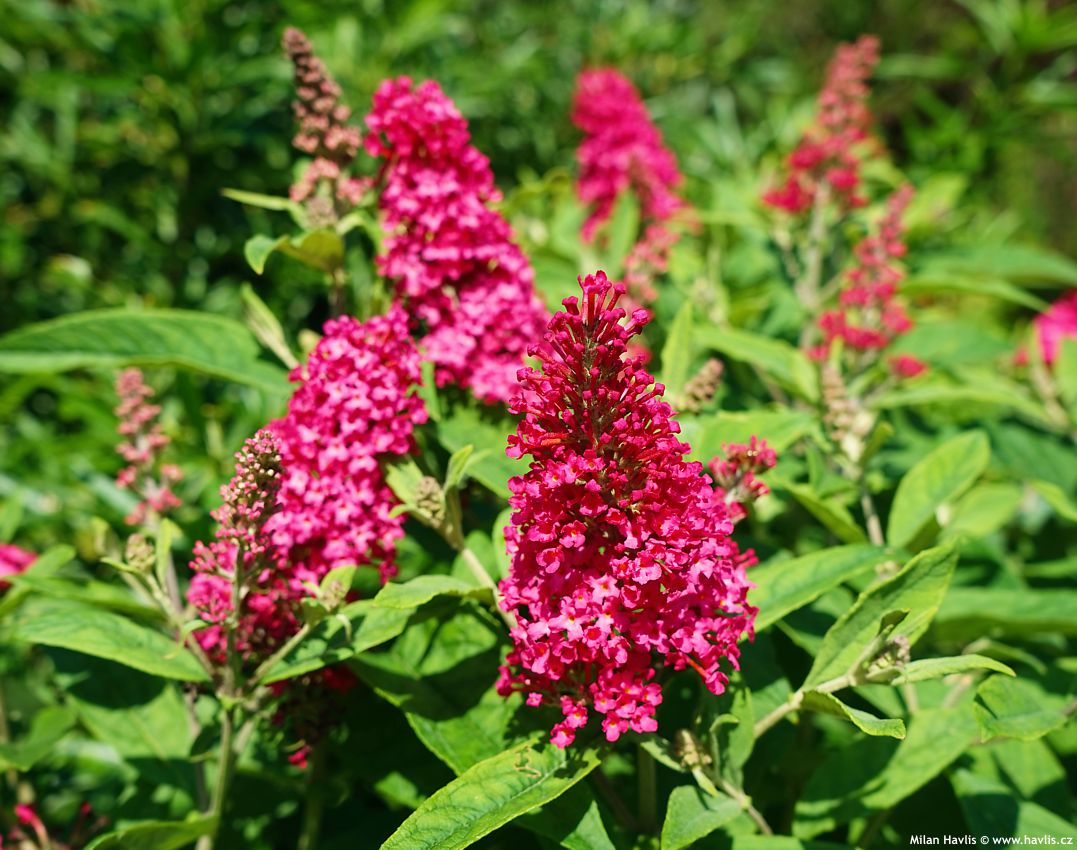
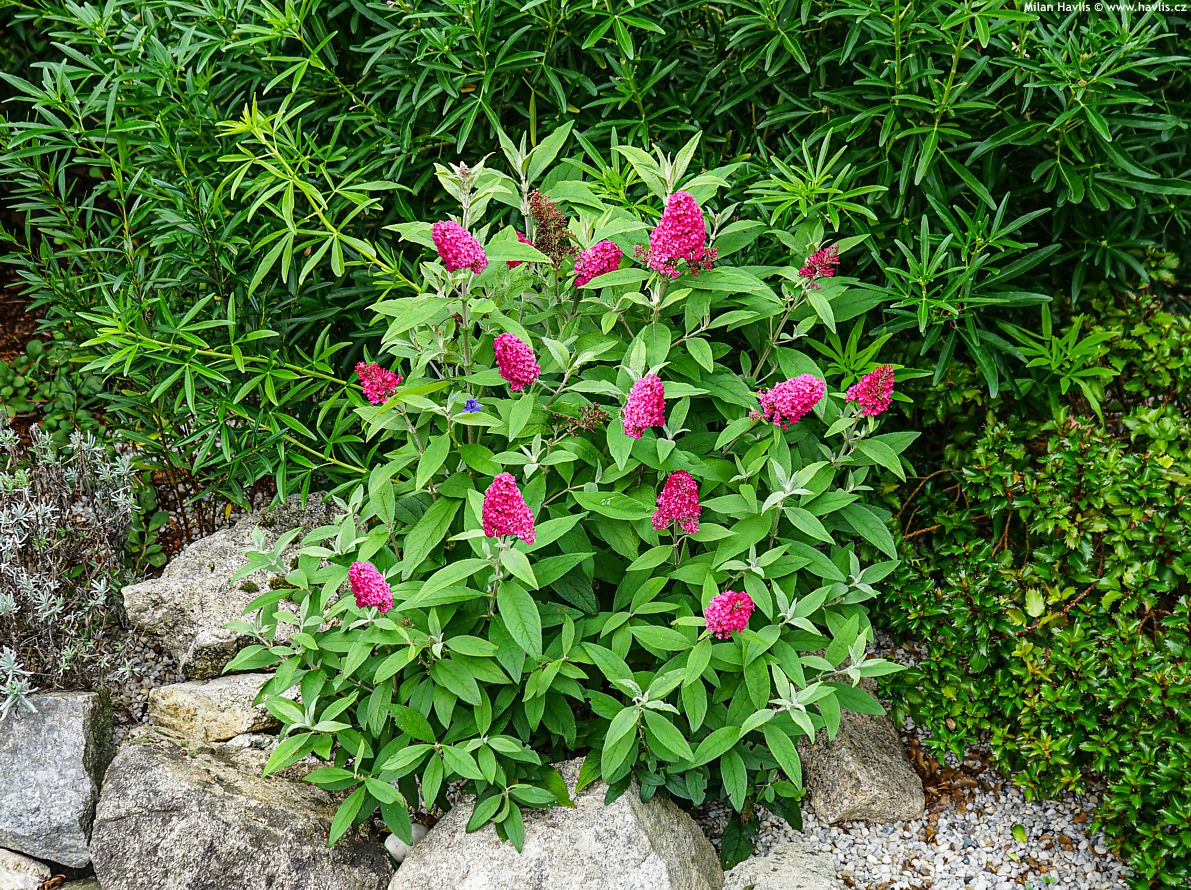
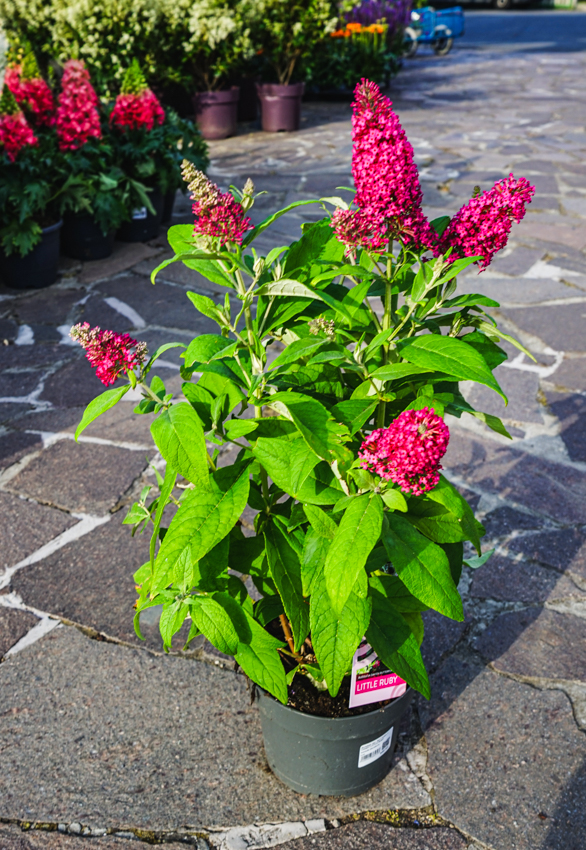
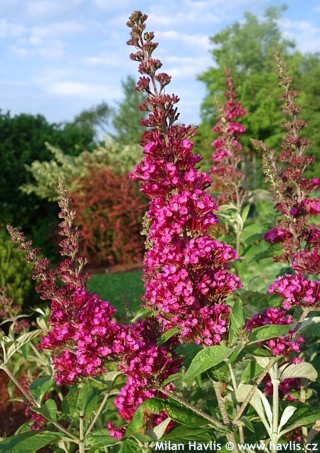
Little Ruby is arguably the brightest jewel of the entire BUTTERFLY CANDY™ series, a cultivar that immediately draws attention with its vivid raspberry-red colour and unexpectedly profuse flowering on such a small plant. Its habit is exemplary: compact, upright and naturally shaped into a clean, neat mound that holds its form even in high summer. Plants reach around 60–80 cm in height and width without losing density or strength. The sturdy, four-angled shoots form a firm framework that does not collapse even after heavy rain. The inflorescences are compact panicles about 7 cm long, composed of roughly 150 small, sweetly scented flowers. The colour is ruby red-pink with a warm orange throat that adds depth to the blooms. Individual flowers last around five days, but the whole panicle remains attractive for up to two weeks. Meanwhile, new buds continue to form, allowing the shrub to flower from late June until the first cold days of autumn.
The deciduous leaves are narrow, elliptic, 9 × 3 cm, light green to grey-green, matte and finely felted, with a slightly serrated margin. Their texture reflects their function – they help the plant cope with heat and drought. ‘Little Ruby’ appears to be sterile and produces no seed, which reduces its invasive potential and supports prolonged flowering. After its introduction it became the most sought-after new Buddleja in the RHS Plant Finder, offered by more nurseries than any other recent butterfly bush. It also received the Gold Medal at the KVBC Summer Challenge 2021, an award based on real summer performance in the field rather than catalogue appearance. In the United States it is sold under the trade name BUTTERFLY CANDY™ Lil’ Raspberry™, which aptly reflects its intense raspberry-red colouring.
The entire BUTTERFLY CANDY™ series captivated me back in 2019, when its creator, Johannes Adrianus Maria Koot of the Dutch company Botanic Experience (part of Van Son & Koot), presented the very first introduction, ‘Little Purple’, at the Plantarium trade fair. Cameras clicked, visitors leaned in with curiosity and gardeners placed eager orders. It was immediately clear that this was not just another “pleasant novelty”, but a collection shaped by thoughtful breeding work and a clear aim: to create “truly urban buddlejas” – low, dense, stable and suitable even for small containers. Koot worked with selected dwarf lines of Buddleja davidii and hybrid material with reduced seed production, selecting under demanding conditions to ensure the plants would withstand heat and drought. The result is a group of compact shrubs with short shoots that hold their shape and flower from June to autumn in a wide palette of colours from white to deep ruby. The series has received numerous awards – Bronze Medal at Plantarium 2021, Silver Medal at Plantarium 2022, the New Plant award at IPM Essen 2023 and recognition in the RHS New Plants Showcase. The latter was particularly significant for Van Son & Koot: BUTTERFLY CANDY™ is one of the first major successes of their own hybrid breeding programme, and recognition from IPM and the RHS confirmed that this is not merely another attractive cultivar but a genuine innovation that has stood up to international competition and opened the door for their breeding work on the global stage.
Last revised 04–08–2022; 10–06–2026
Buddleja davidii and its hybrids are among the most rewarding shrubs for sunny gardens, provided they have full sun, warmth and sharply drained soil that dries quickly. Their fleshy roots dislike waterlogging and winter wet, so a gravelly or sandy substrate, a raised position and moderate watering are ideal. They flower on the current season’s growth, so they are cut back hard in spring, usually to 20–40 cm of last year’s wood, which encourages strong branching and large inflorescences; removing spent panicles during the season further prolongs flowering. Feeding should be light, with an emphasis on potassium, and the greatest winter risk is not frost but moisture around the roots. In nature they are short-lived shrubs, but with good drainage and regular spring pruning they can thrive for many years, flowering from early summer into autumn.
Vigorous cultivars need more space, deeper soil and dry out more quickly, but they tolerate very hard spring pruning. Dwarf and compact cultivars have a finer root system, cope better with restricted space and are more suitable for larger containers, but even they require perfect drainage, winter protection of the container against freezing and summer protection against overheating (never black plastic). In pots, Buddleja generally needs a larger volume of substrate, more frequent feeding and careful moisture control. They are hardy to about –29 °C, but perform better in warmer regions. In colder areas, plant older specimens with well-ripened wood.
Last update 04-08-2022; 10-06-2026
Goods are shipped all over Europe. For Russia and U.K. and for further details please read about SHIPPING OPTIONS HERE.
Are you interested in a serious discount for orders NOV-FEB? Check your options here.
THE PRICES INCLUDE VAT of 15%. For quick conversion you can use 1 CZK = approx. 0.04 EUR
- STANDARD QUALITY - Plants of this group are 1st class quality with number of branches and overall density adequate to their size and age, considering they were container grown.
- DE LUXE QUALITY - This label guarantees a luxurious quality of manually selected plants that, compared to their height and age, are exceptionally dense and beautiful.
- EXTRA - These plants are usually mature and bigger specimens with exceptional overall appearance.
- STANDARD (as described in the plant form) means a tree with a trunk of 190-210 cm and a crown at the top, unless specified differently. The commercial size for trees is their girth measured in the height of 1m from ground.
- HOBBY - These plants are of the same quality as our standard-quality plants but younger and therefore cheaper.
- SHRUB - a woody plant with branches growing bushy from the ground level.
- HALF-STANDARD or MINI-STANDARD - a small tree with shorter trunk, its size is usually specified.
- FEATHERED - These are trees with branches growing already from the base of the trunk and up along the stem.
- GRASSES and PERENNIALS - Sizes given usually read the diameter of the pot or the clump, as specified.
