










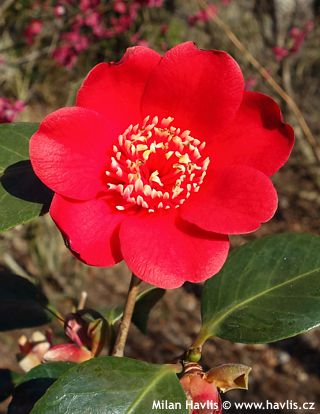
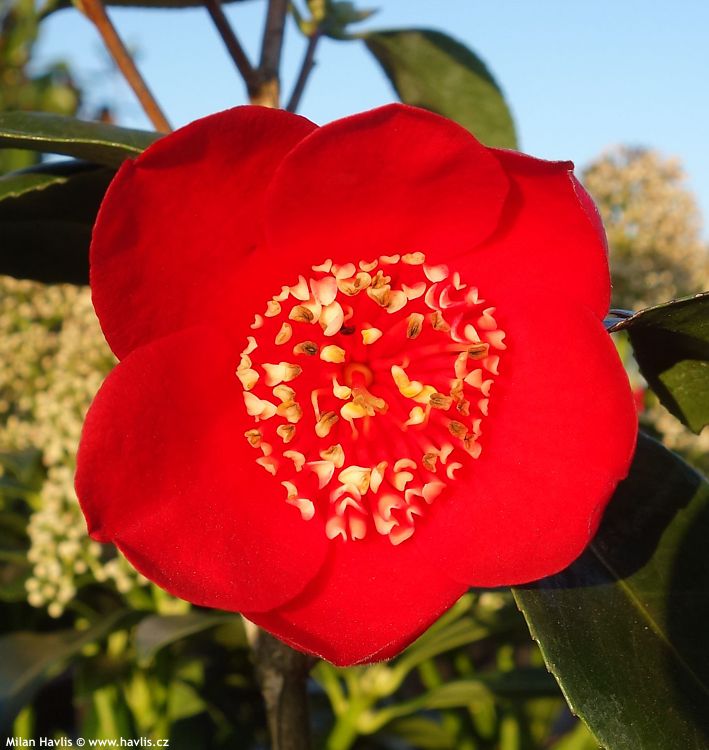
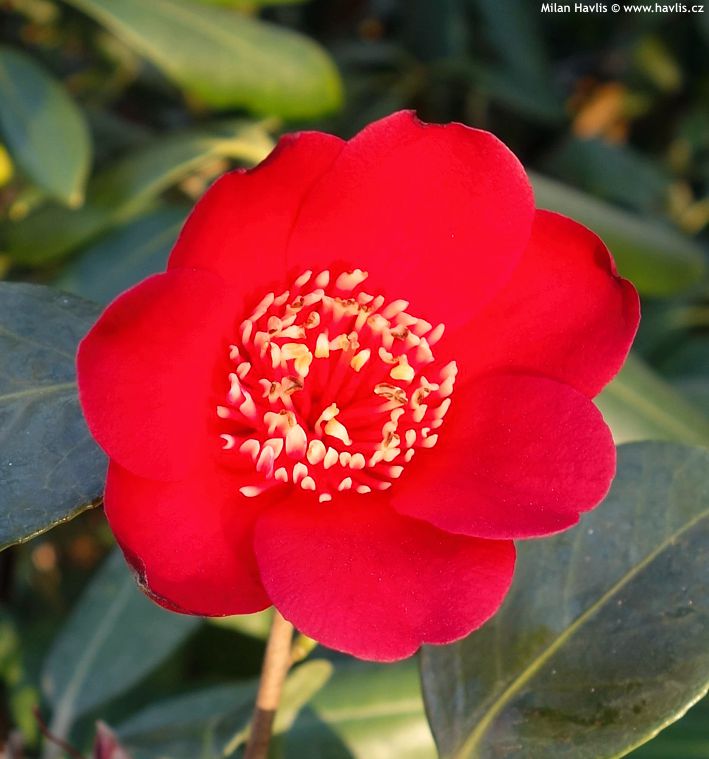
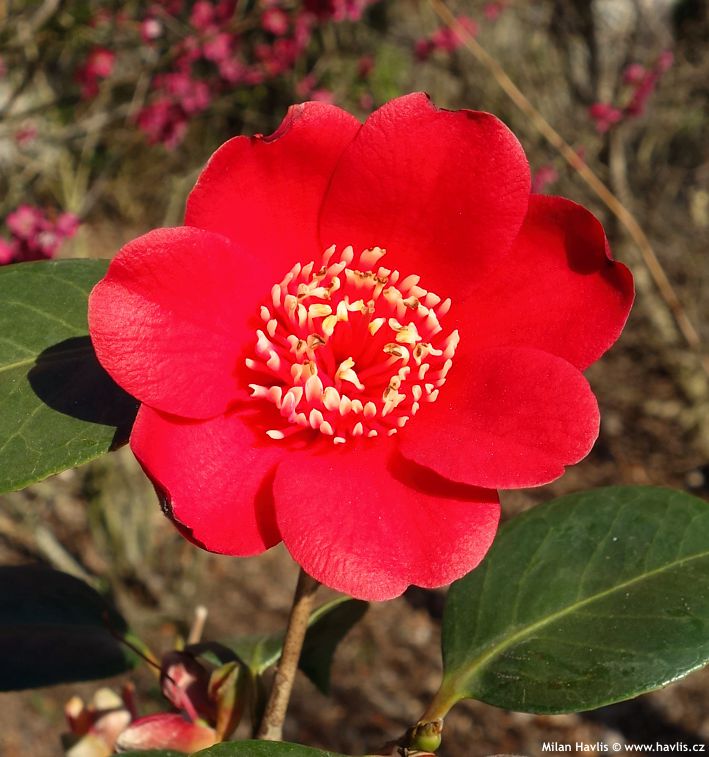
Camellia japonica 'KIMBERLEY' hardy camellia


 Symbivit Tric (arbuscular)
 Symbivit (arbuscular)
Camellia
The genus Camellia ranks among the botanically and culturally most significant groups of woody plants native to East Asia. Depending on the taxonomic approach, it comprises approximately 100 to 300 species of evergreen shrubs and trees, naturally distributed from the foothills of the Himalayas through southern and eastern China, Korea and Japan to Vietnam and Indonesia. Fossil remains of leaves and seeds from the Tertiary period, particularly from present-day Japan and China, indicate that camellias formed part of these forest ecosystems long before the arrival of humans. The scientific name of the genus was established by Carl Linnaeus (1707–1778), who named it in honour of the Brno-born Jesuit missionary and naturalist Georg Joseph Kamel (1661–1706). Paradoxically, Kamel himself never encountered camellias; his name was applied posthumously, yet it has become permanently associated with one of the most iconic genera of ornamental and useful plants.
A fundamental aspect of the genus Camellia that cannot be overlooked is its direct economic and cultural use, centred primarily on tea and oil. Camellia sinensis 茶树, the true tea plant, is among the most important species of the genus and stands at the origin of one of the oldest and most widespread cultural rituals in human history, shaping trade networks, landscapes and everyday habits across East Asia and beyond. Equally significant, however, is Camellia oleifera 油茶, cultivated for centuries in southern China as a source of high-quality oil used both for cooking and traditionally for lighting (in oil lamps), represented a staple economic crop in many regions. While tea became a symbol of learning, commerce and cultural exchange, camellia oil represented a practical foundation of daily life. The study of these utilitarian species opened the way to a deeper understanding of the entire genus, with major contributions from researchers such as Carl Peter Thunberg (1743–1828) in Japan and Robert Fortune (1812–1880) during his exploration of Chinese regions. Camellia is therefore not merely a genus of ornamental plants, but a group of woody species that has shaped economies, landscapes and the dynamics of everyday life for millions of people over centuries.
The native range of the Japanese camellia, Camellia japonica, known in Japan as tsubaki 椿, includes Japan, Korea and parts of eastern China, where it has been cultivated for centuries not only for the beauty of its flowers but also as an integral part of the spiritual and aesthetic world. Its true introduction to Europe is inseparably linked with the travels of Carl Peter Thunberg (1743–1828), who observed camellias in Japanese gardens at a time when the country was almost entirely closed to foreigners. In Japan, camellias were planted for generations near temples, shrines and aristocratic residences, often as heirloom plants that outlived several human generations and became silent witnesses to both family and spiritual continuity. Respect for the Japanese camellia was also reflected in customs and symbolism. Its winter flowering was perceived as an expression of endurance and quiet strength during a season when most plants are at rest. At the same time, the way the camellia flower falls as a whole, rather than shedding its petals individually, inspired a certain restraint in traditional Japanese culture. This sudden and complete fall was sometimes symbolically associated with abrupt endings and impermanence, which led to the camellia appearing less frequently in certain historical contexts, for example within the samurai class. Nevertheless, it remained deeply rooted in everyday life, poetry and garden art, where it came to symbolise purity, restraint and beauty without ostentation. In Europe, from the 18th century onwards, Camellia japonica became an object of collecting passion and a symbol of luxury, particularly in the milder regions of England such as Cornwall and the surroundings of London, where camellias were first cultivated in aristocratic gardens and glasshouses before it was realised that they would also thrive outdoors. Yet its original cultural meaning, founded on quiet coexistence with people, remains legible even today in every old shrub flowering beside a temple wall or in a forgotten garden.
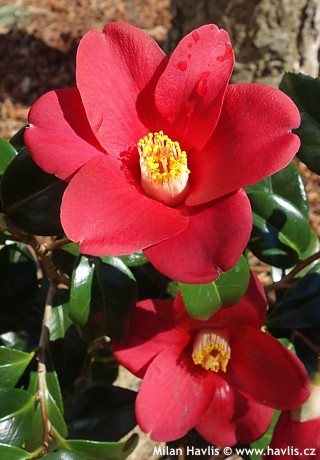
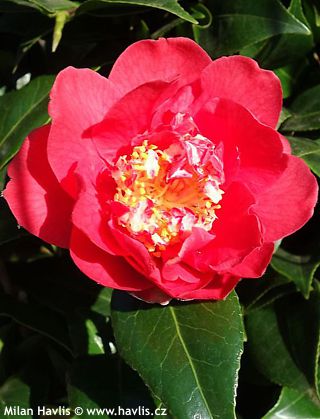
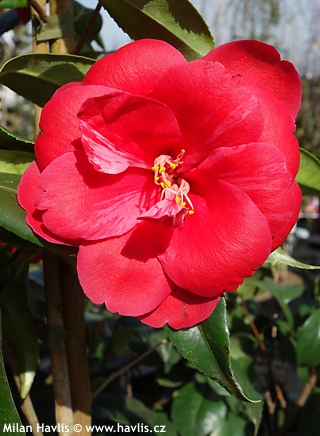
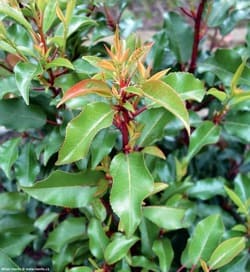
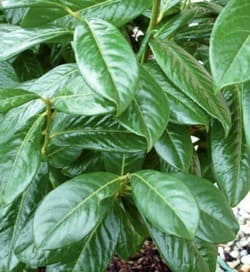
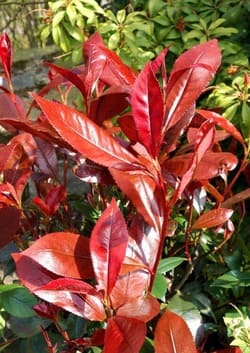
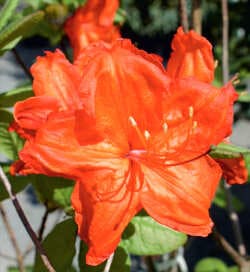
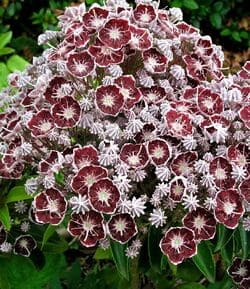
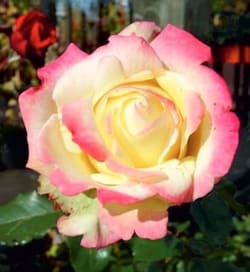
Kimberley is another old Japanese camellia variety from early 20th century, and awarded AGM by RHS in 1934. It produces beautiful, cup-shaped, rich scarlet red blossoms with a crown of yellow stamens. Flowering begins in April and continues for 6-8 weeks. Leaves are evergreen, narrowly obovate, gently serrated at margins, deep green, and glossy. Kimberley grows moderately into a strong, upright, and dense shrub almost 3m tall, under ideal growing conditions of zone 7 yet a little over. Its size can easily be controlled by pruning after flowering.
Camellias need similar planting like rhododendrons - once you plant them well you need not care for them. They require fresh, ericaceous (acid), peat-based, humus-rich soil that will never dry out but will not be water-retaining like clay. Even moisture and good drainage are key demands for good root growth. We strongly suggest using mycorrhizal fungi when planting. Never plant it too deep and if your soil is clay elevate the root ball accordingly. Fertilizing is recommended after flowering, once a month until late summer.
Last update 01-03-2019
Crucial is finding a good location and finding one for good - camellias detest transplanting. In the wild they grow under canopies of tall trees or at woodland margins. They dislike direct sunlight and both excess heat in summer and drying winds in colder months. Find a place at the back of the house away from winter and spring sunlight, sheltered from the north-west, or behind a tall hedge with some trees nearby to cast at least dappled shade during summer. Ever seen a camellia in full sun at the seaside? Remember that the air is so humid there that plants do not suffer from drying rays as they keep on drinking all day long. Before it establishes which might take 2-3 years provide enough moisture also in winter in the ground is not frozen but don't overwater! Mulch it well with bark mulch 5-10 cm high. The hardiness of the cultivar is approximately −18 °C (USDA zone 7), and a site protected from winter sun and cold winds is recommended, as these can damage the flower buds at the turn of winter and early spring