.jpg)
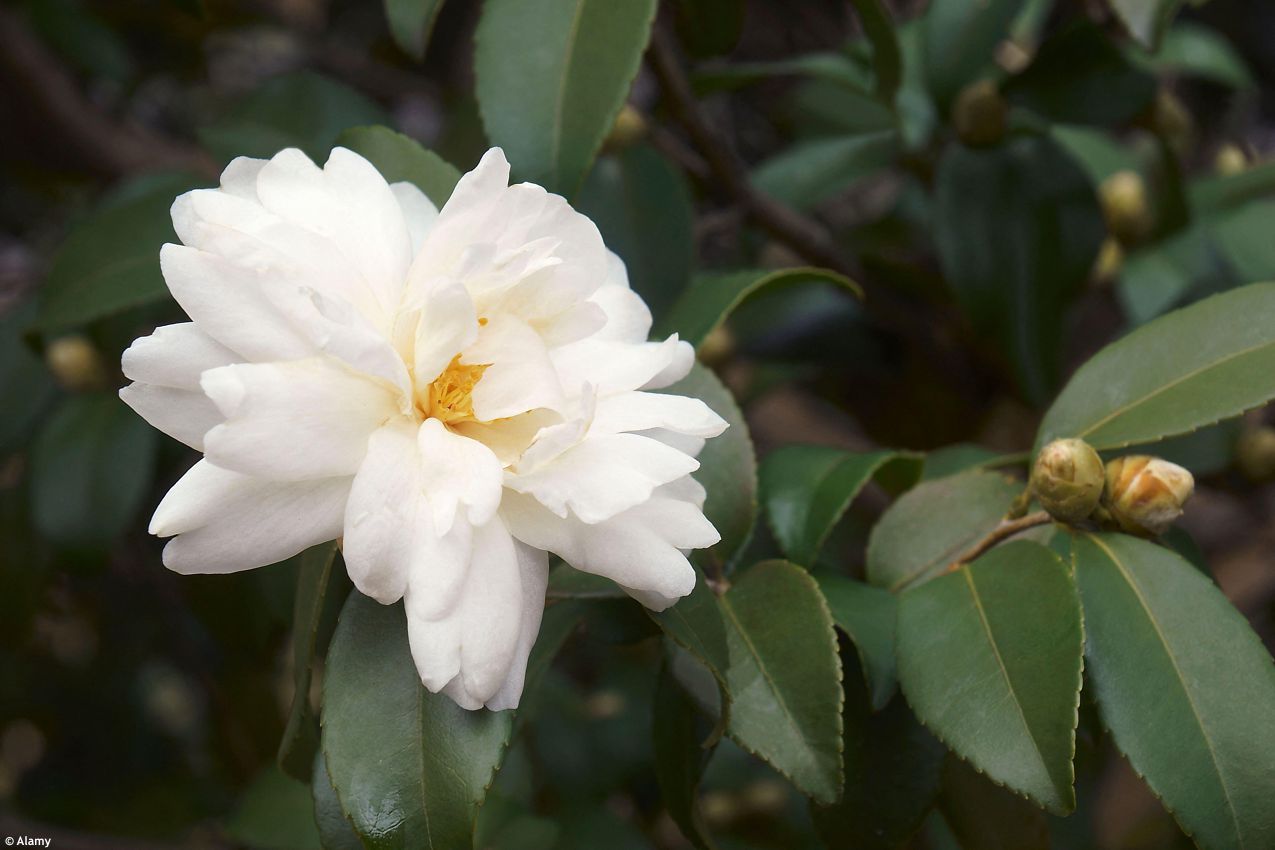
Camellia 'WINTER'S WATERLILY' hardy autumn camellia


 Symbivit Tric (arbuscular)
 Symbivit (arbuscular)
Camellia
Dreams tend to come true above all for those who refuse to accept other people’s assumptions that something cannot be done or is impossible. In the world of gardening this is doubly true. Until quite recently, it was believed that certain trees originating in subtropical regions, such as the silk tree for instance, stood no chance of surviving Central European winters. And yet it works, and the trees not only survive, they thrive and are beautiful. Even today, many gardeners remain sceptical about growing evergreen magnolias in our climate, despite the countless established specimens that prove that not everything is as we once thought.
The same is true of camellias, which until the end of the second millennium were enjoyed almost exclusively by growers in the warmer parts of Europe, with the exception of the driest coastal or mountainous regions, and by gardeners in the southern parts of the British Isles. Thanks to the enthusiasm, vision and, above all, the honest breeding work of two American botanists in particular, our green world has been enriched by these undeniably captivating, evergreen, flowering shrubs, in an ever‑increasing range of cultivars capable of withstanding temperatures of −20 °C to −24 °C in some cases, provided they are planted correctly. These remarkable men were Dr Clifford Parks (†2020) of the University of North Carolina, who focused primarily on spring‑flowering camellias and became renowned for his April series, and Dr William L. Ackerman (†2013) of Ashton, Maryland, who initially devoted himself to his passion for breeding highly fragrant camellias. Only after the severe winters of the 1970s and 1980s, when he witnessed countless mature and well‑established shrubs perish after a single harsh winter, did he have a change of heart, and his goal became to give the world camellias with enhanced frost resistance. Quite literally so, as he distributed his plant material freely, without seeking any financial reward or legal protection. His cultivars are predominantly autumn‑flowering, including both Camellia sasanqua and hybrid forms.
Although the exact parentage of some older cultivars appears difficult to trace and in many cases they are complex hybrids, we respect the accepted names in nomenclature, even when they are listed as Camellia japonica or Camellia sasanqua. Incidentally, did you know that the camellia was named in honour of Czech amateur botanist and missionary in the Philippines Jiří Josef Kamel? He himself never saw the plant, as the first specimen was brought from Asia to Europe only in 1739, thirty‑three years after his death. His significant contribution to botany was recognised by one of the greatest of all, Carl Linnaeus himself.
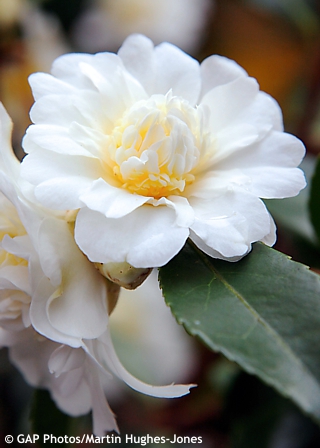
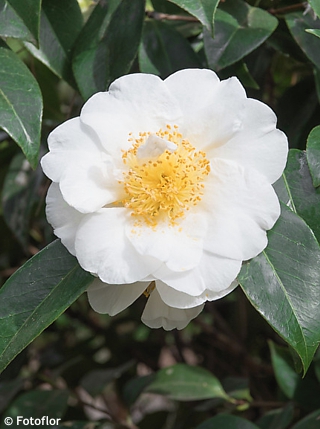
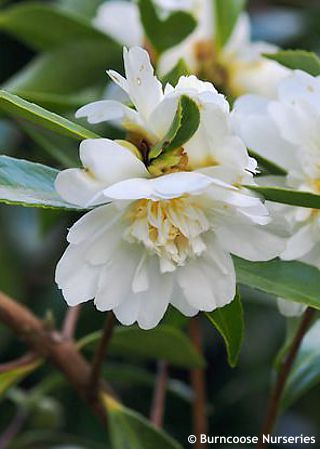
Winter’s Waterlily is another hardy camellia bred by Dr Ackerman. It produces small to medium‑sized, semi‑double to anemone‑type flowers with a rich layer of inner petaloids, which resemble delicate, snow‑white to creamy white “waterlilies” floating on the surface; individual blooms measure approximately 6–8 cm in diameter. The flowers appear during the colder part of the year and the plant blooms early, often from late autumn into winter. The flowers are long‑lasting and, as the plant matures, it forms an increasing number of buds, so the length of the flowering period may vary according to the age of the plant and winter temperatures. The leaves are evergreen, leathery, dark green and glossy; the shrub grows at a moderate rate, with an upright habit, forming a dense and attractive shape. From a horticultural point of view, light formative pruning after frost is suitable.
The cultivar was bred by William L. Ackerman and registered in 1991 (ACS registration). It originated as a cross between the botanical oil camellia (C. oleifera) and the autumn‑flowering sasanqua cultivar ‘Mine‑no‑yuki’ (C. sasanqua). Thanks to the genetic contribution of C. oleifera, it is regarded as one of the hardiest camellia cultivars. Moreover, autumn flowering camellias have a huge advantage as opposed to the spring types – their flowers mature during summer so there is no risk of frost damage of the flower buds.
Camellias need similar planting like rhododendrons - once you plant them well you need not care for them. They require fresh, ericaceous (acid), peat-based, humus-rich soil that will never dry out but will not be water-retaining like clay. Even moisture and good drainage are key demands for good root growth. We strongly suggest using mycorrhizal fungi when planting. Never plant it too deep and if your soil is clay elevate the root ball accordingly. Fertilizing is recommended after flowering, once a month until late summer.
Last update 08-03-2026
Crucial is finding a good location, and finding one for good - camellias detest transplanting. In the wild they grow under canopies of tall trees or at woodland margins. They dislike direct sunlight and both excess heat in summer and drying winds in colder months. Find a place at the back of the house away from winter and spring sunlight, sheltered from the north-west, or behind a tall hedge with some trees nearby to cast at least dappled shade during summer. Ever seen a camellia in full sun at the seaside? Remember that the air is so humid there that plants do not suffer from drying rays as they keep on drinking all day long. Before it establishes which might take 2-3 years provide enough moisture also in winter in the ground is not frozen but don't overwater! Mulch it well with bark mulch 5-10 cm high. Suggested hardiness is -20° to -23°C (USDA zone 6b)