













Campsis × tagliabuana 'Kudian' INDIAN SUMMER® trumpet vine - climber

 Symbivit Tric (arbuscular)
 Symbivit (arbuscular)
Campsis
The genus Campsis consists of only two species and they both carry the energy of subtropical climbers that, over the course of evolution, learned to ascend using small aerial rootlets and to brace themselves against tree bark as if it were a natural ladder. They belong to the family Bignoniaceae, a group known for its trumpet flowers and often woody climbing habit. C. radicans originates from North America, whereas C. grandiflora comes from East Asia, an intriguing geographical split that suggests a much earlier distribution of the genus’s ancestors across the warmer regions of the Northern Hemisphere. The genus was described by João de Loureiro (1717–1791), a Portuguese missionary and botanist working in Southeast Asia, who defined it on the basis of its characteristically curved stamens, reflected in the Greek kampein, meaning “to bend”. The nomenclatural history is, however, tangled: European gardens of the 17th century were unsure where to place the plant, and it appeared under the names Bignonia, Tecoma and even Apocynum, until the 19th century finally settled the genus in its present form. In the wild it is a climber of bright woodland edges, well‑drained riverbanks and disturbed habitats, where its rapid growth and ability to root along the stems allow it to occupy space before slower woody plants can take hold.
Campsis × tagliabuana is an interspecific hybrid created by combining two species that differ both geographically and in character – the North American C. radicans and the Chinese C. grandiflora. It does not occur naturally in the wild; its origin is the result of human curiosity, horticultural intuition and a remarkably fortunate coincidence. The first documented plants appeared in the 19th century in northern Italy, where the Tagliabuana family, active in the Lombardy region, ran a nursery specialising in ornamental woody plants. It was in their horticultural enterprise that accidental pollination occurred between the two species, both of which were fashionable exotics in European collections at the time. The resulting hybrid attracted attention for its vigour, larger flowers and better adaptability to the European climate, and the Tagliabuanas began to propagate and distribute it among gardeners. The Tagliabuana family was among the respected Italian growers of the 19th century, known for their willingness to experiment with newly introduced woody plants. Their name entered botanical nomenclature in the Latinised form tagliabuana, which remains a lasting reminder of their contribution to European horticulture. The hybrid spread quickly across Europe because it combined the best qualities of both parents: the hardiness and resilience of C. radicans with the large, showy flowers of C. grandiflora. While the pure species each had their limitations – one too vigorous, the other too tender – Campsis × tagliabuana proved to be the ideal compromise, capable of growing and flowering reliably in temperate climates.
INDIAN SUMMER® trumpet creeper has been winning all sorts of awards since 1998.
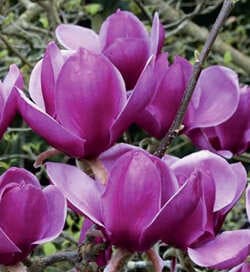
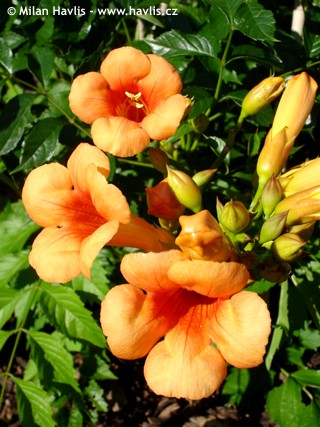
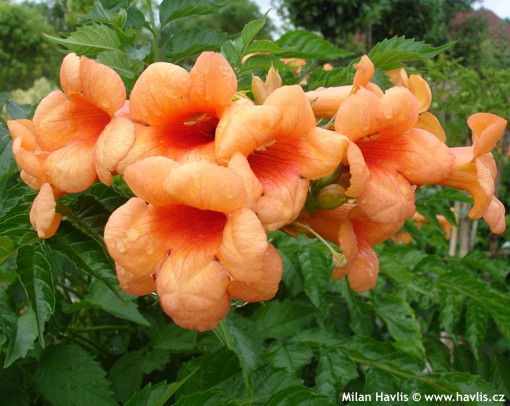
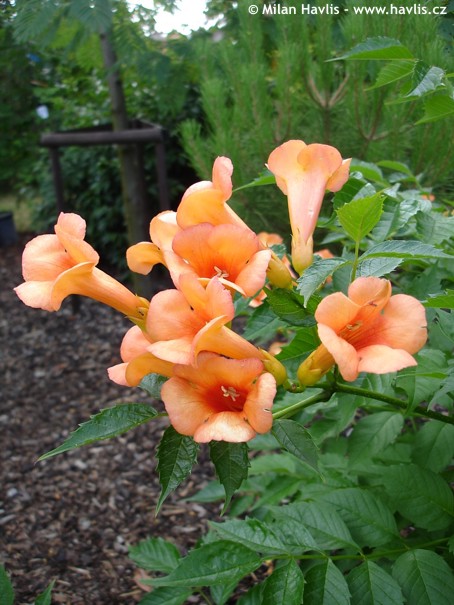
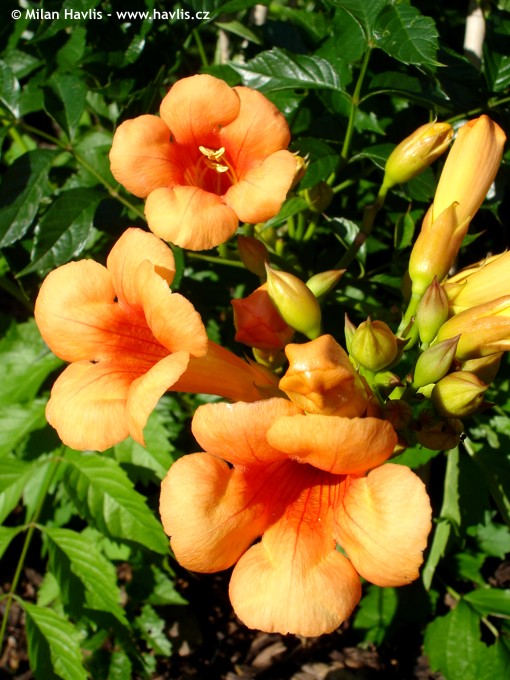
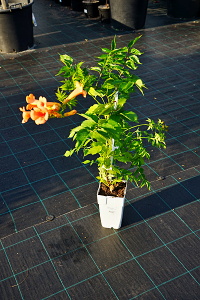
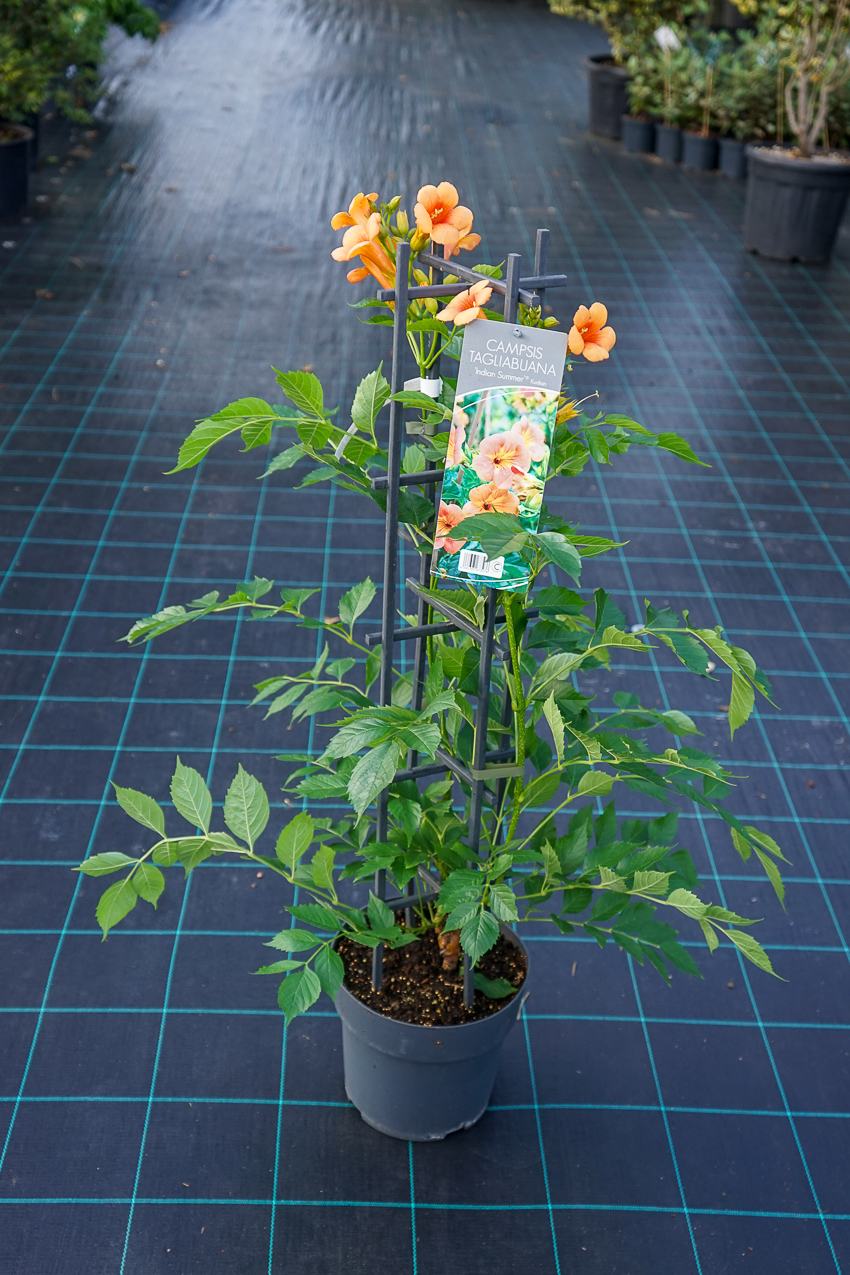
It blooms abundantly from early July until the first frosts if the plant has enough buds. Flowers are bright orange, sometimes with reddish throat, trumpet-shaped, up to 8 cm long. Pinnate leaves are deep to dark green, coarsely serrated, often with burgundy margins.
It is a successful cross between c.tagliabuana and c.radicans bred by Hendricus Jacobus Maria Kuijf from the Netherlands. US plant patent PP13139 was granted in 2002.
Last update 20-12-2008; 15-08-2012
The Tagliabuana trumpet vine requires a warm, sheltered and fully sunny position in order to flower reliably. It will grow in partial shade, but the flowers will be fewer and their colour less intense. It thrives best in deeper, fertile and well‑drained soils that warm up quickly in spring; heavy, cold clays do not suit it. After planting it appreciates regular watering, but once established it is fairly tolerant of drought and can cope with short dry spells. Over‑fertilising with nitrogen encourages lush vegetative growth at the expense of flowers, so feeding should be kept moderate.
Pruning is carried out in spring after all frosts have passed, when weak, damaged or poorly placed shoots can be safely removed. Retain the strong branches, as these will bear the summer inflorescences. In colder regions it is advisable to protect the root collar with a layer of mulch, especially on young plants. Older specimens are more resilient, but they still look their best where they are sheltered by a wall, pergola or other thermal mass that retains warmth overnight. Although technically a climber, its heavier shoots require support – ideally one that disappears within the composition and allows the plant itself to stand out. Hybrid trumpet vines are generally more reliable than the pure species, but they still perform best in warm, sheltered positions. Hardiness ranges between –27 and –29 °C (USDA zone 5), depending on the cultivar and location; they are not recommended for high elevations or very exposed, windy sites.
Goods are shipped all over Europe. For Russia and U.K. and for further details please read about SHIPPING OPTIONS HERE.
Are you interested in a serious discount for orders NOV-FEB? Check your options here.
THE PRICES INCLUDE VAT of 15%. For quick conversion you can use 1 CZK = approx. 0.04 EUR
- STANDARD QUALITY - Plants of this group are 1st class quality with number of branches and overall density adequate to their size and age, considering they were container grown.
- DE LUXE QUALITY - This label guarantees a luxurious quality of manually selected plants that, compared to their height and age, are exceptionally dense and beautiful.
- EXTRA - These plants are usually mature and bigger specimens with exceptional overall appearance.
- STANDARD (as described in the plant form) means a tree with a trunk of 190-210 cm and a crown at the top, unless specified differently. The commercial size for trees is their girth measured in the height of 1m from ground.
- HOBBY - These plants are of the same quality as our standard-quality plants but younger and therefore cheaper.
- SHRUB - a woody plant with branches growing bushy from the ground level.
- HALF-STANDARD or MINI-STANDARD - a small tree with shorter trunk, its size is usually specified.
- FEATHERED - These are trees with branches growing already from the base of the trunk and up along the stem.
- GRASSES and PERENNIALS - Sizes given usually read the diameter of the pot or the clump, as specified.
