

































.jpg)
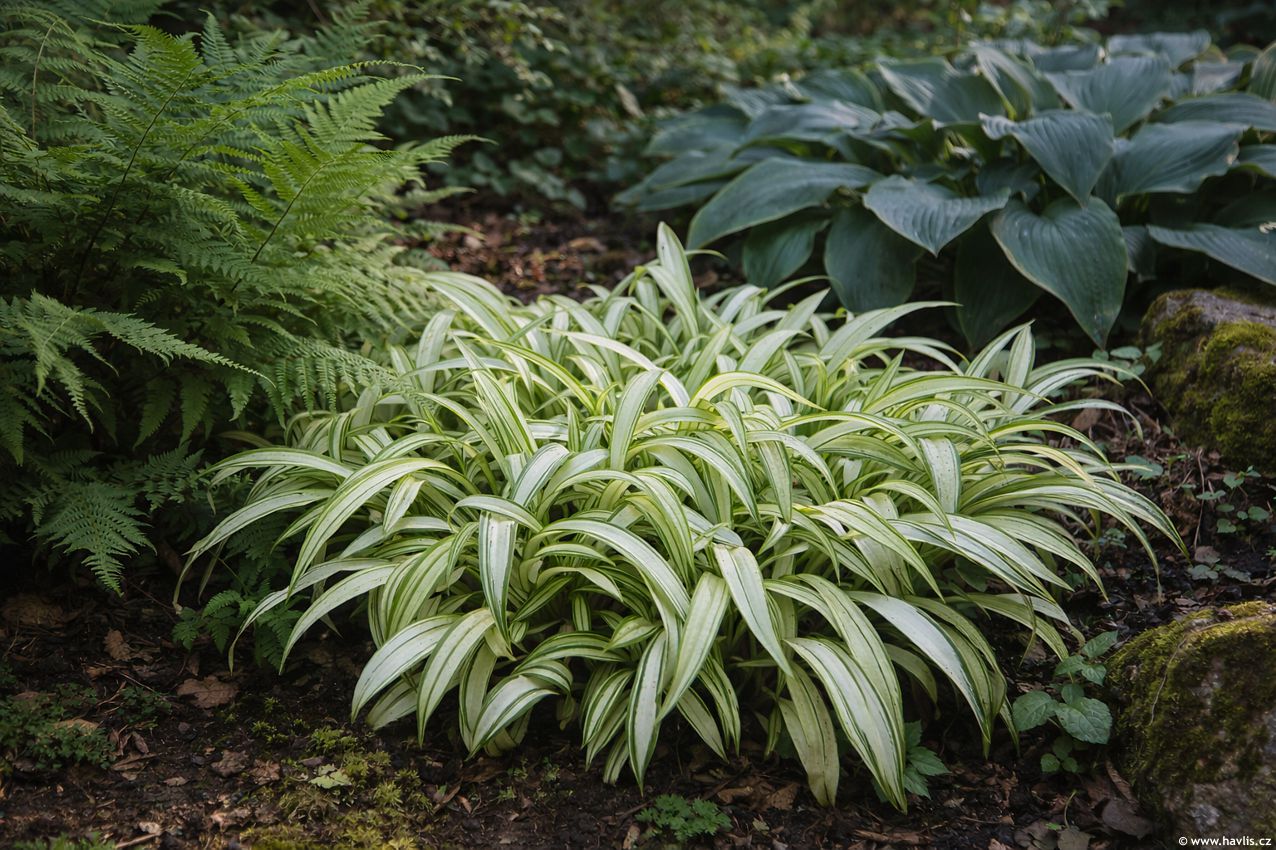
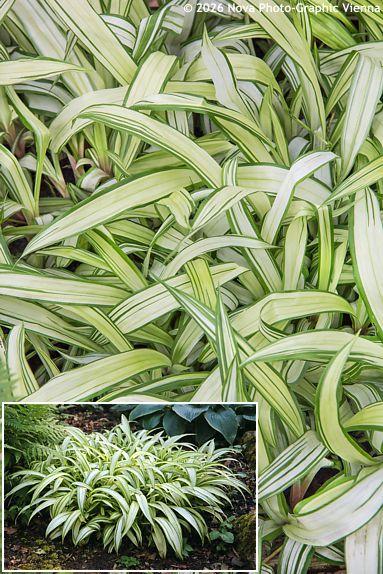
Carex siderosticta 'SHIRO-NAKAFU' creeping broad‑leaf sedge

Carex
Sedges (Carex) form an enormous genus of evergreen and deciduous grasses united by a distinctive feature that gave them their botanical name and echoes in many languages: the edges of their leaves are usually sharp, like the cleanly cut sheets of office paper. There are more than 1500 species, and modern sources already speak of over 2000, occurring in almost every climate zone from hot tropics to arctic tundra. In the far north they are among the most important groups of plants capable of surviving in such harsh conditions. The first botanical descriptions appeared in the 18th century, when Carl Linnaeus (1707–1778) began to classify the vast diversity of sedges, but the real breakthrough came later with detailed studies of spikelet and utricle morphology, which allowed botanists to distinguish species with greater precision. The genus is extraordinarily variable: species differ in size, colour, leaf width, flowering and growth habit. Some form tight clumps, others spread and create dense groundcover. Most sedges, including those native to temperate climates, naturally grow in moist to wet habitats, which is somewhat paradoxical because many of them cope surprisingly well with long periods of drought as long as they are not planted in full sun.
Carex siderosticta, the broad‑leaf creeping sedge, was described by Henry Fletcher Hance (1833–1886) in 1873. It is native to East Asia, from Japan and Korea to northern and eastern China and the Russian Far East. In its natural habitat it grows in moist, lightly shaded woodlands where spring moisture alternates with drier summers. Its broad leaves resemble miniature bamboo foliage and look surprisingly un‑grass‑like, which is unusual within the genus Carex. This peculiarity attracted the attention of botanists as early as the 19th century. It is the only known sedge species that produces so‑called pseudolateral culms, shoots that appear to arise from the side but in fact originate from the terminal meristem. This growth pattern was the subject of several cytological studies in the 1980s and 1990s because it challenged earlier assumptions about sedge morphology. In traditional Japanese gardening the species was used as a soft groundcover in partial shade, often near stone water basins or along paths, where its broad leaves created a calm, gentle transition between stone and greenery. In Korea it appears in folk herbals as a plant of moist forests indicating fertile, humus‑rich soil.
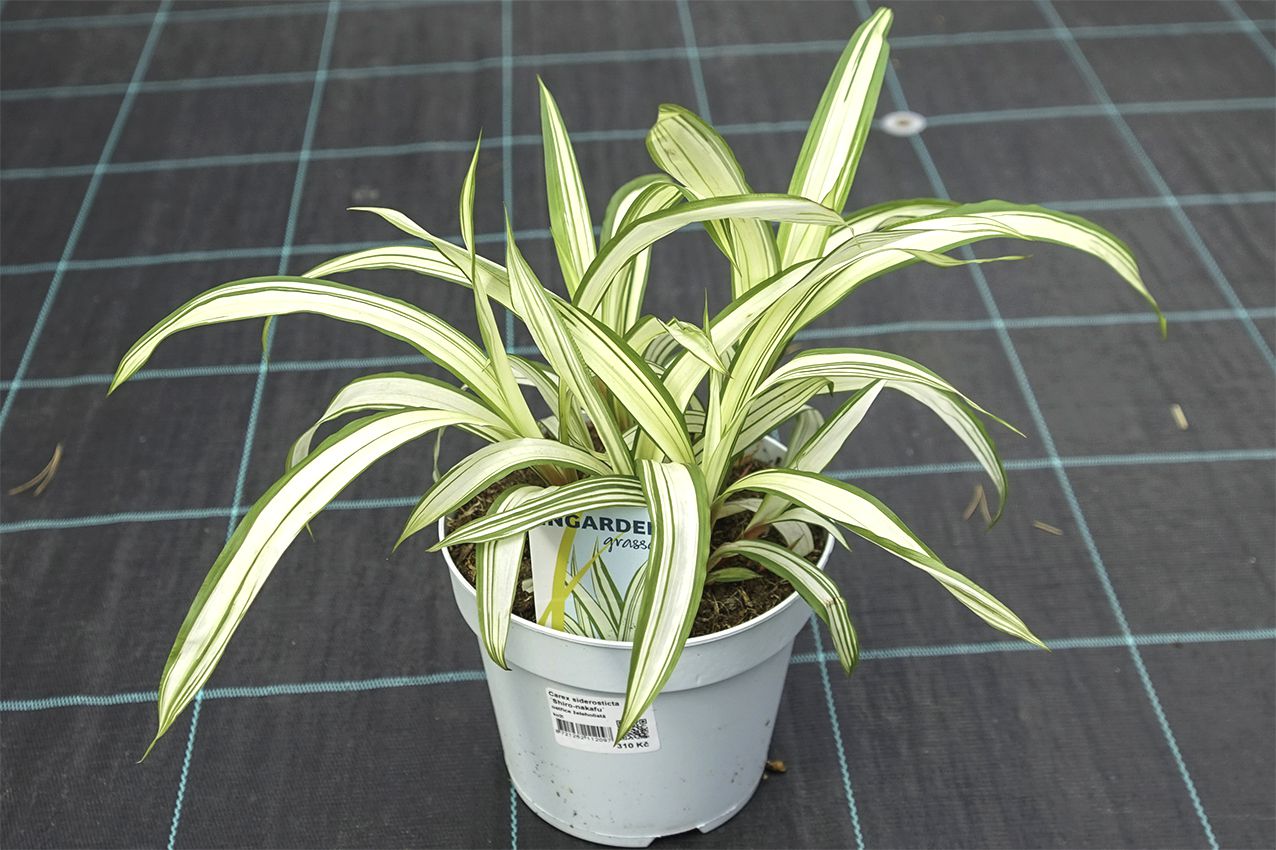
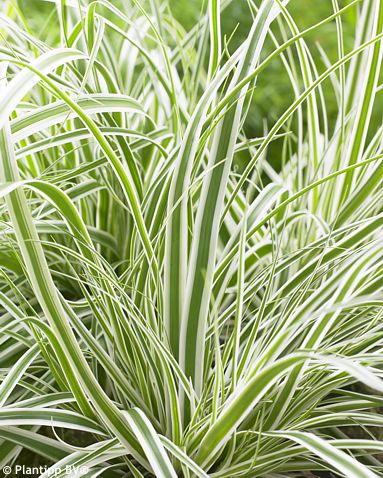
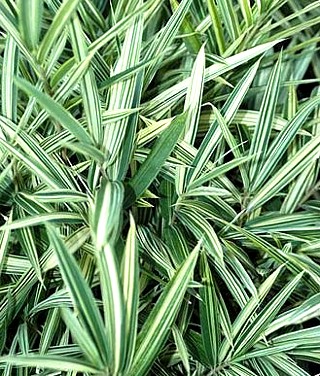
Shiro‑nakafu is a remarkable cultivar of creeping broad‑leaf sedge whose broad, soft leaves look as if someone had brushed them with a wide stroke of cream. The variegation is irregular and the leaves always contain more white than green, which appears only as thin streaks along the margins. Contrary to the sharpness suggested by the genus name, the leaves are soft, almost silky, and invite touch. The plant forms low, slowly spreading clumps that create a soothing, carpet‑like effect in partial shade. It spreads reliably but not aggressively, and its broad leaves give it a stronger presence than most sedges. Compared with the species, ‘Shiro‑nakafu’ is lighter, more striking and less robust because the variegated parts of the leaves contain less chlorophyll. This slows growth but gives the plant a delicacy that the green form lacks.
The origin of the cultivar is not fully documented, but all evidence suggests that it arose in Japan, where Carex siderosticta has been cultivated for centuries and where the tradition of variegated plants runs deep. Japanese horticulture has long valued subtle colour nuances and the play of light on foliage, and many variegated sedges emerged there before spreading to Europe and North America. The name ‘Shiro‑nakafu’ (シロナカフ) is Japanese and means white centre, perfectly describing the appearance of the leaves. It appears in European sources from the second half of the 20th century, when it began to circulate among collectors of ornamental grasses and shade‑loving perennials.
In the garden, ‘Shiro‑nakafu’ is best used in partial shade as a soft, bright contrast to taller and more rigid ferns, green‑leaved brunneras or pulmonarias. It can also break up the monotony of larger areas planted with a single groundcover species such as Vinca or Sedum, adding a gentle rhythm of light. In planting compositions it acts as a subtle but noticeable accent that calms and brightens the space at the same time.
Last revised 01‑06‑2026
The broad‑leaf creeping sedge grows best in partial shade, where variegated cultivars receive enough light to maintain their colouring but are protected from strong summer sun that could scorch the pale parts of the leaves. It grows reliably even in deeper shade, though with slightly reduced contrast. The soil should be humus‑rich, moderately moist and well drained, ideally with added leaf mould. It tolerates heavier soils as long as they are not permanently waterlogged. In summer it appreciates regular watering, especially in containers where the substrate dries out more quickly. Feeding should be light, once or twice a season, ideally with organic fertiliser or compost tea to avoid overly vigorous growth at the expense of variegation.
Cutting is not essential for its survival, but in spring it is advisable to remove old leaves that have lost colour over winter, trimming them to about five centimetres. The plant is fairly resistant to wind because its leaves are broad and soft and therefore do not break. It grows well in containers provided they are large enough and not exposed to full sun all day. Hardiness is high; the plant tolerates temperatures down to about −34 °C (USDA zone 4), so winter protection is usually unnecessary.
Goods are shipped all over Europe. For Russia and U.K. and for further details please read about SHIPPING OPTIONS HERE.
Are you interested in a serious discount for orders NOV-FEB? Check your options here.
THE PRICES INCLUDE VAT of 15%. For quick conversion you can use 1 CZK = approx. 0.04 EUR
- STANDARD QUALITY - Plants of this group are 1st class quality with number of branches and overall density adequate to their size and age, considering they were container grown.
- DE LUXE QUALITY - This label guarantees a luxurious quality of manually selected plants that, compared to their height and age, are exceptionally dense and beautiful.
- EXTRA - These plants are usually mature and bigger specimens with exceptional overall appearance.
- STANDARD (as described in the plant form) means a tree with a trunk of 190-210 cm and a crown at the top, unless specified differently. The commercial size for trees is their girth measured in the height of 1m from ground.
- HOBBY - These plants are of the same quality as our standard-quality plants but younger and therefore cheaper.
- SHRUB - a woody plant with branches growing bushy from the ground level.
- HALF-STANDARD or MINI-STANDARD - a small tree with shorter trunk, its size is usually specified.
- FEATHERED - These are trees with branches growing already from the base of the trunk and up along the stem.
- GRASSES and PERENNIALS - Sizes given usually read the diameter of the pot or the clump, as specified.
