











.jpg)
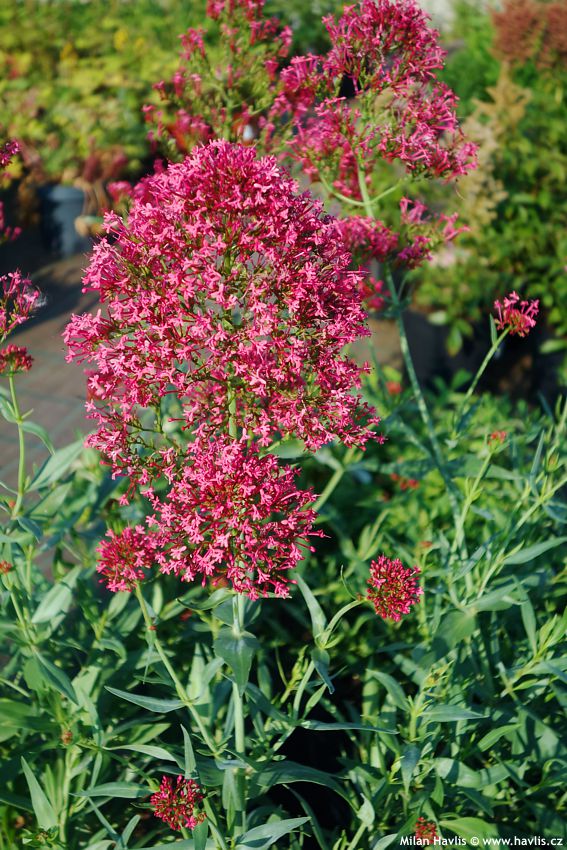
Centranthus ruber 'COCCINEUS' red valerian

 Symbivit Tric (arbuscular)
 Symbivit (arbuscular)
Centranthus
The genus Centranthus, valerian, belongs to the honeysuckle family and forms a small yet botanically intriguing group of plants. It comprises only a few species, most of them native to the Mediterranean, where they grow on rocky slopes, limestone outcrops and dry, stony ground. These natural habitats explain their remarkable resilience and their ability to thrive in places where one would hardly expect any plant to survive. The first botanical descriptions of species now placed in Centranthus date back to the 18th century, when Carl Linnaeus (1707–1778) assigned the red mavuň to the genus Valeriana as Valeriana rubra. It was only later, in 1805, that Augustin Pyramus de Candolle (1778–1841) transferred it to the newly defined genus Centranthus. Since then, its taxonomy has shifted back and forth several times, a pattern that has become almost folkloric for this group. Gardeners, however, have remained loyal to the traditional name Centranthus, which still appears in European floras and everyday horticultural practice.
Centranthus ruber, commonly known as red valerian, is a plant of dry places both in the wild – in cracks of old walls, on abandoned terraces, on stony embankments, anywhere stone meets wind and sun – and in cleverly designed public plantings where irrigation is not an option. It originates from the Mediterranean, but its light, tufted seeds have allowed it to spread across much of Europe, becoming almost a part of the cultural landscape, a plant accompanying human settlements as naturally as a church tower or a stone boundary wall. It was already popular in monastic and urban gardens in the 18th century, valued for its long and reliable flowering and its air of a plant that never gives up. Folk names such as “Jupiter’s beard” capture both its abundant flower heads and its slightly wild character, as if it chose its own places to grow. It is almost surprising how little attention it receives today, despite needing nothing more than a good planting and flowering for up to half a year – few perennials are this persistent.
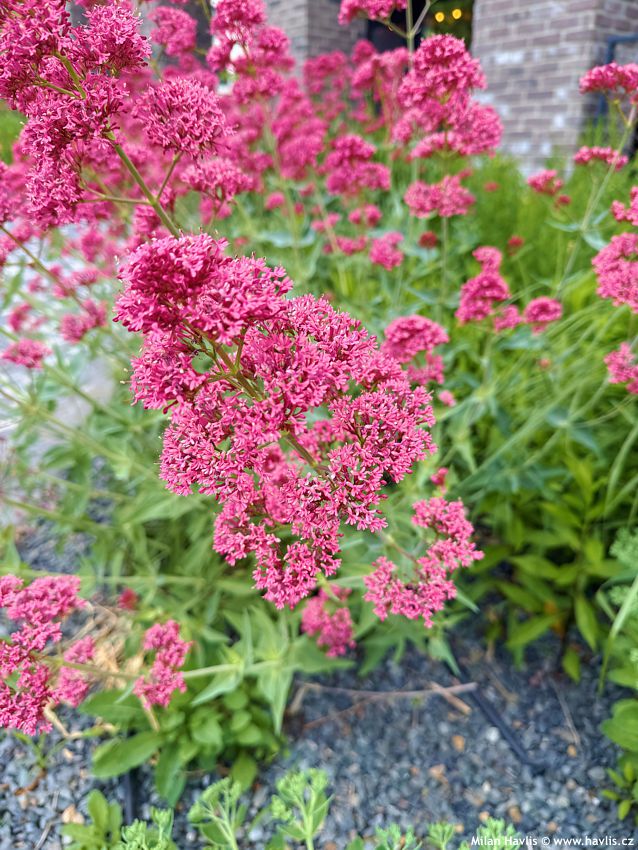
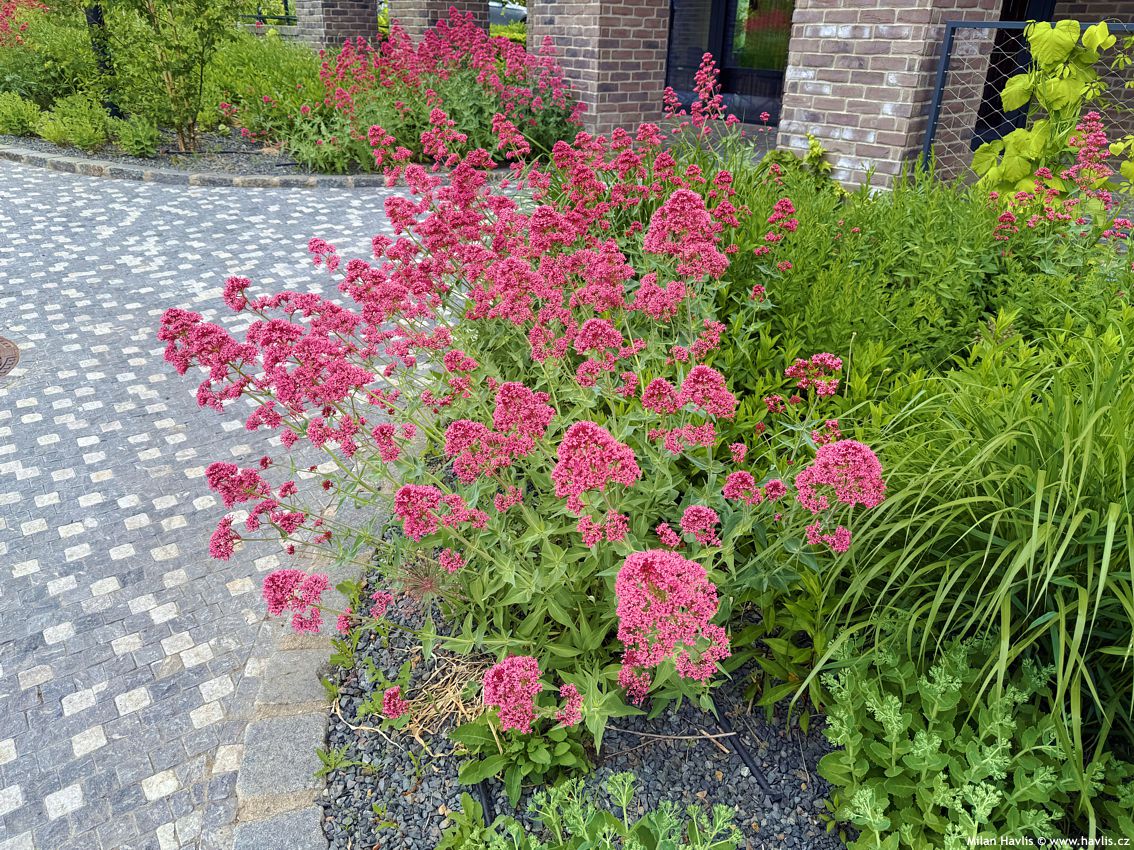
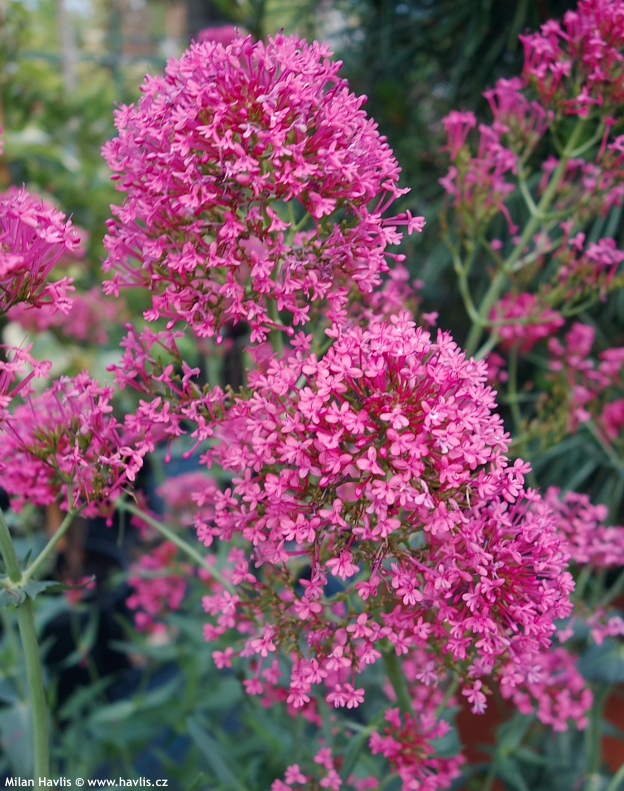
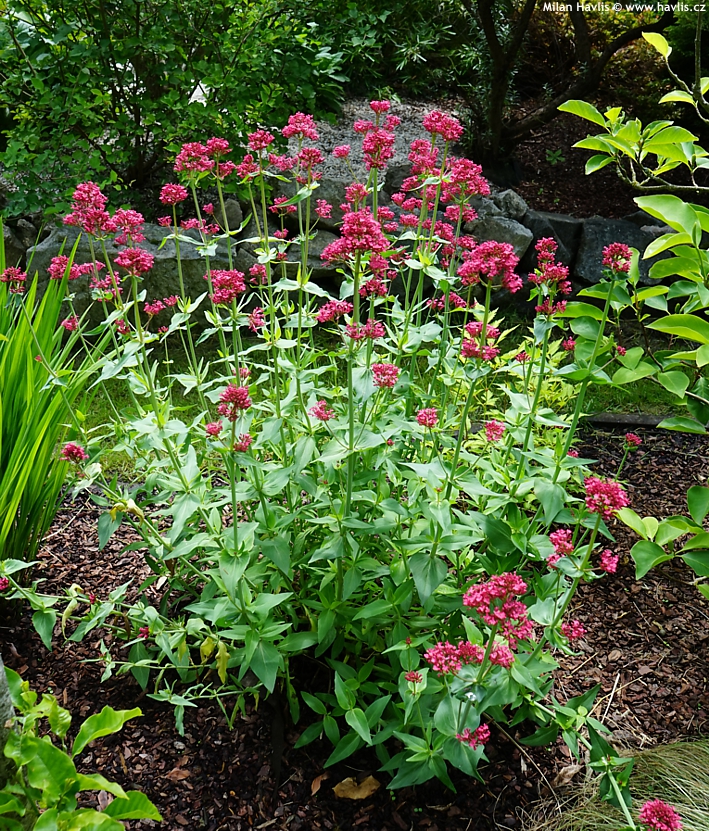
Coccineus is perhaps the reddest form of red valerian you can grow. Its rich raspberry‑red flowers recall old Mediterranean façades faded by sun and sea wind, only in reverse: here the colour does not fade but holds with unexpected intensity. Its habit is as light and airy as the species, forming loose yet elegant clumps with many branching stems that carry conical inflorescences arranged in upright panicles reminiscent of lilac. When the plant is thriving, individual panicles are large and flower for a long time. In poorer soils they are smaller, but before one panicle finishes, a new shoot with fresh buds appears in the leaf axil, and this rhythm continues until the last warm and sunny days of autumn. The leaves are opposite, grey‑green, slightly fleshy, with a fine waxy coating that helps the plant withstand heat and drought. The flower colour is deeper and more saturated than the usual pink form of the species, sometimes almost crimson, without a pastel tone – the main reason why ‘Coccineus’ has remained in gardens for so long. This cultivar, named after the Latin word for scarlet, appears in 19th‑century literature as a darker‑flowered selection, most likely arising from simple selection within ordinary populations rather than deliberate breeding.
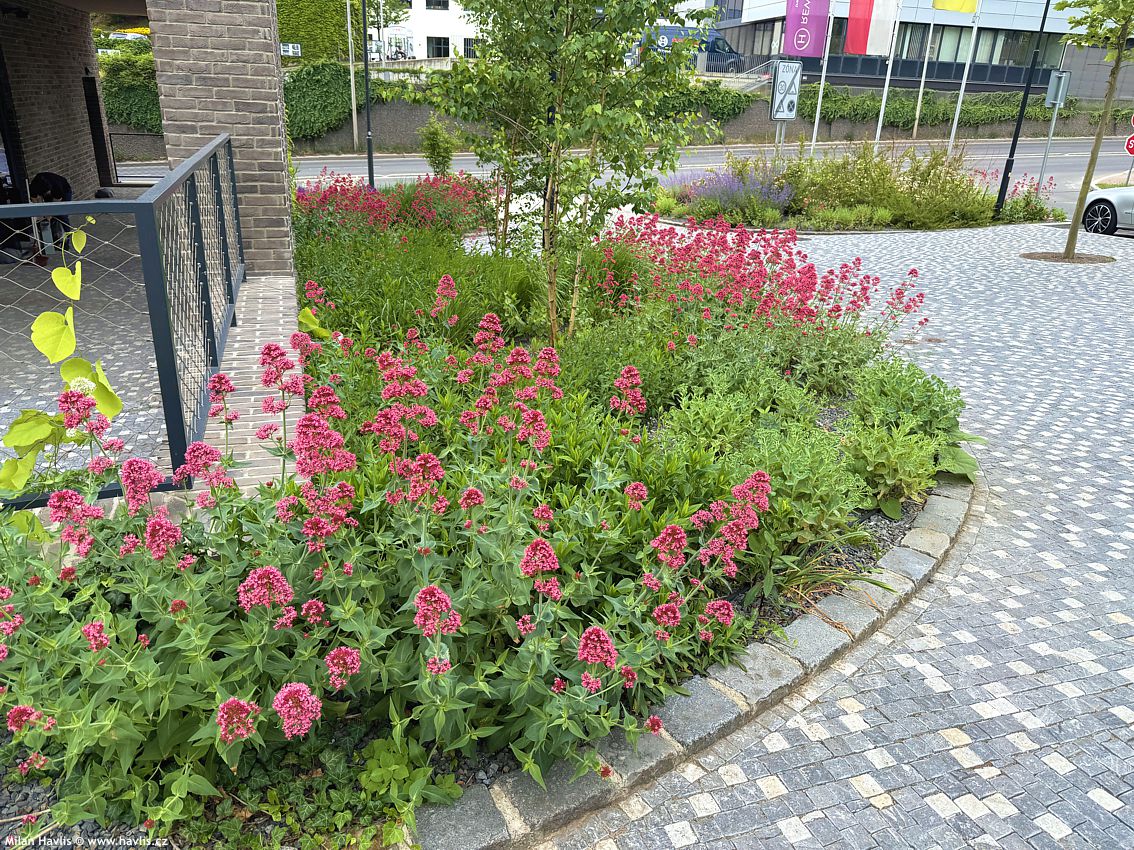
‘Coccineus’ excels in places where sunlight strikes stone and where soil is more symbolic than real – on dry walls, gravel beds, sunny banks or in shallow pockets between boulders where most perennials merely survive. Its scarlet colour brings energy to plantings with grey‑green tones, making it an excellent partner for perovskia, fescues, thymes or fine grasses such as Stipa, where it acts as a bright accent through almost the entire summer. In naturalistic gardens it pairs well with achilleas or viper’s bugloss, whose structure allows its upright panicles to stand out. In public plantings it performs reliably in unirrigated sites – near car parks, along paths or on sunny corners – where its ability to produce new flowers continuously creates an impression of constant activity even when other species are resting.
Last update 26-08-2015; 05-06-2026
Red valerian thrives in full sun or light partial shade and requires excellent drainage. It grows best on slightly stony ground and rubble, in shallow pockets between rocks or in light, sandy soils. Watering is needed only at planting; afterwards it manages on its own, as waterlogging will quickly kill it. Feeding is not advisable, as overly rich soil leads to lanky growth and fewer flowers. It does not require pruning; spent panicles can be removed purely for appearance or to limit self‑seeding – this beauty is highly productive and wander‑prone, with the mother plant rarely staying in one place for long and scattering numerous seedlings around it. Wind does not trouble it thanks to its flexible stems, and it is neither poisonous nor allergenic. The species is hardy to around –29 °C, so it overwinters reliably in temperate climates (USDA zone 5).