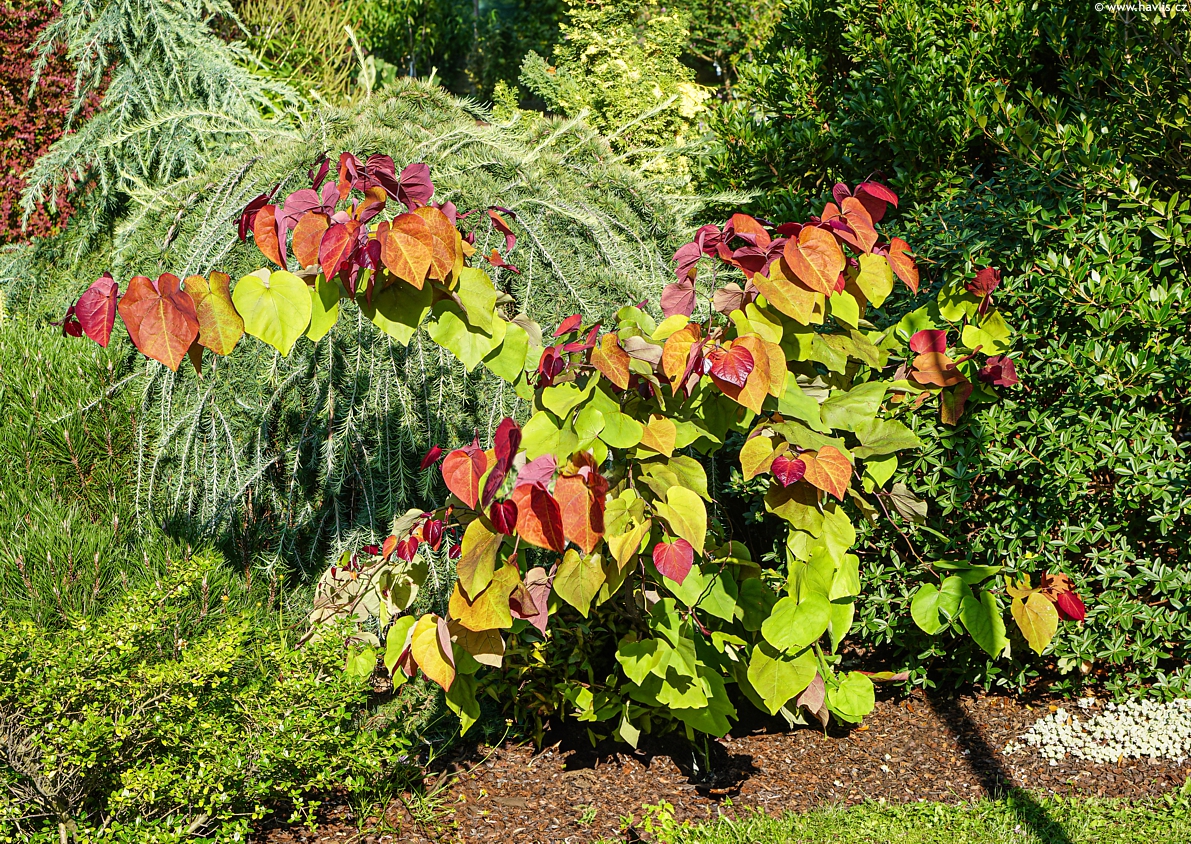
Cercis canadensis 'NC2016-2' ETERNAL FLAME (FLAME THROWER™) redbud

 Symbivit Tric (arbuscular)
 Symbivit (arbuscular)
Cercis
The genus Cercis, commonly known as redbud, includes around ten species of deciduous trees and shrubs native to the temperate regions of the Northern Hemisphere – from North America through Southern Europe to Eastern Asia. All species share several distinctive traits: heart-shaped leaves reminiscent of the iconic symbol of love, and early spring flowering, when small blossoms appear directly on bare wood – on branches and trunks, before the leaves emerge. The flowers have the typical shape of legumes, as redbuds belong to the Fabaceae family. In gardens, the most cultivated species are Cercis canadensis (Eastern redbud), Cercis siliquastrum (Judas tree), and Cercis chinensis (Chinese redbud), each offering a wide range of cultivars with varying growth habits and foliage colours.
Eastern redbud originates from the eastern regions of North America – from southeastern Canada through the Great Lakes area down to Texas and Florida. The first botanical records of this species date back to the 16th century, when it was described by Spanish and French naturalists. In the 18th century, it reached European botanical gardens, quickly gaining popularity thanks to its early flowering and elegant form. Thomas Jefferson planted it in his gardens at Monticello, and George Washington recommended it for shrubbery plantings. In Native American culture, redbud had practical uses – its flowers were edible, and medicinal infusions were made from its bark. Today, it symbolizes spring and hope and has even become the official state tree of Oklahoma.
Dennis James Werner is a Distinguished Professor of Horticultural Sciences at North Carolina State University in Raleigh, USA, and a breeder who specializes in buddleja, peaches, and redbuds. Regarding the last mentioned he has developed and already patented 8 beautiful varieties, some of which are recognized and very successful also in Europe, e.g., Ruby Falls and Merlot.
Another gem of his is called FLAME THROWER™ in USA and in Europe it is marketed under a slightly different name ETERNAL FLAME. It is a cross between his own varieties RISING SUN and an unnamed seedling with purple foliage and weeping habit. US patent No. PP31260 was granted in 2019 and the variety was launched in Europe in 2021 at the prestigious Chelsea Flower Show, where it won the highest award Plant of the Year 2021.
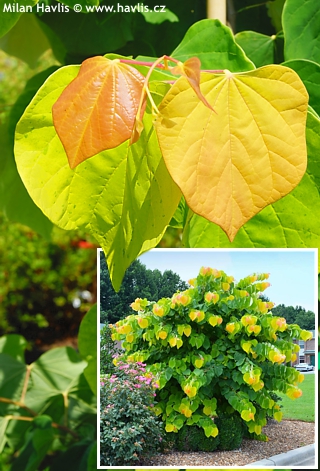
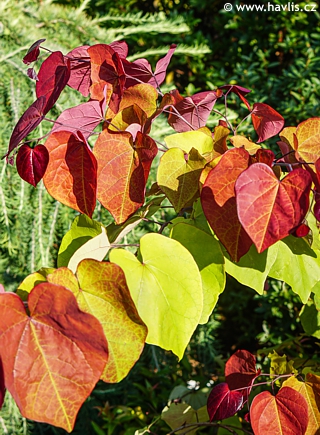
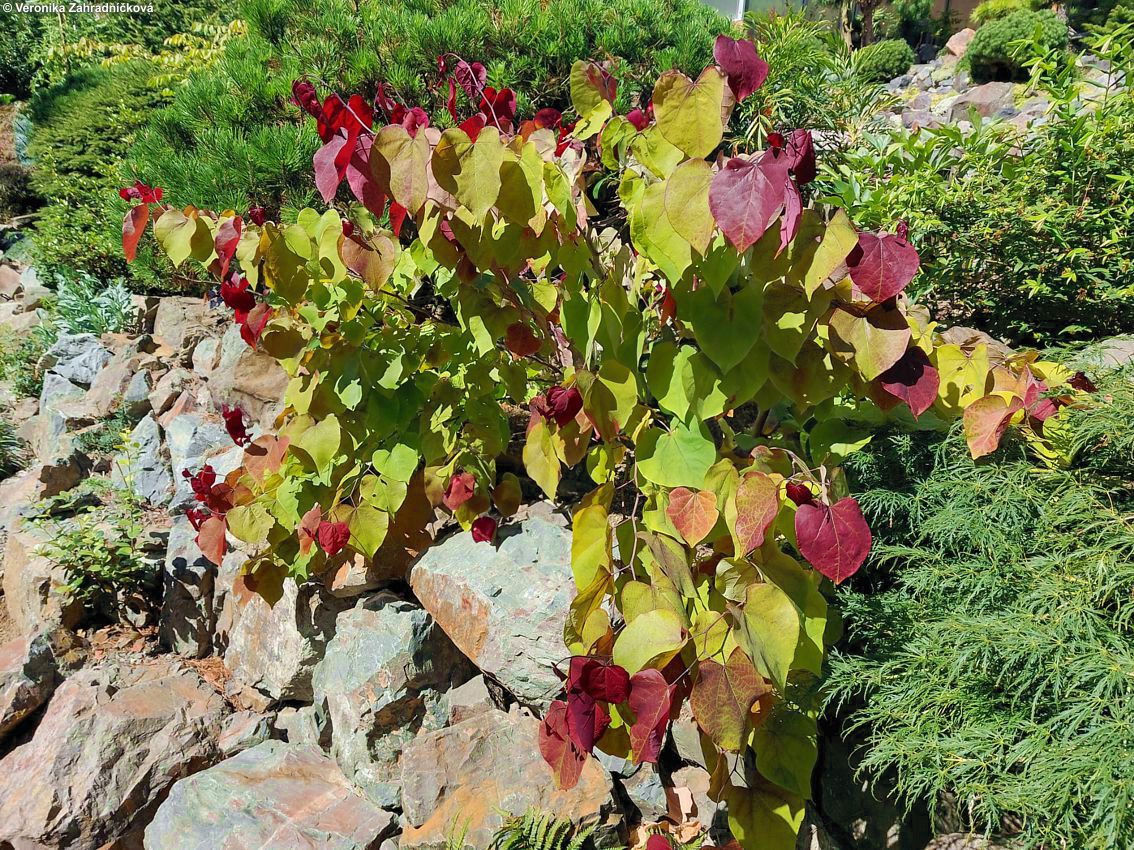
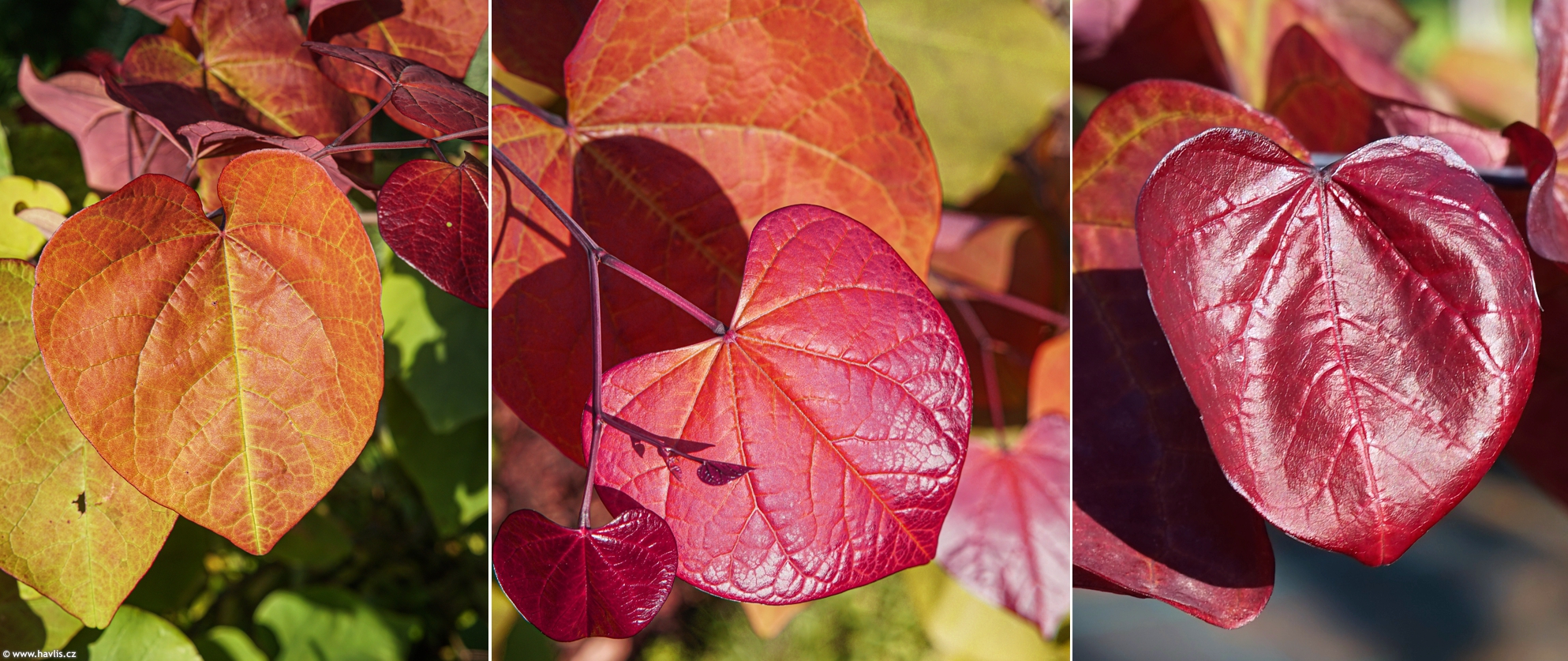
ETERNAL FLAME is, without exaggeration, a jewel not only among redbuds but deciduous shrubs in general. It bears large, broadly ovate to heart-shaped leaves 8-11 cm across and a dynamic mix of colours. New leaves emerge dark maroon and glossy, they soon turn fiery red and copper orange, and later they mature to somewhat chartreuse. In other words, you have multiple colors in a row along one branch. And what’s best is that this spectacular show is not just a question of spring as with many other deciduous shrubs. Here it you can enjoy a firework of vibrant colours all season long until autumn, hence its name Eternal Flame. In early spring, tiny, bright pink, pea-like flowers appear on miniature stalks on bare wood.
ETERNAL FLAME redbud grows rather fast (40-50 cm per year) under optimal growing conditions into a broadly funnel-shaped shrub with slightly arching ends. You can grow it as a multi-stemmed shrub or a single-stemmed tree. Young branches tolerate trimming and pruning, but older plants dislike cutting into old wood which might result in fungi infection.
Last update 29-08-2023
Eastern redbud is not particularly demanding when it comes to soil, it will thrive in ordinary garden soil as long as it’s well-drained. However, it performs best in slightly to strongly acidic soil with consistent moisture, though not in boggy conditions. During hot spells in June, we’ve observed occasional scorching of the youngest leaves on plants exposed to full sun without adequate watering. Fortunately, it has proven very resilient – damaged leaves were quickly replaced by new, healthy ones. Young plants benefit from protection against harsh spring sun, which can be surprisingly intense, and from drying winter winds, especially in exposed locations. It dislikes transplanting, this is a tree that settles into its spot and doesn’t appreciate being moved. It can be shaped by pruning while young; later, we recommend trimming only thin branches during dormancy, ideally in late winter before bud break. Its cold hardiness is excellent, commonly rated to -29 °C (USDA zone 5), with some sources suggesting it may survive down to -34 °C (zone 4a), though this remains untested. Container growing is not recommended as it needs space for its roots and a stable microclimate that pots cannot provide.