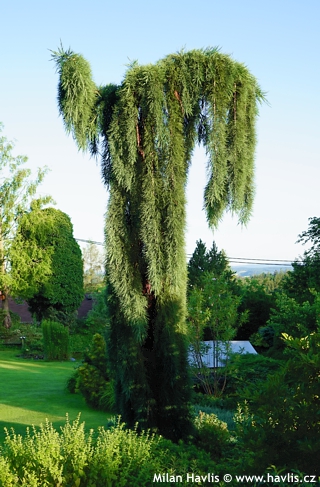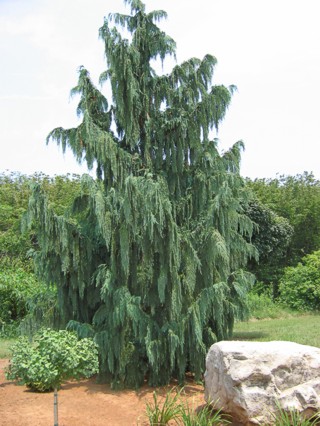
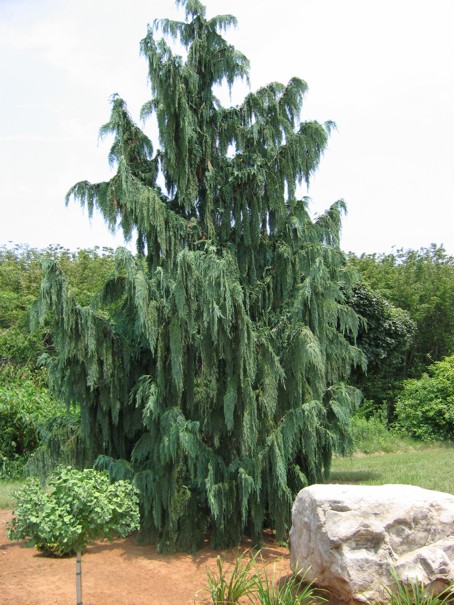
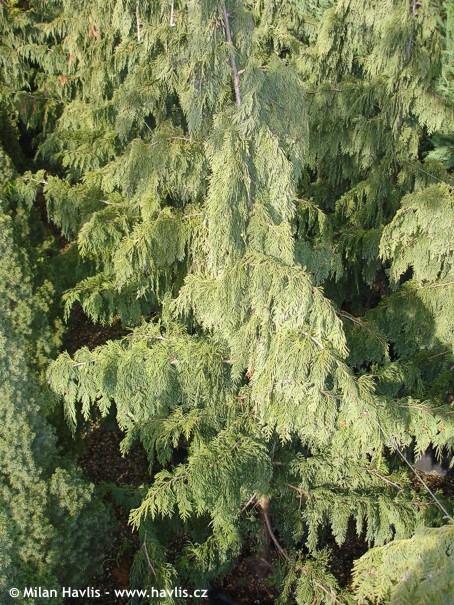
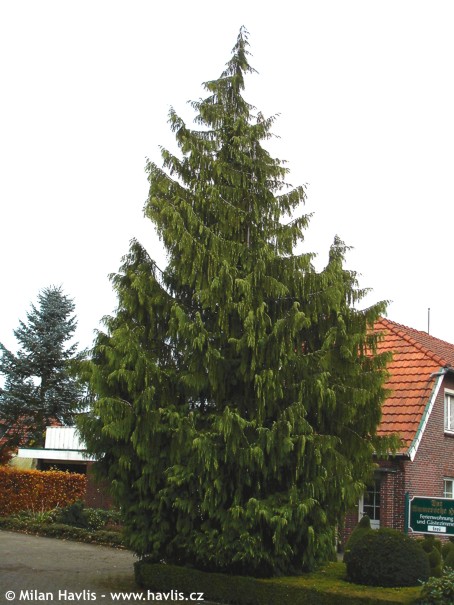
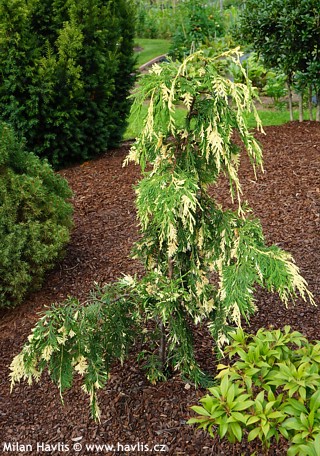
Chamaecyparis nootkatensis 'PENDULA' Nootka cypress

 Symbivit Tric (arbuscular)
 Symbivit (arbuscular)
Chamaecyparis
The genus Chamaecyparis comprises a small group of coniferous trees native exclusively to eastern Asia and the western regions of North America. Botanically, it belongs to the cypress family and is characterised by its fine branch structure, scale‑like foliage and remarkable diversity of forms and colours, which has made it one of the most important genera of ornamental conifers. The genus was first formally described by Stephan Ladislaus Endlicher (1804–1849) in the first half of the nineteenth century, at a time when Europe was becoming increasingly familiar with the flora of the Far East. Fossil evidence suggests that the ancestors of modern false cypresses were once far more widely distributed, making the genus another example of woody plants that survived major climatic shifts in restricted refuges.
Weeping forms of nootka cypress are darlings among conifers. Their unique structure makes the tree look like a conifer with veils. The main branches are horizontal and deflected, lateral branches are 100% drooping. We know that the species comes from North America (Alaska, British Columbia) but we found the botanists puzzled when they are to name it correctly. It appears that the plant hybridizes readily with anything willing to cross hence the difficulties with its classification. Formerly it was called cupressus, later xanthocyparis, now we believe that chamaecyparis is the right thing, but some foresee its future as callitropsis.
Weeping forms of nootka cypress are darlings among conifers. Their unique structure makes the tree look like a conifer with veils. Pendula is a variety where the main branches are horizontal and deflected, lateral branches are 100% drooping. New growths are thread-like, covered with medium green, scale-like needles with blue-green hues.
We know that the species comes from North America (Alaska, British Columbia) but we found the botanists puzzled when they are to name it correctly. It appears that the plant hybridizes readily with anything willing to cross hence the difficulties with its classification. Formerly it was called cupressus, later xanthocyparis, now we believe that chamaecyparis is the right thing, but some foresee its future as callitropsis.
Last update 10-01-2008, 08-09-2019
Weeping nootka cypress is not a tiny piece but a show-stopping specimen. This variety needs time to grow but when it matures it can be anything from 6 to 10 m tall, or even more in parks and arboretums with unlimited space for root system. It dislikes air pollution. Pruning can be done in early spring if you wish to keep the tree smaller. It prefers moist, slightly acidic soil but is adaptable to almost all types of soil. Fully hardy to -34°C (USDA zone 4).

.jpg)