












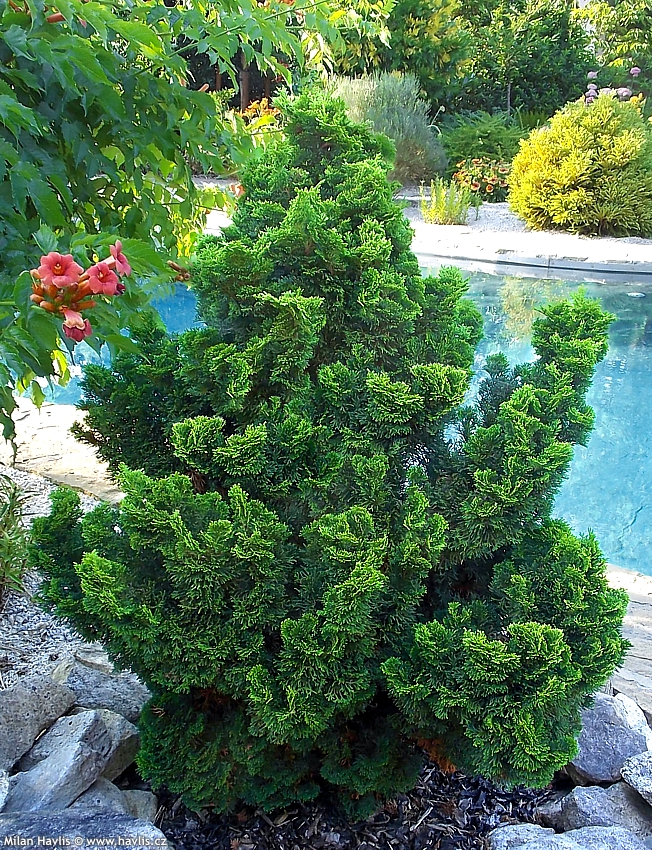
Chamaecyparis obtusa 'NANA GRACILIS' Hinoki cypress

 Symbivit Tric (arbuscular)
 Symbivit (arbuscular)
Chamaecyparis
The genus Chamaecyparis comprises a small group of coniferous trees native exclusively to eastern Asia and the western regions of North America. Botanically, it belongs to the cypress family and is characterised by its fine branch structure, scale‑like foliage and remarkable diversity of forms and colours, which has made it one of the most important genera of ornamental conifers. The genus was first formally described by Stephan Ladislaus Endlicher (1804–1849) in the first half of the nineteenth century, at a time when Europe was becoming increasingly familiar with the flora of the Far East. Fossil evidence suggests that the ancestors of modern false cypresses were once far more widely distributed, making the genus another example of woody plants that survived major climatic shifts in restricted refuges.
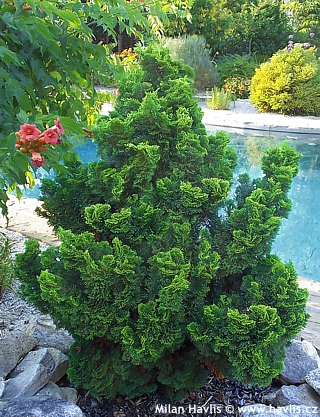
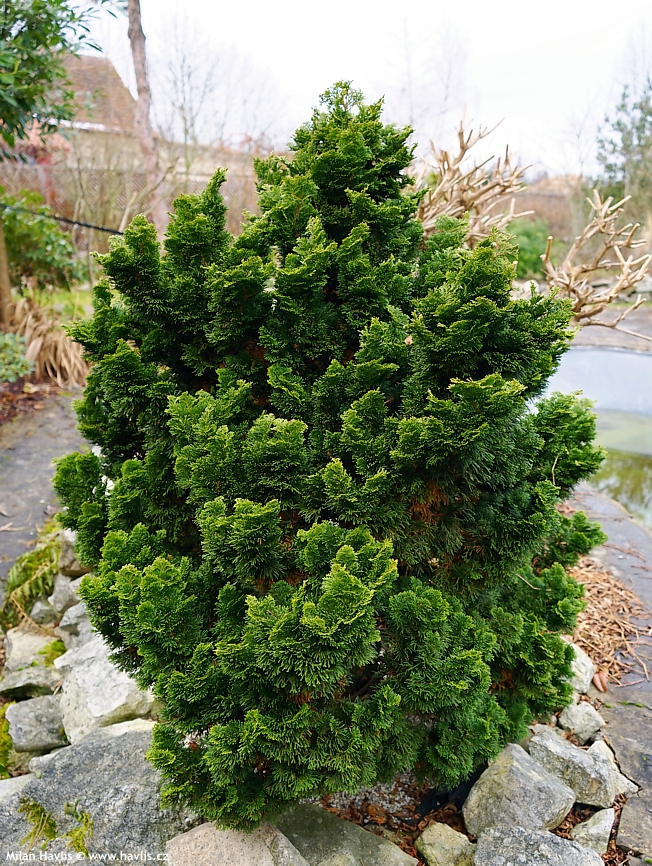
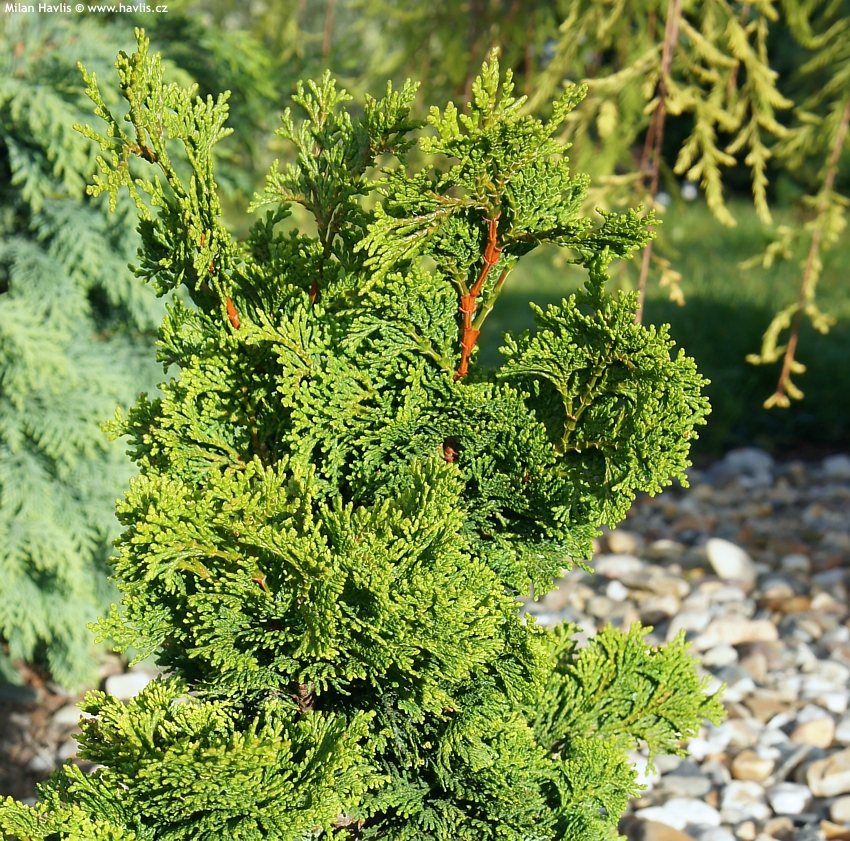
The Hinoki cypress is both a must-see and a must-have thereafter. Its dark green foliage is tightly congested, forming a tiny mound. It forms twisting fan-shaped branchlets in dense tiered layers.
Want to ask how fast it grows? Well it takes the same time as your partner does getting prepared for a formal evening. You just can’t wait. For this reason we mostly offer older plants where time has done its job, helping this extraordinary dwarf conifer grow to an exquisite specimen.
Last update 17-01-2009
Hinoki cypress likes medium fertile, acid to neutral, moist but well-drained soil. Grow it preferably in full sun or only a light shade so that the plant keeps its compact shape and bottom branches. Pruning or trimming can be done in early spring after all frosts. Mulching is recommended for keeping the soil moist. Fully hardy to -29°C (USDA zone 5), possibly a little more.
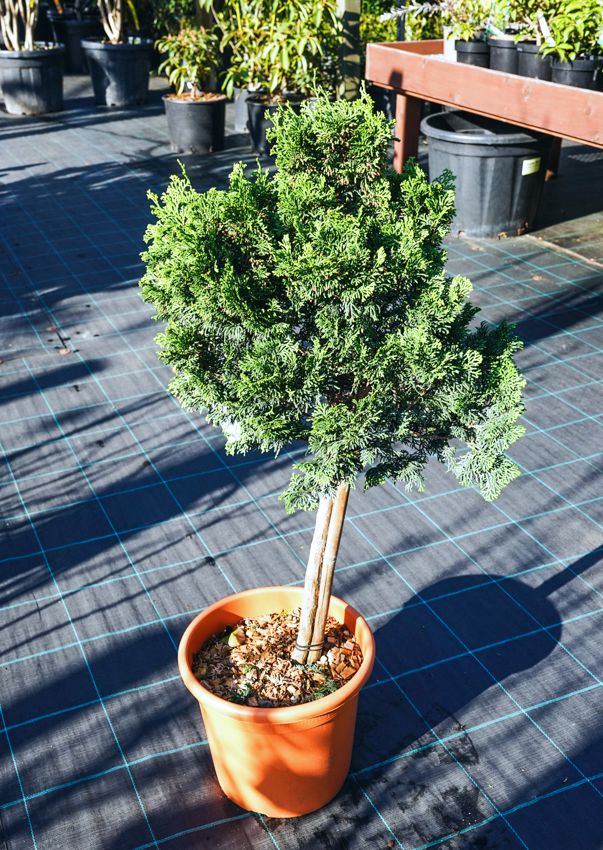

Goods are shipped all over Europe. For Russia and U.K. and for further details please read about SHIPPING OPTIONS HERE.
Are you interested in a serious discount for orders NOV-FEB? Check your options here.
THE PRICES INCLUDE VAT of 15%. For quick conversion you can use 1 CZK = approx. 0.04 EUR
- STANDARD QUALITY - Plants of this group are 1st class quality with number of branches and overall density adequate to their size and age, considering they were container grown.
- DE LUXE QUALITY - This label guarantees a luxurious quality of manually selected plants that, compared to their height and age, are exceptionally dense and beautiful.
- EXTRA - These plants are usually mature and bigger specimens with exceptional overall appearance.
- STANDARD (as described in the plant form) means a tree with a trunk of 190-210 cm and a crown at the top, unless specified differently. The commercial size for trees is their girth measured in the height of 1m from ground.
- HOBBY - These plants are of the same quality as our standard-quality plants but younger and therefore cheaper.
- SHRUB - a woody plant with branches growing bushy from the ground level.
- HALF-STANDARD or MINI-STANDARD - a small tree with shorter trunk, its size is usually specified.
- FEATHERED - These are trees with branches growing already from the base of the trunk and up along the stem.
- GRASSES and PERENNIALS - Sizes given usually read the diameter of the pot or the clump, as specified.
