











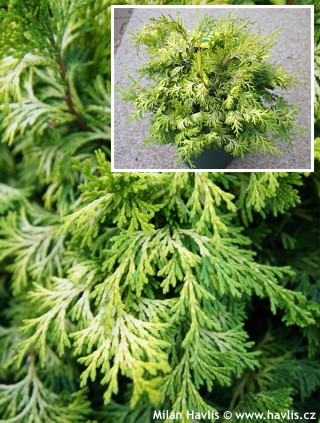
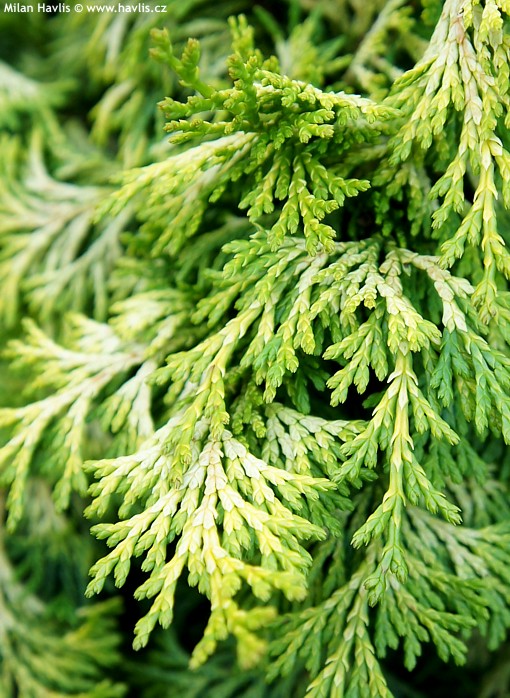
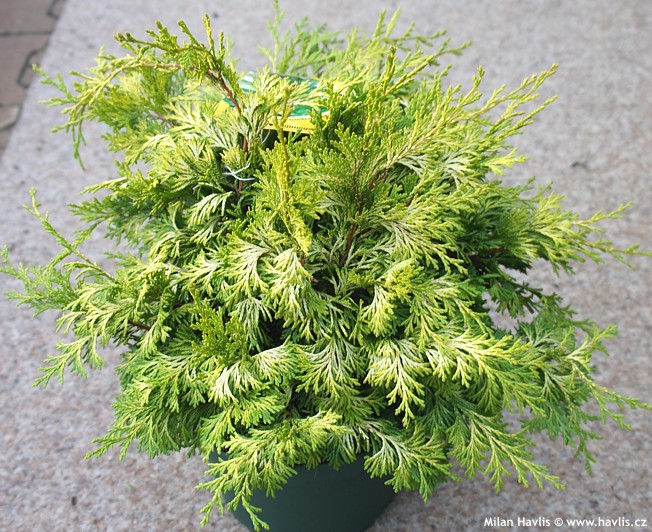
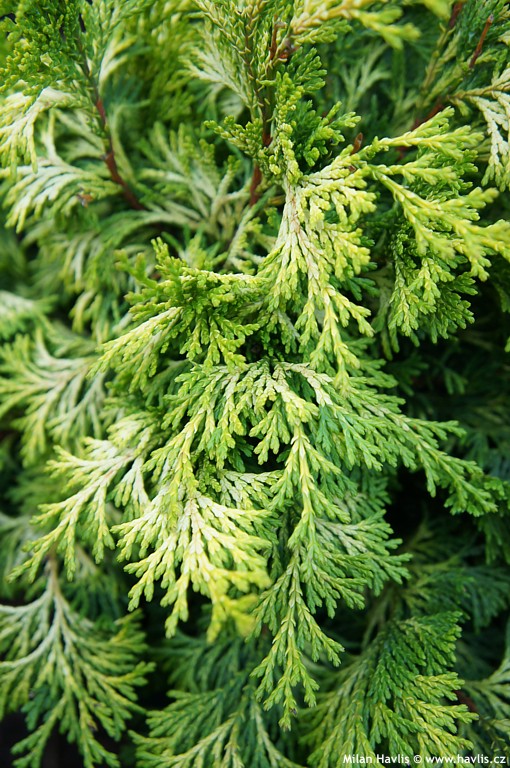
Chamaecyparis obtusa 'RASHAHIBA' Hinoki cypress

 Symbivit Tric (arbuscular)
 Symbivit (arbuscular)
Chamaecyparis
The genus Chamaecyparis comprises a small group of coniferous trees native exclusively to eastern Asia and the western regions of North America. Botanically, it belongs to the cypress family and is characterised by its fine branch structure, scale‑like foliage and remarkable diversity of forms and colours, which has made it one of the most important genera of ornamental conifers. The genus was first formally described by Stephan Ladislaus Endlicher (1804–1849) in the first half of the nineteenth century, at a time when Europe was becoming increasingly familiar with the flora of the Far East. Fossil evidence suggests that the ancestors of modern false cypresses were once far more widely distributed, making the genus another example of woody plants that survived major climatic shifts in restricted refuges.
Rashahiba is a dwarf Hinoki cypress with fantastic colour play. This evergreen conifer is rich green in the centre of the shrub, and makes thin sprays of bright yellow-green and light yellow new leaves. The new branches are thin, thread-like, rich yellow, and turn orange brown in summer. It grows slowly into a widely pyramidal shape with arching new growths
Last update 06-02-2013
Hinoki cypress likes medium fertile, acid to neutral, moist but well-drained soil. Grow it preferably in full sun or only a light shade so that the plant keeps its compact shape and bottom branches. Pruning or trimming can be done in early spring after all frosts. Mulching is recommended for keeping the soil moist. Fully hardy to -29°C (USDA zone 5), possibly a little more.