Coreopsis grandiflora 'EARLY SUNRISE' tickseed, coreopsis

 Symbivit Tric (arbuscular)
 Symbivit (arbuscular)
Coreopsis
The genus Coreopsis, described by Carl Linnaeus in 1753, comprises nearly forty predominantly North American species that evolved in open prairies, on dry slopes and along moist margins of wetlands, and this ecological breadth explains their present-day reliability in gardens. Linnaeus chose a name derived from the Greek koris and opsis, meaning “the appearance of a bug”, because the dry achenes resemble tiny insects, a small example of his observational humour. The taxonomy of the genus was not always settled and in 18th and 19th centuries various synonyms appeared, such as Calliopsis and Acispermum, before modern revisions unified the group, particularly the work of Ernest E. Sherff (1882–1966). Coreopsis holds strong place in American culture: Coreopsis tinctoria was used by Indigenous peoples for dyeing textiles, and several US states have chosen different species as their official flowers – Florida, Mississippi, Tennessee and Maryland.
Coreopsis grandiflora, large-flowered tickseed, has become a symbol of the North American prairies. It originates from the central and southern regions of the United States, where it grows in sunny, light soils and naturally appears in a mosaic of grasslands, rocky slopes and roadside habitats. Although it is an important species, it is not the most widespread in the wild. In gardens, however, the opposite is true – it is among the most popular and is also one of the most frequently used species for hybridisation. It was described by Thomas Nuttall (1786–1859), a British botanist and traveller who spent much of his life exploring the American interior. His journals show that he was struck not only by the size of the flowers but also by the plant’s ability to colonise disturbed ground, a common feature during the settlement of the West, when landscapes were rapidly changing under human influence. This closeness to human activity explains why the species entered gardens so early: it was readily available, dependable and felt like a fragment of prairie carried into a cultivated setting.
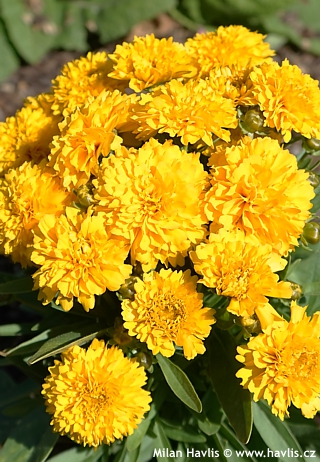
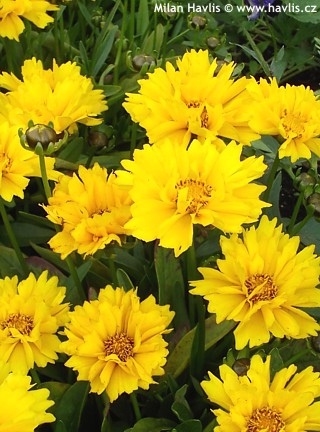
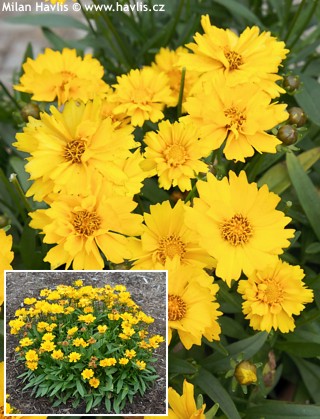
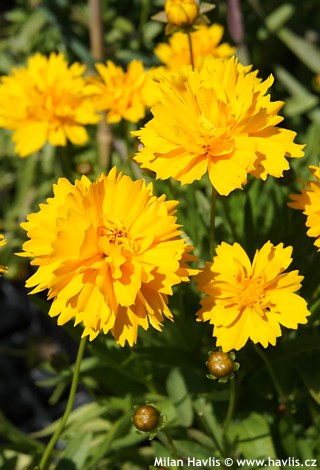
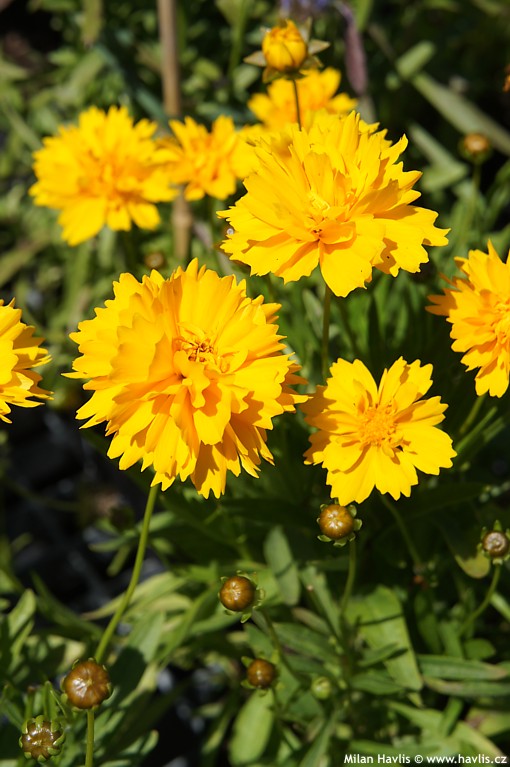
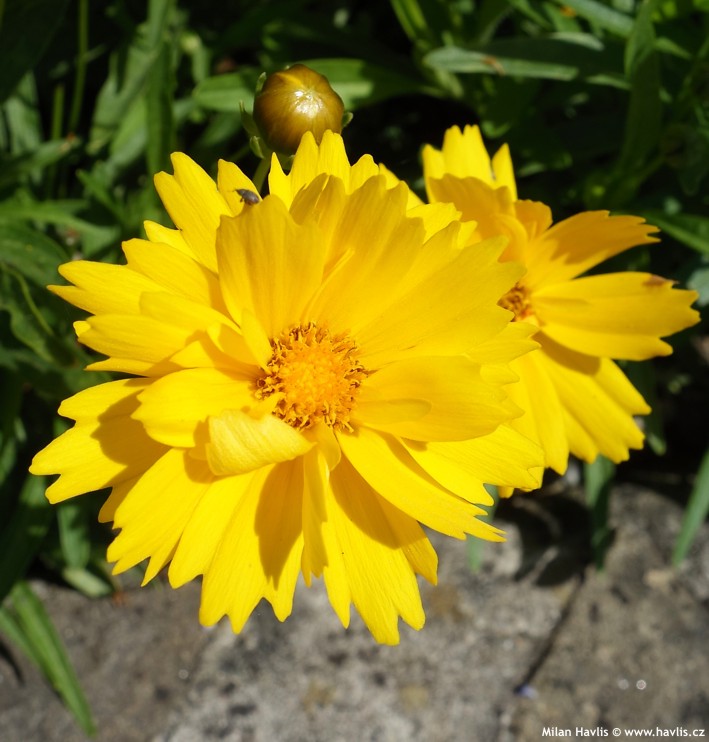
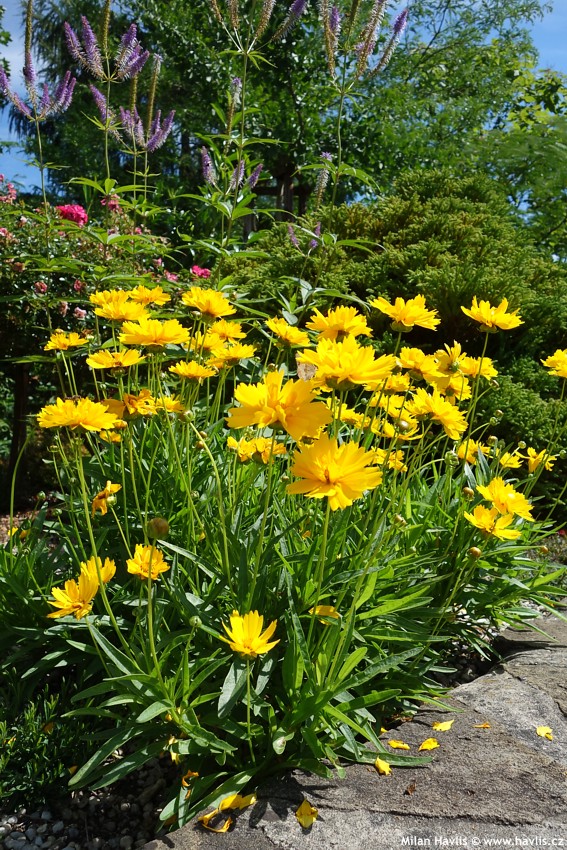
Early Sunrise is a profusely flowering tickseed with an extremely long bloom period. It produces semi-double or double flowers of golden yellow colour from early June until late autumn if the weather is sunny and relatively warm. The stems are a little shorter than other grandiflora tickseeds, only about 30 cm tall. Deadheading will enhance the flowering but is not a must, it will still flower abundantly every year and all summer long. Early Sunrise tickseed forms a bushy clump with healthy, light to mid green, narrowly lanceolate leaves, and is not invasive (not selfseeding like some other tickseed species).
Last update 11-12-2014
Large-flowered tickseed is a reliable perennial as long as its origins are respected, meaning sunny and airy sites. It requires full sun and well-drained soil that must never remain wet, otherwise it loses vigour and is prone to rotting in winter. Watering is needed only during extreme drought, as the species is naturally adapted to alternating wet and dry periods. It does not require fertilising, or only very light feeding with compost in spring, because rich soil and the use of artificial, commonly nitrogen-based fertilisers lead to lush but unstable growth and eventual exhaustion of the plant. Spent flowers should be removed regularly together with their stems to prolong flowering and maintain a clean appearance of the clump. Cut the entire plant back to about 3–5 cm above ground level in spring once all frosts have passed. It is not reliably long-lived in containers. Wind and exposed positions do not trouble it. Hardiness varies slightly between cultivars but is generally around minus 29 °C (USDA zone 5), so in temperate climates it overwinters without difficulty and requires no special protection.