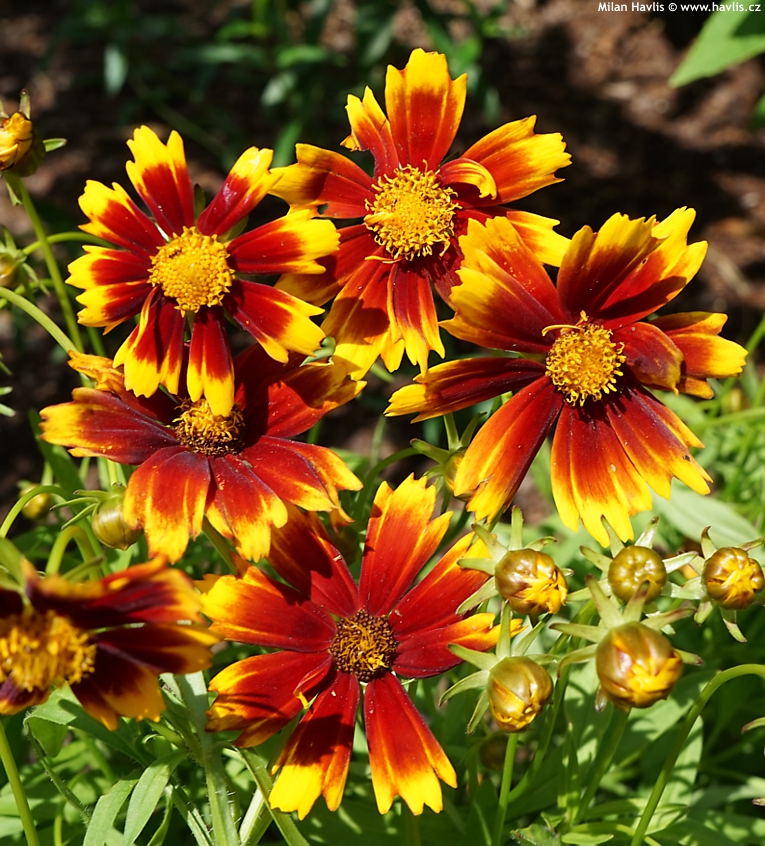
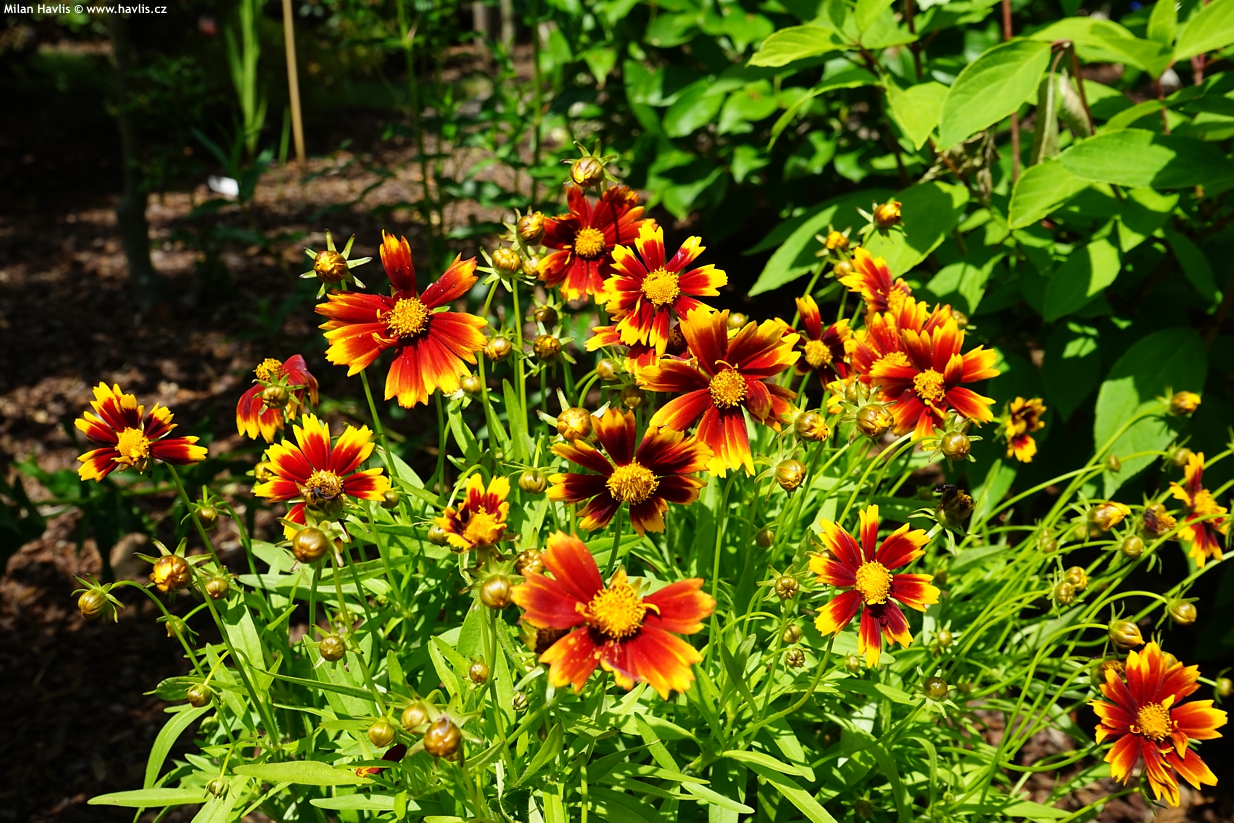
Coreopsis UPTICK™ GOLD & BRONZE 'Baluptgonz' tickseed

 Symbivit Tric (arbuscular)
 Symbivit (arbuscular)
Coreopsis
The genus Coreopsis, described by Carl Linnaeus in 1753, comprises nearly forty predominantly North American species that evolved in open prairies, on dry slopes and along moist margins of wetlands, and this ecological breadth explains their present-day reliability in gardens. Linnaeus chose a name derived from the Greek koris and opsis, meaning “the appearance of a bug”, because the dry achenes resemble tiny insects, a small example of his observational humour. The taxonomy of the genus was not always settled and in 18th and 19th centuries various synonyms appeared, such as Calliopsis and Acispermum, before modern revisions unified the group, particularly the work of Ernest E. Sherff (1882–1966). Coreopsis holds strong place in American culture: Coreopsis tinctoria was used by Indigenous peoples for dyeing textiles, and several US states have chosen different species as their official flowers – Florida, Mississippi, Tennessee and Maryland.
Hybrid tickseeds represent a broad group of interspecific hybrids created by combining several North American species, each contributing specific traits to the final genetic mix. C. grandiflora increases flower size and ensures an early start to flowering, C. lanceolata adds stem strength, drought tolerance and the ability to grow in poor soils, C. tinctoria provides genetic variability and a wide colour range, C. rosea contributes pastel shades and a finer texture, and C. verticillata supplies a fibrous root system that improves winter survival and reduces the risk of rot. Breeding and selection are carried out under conditions of high humidity, summer drought and temperature fluctuations in order to eliminate lines prone to the typical weaknesses seen in some coreopsis. Most modern hybrids are partially or fully sterile, which prolongs the flowering period and maintains a more compact habit without self‑seeding. The result is a group of plants well adapted to variable European climates, where winter moisture, summer heat and irregular rainfall alternate throughout the season.
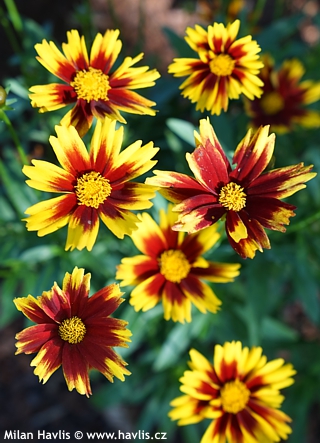
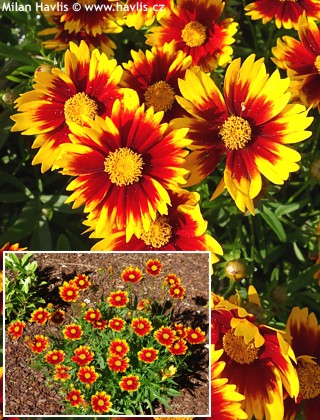
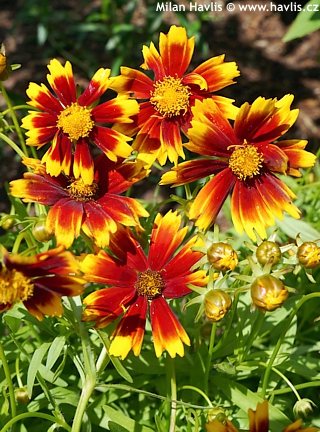
The aim of the UPTICK™ series of perennial tickseed was to select freely flowering plants of attractive colours and reliable hardiness. UPTICK™ GOLD & BRONZE has vibrant golden yellow, daisy-like flowers with deep mahogany eye around a centre packed with numerous, short, golden yellow stamens. They come out in abundance from June until the first frost. Stems are about 25-35 cm tall, upright, and strong enough not to bend. The plant makes a dense, compact, and rather wide tuft. Leaves are medium green, narrowly three-lobed and resistant to common diseases.
The UPTICK™ series bred by Blair Winner from Santa Paula in California, USA. Patent No. PP28882 was granted in 2018.
Last update 01-07-2020
Thread‑leaf tickseed and their hybrids are reliable perennials provided their origins are respected: they require sunny, open and well‑ventilated sites. They need full sun and a free‑draining soil that must never remain permanently wet, as this leads to loss of vigour and makes the plants prone to winter rot. Watering is necessary only during periods of extreme drought, since they are naturally adapted to alternating wet and dry conditions. They do not require feeding, or only a light application of compost in spring, because overly rich soils and the use of artificial fertilisers result in lush but unstable growth and eventual weakening of the plant. Removing spent flowers together with their stems helps to prolong the flowering period and maintains a clean, tidy appearance. The entire plant should be cut back to about 3–5 cm above ground level in spring once all frosts have passed. They are not reliably long‑lived in containers. Wind and exposed positions do not trouble them. Hardiness varies slightly between cultivars, but most tolerate around minus 29 °C (USDA zone 5), which means they overwinter without difficulty in typical Central European conditions and require no special protection.