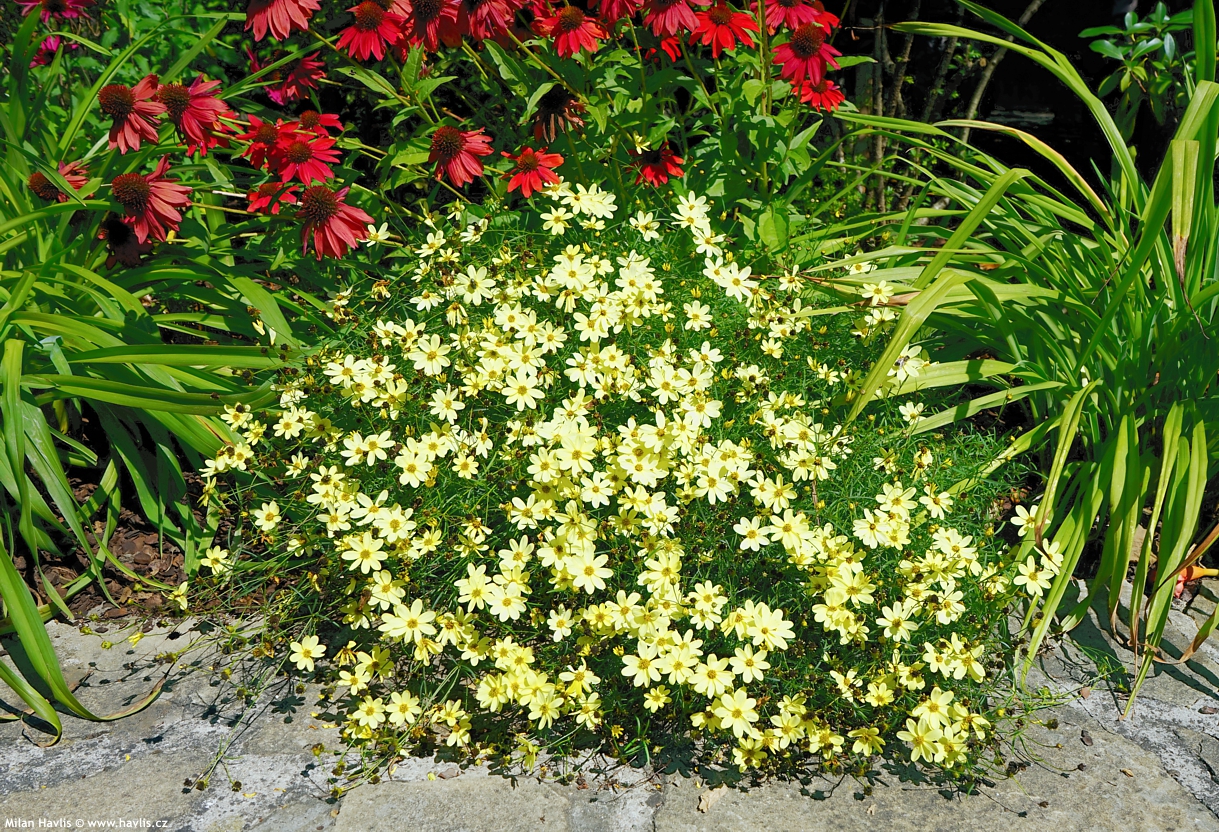
Coreopsis verticillata 'MOONBEAM' thread leaf coreopsis, tickseed

 Symbivit Tric (arbuscular)
 Symbivit (arbuscular)
Coreopsis
The genus Coreopsis, described by Carl Linnaeus in 1753, comprises nearly forty predominantly North American species that evolved in open prairies, on dry slopes and along moist margins of wetlands, and this ecological breadth explains their present-day reliability in gardens. Linnaeus chose a name derived from the Greek koris and opsis, meaning “the appearance of a bug”, because the dry achenes resemble tiny insects, a small example of his observational humour. The taxonomy of the genus was not always settled and in 18th and 19th centuries various synonyms appeared, such as Calliopsis and Acispermum, before modern revisions unified the group, particularly the work of Ernest E. Sherff (1882–1966). Coreopsis holds strong place in American culture: Coreopsis tinctoria was used by Indigenous peoples for dyeing textiles, and several US states have chosen different species as their official flowers – Florida, Mississippi, Tennessee and Maryland.
Coreopsis verticillata, thread-leaf tickseed, belongs among the tougher members of the genus. It originates from the Appalachian Mountains and adjacent regions of the eastern United States, where it grows on dry, stony slopes, in open woodlands and along roadsides, in habitats that alternately overheat, dry out and rehydrate. The species was described by André Michaux (1746–1802), the French botanist who, during his American expeditions in the late eighteenth century, collected an enormous amount of plant material and was particularly fascinated by species with fine, thread‑like foliage and their ability to survive where one would not expect it and where other coreopsis species would give up. Thanks to this resilience, the species soon found its way into gardens and has remained near the top of the rankings of so‑called foolproof perennials ever since.
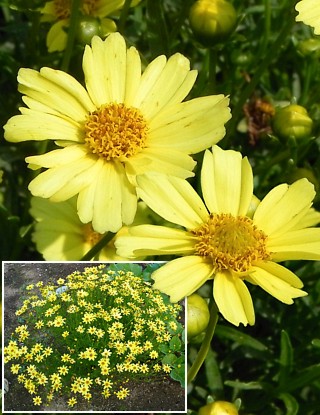
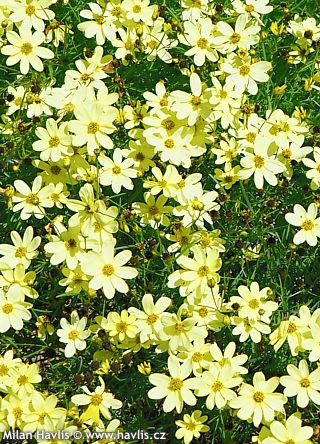
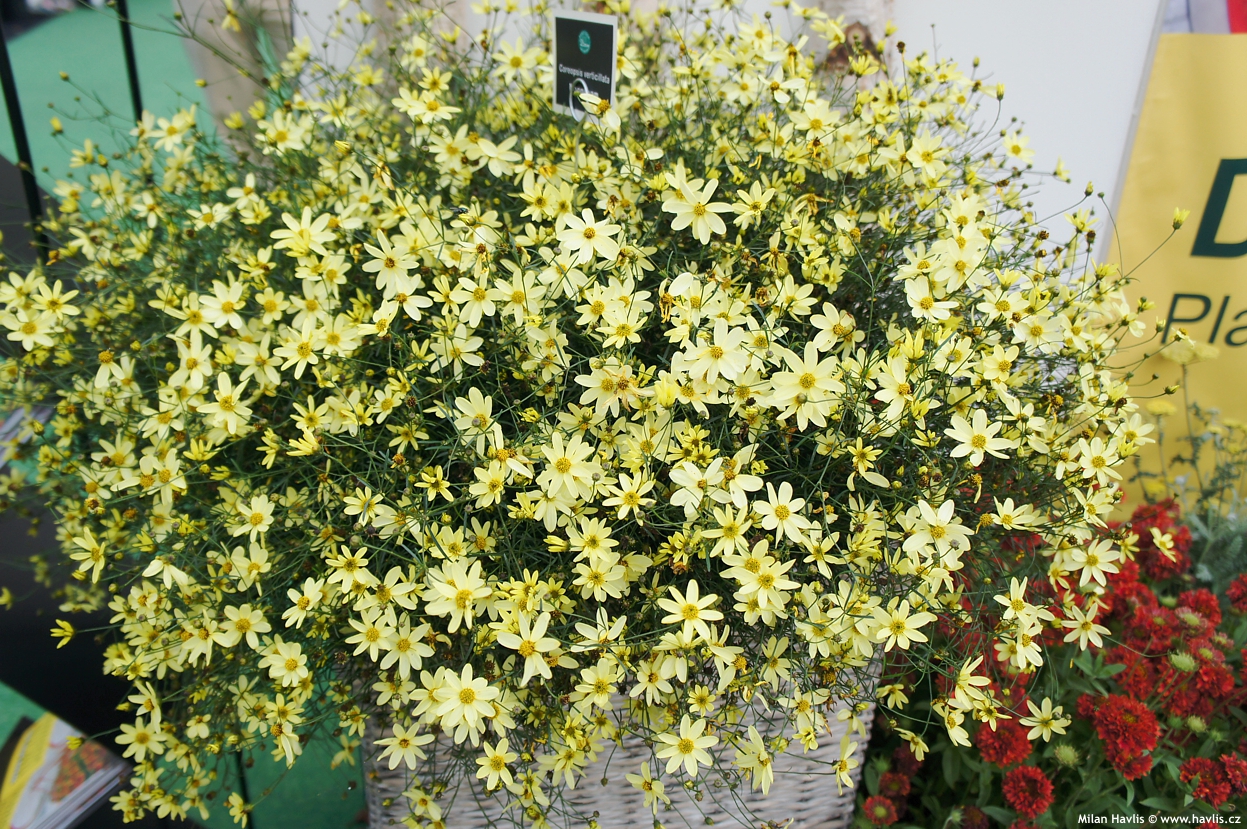
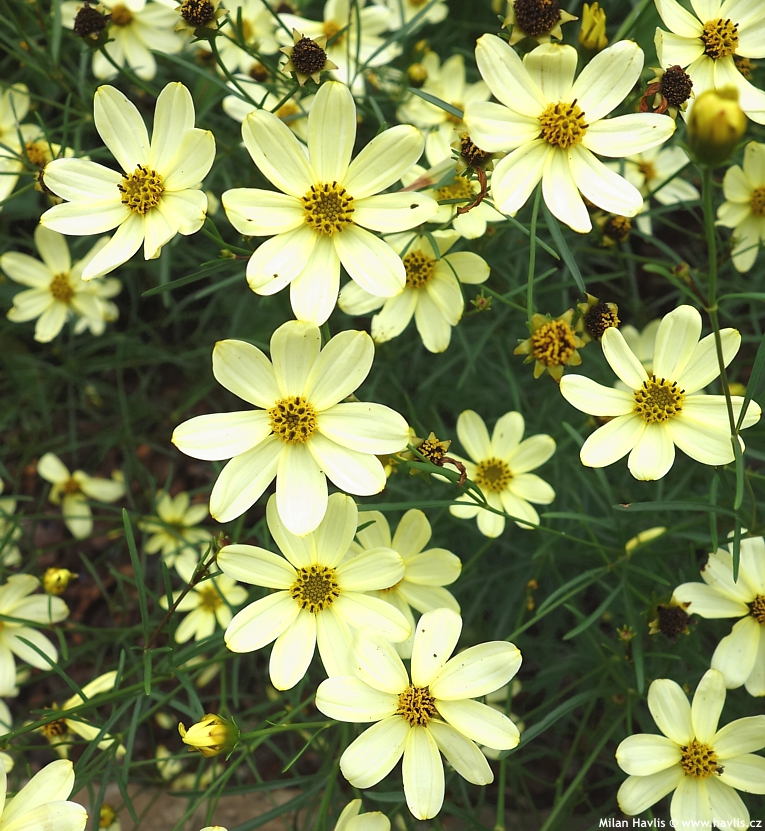
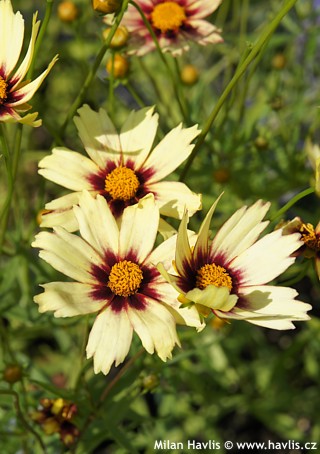
Moonbeam is one of the most reliable and sought-after varieties of thread leaf coreopsis. Its small, daisy-like flowers are light yellow just like moonlight. Its extremely long flowering period begins in early summer and ends in the last warm days of autumn. Deadheading will enhance flowering but is not necessary, it flowers abundantly every year. Thread-like leaves are very narrow, rich green and not very dense. Stems are thin and slightly procumbent at the peak of the season. Moonbeam coreopsis will not self-seed.
Last update 09-08-2014
Thread‑leaf tickseed is one of the most reliable species of the entire genus because it is significantly more tolerant of heavier soils than most other tickseeds. It requires full sun or light partial shade for only part of the day, which is essential for maintaining a dense clump and long flowering. It thrives best in light, sandy loam that drains well. It does not tolerate permanently wet or heavy clay soil, as its fine, fibrous roots are adapted to quick drying and easily rot in winter under such conditions. Watering is unnecessary except during the first one or two months after planting. Feeding is not required, and in fact richer soils tend to produce lush but unstable growth that collapses in summer. Removing spent flowers prolongs the flowering period and keeps the clump tidy, although it is not essential for the plant’s survival. The plant is not cut back in autumn, as its fine stems protect the crown from winter moisture. After the danger of all frosts in spring, cut the whole plant back to the ground. It can also be grown in containers with good drainage. It tolerates windy and exposed sites and is hardy to at least -30 °C (USDA zone 5).

.jpg)