

































.jpg)
Cornus kousa (var. chinensis) Japanese dogwood

 Symbivit Tric (arbuscular)
 Symbivit (arbuscular)
Cornus
Cornus is a genus that botanists rightly regard as true aristocracy among woody plants. It comprises approximately 50–60 species of trees and shrubs distributed mainly across the temperate regions of the Northern Hemisphere, with centres of diversity in East Asia and North America. Fossil records confirm its presence as early as the Tertiary period, and the first scientific description of the genus was published by Carl Linnaeus (1707–1778) in 1753 in his Species Plantarum. For centuries, dogwoods have accompanied human culture not only as ornamental plants, but also as sources of exceptionally hard timber, medicinal substances and symbolic meaning in folk traditions, where they often represent strength, order and longevity.
Japanese dogwood (Cornus kousa) originates from East Asia, where it occurs naturally in Japan, Korea, and parts of China. It was scientifically described in the 19th century based on Asian plant material examined by Henry Fletcher Hance (1827–1886), who published it under the name Cornus kousa. The species was introduced into European and North American botanical collections, and later into nursery production, during the wave of botanical exploration and plant exchange at the turn of the 19th and 20th centuries. It was valued primarily for its pronounced seasonal interest, offering ornamental appeal from spring through autumn, and for its edible fruits. Japanese and Chinese botanists studied its variability in the wild and, in the past, described local forms that were treated as two subspecies, ssp. kousa and ssp. chinensis. While some authors regarded ssp. chinensis as a more vigorous, loosely flowering form with larger inflorescences and considered it worthy of formal recognition, modern taxonomy generally prefers to treat the species simply as Cornus kousa, without further infraspecific distinction.
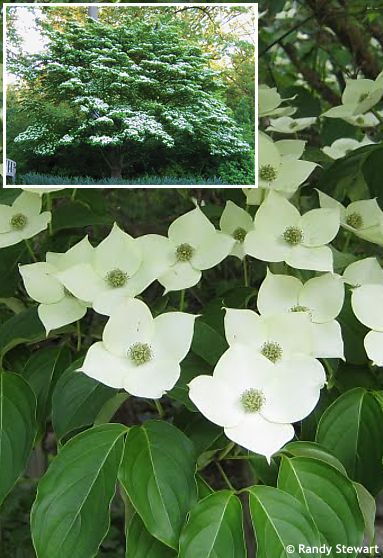
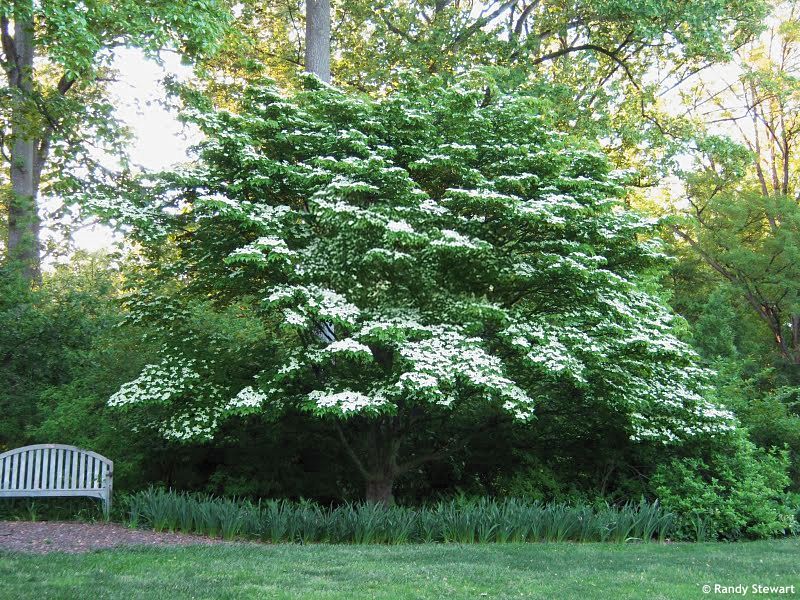
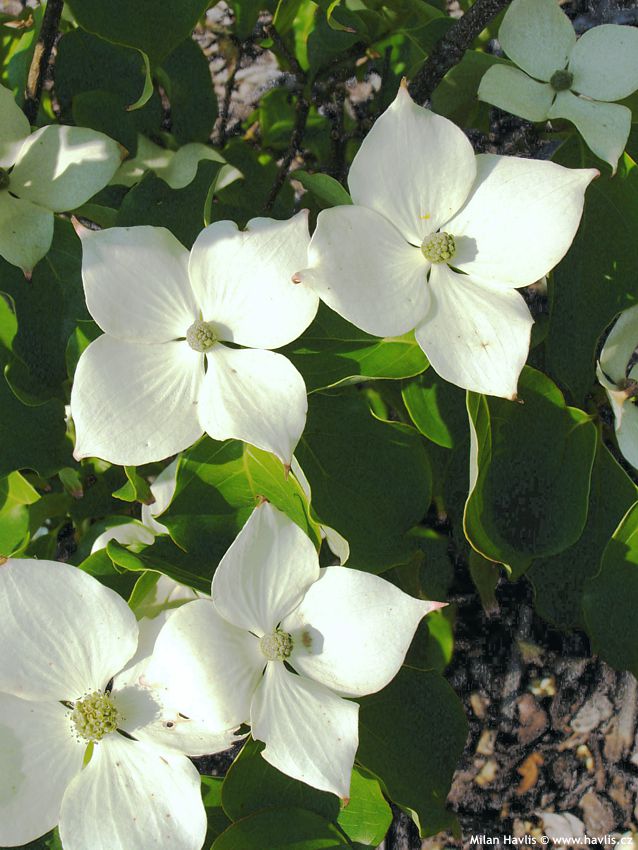
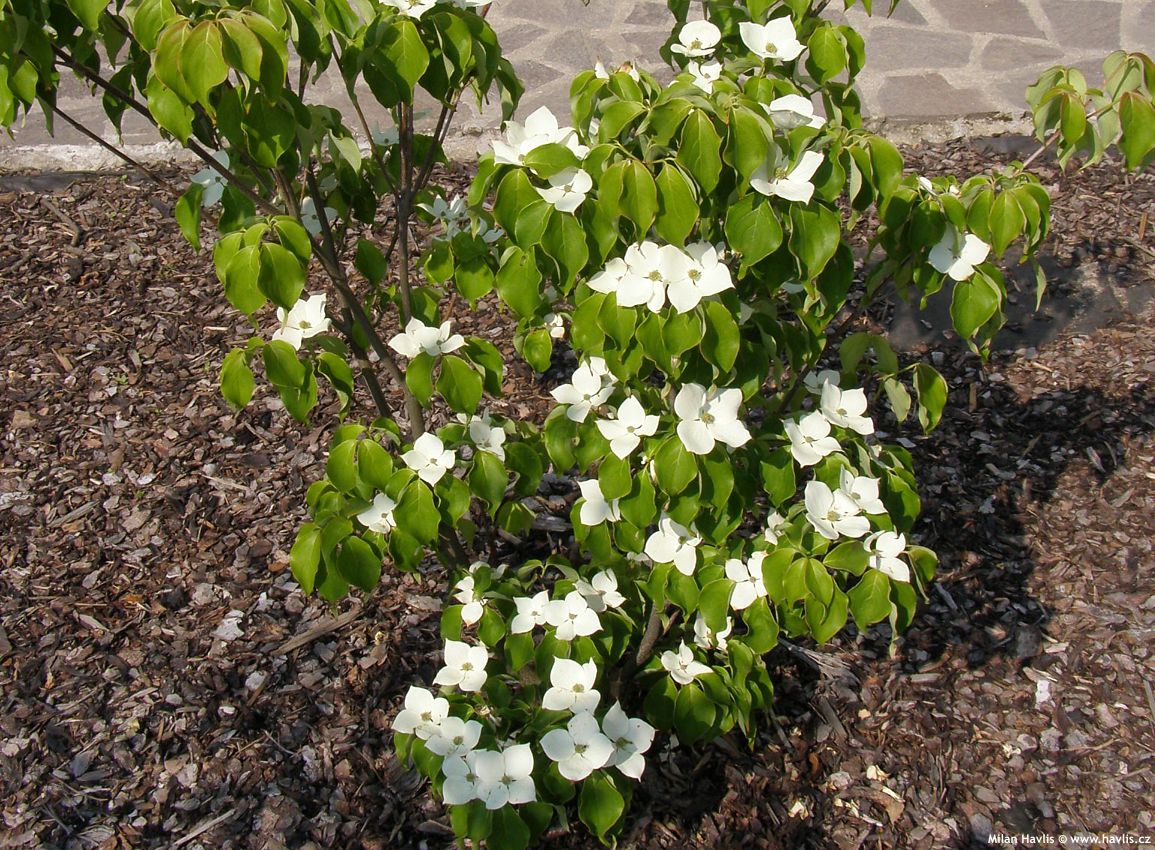
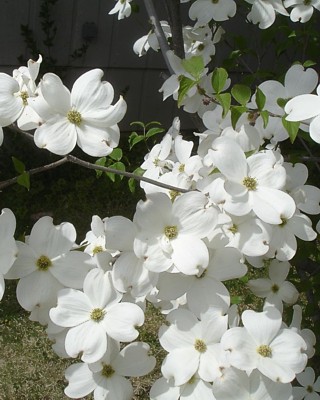
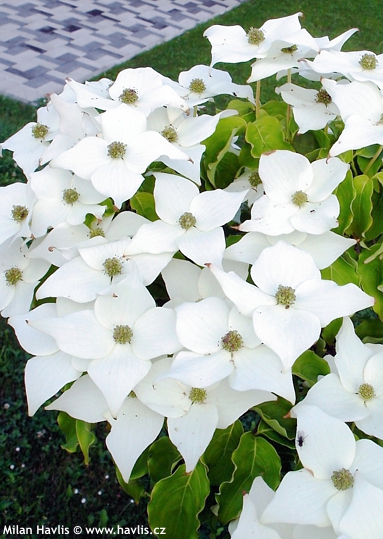
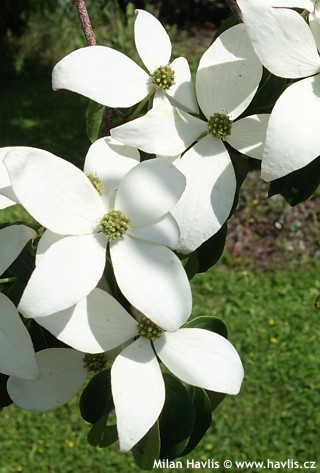
Japanese dogwood is a showy, beautifully structured deciduous shrub native to Asia. It most often flowers in June and, like many plant species, it is something of a trickster, because the attractive parts visible at first glance are not the true flowers themselves but the coloured bracts surrounding the actual inflorescence. The true flowers are small, yellow-green and inconspicuous, arranged in a compact, spherical head. This is encircled by four prominent bracts that are narrowly ovate to lanceolate, distinctly pointed, initially slightly greenish and later creamy white, with the entire inflorescence reaching a diameter of approximately 7 to 13 cm. Because flowering takes place in the height of the season against a backdrop of fully developed foliage, the colour contrast is striking and, on older, heavily flowering plants, often breathtaking.
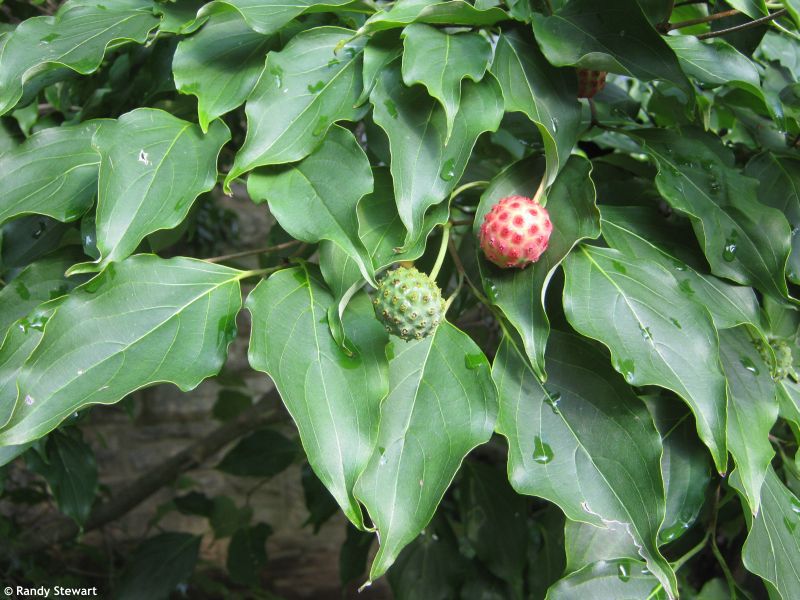
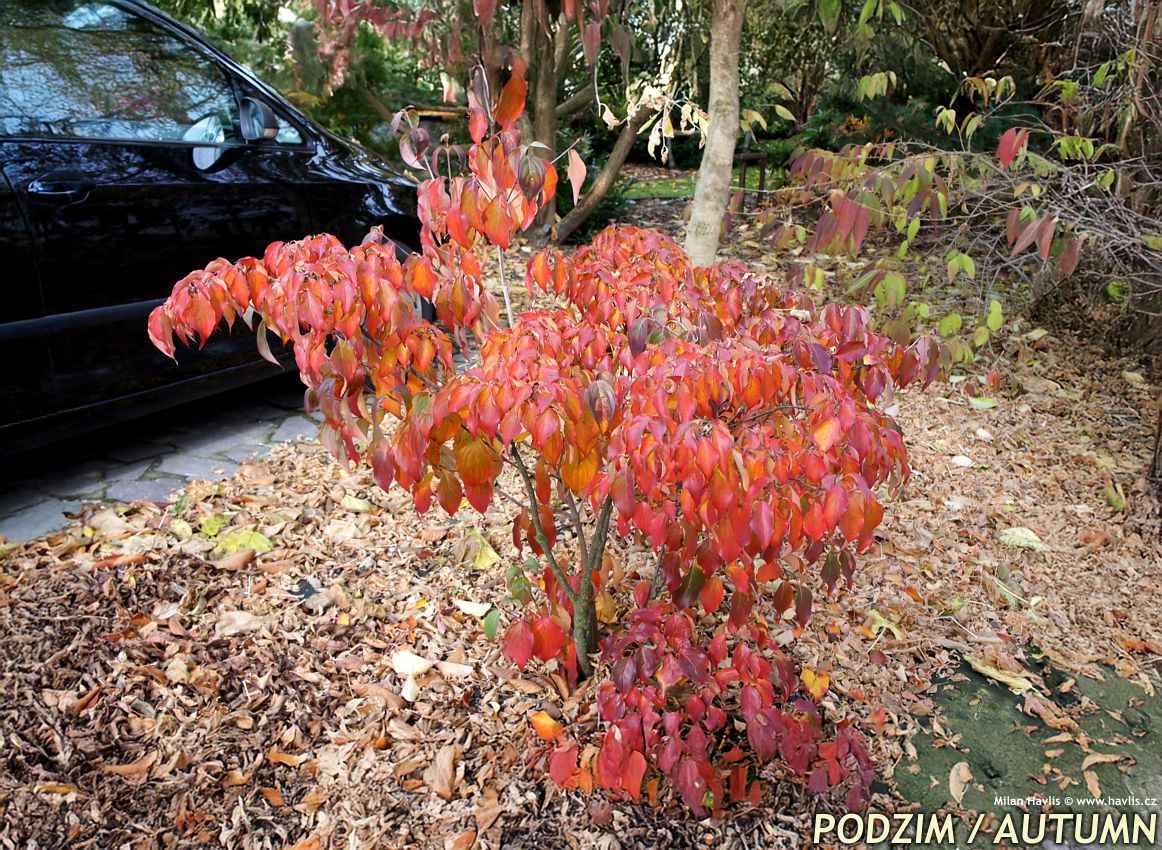
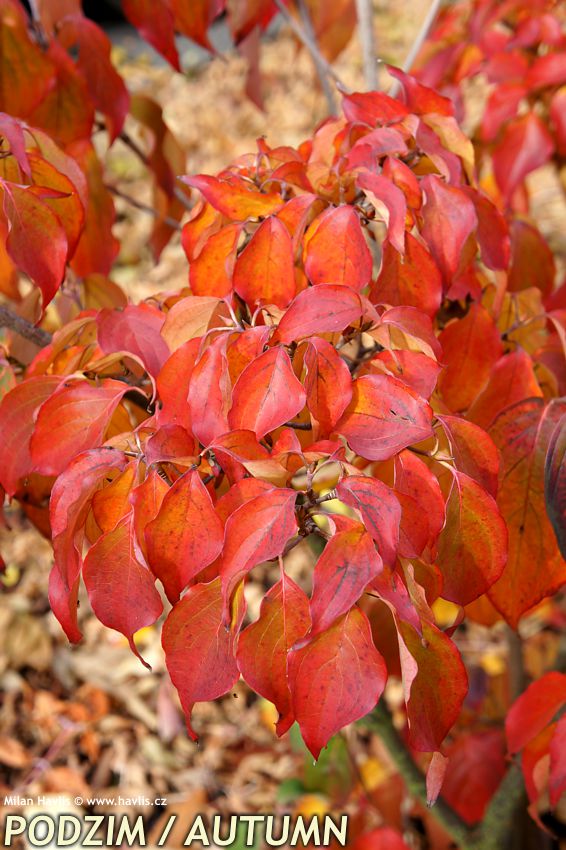
The leaves are deciduous, elliptic to ovate with a pointed tip, usually 4 to 10 cm long, with slightly undulate margins and often gently drooping, reminiscent of pear leaves. In autumn they turn vivid shades of fiery orange, red and deep wine tones. Before that, however, the fruits ripen, most commonly from late August into early September. These are 2 to 3 cm wide, spherical fruits resembling lychee, with a raspberry-pink skin and orange flesh. They are edible and, in some clones, quite palatable, but they contain large seeds, so the amount of flesh is limited and the skin may be slightly bitter.
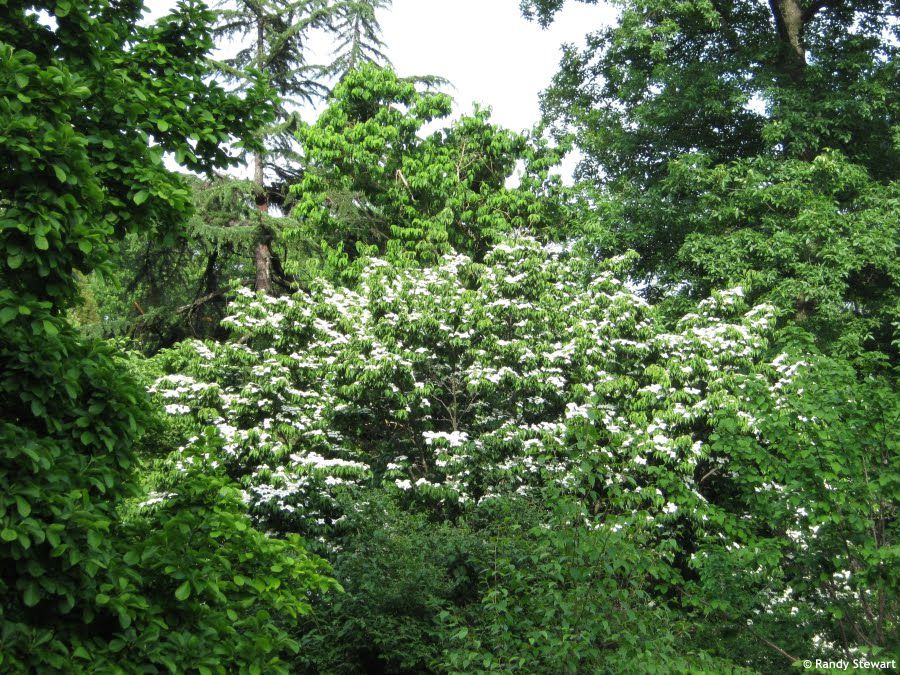
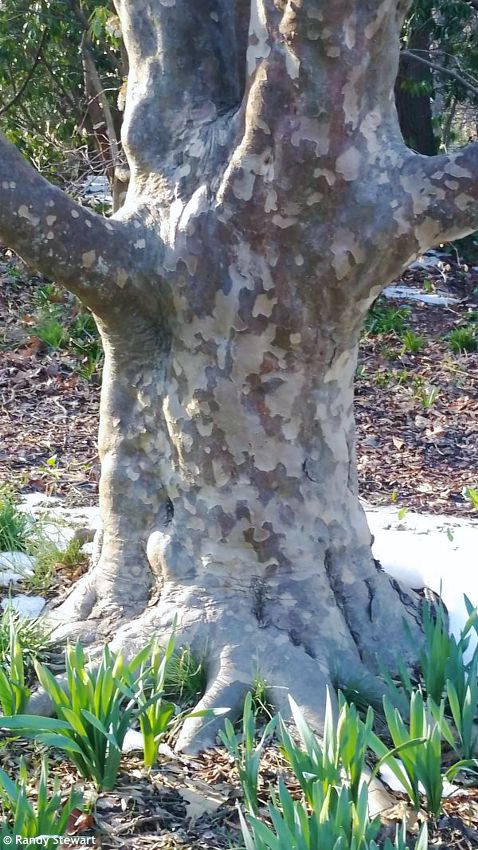
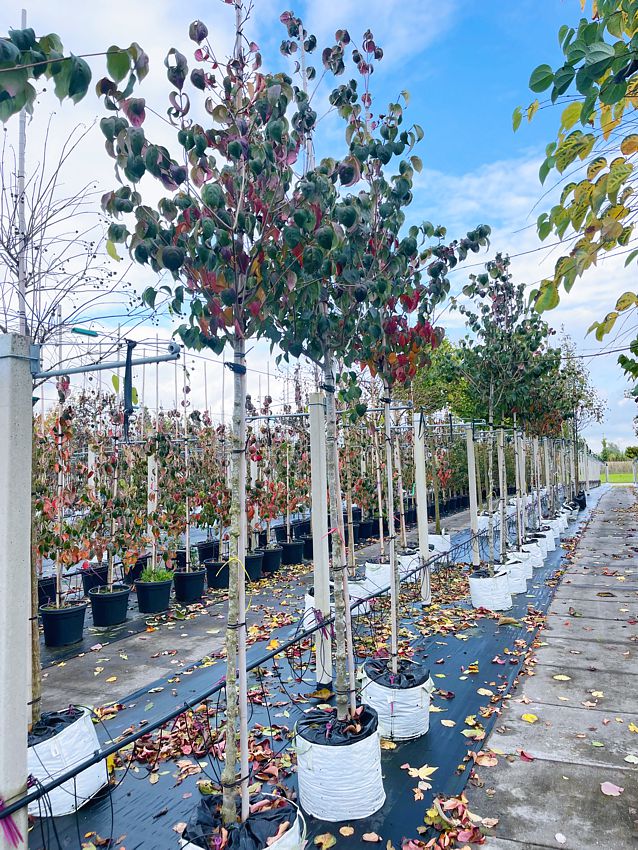
Japanese dogwood forms a spreading shrub or small tree with a characteristic wide V-shaped structure, botanically described as a funnel-shaped habit. It is often multi-stemmed and only rarely trained as a single-stem tree. Growth is moderate and follows a distinctive pattern: the plant first produces longer shoots, which in subsequent years are filled in with short lateral branches, creating flat, richly layered tiers that give rise to the characteristic tiered crown effect. Under local conditions it typically reaches 3 to 5 metres in height and spread, while in its native range and under ideal growing conditions in open landscapes it can reach twice as tall and wide. Older trunks develop an attractive, mottled, exfoliating bark in shades of grey to light brown. It is extremely long-lived, there are recorded specimens over 1300 years old.
In the past, Japanese dogwood was separated in parts of its range, especially in China, as var. chinensis and for a long time was also listed in nurseries as a distinct entity based on its more vigorous growth, larger bracts and looser inflorescence structure. These traits, however, vary continuously across the natural range of the species and do not represent stable diagnostic differences. Modern nomenclature no longer distinguishes them and includes all such forms within the broadly defined species Cornus kousa. The name var. chinensis therefore survives today mainly in horticultural practice as a historical or commercial term for strongly growing populations of Chinese origin, rather than as a valid botanical unit.
Japanese dogwoods prefer acidic to very acidic, fertile and light soils that do not dry out over long periods. Planting in partial shade, where they are sometimes said to be protected from summer drought, has proven unsatisfactory, as plants there usually flower less and develop sparser crowns. Much better results are achieved in full sun, combined with a good mulch layer that helps retain soil moisture and protects the root system. During prolonged dry periods, supplemental watering is advisable, especially for younger plants. In sunny positions, dogwoods flower more abundantly and grow denser and healthier. If fertilised, products that support flower formation and healthy leaf growth are recommended, rather than fertilisers aimed at rapid vegetative growth. Pruning is generally undesirable and should only be carried out after flowering to rejuvenate older plants. Japanese dogwood is fully hardy to approximately −29 °C.
Last update 16-01-2009; 11-02-2026
Goods are shipped all over Europe. For Russia and U.K. and for further details please read about SHIPPING OPTIONS HERE.
Are you interested in a serious discount for orders NOV-FEB? Check your options here.
THE PRICES INCLUDE VAT of 15%. For quick conversion you can use 1 CZK = approx. 0.04 EUR
- STANDARD QUALITY - Plants of this group are 1st class quality with number of branches and overall density adequate to their size and age, considering they were container grown.
- DE LUXE QUALITY - This label guarantees a luxurious quality of manually selected plants that, compared to their height and age, are exceptionally dense and beautiful.
- EXTRA - These plants are usually mature and bigger specimens with exceptional overall appearance.
- STANDARD (as described in the plant form) means a tree with a trunk of 190-210 cm and a crown at the top, unless specified differently. The commercial size for trees is their girth measured in the height of 1m from ground.
- HOBBY - These plants are of the same quality as our standard-quality plants but younger and therefore cheaper.
- SHRUB - a woody plant with branches growing bushy from the ground level.
- HALF-STANDARD or MINI-STANDARD - a small tree with shorter trunk, its size is usually specified.
- FEATHERED - These are trees with branches growing already from the base of the trunk and up along the stem.
- GRASSES and PERENNIALS - Sizes given usually read the diameter of the pot or the clump, as specified.
