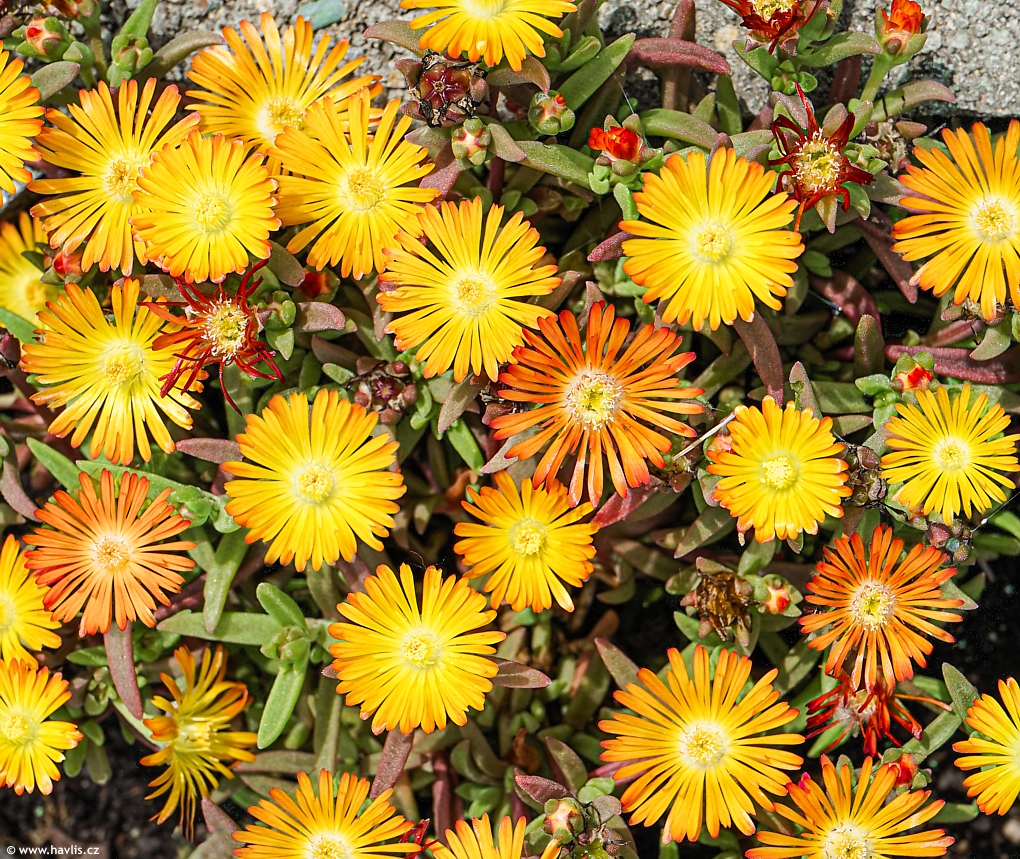
Delosperma SUNTROPICS® 'COPPER' hardy ice plant

 Symbivit Tric (arbuscular)
 Symbivit (arbuscular)
Delosperma
Delosperma, known as ice plant, is a genus of low‑growing, perennial succulents in the family Aizoaceae, native mainly to the mountainous and arid regions of southern and eastern Africa, from Lesotho and South Africa to Ethiopia, Eritrea, Tanzania and Kenya, with additional occurrences on Madagascar, Réunion and even Yemen. The genus was formally established in the early twentieth century by the British botanist Nicholas Edward Brown (1849–1934), who separated it from the broadly defined Mesembryanthemum on the basis of its distinctive capsule structure. This feature also gave the genus its name: delos means evident and sperma seed, referring to the fact that the seeds are not covered by a membrane and become exposed when the capsule is moistened. The leaves are fleshy, water‑retentive and often dotted with tiny, light‑reflecting cells that give the plants their characteristic sparkle. Most species grow strictly at ground level, forming dense, low mats that erupt into a mass of daisy‑like flowers opening only in full sun. This combination of extreme resilience, frugal growth and unexpected colour explains why ice plants are among the most reliable perennials for dry, sun‑exposed sites in temperate climates, where many other plants struggle.
The diversity within the genus has long inspired breeders to create modern cold‑hardy hybrids. Their foundation lies in several species native to the high mountains of southern Africa, where plants endure intense sunlight, sharp temperature swings and fast‑draining, stony soils. D. cooperi is used most frequently, contributing vivid purple flowers and a rapid, mat‑forming habit. D. nubigenum, native to Lesotho and the high plateaus of South Africa, adds exceptional frost tolerance and a low, compact growth. D. sutherlandii brings larger flowers and strongly papillose leaves, while D. basuticum is valued for its ability to withstand prolonged drought. An important role is also played by D. congestum, a species from the mountains of Lesotho that contributes an extremely dense, low habit, high resistance to winter moisture and the capacity to form firm, long‑lived clumps, traits that stabilise growth and increase reliability in temperate climates. Each species offers something different – colour, flower form, density, hardiness or resilience – and their combination produces modern cultivars capable of thriving in temperate regions. Many of these species were originally collected during botanical expeditions into remote mountain areas, where they survive in narrow rock fissures. Thanks to the careful combination of the most suitable parents, today’s hybrids not only carry the showy flowers typical of more delicate species but also reliably withstand winter temperatures between –24 and –30 °C, provided they are not exposed to prolonged moisture.
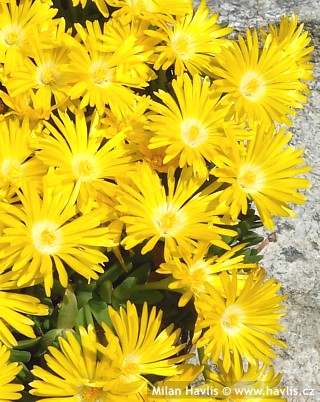
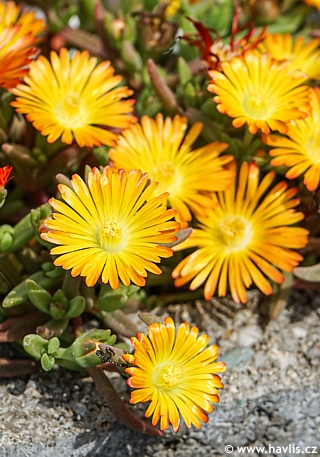
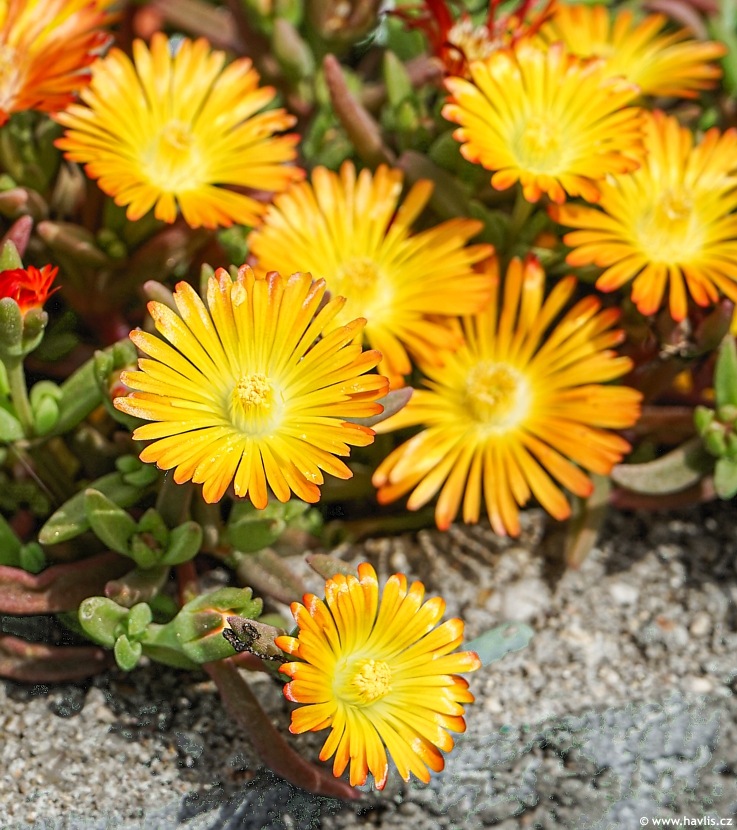
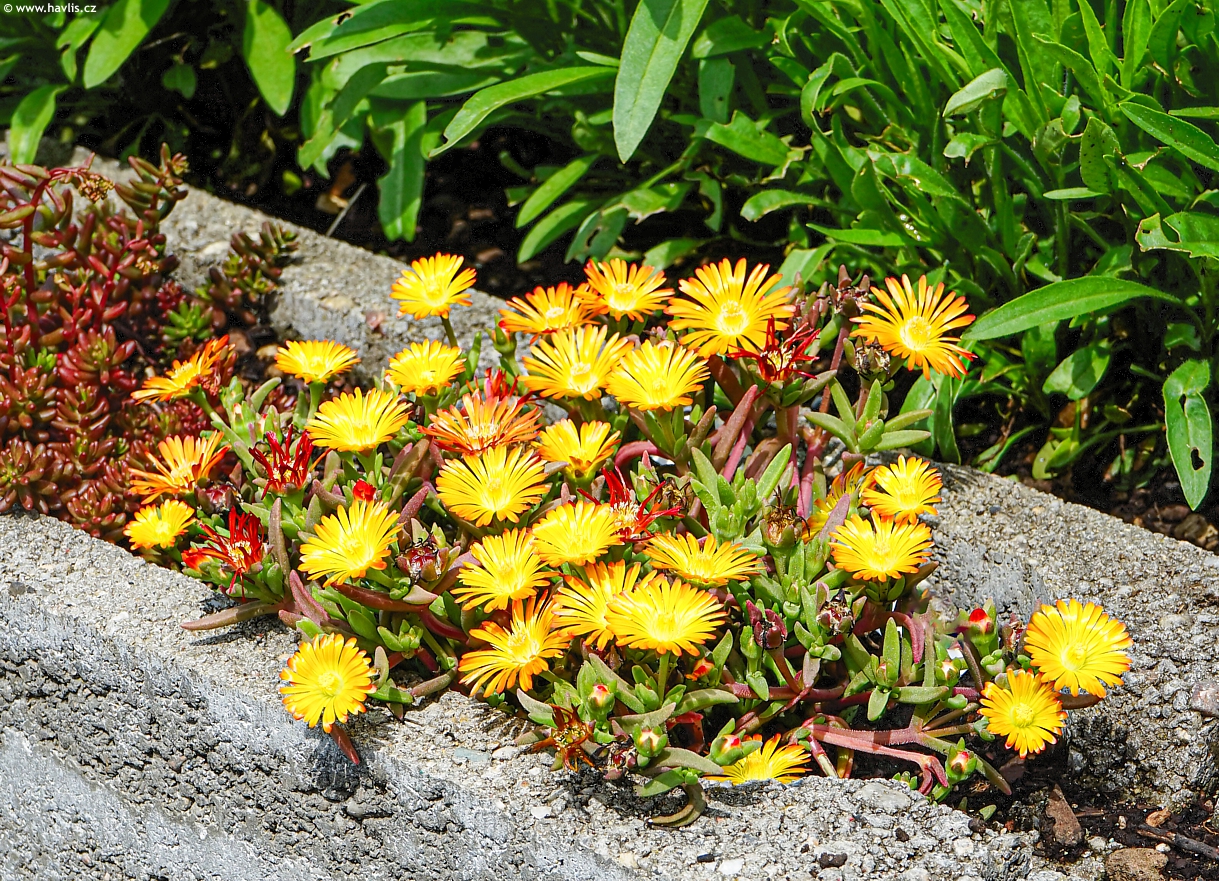
Copper is a gorgeous ice plant variety from the SUNTROPICS® series introduced by Volmary in 2022. It makes rich golden flowers with amber orange to copper red hues. They are large and appear in profusion from the first really hot days of late May and sporadically keep popping up until August, weather conditions pending. They bloom only if the sun is out and close on cloudy days. Evergreen leaves are thick, bright green or with red hues. The plant makes a natural groundcover and can be trimmed every few years to gain density.
Last update 23-06-2023
Hardy ice plants require full sun and perfectly drained soil, ideally gravelly or sandy, where water runs off quickly. In heavier soils, drainage is essential, otherwise the plants suffer from winter moisture, which is more dangerous to them than frost itself. Watering is needed only during prolonged drought, as they cope well with natural rainfall. Feeding is unnecessary, though a light application of low‑nitrogen fertiliser in spring encourages stronger growth. They do not need pruning; removing dead parts after winter is enough to help them recover. In older plants growing in poorer soils, cutting back thin, trailing shoots in early spring has proved effective, as it encourages the cushions to thicken. Container growing is possible only with extremely fast drainage and frost‑free conditions, otherwise the plants are short‑lived. Wind does not harm them and even helps keep the surface dry. They are not poisonous or harmful. Frost tolerance varies according to the parent species, but under suitable conditions they withstand at least –24 °C (USDA zone 6), provided they are not exposed to prolonged moisture.