

































Dicentra spectabilis bleeding heart

 Symbivit Tric (arbuscular)
 Symbivit (arbuscular)
Dicentra
Dicentra is a genus of perennial herbs in the poppy family, comprising around twenty species native to eastern Asia and North America. It was first defined by Michel Félix Dunal (1789–1856) in 1817, when he separated these delicate, bilaterally symmetrical flowers from related genera on the basis of their distinctive floral shape and fruit structure. Most dicentras grow in humus‑rich, well‑drained woodland soils, where they form colonies from fleshy, brittle rhizomes. The botanical history of the genus is notable for its shifting boundaries: in 1997, molecular studies led to the transfer of Dicentra spectabilis into the separate genus Lamprocapnos, although its original name remains firmly rooted in horticultural practice. Other species, such as the North American Dicentra formosa and Dicentra eximia, remain within Dicentra and form the core of the genus. These plants occupy a wide range of habitats, from the moist forests of eastern Asia to the dry, rocky slopes of western North America, yet they share a fine leaf texture, graceful habit and flowers that resemble droplets or stylised hearts. Dicentras reached Europe in the 19th century through botanical expeditions, particularly the collections of William Lobb (1809–1864) and later Ernest Henry Wilson (1876–1930), who introduced both Asian and North American species to botanical gardens and nurseries. Since then, they have become established perennials valued for their reliability, romantic appearance and ability to create a spring display that few other plants can match.
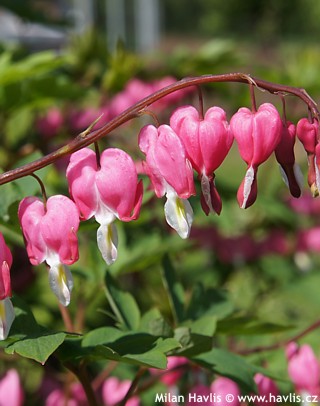
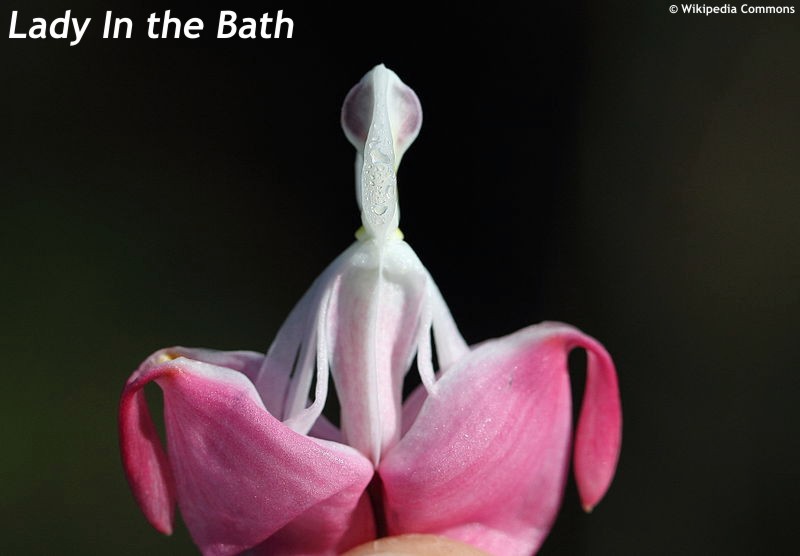
Dicentra spectabilis is a species that quickly earned a reputation as one of the most striking spring perennials. It was brought to Europe in 1847 by the Scottish plant collector Robert Fortune (1812–1880), who discovered it in northern China and sent it to England as one of the horticultural novelties of the time. The formal scientific description was later completed by the German botanist Ernst Rudolf von Trautvetter (1809–1889). The plant soon appeared in the catalogues of English and French nurseries and within a few years became a staple of 19th‑century romantic gardens. Its pink hearts found a place in gardening folklore and everyday culture: in English it is known as bleeding heart, and the playful name lady in the bath refers to the tiny figure revealed when the flower is turned upside down. In Asia it had been cultivated long before its European debut, especially in Korean and Japanese temple gardens, where it complemented spring plantings of ferns and hostas. In Europe it settled naturally into the half‑shaded corners of cottage gardens, where it remains a familiar and traditional perennial in temperate climates.
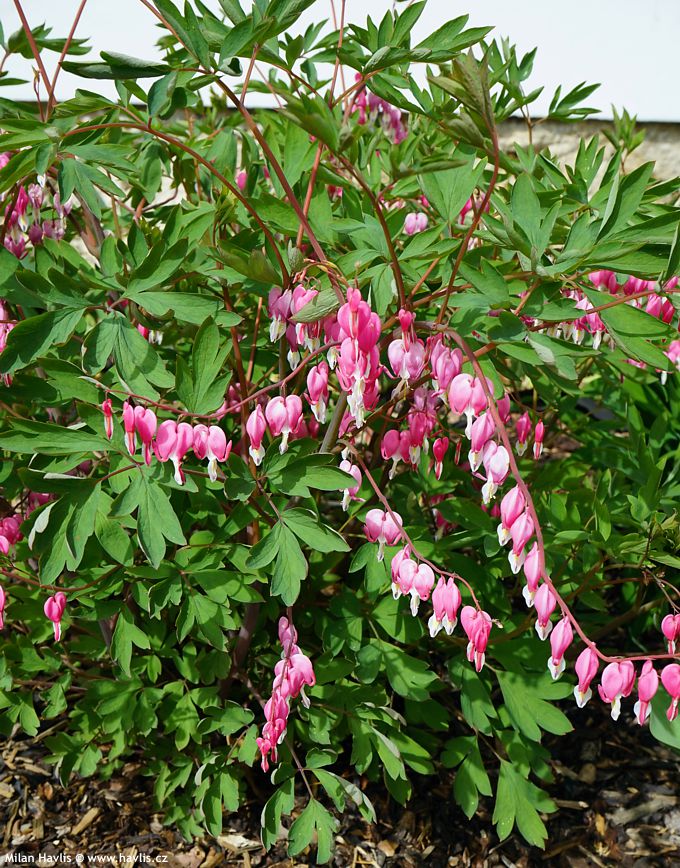
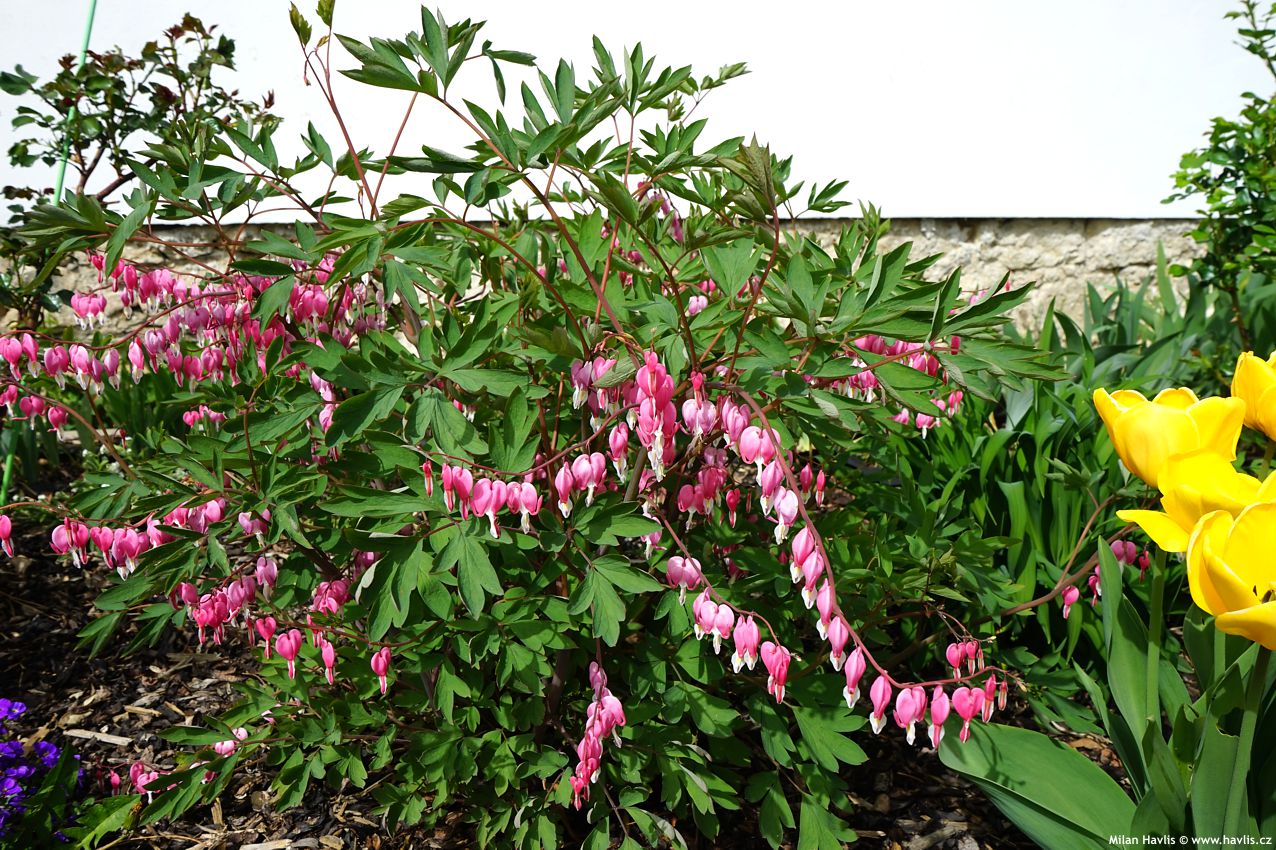
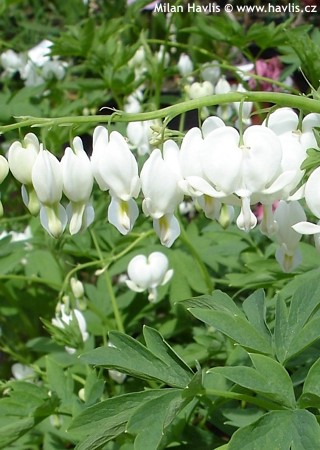
The botanical species of bleeding heart is a medium‑sized perennial with fleshy, fragile rhizomes that branch into short, thick segments underground and allow the plant to survive both winter and summer dormancy. In spring, hollow, gently arching stems emerge from the rhizomes and bend under their own weight, carrying one‑sided racemes of distinctive flowers. Each flower has two strongly arched outer petals forming the familiar pink heart shape, and inside a pair of white petals that extend like a tiny tongue as the flower opens. The flowers are bilaterally symmetrical, lightly scented and appear from May to June in temperate climates. After flowering, narrow, elongated capsules develop, though in gardens the plant is propagated far more often by division than by seed.
The leaves are matte, light to mid‑green, and deeply divided into ternate segments reminiscent of woody peony foliage. They emerge fresh and airy in spring, but begin to yellow and fade as summer approaches, when the plant naturally enters dormancy. At the height of flowering the habit is almost shrub‑like, full and soft, while after retreating in early summer only a small scar at soil level remains. This seasonal rhythm is characteristic of the species and explains why bleeding heart looks best among perennials that remain decorative after it disappears.
Last update 16-01-2014; 23-04-2026
Bleeding heart thrives in partial shade, with enough light in spring but protection from harsh summer sun. It prefers a moist microclimate but cannot tolerate waterlogged soil, as its fleshy rhizomes rot easily. It performs best in fertile, humus‑rich soil of neutral to slightly alkaline reaction that retains moisture yet drains well. During active growth it benefits from regular watering and light feeding to support abundant flowering. Once the plant retreats, the stems can be cut back to ground level; this is a natural part of its cycle. It is difficult to grow in containers because it requires stable moisture and a cooler root zone. The plant is mildly poisonous, so it is best placed out of reach of small children and pets. Its cold tolerance is excellent, reliably withstanding temperatures around –34 °C and reportedly even down to –40 °C, though the latter is not well documented.

Goods are shipped all over Europe. For Russia and U.K. and for further details please read about SHIPPING OPTIONS HERE.
Are you interested in a serious discount for orders NOV-FEB? Check your options here.
THE PRICES INCLUDE VAT of 15%. For quick conversion you can use 1 CZK = approx. 0.04 EUR
- STANDARD QUALITY - Plants of this group are 1st class quality with number of branches and overall density adequate to their size and age, considering they were container grown.
- DE LUXE QUALITY - This label guarantees a luxurious quality of manually selected plants that, compared to their height and age, are exceptionally dense and beautiful.
- EXTRA - These plants are usually mature and bigger specimens with exceptional overall appearance.
- STANDARD (as described in the plant form) means a tree with a trunk of 190-210 cm and a crown at the top, unless specified differently. The commercial size for trees is their girth measured in the height of 1m from ground.
- HOBBY - These plants are of the same quality as our standard-quality plants but younger and therefore cheaper.
- SHRUB - a woody plant with branches growing bushy from the ground level.
- HALF-STANDARD or MINI-STANDARD - a small tree with shorter trunk, its size is usually specified.
- FEATHERED - These are trees with branches growing already from the base of the trunk and up along the stem.
- GRASSES and PERENNIALS - Sizes given usually read the diameter of the pot or the clump, as specified.
