Echinacea SUNSEEKERS CORAL 'Ifecssc' coneflower

 Symbivit Tric (arbuscular)
 Symbivit (arbuscular)
Echinacea
The genus Echinacea, the coneflower, comprises nine recognised species of perennial plants native to the prairies and open habitats of North America, where their ancestors have evolved over millions of years. Fossilised pollen of related members of the daisy family has been found in deposits tens of millions of years old, showing that the lineage from which coneflowers arose was present on the continent long before humans arrived. The name of the genus comes from the Greek echinos – hedgehog – and refers to the prickly cone at the centre of the flower head, a feature shared by all species. The genus was formally described by the German botanist Konrad Mönch (1744–1805) on the basis of herbarium material brought to Europe by missionaries and naturalists returning from American expeditions in the late eighteenth century. Even then, botanists noticed that the species differed not only in flower colour but also in the shape of the ray florets, height and ecological preferences, which later led to taxonomic debates about the boundaries between E. pallida, E. angustifolia and E. purpurea. The genus became known not only for its ornamental appeal but also for its traditional use by Indigenous peoples of North America, who applied coneflower preparations for pain, inflammation, snakebite and even rabies. It reached Europe at the turn of the eighteenth and nineteenth centuries, though for a long time it remained more of a botanical curiosity than a garden favourite.
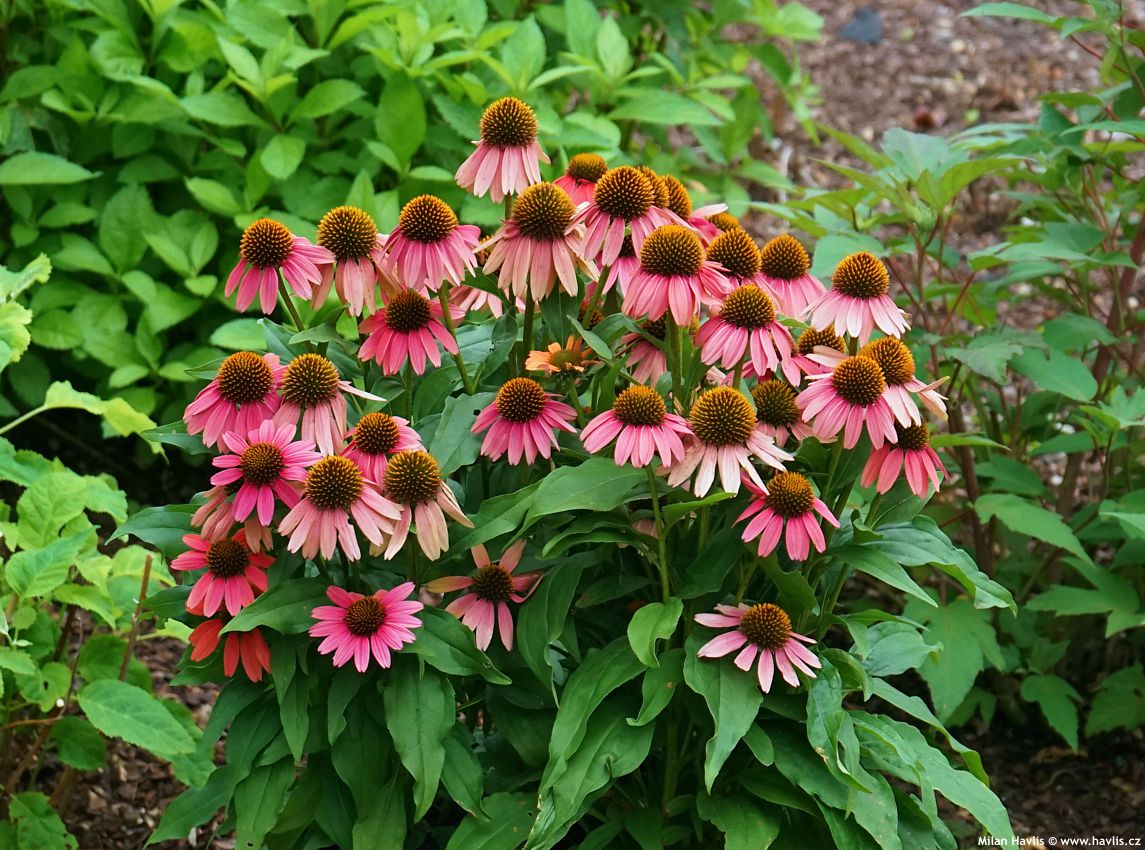
Echinacea purpurea, the purple coneflower, is the most widespread species of the genus, originating from the moister prairies and bright woodland edges from Oklahoma to Tennessee, where it grows in deeper, nutrient‑rich soils. Although its formal description dates back to the Linnaean era, real interest in the species rose only when it became part of the traditional medicine of North American tribes, especially the Sioux and Comanche, who used it as a versatile remedy. It entered European gardens as an exotic perennial with an unusual flower form, but its modern fame began in the 1990s, when botanists in Chicago started crossing E. purpurea with the bright yellow E. paradoxa. In 1995 the first orange cultivar, Art’s Pride, was created, launching an era of hybrid coneflowers in shades ranging from apricot to raspberry. These hybrids spread quickly thanks to their robustness, long flowering period and ability to bring colours to gardens that had never before been seen in coneflowers. From a once medicinal prairie plant, it has become one of the most important perennials in contemporary garden design, combining cultural history, botanical interest and modern breeding enthusiasm.
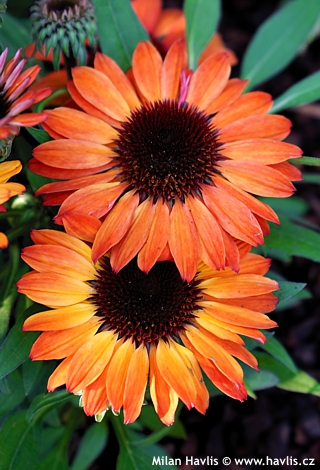
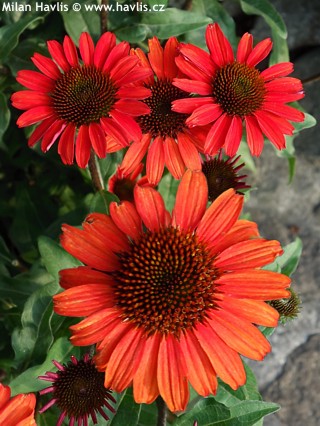
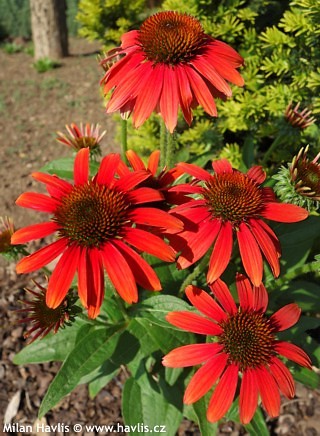
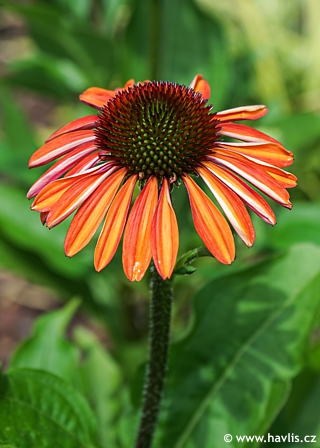
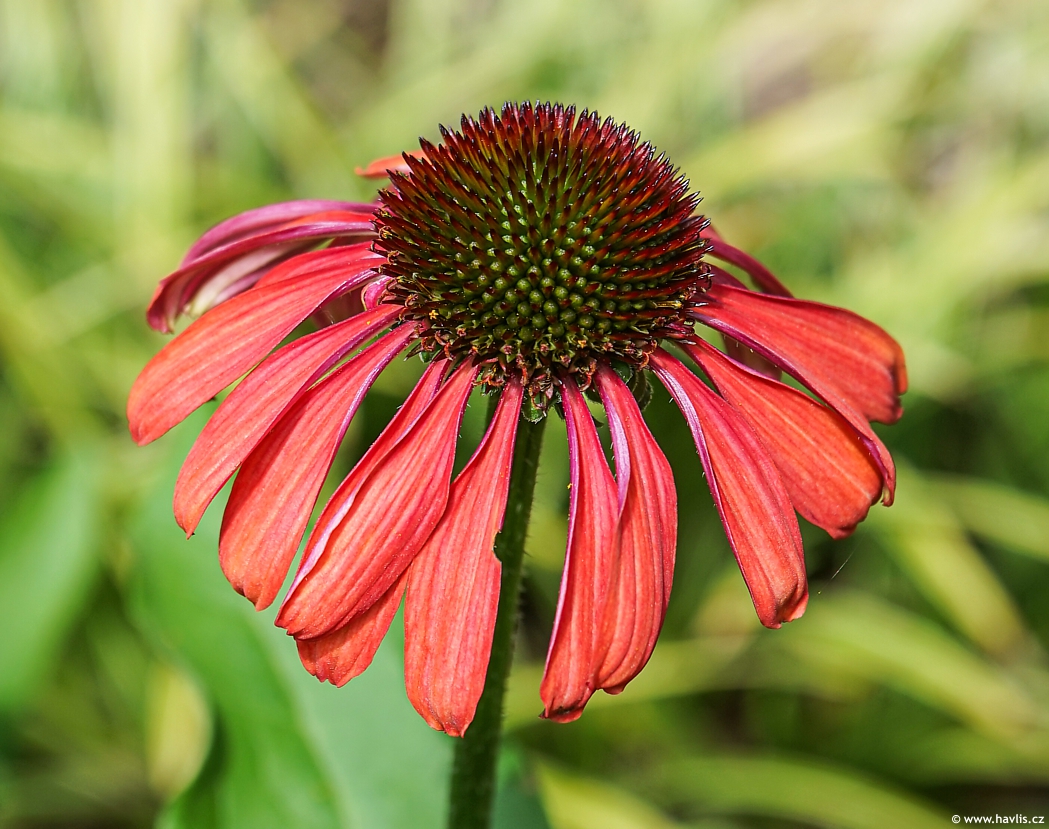
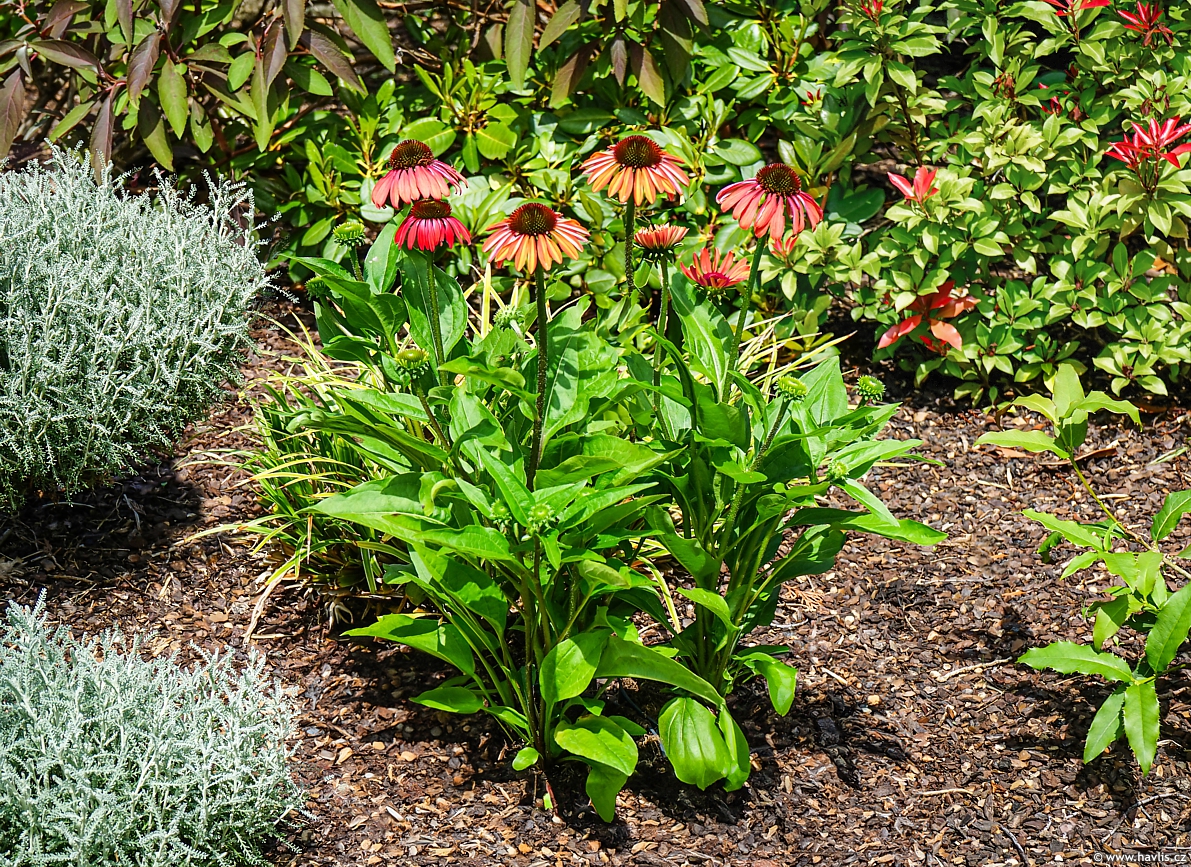
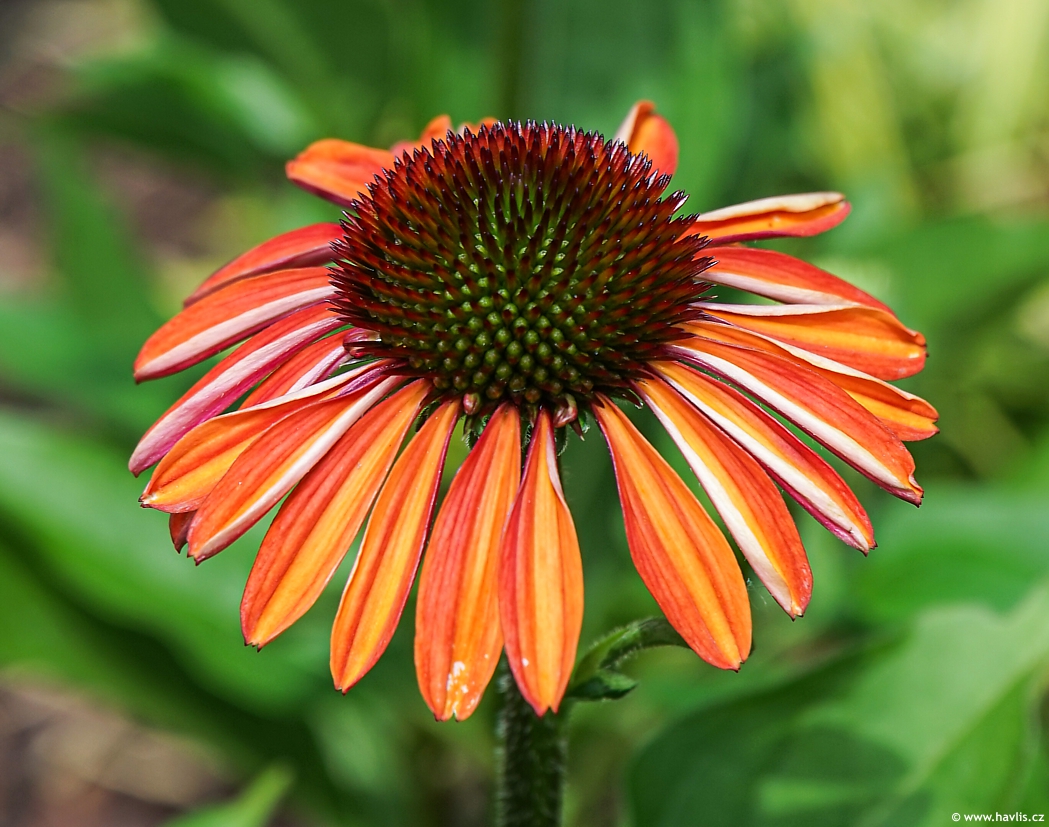
SUNSEEKERS CORAL is hybrid coneflower makes flowers of intriguing colour mélange combining rich orange and scarlet red which results in soft and warm coral red tone. Central discs are deep mahogany red, cone-like, and provide plenty of nectar for butterflies, bumble bees as well as bees. Flowering begins early – in July and strong and reliably fed plants keep on flowering until September. Longevity of individual flowers is exceptional, too – almost 3 weeks.
Plants are compact but have exceptional vigour and dense habit. Stems are dark purple and reach about 40 cm tall. Deadhead spent flowers regularly and feed the plants every two weeks during summer. Leaves are healthy, deep green, and broadly lanceolate. SUNSEEKERS CORAL was bred by Jelle can den Haak and granted an EU patent No. 64410 in 2023.
SunSeekers is a coneflower series bred by Jelle van den Haak for Innoflora BV from the Netherlands. The first part consists of varieties whose patent names begin with Apecss- and comprises of plants with single flowers of remarkably rich colours. While the second part of the series with patent names beginning with Ifecss- breaks through with a completely new and innovative design of unique colours or semi-double flowers which recall gerbera and dahlia rather than a coneflower. The first and hugely successful variety was SunSeekers Salmon and was awarded Gold Medal by KVBC at Plantarium Exhibition 2018.
The plant is usually trouble-free and resistant, just be careful if slugs are present in your garden. Since coneflowers emerge quite late, often when slugs are already in their lethal strength, they could gobble up newly emerging foliage totally and thus destroy the plant before it even comes out.
Last update 14-06-2024
Coneflowers are undemanding perennials that thrive in full sun and in well‑drained, fertile soil that does not remain waterlogged. They dislike acidic ground, while neutral to slightly alkaline soils suit them well. Removing spent flowers can extend the flowering period, though it is not essential, as most modern hybrids bloom reliably even without deadheading. Feeding should be moderate – a liquid fertiliser every two to three weeks during the growing season is sufficient. Because they originate from the North American prairies, where summer rainfall is more frequent than in the long dry spells typical of temperate Europe, hybrid cultivars appreciate additional watering during extended drought; otherwise they may reduce flower production. Their stems are sturdy and withstand wind and heavy summer storms. In spring, young shoots must be protected from slugs, which can damage new growth; barriers, mechanical protection and classic beer traps all work well. Coneflowers are long‑lived, overwinter successfully and require no winter cover. Most cultivars tolerate frost down to at least –29 °C (USDA zone 5).