












.jpg)
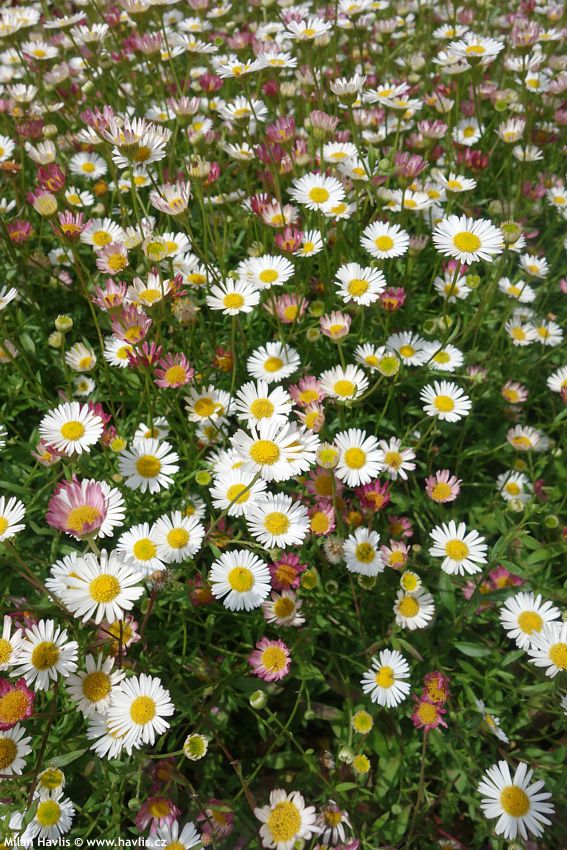
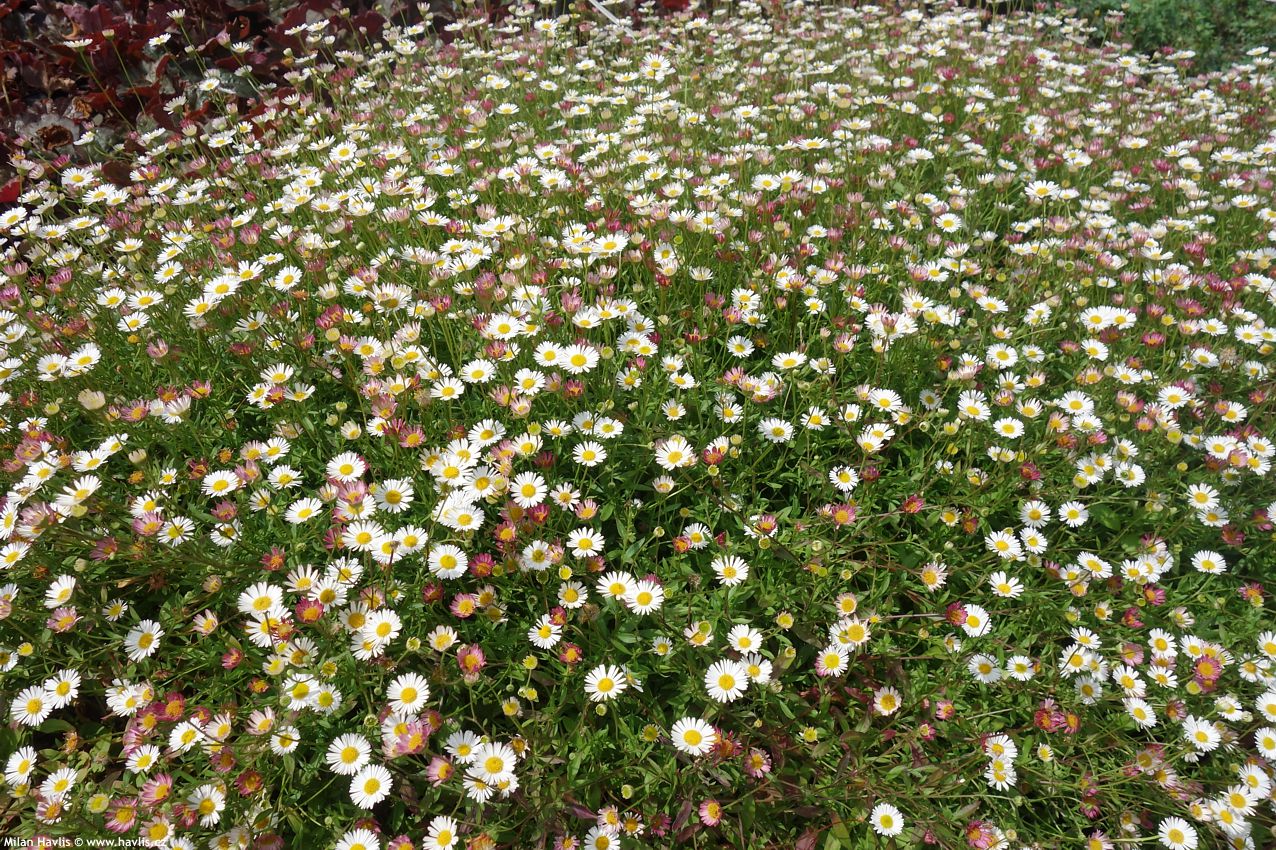
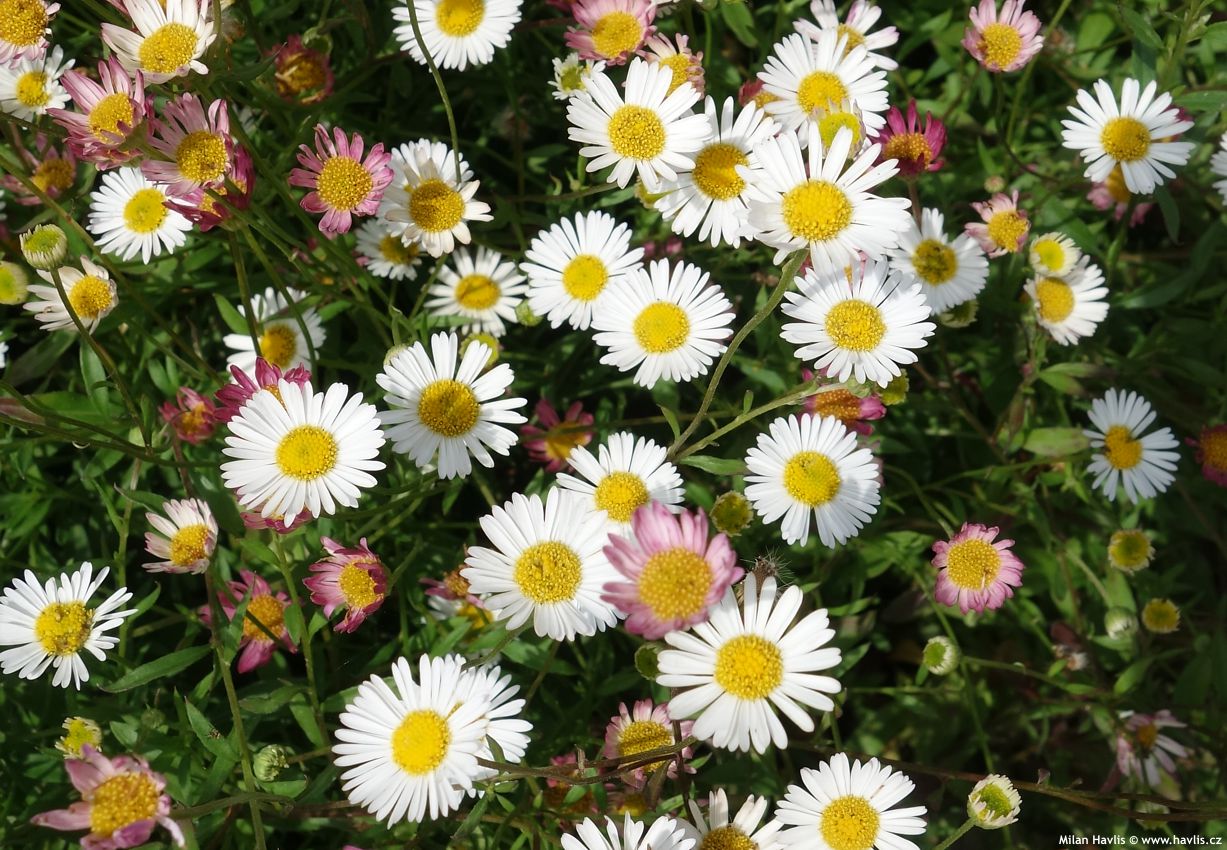
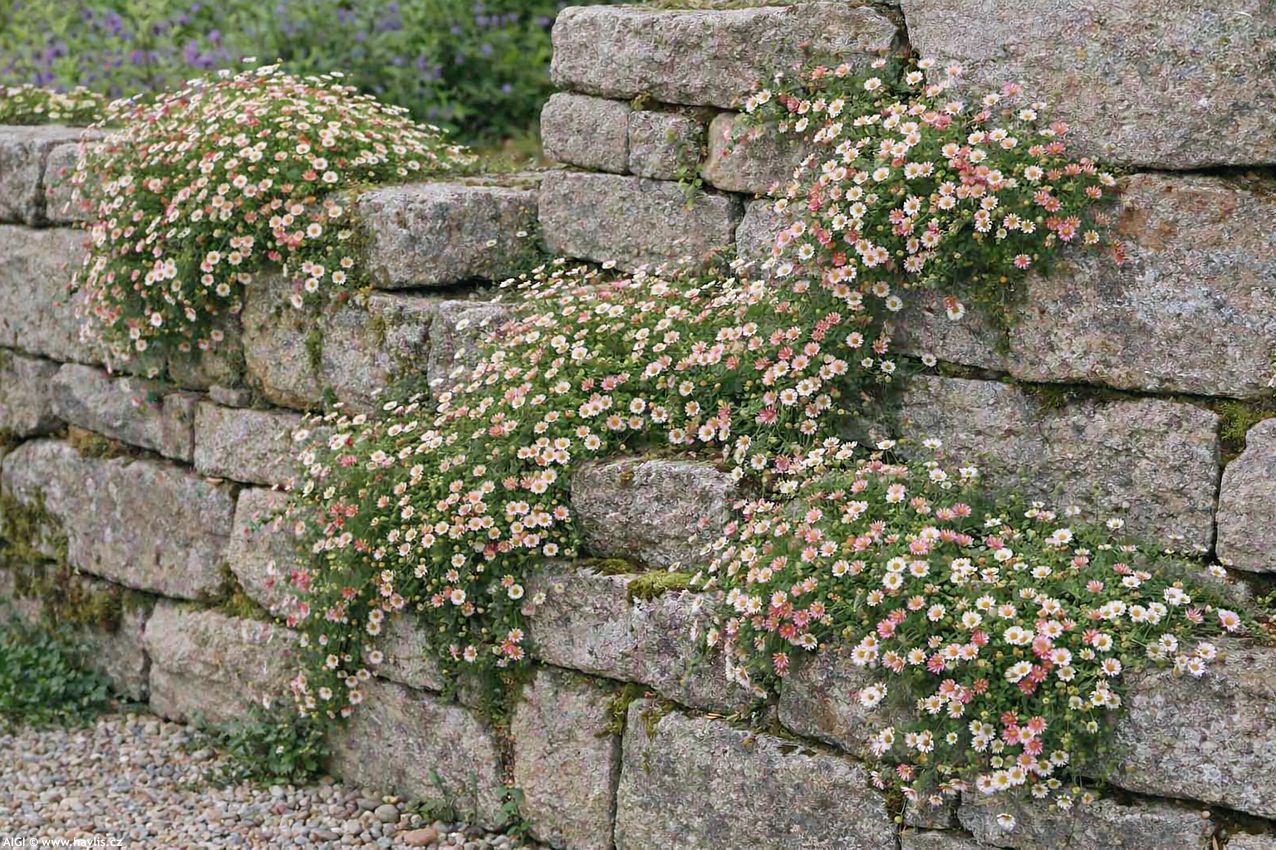
Erigeron karvinskianus 'BLÜTENMEER' Karvinsky’s fleabane

 Symbivit Tric (arbuscular)
 Symbivit (arbuscular)
Erigeron
Erigeron belongs to the family Asteraceae and includes several hundred species distributed across both hemispheres, most often in open, sunny habitats of the temperate and subtropical zones. Its name comes from the Greek words êri (early) and gérōn (old man), referring to the contrast between the early flowering and the rapid “ageing” of the seed heads, which soon become covered with pale fluff resembling an old man’s beard. The genus has a rich fossil and cultural history: some species appear in palaeobotanical records of the North American prairies, others accompanied people as medicinal herbs or field weeds. Botanically, the genus is notable for its variability – from tiny rock plants to more robust perennials with conspicuous flowers – and for the taxonomic shifts that have marked its history. Several species were once placed in Aster or Felicia, which still causes confusion in literature, but modern botany brings them back together under Erigeron.
Erigeron karvinskianus, Karvinsky’s fleabane, is an exceptionally charming perennial from Mexico and Central America, admired for its ability to grow where most other perennials give up without a fight – in wall crevices, between stones, on dry terraces or in urban cracks. The species was described in 1836 by the Swiss botanist Augustin Pyramus de Candolle (1778–1841) from collections made by the naturalist Wilhelm Friedrich Karwinsky von Karwin (1780–1855), who found the plant near Mexico City; the species was named in his honour. In its native region it accompanies people not only as an ornamental plant but also as a modest herb used in folk medicine and even as fodder for small livestock. While in Mexico it has become a symbol of resilient urban greenery, in Europe it is loved as a plant capable of turning an ordinary stone wall into a charming corner reminiscent of country gardens. Thanks to its long flowering period and its ability to colonise even inhospitable surfaces, it has spread across the world – sometimes as a welcome ornament, elsewhere as an invasive species able to dominate damp walls and disrupt the regeneration of native woodland. In 1993 it received the RHS Award of Garden Merit.
Anyone who loves flowers, especially those modest at first glance, will be disarmed by the abundance of blooms of Blütenmeer Karvinsky’s fleabane. No wonder its German name means “Sea of Flowers”. The blooms behave like a living watercolour – they begin pure white, shift into soft pink within hours and finally take on a surprisingly deep purplish tone. This colour transition is not merely an aesthetic trick but a typical feature of the species, pushed in this selection to extreme density of flowering from late spring until October. The plant forms low, wide mats with thin, wiry stems and narrow, slightly hairy leaves that remain unobtrusive and allow the flowers to stand out. This fleabane is a classic “wall plant”: it fills crevices, spills over edges and creates soft, irregular cushions about 20–30 cm high. Compared with the original species, Blütenmeer is more compact, more densely branched and even more persistent in flower, which explains its popularity among gardeners and garden designers.
Karvinsky’s fleabane is like an oversized, airy daisy that can enliven a lifeless structure – a wall, steps or paving edges – turning it into something living and quietly romantic. Between large stone slabs it creates soft, flowering seams, and along the edges of borders it offers a light, natural touch that suits country-style gardens beautifully. Yet it works just as well in modern compositions, for example as a contrast to hard materials such as concrete blocks, stone gabions or corten steel, where its tiny flowers act as gentle softening. In naturalistic plantings it pairs well with drought-tolerant species, and although I do not wish to impose my own view, it seems best used as the lowest layer, weaving through everything and covering the soil. Imagine those bohemian compositions where the mass of its daisy-like flowers is lifted by the firm stems of pink verbenas, blue sea hollies, sanguisorbas, gillenias, patrinias, taller yarrows, coneflowers or golden rudbeckias. And because it is a summer plant with a later start, it is an excellent successor – not to a throne, but to spring bulbs.
Last revised 11–10–2026
Karvinsky’s fleabane is an undemanding, drought-tolerant perennial that thrives best in full sun and in poor, well-drained soil. It dislikes permanently wet conditions and copes better with the opposite extreme: drought. Watering is needed only during prolonged drought or after planting; otherwise, it manages with natural rainfall. Feeding is unnecessary – overly rich soil leads to lush growth at the expense of flowers. Pruning is limited to removing dry parts in spring; during the season nothing is required, as the plant flowers continuously and is self-cleaning. It is wind-resistant, non-toxic and without known allergenic effects.
Reports on hardiness vary across European and American sources (from –10 to –24 °C), but long-term cultivation experience shows that fleabane behaves similarly to verbena: in dry, well-drained soil the parent plants survive ordinary winter frosts, yet after several years or after colder or wet winters they die off. Their place is easily taken by new plants from the many seeds shed in the previous season. As a result, the planting appears permanent and reliable even though individual plants are not long-lived.

Goods are shipped all over Europe. For Russia and U.K. and for further details please read about SHIPPING OPTIONS HERE.
Are you interested in a serious discount for orders NOV-FEB? Check your options here.
THE PRICES INCLUDE VAT of 15%. For quick conversion you can use 1 CZK = approx. 0.04 EUR
- STANDARD QUALITY - Plants of this group are 1st class quality with number of branches and overall density adequate to their size and age, considering they were container grown.
- DE LUXE QUALITY - This label guarantees a luxurious quality of manually selected plants that, compared to their height and age, are exceptionally dense and beautiful.
- EXTRA - These plants are usually mature and bigger specimens with exceptional overall appearance.
- STANDARD (as described in the plant form) means a tree with a trunk of 190-210 cm and a crown at the top, unless specified differently. The commercial size for trees is their girth measured in the height of 1m from ground.
- HOBBY - These plants are of the same quality as our standard-quality plants but younger and therefore cheaper.
- SHRUB - a woody plant with branches growing bushy from the ground level.
- HALF-STANDARD or MINI-STANDARD - a small tree with shorter trunk, its size is usually specified.
- FEATHERED - These are trees with branches growing already from the base of the trunk and up along the stem.
- GRASSES and PERENNIALS - Sizes given usually read the diameter of the pot or the clump, as specified.
