Fagus sylvatica 'Verschuurfag1' MIDNIGHT FEATHER European beech

 Ectovit (ectomycorrhizal)
Fagus
Beeches are reliable, hardy trees typical of our climate. The genus Fagus comprises roughly ten species of deciduous trees distributed across the temperate zone of the Northern Hemisphere, chiefly in Europe, eastern Asia and North America. Fossil finds show that beeches were important components of forests already in the Tertiary, when the climate was warmer and wetter. The genus was described botanically by Carl Linnaeus in 1753 and has since become one of the cornerstones of European dendrology. For centuries beeches have been valued not only for their timber but also for their ability to form stable, long lived stands that have shaped both landscape and human culture.
The European beech has shaped the face of the Czech landscape for centuries as naturally as human settlement; native beechwoods were among the most widespread forest communities here and still survive in protected sites with an almost cathedral like atmosphere. For example: the park at Hluboká Castle, where extensive 19th century plantings and English style landscaping created monumental groups of solitary beeches. By contrast, the primeval core of Boubín Forest, protected since 1858, contains individuals estimated at 300–400 years old. The Voděradské beechwoods, designated a nature reserve in 1955 and covering roughly 650 ha, are one of the largest beech complexes in Central Bohemia and serve as an important research and educational site with rich fauna. These Czech examples mirror a wider European pattern — from managed estate parks and avenue plantings that shaped noble landscapes across Central Europe to ancient, protected beech remnants in the Carpathians, Białowieża and Hainich that preserve primeval forest dynamics and biodiversity. The beech has traditionally been a tree of shade, calm and endurance: its understorey was used for grazing, its beechnuts collected as fodder, and its timber for tools and craftwork. In folk tradition the beech is associated with wisdom and memory; old beeches were often treated as boundary markers, meeting places and living witnesses to the continuity of the landscape.
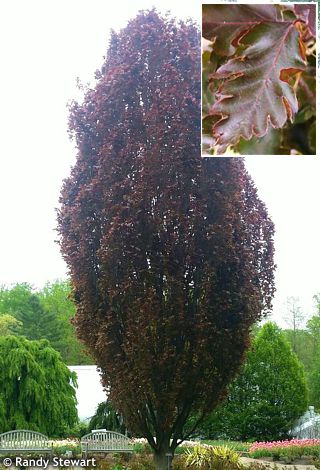
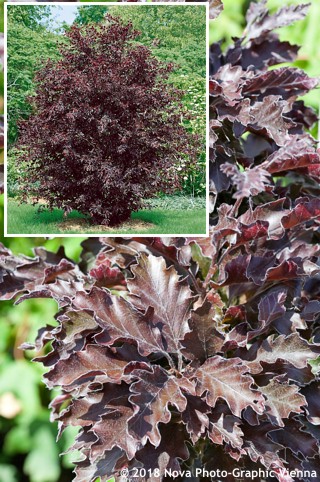
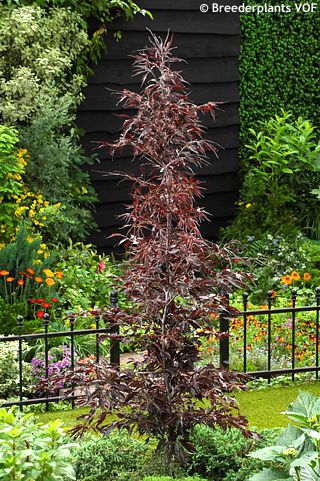
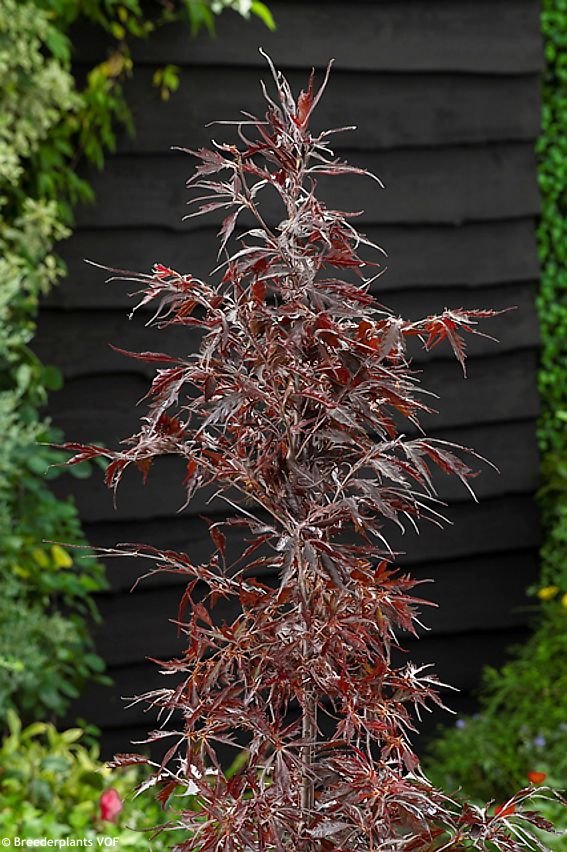
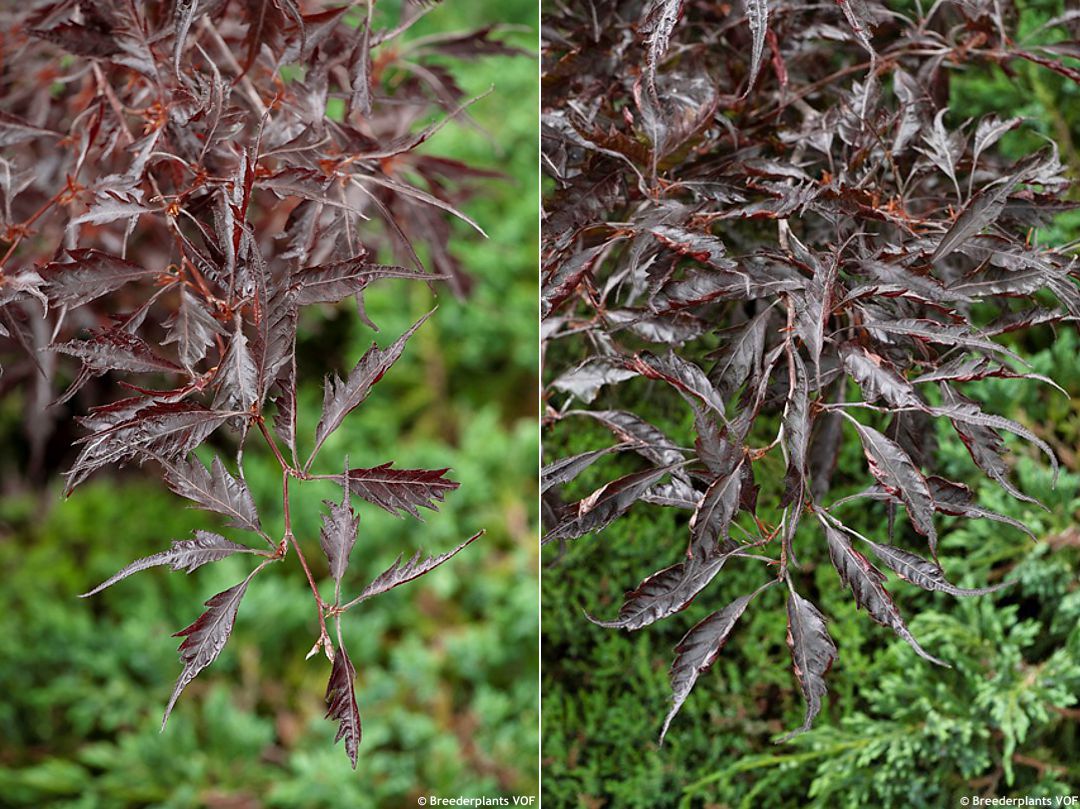
MIDNIGHT FEATHER is a unique variety of European beech from the Netherlands with attractive foliage. Its deciduous leaves are deep maroon during the season and brighter burgundy red in autumn. They are glossy and conspicuously incised or notched at margins like many Japanese maple varieties. The will add elegance and delicacy to your garden and, thanks to their dark colour, they will make a great contrast if planted among green-leaved shrubs and trees.
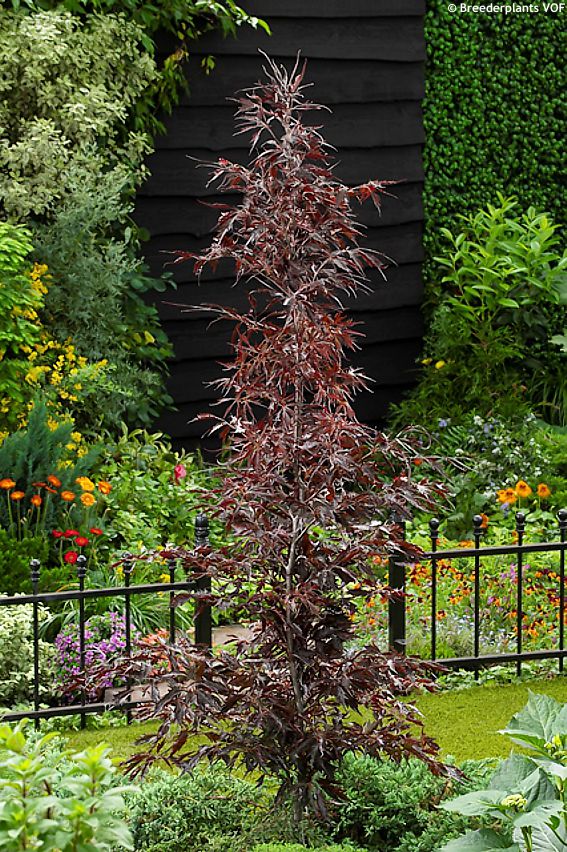
It grows slowly to moderately into an upright, small tree with a strong central leader. Its branching is dense and present from the ground, yet you can remove lower framework in order to train in into a single clear-stemmed standard tree. The habit is relatively dense even without pruning. The variety was bred by Peter Verschuuren and European Patent No. 56853 was granted in 2021.
Last update 17-06-2024
The European beech is very undemanding. It performs best on deep, fertile, well drained soils in full sun to partial shade and does not tolerate prolonged waterlogging. After planting, water regularly and apply mulch to protect the root ball for the first three to five years; thereafter the beech is relatively tolerant of drier periods. Newly planted trees should be staked with a sturdy three pole support for three to five years and the area around the roots kept free of weeds and dense turf. Beeches are sensitive to road salt and are therefore unsuitable for immediate planting beside frequently salted roads. The root system is typically deep and strong; it is not aggressively invasive, but where space is limited some roots may expand and lift the surface, potentially damaging paving or shallow foundations. Prune sparingly: remove dead and damaged branches during dormancy and avoid heavy summer pruning, which leaves large wounds. Hardy to approximately −34 °C.