

































Gaultheria mucronata (syn. Pernettya) + ODRŮDY gaultheria, prickly heath


Gaultheria
The genus Gaultheria includes more than 130 species distributed mainly across the Americas, eastern Asia and Oceania, inhabiting cool mountain forests as well as coastal regions. It belongs to the heath family, which explains its typical leaf structure and small, bell‑shaped flowers. The genus is named after the French‑Canadian botanist Jean François Gaulthier (1708–1756), who worked in Québec and was among the first systematists to describe the flora of North America. The nomenclatural history of the genus is somewhat confused: several species were long placed in Pernettya until it became clear that the morphological differences were insufficient and all belonged back in Gaultheria. Fossil finds from Patagonia suggest that the genus has been rooted in the southern part of the Americas for a very long time, which explains its present distribution from subantarctic regions to the temperate zone, from the Andes to Tasmania.
Gaultheria mucronata, the prickly heath, is native to southern Chile and Argentina, where it grows as a low shrub in cool, moist areas above the tree line and often appears on volcanic slopes with acidic, well‑drained soils, although it is not considered a true heathland species. The first valid description was published by William Jackson Hooker (1785–1865) and George Arnott Walker‑Arnott (1799–1868) in 1834, but the epithet mucronata dates back to 1782, when Carl Linnaeus, jr. (1741–1783) placed the species in the genus Arbutus. Locally it is known as chaura or murtillo, and its fruits served as a small, easily collected food source during travel in harsh terrain – not particularly flavourful, but sweet enough to provide energy. The prickly heath is valued for its tolerance of wind, cold conditions and poor soils, which makes it a reliable companion in gardens and landscapes of the temperate zone, especially where an acid‑loving shrub is needed and common heathland species fail.
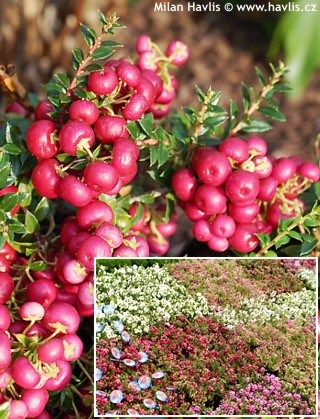
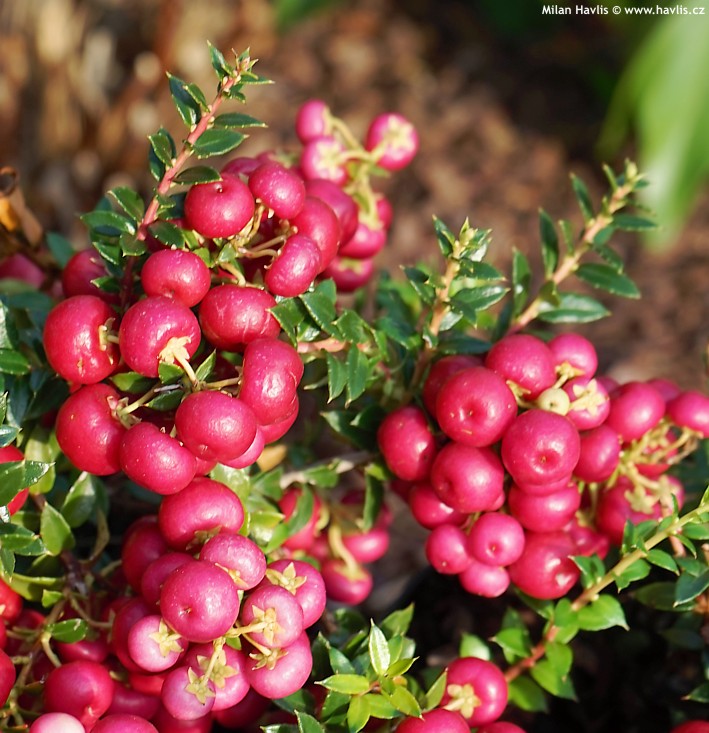
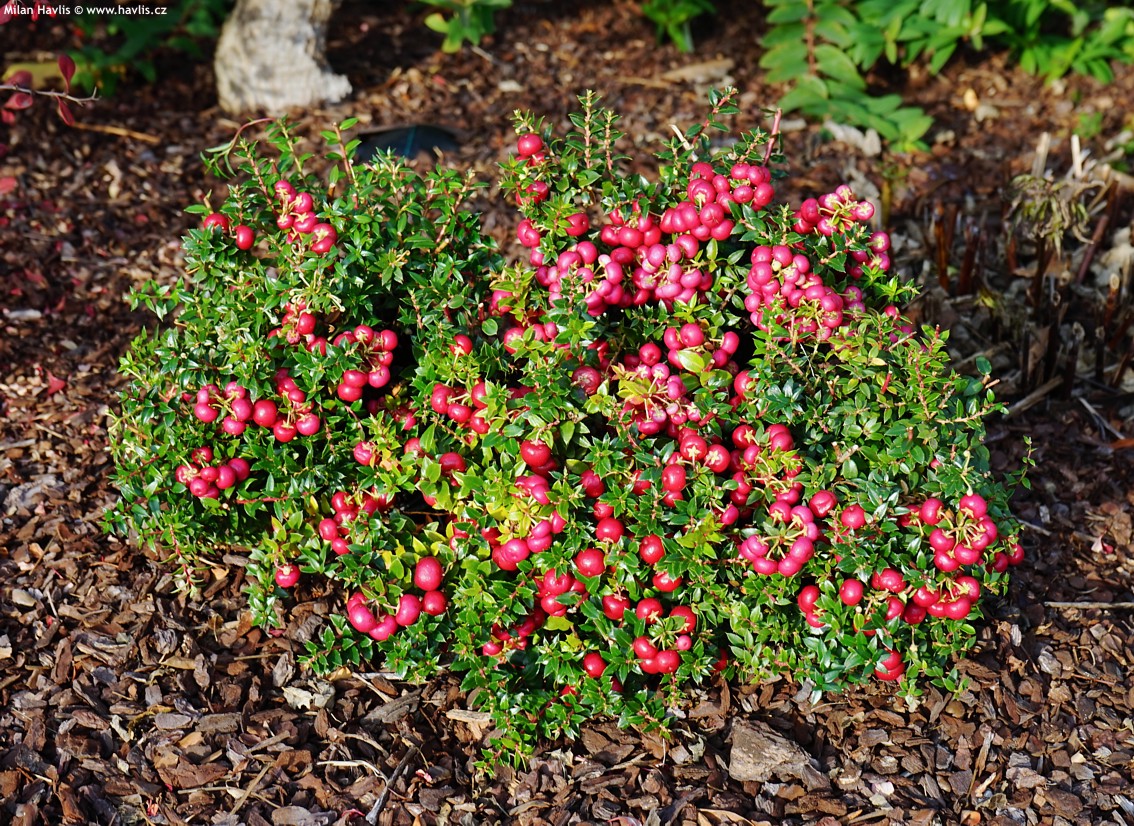
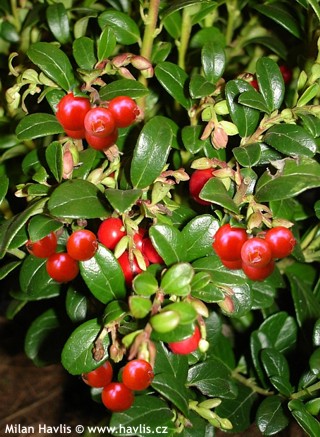
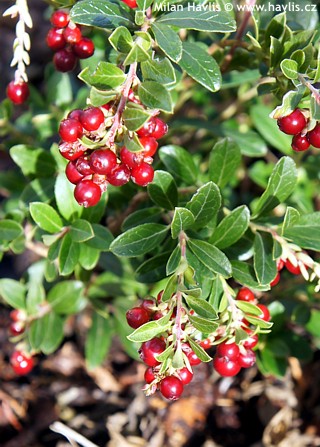
The prickly heath is a low, evergreen shrub with a spreading, irregular habit that opens with age and looks slightly untidy, which is typical for the species. The leaves, though, are very nice – they are quite small, leathery, glossy, dark green and sharply pointed, giving rise to the name mucronate (from Latin word for shar tip). The flowers appear in early summer as small white to pinkish bells, and during flowering the shrub resembles a lingonberry. The flowers are often hidden beneath the branches and are not the main ornamental feature. The fruits, however, are a spectacle in autumn: round, waxy and highly variable in colour, ranging from white through pink to deep red, and they persist well into winter. They are edible but rather bland in flavour; locally they served more as an easily available source of sweet energy during travel than as true fruit. Compared with other species of the genus, the prickly heath is more robust, more tolerant of wind and cold, and its fruits are larger and more conspicuous. Historically it was long placed in Pernettya until a revision in 1990 returned it to Gaultheria, which explains the dual naming still found in the literature.
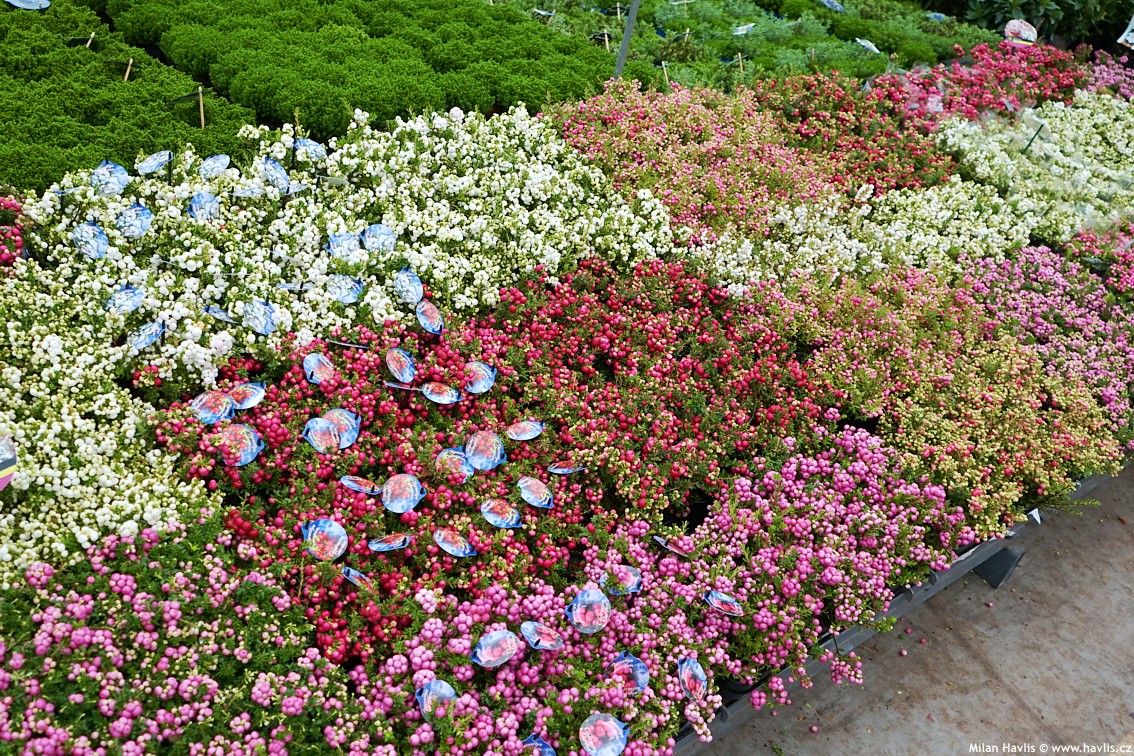
Today many cultivars are selected for fruit colour, but one essential point must be mentioned: the prickly heath is dioecious. Fruit production requires pollen from a male plant – these are the ones without fruit and are rarely sold in horticulture. As a result, growers send almost exclusively female plants with attractive fruit to garden centres in autumn, but without the possibility of fruiting in subsequent years. Customers often buy autumn decorations that will continue to grow but will no longer bear fruit. To ensure fruiting, a male plant must be purchased separately and clearly labelled with the symbol ♂ or simply the word MALE.
The prickly heath is a small garden rascal: it grows densely but its shape is free‑spirited and irregular – either you enjoy its character or you keep the secateurs close. It works best in acid‑loving compositions, forming a fine‑textured underplanting beneath shrubs with larger leaves when clipped, or weaving naturally among shrubs of different colours and textures when left untrimmed. It combines beautifully with pieris, leucothoe, choisya, rhododendrons, enkianthus, kalmia, camellias, photinia, cherry laurels and even blueberries and cranberries. In more formal plantings it complements low conifers such as dwarf mountain pines, Korean firs, small spruces, cypresses and cryptomerias. If it fascinates you enough to make it the centrepiece of a small bed, pair it with evergreen grasses and perennials such as carex or liriope.
Last revision 20‑11‑2019; 11‑10‑2026
The prickly heath does not grow quickly – usually around 10–20 cm per year – and spreads slowly by short, shallow rhizomes that create a manageable, non‑invasive clump. To maintain a smaller and tidier shape, it is best to trim it in late spring before flowering. It thrives best in partial shade or in bright light without harsh midday sun; it will tolerate full sun only if the soil stays consistently moist and the roots are not exposed to overheating. In dry, exposed sun it suffers from drought stress, the leaves may brown and growth slows down. As a heathland shrub it requires the same soil as rhododendrons, azaleas or enkianthus: the soil must be lightened (fibrous substrate, fine bark chips, light compost, leaf mould), acidic (peat added) and well drained. In heavy clay it is better to create a wide, shallow bed rather than a deep hole, ideally slightly raised. The soil must remain consistently moist but not wet, preferably mulched and watered occasionally, especially during flowering and fruit formation. A balanced, slow‑release fertiliser may be used, but the plant grows reliably even without it. Hardiness is around –24 °C. In containers it looks beautiful through winter but is sensitive to both overwatering and complete drying, so it requires careful attention or a larger pot that does not dry out or freeze too quickly.

Goods are shipped all over Europe. For Russia and U.K. and for further details please read about SHIPPING OPTIONS HERE.
Are you interested in a serious discount for orders NOV-FEB? Check your options here.
THE PRICES INCLUDE VAT of 15%. For quick conversion you can use 1 CZK = approx. 0.04 EUR
- STANDARD QUALITY - Plants of this group are 1st class quality with number of branches and overall density adequate to their size and age, considering they were container grown.
- DE LUXE QUALITY - This label guarantees a luxurious quality of manually selected plants that, compared to their height and age, are exceptionally dense and beautiful.
- EXTRA - These plants are usually mature and bigger specimens with exceptional overall appearance.
- STANDARD (as described in the plant form) means a tree with a trunk of 190-210 cm and a crown at the top, unless specified differently. The commercial size for trees is their girth measured in the height of 1m from ground.
- HOBBY - These plants are of the same quality as our standard-quality plants but younger and therefore cheaper.
- SHRUB - a woody plant with branches growing bushy from the ground level.
- HALF-STANDARD or MINI-STANDARD - a small tree with shorter trunk, its size is usually specified.
- FEATHERED - These are trees with branches growing already from the base of the trunk and up along the stem.
- GRASSES and PERENNIALS - Sizes given usually read the diameter of the pot or the clump, as specified.
